On This Page
- Why creators start looking past DupDub
- The five alternatives at a glance
- HeyGen — the avatar benchmark everyone else chases
- Synthesia — the safe choice for serious organizations
- Pippit — the e-commerce shortcut DupDub never had
- Akool — face swap and live avatars done right
- Revid AI — built for faceless channels that publish daily
- Three comparisons that actually decide it
- Matching the tool to the job
- One number that explains the whole scramble
- The verdict after living with all five
DupDub was the first tool that made me feel like AI voiceovers had finally grown up. For a stretch last year it handled most of my faceless YouTube workflow, and the 700-plus voices genuinely saved hours. But the cracks showed fast. The website crawled on busy afternoons, lip-sync slipped on longer clips, and the credit meter drained quicker than the marketing suggested. Somewhere around the third re-render of a two-minute explainer, the obvious thought landed: maybe DupDub is fine, but it is no longer the best seat in the room.
So the next few weeks went into testing the tools people keep recommending as replacements. Some are sharper at avatars, some at short-form virality, some at sheer enterprise polish. Below are the five that earned a spot, what each one is good and bad at, side-by-side comparisons, and where the market is heading. No fluff, no padding, just what held up.
Why creators start looking past DupDub
DupDub is a capable all-in-one platform built by Mobvoi, packing text-to-speech, transcription, video translation across 90-plus languages, and avatar generation into a single credit-based dashboard. It is backed by serious investors and grew quickly through 2024 and early 2025. The trouble is that being decent at everything leaves room for tools that are excellent at one thing. Three friction points come up again and again in user reviews:
•Credit anxiety. Avatar and dubbing minutes burn through allotments faster than expected, a complaint echoed across nearly every competing platform too.
•Speed and polish. Reviewers note a sluggish interface and imperfect lip-sync on longer scripts, fine for quick reels, frustrating for client work.
•Shallow editing. The video editor covers cuts and captions but lacks the timeline depth serious creators eventually want.
For reference, DupDub's paid tiers start around $11/month for the Personal plan and $30/month for Professional. That is genuinely affordable, so any alternative has to justify a higher ask with clearly better output. The five below do, in different ways. A useful way to read this list: the first two trade up on quality and trust, the middle two trade up on a specific job DupDub was never designed for, and the last trades up on raw speed.
The five alternatives at a glance
Before the deep dives, here is the quick map. Pricing reflects entry-level paid plans verified against each vendor in 2026.
| Tool | Best for | Starting price | Standout strength |
|---|---|---|---|
| HeyGen | Realistic talking-avatar video | $29/mo (Creator) | Avatar IV realism + translation |
| Synthesia | Corporate training & L&D | $29/mo (Starter) | Compliance + 140+ languages |
| Pippit (CapCut) | E-commerce & UGC ads | ~$24/mo (Starter) | Product URL to ad video |
| Akool | Face swap & live avatars | $30/mo (Pro) | 155+ language dubbing, live camera |
| Revid AI | Faceless short-form at volume | $29/mo (Starter) | Script-to-post automation |
Prices verified in 2026; vendors change plans often, so confirm before subscribing.
HeyGen — the avatar benchmark everyone else chases

If DupDub's avatars left you wanting, HeyGen is the upgrade. Its Avatar IV model, launched in August 2025, animates a still photo into a talking presenter with natural head turns, hand gestures, and micro-expressions that genuinely pass a second glance. Backed by $65M-plus in funding and named G2's #1 Fastest Growing Product of 2025, it is used by more than 100,000 businesses. Translation across 175-plus languages is widely considered best in class.
HeyGen at a glance
| Aspect | Details |
|---|---|
| Core use | Script-to-video with AI avatars, voice cloning, translation |
| Avatars | 700+ stock on paid plans; custom Digital Twin from your footage |
| Languages | 175+ for voice and translation |
| Pricing | Free (3 videos, watermark); Creator $29/mo; Pro $99/mo; Business $149/mo + $20/seat |
| Watch-outs | Premium credits drain fast on Avatar IV (about 10 min/month on Creator); no real timeline editor |
Where it wins: Spokesperson and explainer content where a believable human face matters more than cinematic editing. Reviewers repeatedly call Avatar IV the first model they would put in front of a client without explanation.
Where it frustrates: The “unlimited videos” marketing refers to drafts, not renders. Every final export eats credits, and Avatar IV burns them quickly, a surprise that catches Creator-plan users mid-project.
Reviewer verdict: Robo Rhythms calls HeyGen “the best AI avatar video generator available in 2026” for structured, script-driven content, while flagging that the credit system burns faster than the marketing implies.
Synthesia — the safe choice for serious organizations
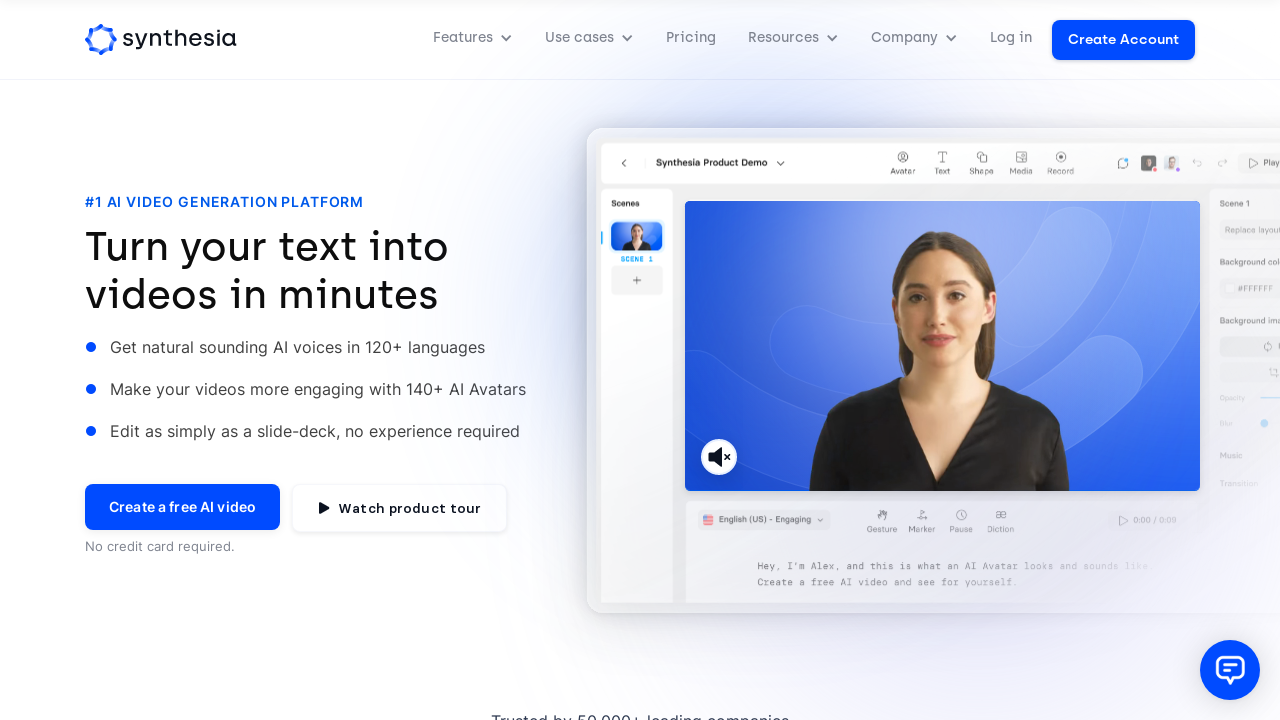
Synthesia is the platform IT and legal teams actually approve. Launched in 2017 and used by Zoom, Heineken, Bosch, and SAP, it converts scripts into polished avatar videos in 140-plus languages. The 2026 releases lean hard into enterprise value: a PowerPoint-to-video tool that preserves slide design and turns speaker notes into scripts, plus embedded access to Veo 3.1 and Sora 2 for B-roll, available on every paid tier.
Synthesia at a glance
| Aspect | Details |
|---|---|
| Core use | Corporate training, L&D, localized internal communication |
| Avatars | 180+ on Creator; custom Digital Twins on higher tiers |
| Languages | 140+ languages; subtitles in 39+ |
| Pricing | Free (10 min/mo, watermark); Starter $29/mo; Creator $89/mo; Enterprise custom |
| Watch-outs | Minute caps feel tight (120 min/year on some plans); pricey for solo creators; no rollover |
Where it wins: Governance. SOC 2 Type II, ISO 42001, GDPR with EU data residency, SCORM export, and strict avatar-consent moderation make it the low-risk pick for regulated industries and public companies.
Where it frustrates: It is optimized for repeatable, information-dense video, not expressive or cinematic work. Solo creators on a budget will feel the per-minute cost quickly.
Reviewer verdict: Synthesia holds a 4.7/5 rating across roughly 2,500 G2 reviews, with users praising the PowerPoint-like ease of building videos and naming the annual minute caps as the main gripe.
Pippit — the e-commerce shortcut DupDub never had
Built by the CapCut team at ByteDance, Pippit does one thing DupDub simply does not: paste a product URL and get a ready-to-post vertical ad, complete with voiceover, captions, music, and even an AI avatar. It is purpose-built for Shopify, Amazon, and TikTok Shop sellers, and the CapCut lineage means the editing backend is battle-tested at consumer scale. It won Product Hunt's Product of the Day in April 2025.
Pippit at a glance
| Aspect | Details |
|---|---|
| Core use | UGC-style product ads and short-form marketing video |
| Signature trick | Product page URL converted into a finished ad in minutes |
| Extras | Auto-captions, filler-word removal, voice cloning, background removal, scheduling |
| Pricing | Free (150 weekly credits); Starter ~$24/mo billed annually |
| Watch-outs | Avatars and Smart Creation drain credits fast; processing can lag at volume |
Where it wins: Sellers who need scroll-stopping ads without touching an editor. The URL-to-video flow saves the hours DupDub would have spent on manual assembly, and everything generated is cleared for commercial use.
Where it frustrates: It is not built for long-form or B2B avatar work. High-volume creators will hit the credit ceiling sooner than the annual allowance implies.
Reviewer verdict: MakerStack scores Pippit 7.7/10, calling the URL-to-video feature a real time-saver for sellers while noting quality lands at “social-media ad” rather than premium polish.
Akool — face swap and live avatars done right
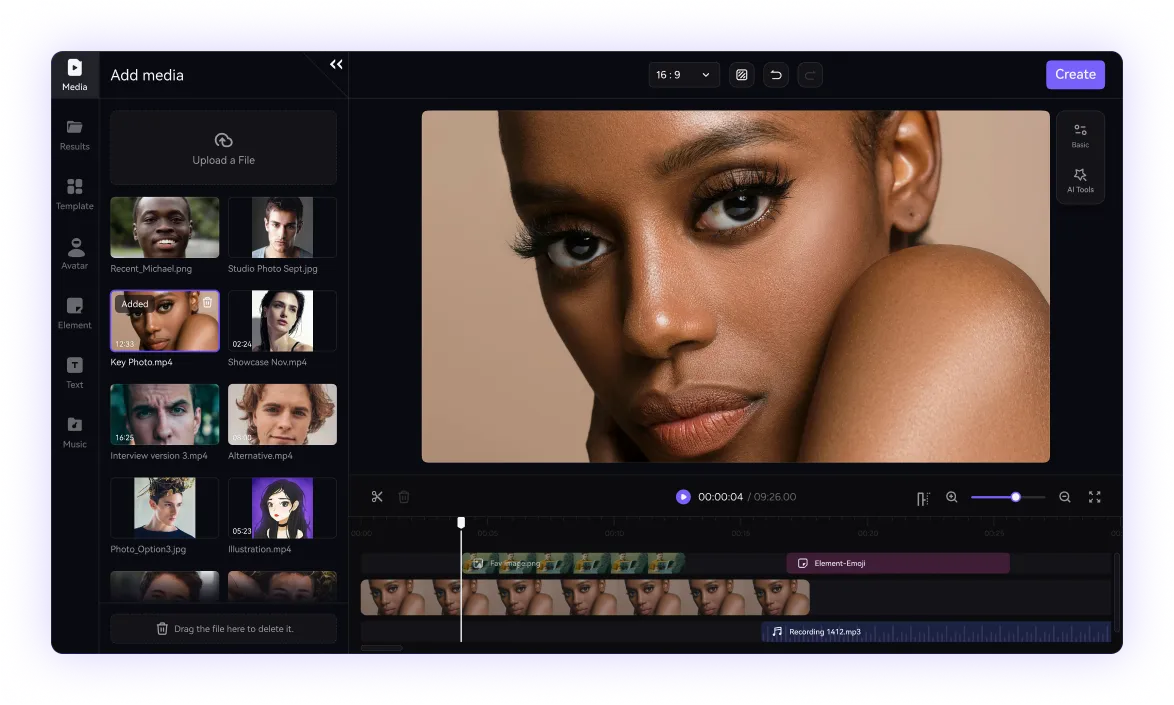
Akool is the most technically adventurous tested tool on this list. The Palo Alto company hit #1 on the 2025 Inc. 5000 with reported $40M ARR and runs campaigns for brands like Coca-Cola and Qatar Airways. Its face-swap engine is among the most realistic available, its dubbing covers 155-plus languages with synced lip movement, and its 2026 Live Camera feature applies an AI face in real time during calls with sub-frame latency.
Akool at a glance
| Aspect | Details |
|---|---|
| Core use | Face swap, talking avatars, real-time streaming, video translation |
| Signature trick | Live Camera real-time face transformation on video calls |
| Languages | 155+ for translation and dubbing |
| Pricing | Free (watermarked); Pro from $30/mo, credit-based up to enterprise |
| Watch-outs | Opaque credit system; rendering occasionally lags; narrower creative range |
Where it wins: Privacy-conscious creators and brands needing personalized, multilingual, or face-swapped video at scale. The live avatar capability is genuinely unique in 2026.
Where it frustrates: It is laser-focused on talking-head and face-swap output. Want cinematic clips or conversational, describe-it-in-words generation and you will reach for something else.
Reviewer verdict: Capterra and G2 users single out the avatar realism and lip-sync quality; the recurring critique is rendering speed and credit costs creeping up with heavy use.
Revid AI — built for faceless channels that publish daily
Founded in Paris by serial entrepreneur Thibault Louis-Lucas (“Tibo”), Revid AI evolved out of Typeframes with a single mission: mass-produce viral short-form video. It turns text, URLs, Reddit threads, and podcasts into TikToks and Shorts, leaning on a library trained on millions of viral clips. Its “Script-to-Post” automation is the closest thing here to a hands-off content engine.
Revid AI at a glance
| Aspect | Details |
|---|---|
| Core use | High-volume faceless short-form (TikTok, Reels, Shorts) |
| Signature trick | Reddit, URL, and podcast-to-video plus auto-publishing workflows |
| Voices | 50+ AI voices, ElevenLabs integration on higher tiers |
| Pricing | Free plan; Starter $29/mo (10 videos); Pro $59/mo (30 videos) |
| Watch-outs | Mixed reliability reports; some users cite unclear costs and occasional tool glitches |
Where it wins: Creators running automated, faceless channels who need volume more than perfection. The viral-remix library gives performance-tested reference material no single competing tool matches.
Where it frustrates: Quality is inconsistent and some reviewers report functionality hiccups and surprise fees, so test the free plan before committing.
Reviewer verdict: Feedback splits sharply: fans praise the speed of going idea-to-published, while a SelectHub aggregate logs a 44% satisfaction score citing reliability and pricing clarity.
Three comparisons that actually decide it
Specs are easy to list. What matters is how these tools stack up on the dimensions creators feel day to day: realism, value, and how much they handle for you. Here is how DupDub and its five challengers line up.
Comparison 1 — Output realism and avatar quality
| Tool | Avatar realism | Best output type |
|---|---|---|
| HeyGen | Excellent (Avatar IV) | Lifelike talking presenters |
| Synthesia | Very good | Clean corporate avatars |
| Akool | Very good + face swap | Personalized & swapped faces |
| Pippit | Good | UGC-style product ads |
| Revid AI | Basic | Faceless stock-driven clips |
| DupDub | Fair (lip-sync slips) | Voice-led explainers |
Comparison 2 — Value and credit honesty
| Tool | Entry price | Credit pressure |
|---|---|---|
| DupDub | $11/mo | Moderate |
| Pippit | ~$24/mo | High on avatars |
| HeyGen | $29/mo | High (Avatar IV) |
| Synthesia | $29/mo | Tight minute caps |
| Revid AI | $29/mo | Reported surprises |
| Akool | $30/mo | Opaque, scales up |
Comparison 3 — How much automation you get
| Tool | Automation level | Who it frees up |
|---|---|---|
| Revid AI | Very high | Faceless channel operators |
| Pippit | High | E-commerce sellers |
| HeyGen | Medium | Marketers & educators |
| Akool | Medium | Brand & live-video teams |
| Synthesia | Medium | L&D and corporate comms |
| DupDub | Medium | Solo content creators |
Matching the tool to the job
None of these is the universal winner, and that is the point. The right pick depends entirely on what you publish:
•Pick HeyGen if a believable human face carries your content and you can manage the credit math.
•Pick Synthesia if compliance, security sign-off, and multilingual training video are non-negotiable.
•Pick Pippit if you sell products and want ads generated straight from a listing URL.
•Pick Akool if face swap, live avatars, or heavy localization define your work.
•Pick Revid AI if you run faceless channels and need raw publishing volume.
One practical caution cuts across all of them: the credit meter is where budgets quietly break. Every platform here, DupDub included, advertises a headline price that assumes light use, then bills the real work in credits or capped minutes. Before committing to an annual plan, run a single realistic project through the free tier and watch how fast the balance drops. That fifteen-minute test reveals more about true monthly cost than any pricing page.
One number that explains the whole scramble
Every one of these tools is racing because the ground is moving under them. The global AI video generator market sat at roughly $717 million in 2025 and is projected to reach about $847 million in 2026, on its way to $3.35 billion by 2034, an 18.8% compound annual growth rate. North America holds roughly 41% of that spend. The kicker: production costs have collapsed, with a 60-second marketing video that once took around 13 days now rendering in under half an hour.
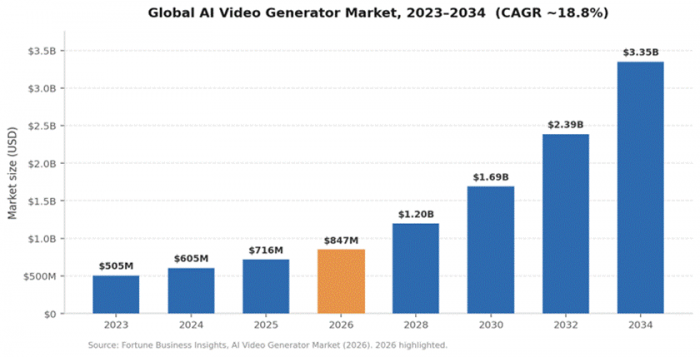
Figure 1. Market trajectory based on Fortune Business Insights data; 2026 highlighted.
The verdict after living with all five
If forced to keep only one, it would be HeyGen, because the gap between an Avatar IV render and an actual recording is now small enough that it changed which projects felt worth doing at all. That said, the honest answer is that DupDub never got fully uninstalled. It still handles quick multilingual voiceovers cheaply, and at $11 a month it is hard to resent.
What changed is the assumption that one tool should do everything. The week of testing turned into a small stack: HeyGen for anything client-facing, Pippit when a product needed an ad yesterday, and Revid for the faceless channel that just needs to keep posting. The market data backs the instinct, this category is nearly doubling by the end of the decade, and specialization is winning. The best move in 2026 is not finding the perfect DupDub replacement. It is being honest about what each video is for, and reaching for the tool that was built for exactly that.
Post Comment
Be the first to post comment!