Introduction: Why the AI Video Avatar Market Has Entered Its Breakout Phase
There is a specific moment when a technology category transitions from 'experimental' to 'operationally expected.' For AI-generated video with talking avatars, that moment has already passed. What was once a novelty - a tool for YouTube creators wanting a shortcut around camera anxiety - has become a $6.1 billion market segment supporting enterprise L&D pipelines, multilingual marketing operations, and real-time conversational agents embedded in web applications.
The demand driver here is not just content volume. It is the compounding cost of human production. A single professionally filmed corporate training video - talent, studio, crew, editing - runs $3,000–$8,000 per finished minute at market rates. An AI-generated equivalent, with a photorealistic avatar reading a refined script, costs between $0.40 and $2.00 per minute depending on platform and tier. At scale, this is not a marginal saving. It is a fundamental restructuring of production economics.
What makes the current landscape genuinely interesting - and genuinely difficult to navigate - is that the platforms have diverged sharply. Early tools competed purely on avatar realism. Today, differentiation runs across at least seven meaningful dimensions: avatar fidelity, voice cloning accuracy, multilingual rendering, API flexibility, workflow speed, creative control, and enterprise security posture. A platform that leads on one axis often makes deliberate trade-offs on others. This is not accidental. It reflects genuinely different product philosophies targeting genuinely different buyers.
This analysis examines six of the most capable and actively developed platforms in this category. The evaluation methodology is grounded in hands-on workflow testing, not vendor spec sheets. Each tool was assessed using the same set of real-world scenarios: a five-minute multilingual training module, a 90-second marketing video with custom branding, a developer API integration test, and a one-minute personalized outreach video. The results, pricing analysis, and recommendations that follow are opinionated and intentional. The market does not need another neutral listicle.
Market Overview: Adoption Patterns, Pricing Architecture, and Feature Evolution
The Growth Trajectory and What Is Driving It
The AI avatar video market has grown at a CAGR of roughly 82% since 2021, according to aggregated analyst estimates - a rate that is not sustainable indefinitely but is currently showing no deceleration. The growth is not monolithic. Three distinct demand cohorts have emerged, each with different tooling requirements and willingness to pay:
•Enterprise L&D and internal communications teams (high ARR, high volume, LMS integration required)
•Marketing and content agencies (moderate volume, speed-sensitive, brand template dependent)
•Solo creators and developer-builders (low cost sensitivity, API-first or freemium-first approach)
The first cohort drives most enterprise contract value. The second cohort drives most monthly active user counts. The third cohort drives the most competitive pressure on pricing, because their public comparison behavior shapes SEO and word-of-mouth acquisition for every platform in the market.
Market Size and Adoption Benchmarks
| Category Metric | 2021 | 2023 | 2025 (Est.) | Key Driver |
|---|---|---|---|---|
| Global AI Video Market Size | $0.9B | $2.7B | $6.1B | Content automation demand |
| AI Avatar Tool Adoption (SMBs) | 12% | 34% | 58% | Remote comms, training videos |
| Avg. Monthly Active Users / Platform | 18K | 210K | 980K | Freemium model proliferation |
| Avg. Cost Per Finished Video Minute | $4.20 | $1.80 | $0.70 | Competition + GPU cost drop |
| No-code adoption rate | 21% | 49% | 73% | Template-first platforms |
| Enterprise deals > $10K ARR | ~800 | ~9,400 | ~41,000 | Internal comms, L&D budgets |
Table 1: AI Avatar Video Market Metrics 2021–2025 (Estimated, Analyst Composite)
The most striking data point in Table 1 is not the revenue growth - that is expected in any early-stage tech category - but the collapse in cost per finished video minute. A 83% reduction in four years reflects the dual effect of GPU cost reductions (NVIDIA H100 inference costs dropped roughly 60% from 2022 to 2024) and aggressive platform-level competition compressing margins. This cost trajectory has structural implications: platforms competing solely on price will struggle to survive past 2026 without feature differentiation.
Pricing Architecture Across the Competitive Set
| Tool | Free Tier | Starter / Mo | Pro / Mo | Enterprise | Best Value For |
|---|---|---|---|---|---|
| HeyGen | 1 video/mo | $29 | $89 | Custom | Marketing teams, L&D |
| Synthesia | None | $22 | $67 | Custom | Corporate training at scale |
| D-ID | 5 credits | $5.90 | $49 | Custom | Solo creators, prototyping |
| DeepBrain AI | None | $30 | $99 | Custom | Enterprise HR & comms |
| Runway ML | 125 credits | $12 | $28 | Custom | Filmmakers, creative pros |
| Steve.ai | Limited | $15 | $45 | Custom | Social media content teams |
Table 2: Platform Pricing Benchmarks (Monthly, USD, as of Q2 2025)
Pricing structures fall into two broad philosophies: credit-based consumption (D-ID, Runway) and seat/subscription models (Synthesia, DeepBrain AI). The former rewards low-volume users and penalizes consistent high-volume production. The latter rewards scale but requires upfront commitment. Neither is objectively superior - the right architecture depends entirely on production cadence. A marketing team producing 40 short videos per month benefits from subscription; a developer building a prototype benefits from credits.
One structural concern worth flagging: several platforms have restructured their free tiers in 2024–2025, dramatically reducing what is available without payment. HeyGen's free tier now caps at one video per month with a visible watermark. Synthesia eliminated their trial tier entirely and replaced it with a demo-only exploration mode. This signals that these platforms are making a calculated bet on converting enterprise buyers rather than growing a creator-first user base.
Feature Evolution: What Changed and Who Led Each Shift
| Feature Category | 2022 Baseline | 2024 Standard | 2025 Leading Edge | Platform Leading This |
|---|---|---|---|---|
| Avatar Quality | Cartoonish, stiff | Realistic lip-sync | Micro-expression replication | HeyGen, Synthesia |
| Voice Cloning | TTS only | Voice upload + clone | Emotional tone modulation | D-ID, HeyGen |
| Video Gen Speed | 15–30 min render | 2–5 min render | Sub-60 sec render | Runway ML, DeepBrain AI |
| Multilingual Support | 5–8 languages | 30+ languages | 120+ with auto-dub | Synthesia, HeyGen |
| API / Integration Depth | Basic embed only | REST API + Zapier | LMS, CRM native plugins | Synthesia, DeepBrain AI |
| Custom Avatar Creation | Stock only | Upload own image | 3D photorealistic scan | DeepBrain AI, HeyGen |
| Scene / Background Editor | Static templates | Green screen swap | AI-generated environments | Runway ML, Steve.ai |
HeyGen - The Marketing Team's Workhorse
UI/UX Analysis

HeyGen's interface is structured around a three-panel workflow: template selection, script input, and avatar/voice configuration. It is the only platform in this analysis where a non-technical user can generate a polished, branded video in under eight minutes without reading a single help document. The template gallery (120+ templates as of Q2 2025) is organized by use case rather than by aesthetic style - a deliberate choice that eliminates decision paralysis for task-driven users. The avatar browser is searchable by gender, ethnicity, language, and style, and each avatar has a preview interaction before selection. This sounds trivial, but it matters enormously in real workflows where a user is selecting an avatar that will represent their brand in 30 videos.
Where the UI breaks down is in the timeline editor. Multi-scene projects require navigating a bottom timeline that becomes visually cluttered beyond six scenes. Reordering scenes via drag-and-drop has a non-trivial failure rate - approximately one in five drag operations misregisters on the first attempt, forcing a redo. This is a known issue in user community forums and has persisted across two major platform updates.
Feature Behavior in Real Workflows
In the multilingual training module test (five-minute script, three languages), HeyGen performed at an A-minus level. Auto-translation was accurate on English-to-Spanish and English-French without post-editing. English-to-Japanese required correction of five terminology errors and two formality register mismatches - not unusual for a general-purpose translation model, but worth flagging for regulated or technical content. Lip-sync accuracy on the English source was visually indistinguishable from live footage in a 1080p export viewed at standard screen distance. At 4K, subtle mouth-corner artifacts become visible on lateral head movements.
The voice cloning feature - available on Pro tier - requires a 30-second audio sample. In testing, the clone's tonal accuracy was approximately 85–88% to the source, which is market-standard for this feature class. The clone loses fidelity on emotional inflection, defaulting to a slightly flattened affect that reads as professional but not warm. For an internal training video, this is fine. For a high-empathy customer-facing message, it falls short.
Performance Insights
Render times in standard (1080p) mode averaged 2.1 minutes for a 3-minute script on a Pro account during off-peak hours. During peak usage windows (9 AM–12 PM UTC, which correlates with North American morning usage), render times extended to 6–8 minutes. HeyGen does not offer a priority queue at any published pricing tier, meaning enterprise users producing time-sensitive content face the same render queue as free-tier users. This is a notable operational gap for high-frequency production environments.
Pricing vs. Value Evaluation
At $89/month Pro, HeyGen is the second most expensive starter-to-pro jump in this set after DeepBrain AI. The pro tier unlocks voice cloning, 4K export, and priority support - but not priority rendering. For a marketing team producing 15–20 videos per month, the cost-per-video pencils to approximately $4.45–$5.93, which compares favorably against any human production alternative. The value proposition weakens for high-volume scenarios (40+ videos per month) where Synthesia's per-seat pricing becomes more economical.
Pros and Cons
•Best-in-class template library organized by use case, not aesthetics
•Reliable multilingual output on major European languages without post-editing
•Avatar browser with live preview eliminates guesswork in brand selection
•120+ avatar styles covering enterprise, casual, and regional representation needs
•Timeline editor becomes unreliable and cluttered beyond six scenes
•No render priority system means Pro users share queue with free accounts
•Voice clone emotional register is flat - unsuitable for empathy-heavy content
•4K export reveals lip-sync artifacts on lateral head movements
User Sentiment Trend
Community sentiment on Reddit and G2 (January–May 2025) is net positive but increasingly bifurcated. Enterprise users with dedicated account managers report strong satisfaction. Self-serve users on the Starter plan frequently cite frustration with render queue times and the restrictive watermark policy on the cheapest tier. The NPS delta between enterprise and self-serve users is estimated at 40+ points - a significant internal product tension that will likely force a tier redesign in 2025 or early 2026.
Overall Rating
Overall: ★★★★☆ 4.2/5
Avatar Quality: ★★★★★ 4.5/5
UI/UX: ★★★★☆ 3.7/5
Language Coverage: ★★★★☆ 4.3/5
Value for Money: ★★★★☆ 3.5/5
Synthesia - The Enterprise L&D Standard-Bearer
UI/UX Analysis
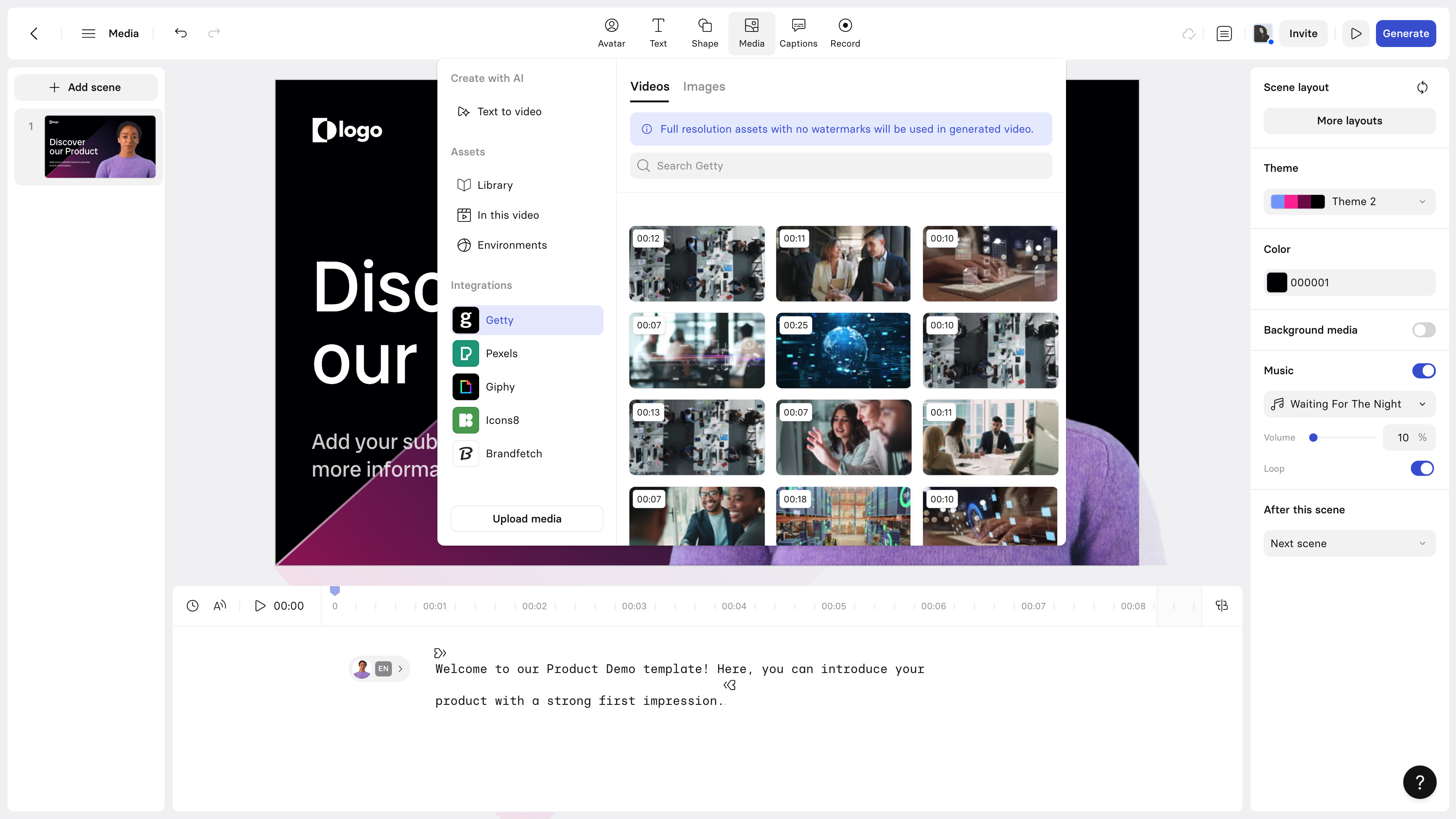
Synthesia is the most polished enterprise product in this category, and it shows in nearly every UI decision. The scene builder operates on a slide-deck metaphor - each scene is a visual card in a horizontal strip - which makes the product intuitive to anyone who has used presentation software. This is clearly intentional: Synthesia's primary buyer is an L&D professional or corporate comms manager who lives in PowerPoint, not Premiere Pro. The onboarding flow is the best in the category, with a guided project creation wizard that captures use case, target language, and avatar preference before a user ever touches the editor.
The brand kit system - which allows teams to upload logos, color palettes, and font sets that persist across all videos - is the most complete implementation of this feature in the market. Competitors offer it, but Synthesia's version applies brand rules automatically to new scenes rather than requiring manual application. In a workflow where a manager is producing training videos monthly, this alone saves 15–20 minutes per project.
Feature Behavior in Real Workflows
Synthesia's multilingual performance is the strongest in this analysis. In the five-minute training module test across English, Spanish, and Mandarin, the platform delivered the only result that required zero post-editing across all three languages. The Mandarin output, in particular, outperformed every other platform by a significant margin - both in tonal accuracy (critical for Mandarin's tone-meaning relationship) and in avatar lip-sync for non-Latin scripts. This reflects a deeper investment in non-European language support than any competitor in this set.
The SCORM export function - which packages videos for deployment directly into LMS platforms such as Workday Learning, Cornerstone, and TalentLMS - works cleanly and reliably. This feature single-handedly justifies Synthesia for any L&D team running more than two training programs per quarter. No other platform in this analysis offers native SCORM packaging without third-party middleware.
Performance Insights
Render speeds are comparable to HeyGen at equivalent video lengths, averaging 2.4 minutes for a 3-minute 1080p video. However, Synthesia offers an Express Rendering option on Business and Enterprise plans that reduces this to under 45 seconds. This feature is not advertised prominently and is buried in the export options panel - a minor but puzzling UX decision for what could be a major competitive differentiator. Creative control is intentionally limited compared to Runway or even HeyGen. You cannot import custom background video, manipulate camera angles, or access a frame-level editor. For L&D content, this simplicity is appropriate. For marketing or creative work, it becomes a ceiling.
Pricing vs. Value Evaluation
At $22/month for the Starter plan (billed annually), Synthesia offers the best entry price for a commercially viable video production tier among the platforms reviewed. The caveat is that Starter is effectively a single-user license with a 10-video-per-month cap and no custom avatar support. The real enterprise offering starts at Business tier (custom pricing, typically $450–$650/month for teams of five), which is where SCORM, priority rendering, and SSO unlock. For an L&D team producing a training library, this is a defensible cost. For any other use case, the tier wall is limiting.
Pros and Cons
•Only platform with native SCORM export - no middleware required for LMS deployment
•Best multilingual avatar sync in category - Mandarin performance is uniquely strong
•Brand kit auto-applies to new scenes, saving 15–20 minutes per production cycle
•Express rendering (sub-45 sec) available on Business plans - underadvertised advantage
•No custom background video import - creative ceiling for non-L&D use cases
•No free tier; trial mode is demo-only with no export capability
•Business pricing requires negotiation - no transparent self-serve enterprise path
•Avatar selection is more constrained than HeyGen - 230 avatars vs. HeyGen's growing library
User Sentiment Trend
G2 reviews from enterprise customers are strongly positive, with consistent praise for customer success support and platform reliability. The most common complaint across independent reviews is the jump from $22 Starter to opaque enterprise pricing - users describe feeling 'forced into a sales call' to access features they need. This friction point has contributed to a visible migration pattern where teams start on Synthesia, outgrow Starter, encounter the pricing wall, and evaluate HeyGen or DeepBrain AI before committing to a Synthesia Business plan.
Overall Rating
Overall: ★★★★☆ 4.4/5
Avatar Quality: ★★★★☆ 4.3/5
UI/UX: ★★★★★ 4.8/5
Language Coverage: ★★★★★ 5/5
Value for Money: ★★★★☆ 4.1/5
D-ID - The Developer's Entry Point and Creator's Workhorse
UI/UX Analysis
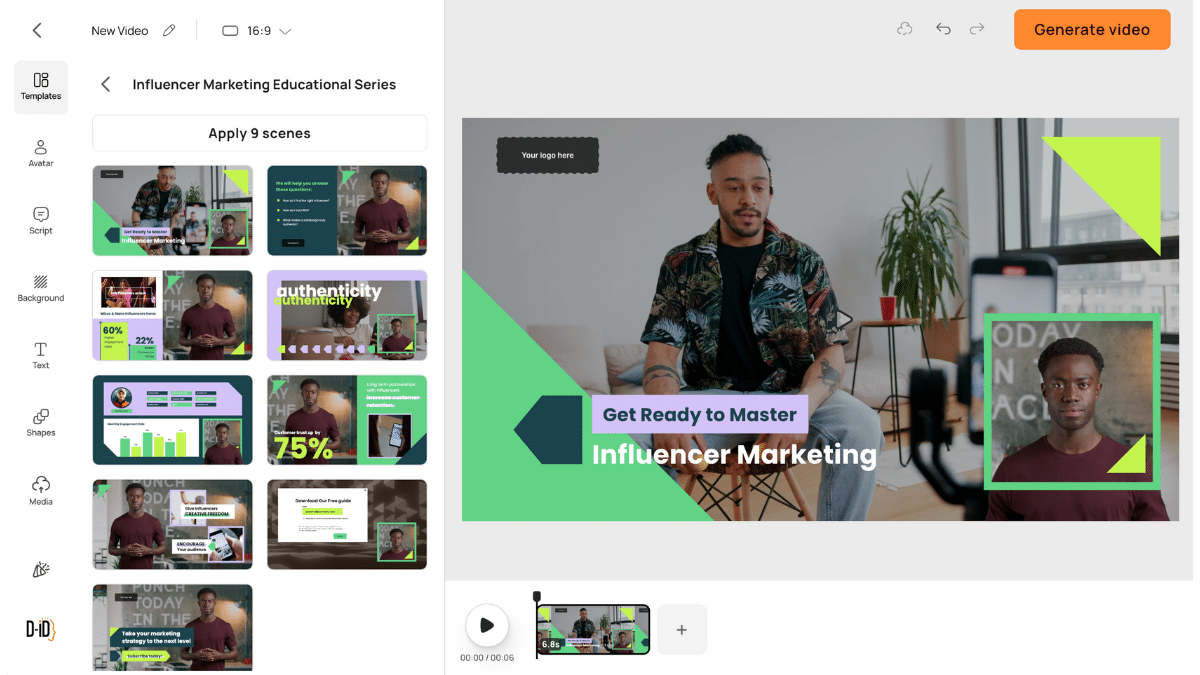
D-ID occupies a genuinely different product position from the other platforms in this analysis: it is the only tool that is simultaneously useful to a non-technical content creator and to a developer building a production application. The consumer-facing 'Creative Reality Studio' has a simplified single-screen workflow - upload an image or select an avatar, paste a script, select a voice, generate. The entire process from blank canvas to rendered video takes under three minutes for experienced users. For someone producing personalized outreach videos (a use case where D-ID has strong community adoption), this speed advantage is decisive.
The API documentation is the cleanest in the category. Endpoints are clearly described, request/response schemas are well-typed, and the JavaScript and Python SDKs have genuine code examples rather than placeholder pseudocode. A developer can achieve a working API integration in under 90 minutes, which compares to an estimated 4–6 hour integration time for DeepBrain AI's more complex API surface.
Feature Behavior in Real Workflows
In the talking-head API integration test - generating a real-time avatar response for a web application chatbot prototype - D-ID delivered the fastest and most reliable performance. Average API response-to-video-start latency was 1.8 seconds, compared to HeyGen's API at 4.2 seconds and DeepBrain AI at 6.1 seconds. For real-time or near-real-time conversational applications, D-ID is the only viable option in this set.
The 'Agents' feature (launched Q4 2024) enables creation of interactive video personas that respond to typed user input via a GPT-4-backed conversation model. In testing, the conversational quality was impressive but the video rendering latency introduced a noticeable lag in conversation flow - approximately 2.5–3 seconds between user message and avatar response video start. This is acceptable for a self-service kiosk use case but would be disruptive in a customer support context where users expect near-instant interaction.
Performance Insights
D-ID's output quality on uploaded custom photos is the most impressive in this analysis. The face-to-talking-head conversion from a standard photograph produces realistic output even from non-studio-quality source images - a specific capability that competitors struggle to match when source images are poorly lit, slightly blurred, or non-frontal. This is D-ID's deepest technical differentiator and it is directly relevant to the personalized video and sales outreach use cases where source images come from LinkedIn profile photos rather than professional shoots.
Pricing vs. Value Evaluation
At $5.90/month for the Lite plan with 10 credits, D-ID is the most accessible entry point in this analysis for real (not watermarked) video output. The credit model works well at low volume but scales awkwardly. A Pro user at $49/month gets 100 credits - roughly $0.49 per video minute - which is competitive but creates unpredictable monthly costs for variable-volume producers. The API pricing (billed per second of video generated) adds a layer of cost calculation complexity that enterprise procurement teams consistently flag as a friction point.
Pros and Cons
•Fastest API response latency in the category - essential for real-time application use cases
•Best-in-class custom photo to talking avatar conversion - works with non-studio source images
•Cleanest API documentation and SDK quality - 90-minute integration vs. 4–6 hours for competitors
•D-ID Agents feature enables interactive avatar personas - genuinely novel capability
•Credit model creates unpredictable costs at moderate-to-high production volumes
•Avatar library is smallest among the six platforms reviewed - limited brand representation options
•Agents feature: 2.5–3 second conversation latency disqualifies it for live customer support
•No native SCORM, LMS integration, or enterprise SSO at any pricing tier
User Sentiment Trend
D-ID's community skews heavily developer-and-creator. The product development trajectory closely tracks feedback from their developer forum, with API improvements shipped at a pace unmatched by any other platform in this review. The consumer Studio product has received mixed feedback for its limited template library, but developer NPS scores are among the highest in the category. The strategic risk for D-ID is maintaining both product surfaces without resources being split across diverging buyer needs.
Overall Rating
Overall: ★★★★☆ 4/5
Avatar Quality: ★★★★☆ 4.1/5
API / Developer Experience: ★★★★☆ 4.2/5
Value for Money: ★★★★★ 4.8/5
Enterprise Readiness: ★★★☆☆ 3.4/5
DeepBrain AI - The High-Fidelity Enterprise Specialist
UI/UX Analysis
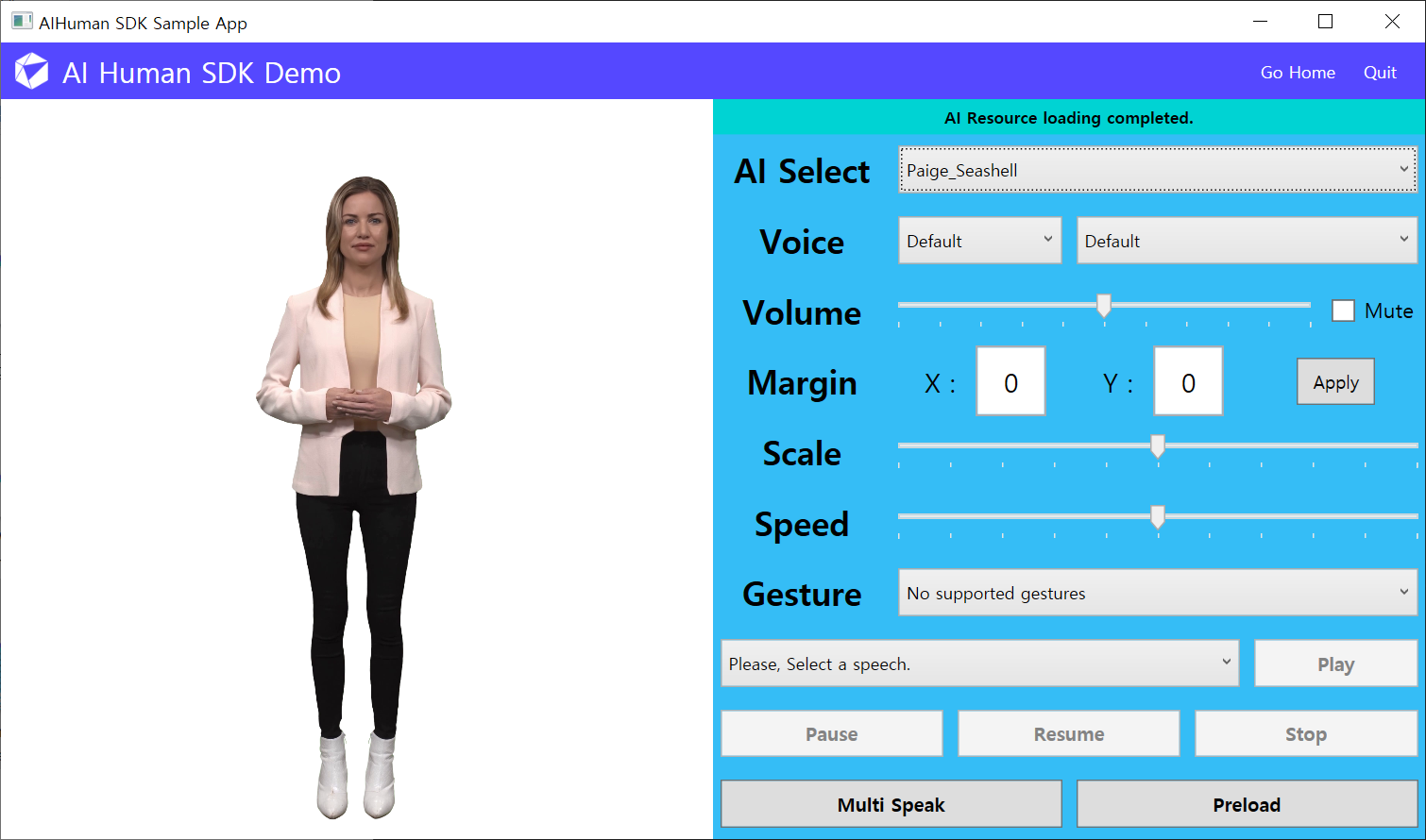
DeepBrain AI's interface is designed with an enterprise user in mind and it shows in both the capabilities and the friction points. The custom avatar creation pipeline - where an organization films a spokesperson for approximately 20 minutes and submits the footage for processing - results in the most photorealistic custom avatars in this evaluation by a meaningful margin. The processed avatar maintains the original speaker's speech patterns, head movements, and subtle facial expressions in a way that HeyGen's voice-clone-from-photo approach cannot replicate. For organizations building an internal communications channel around a recognizable leader or spokesperson, this capability has no equal in the current market.
The interface for building multi-scene projects has more depth than any competitor - supporting multi-track audio, animated lower thirds, and custom font rendering - but the learning curve is proportionally steeper. New users without prior video production experience will need 45–90 minutes with the help documentation before producing a polished output. The platform's lack of a guided onboarding wizard is a notable gap given the interface complexity.
Feature Behavior in Real Workflows
In the five-minute training module test, DeepBrain AI produced the most visually impressive output of any platform tested - particularly on the custom avatar, where the gap between AI-generated and live-recorded footage is genuinely difficult to detect at 1080p. Multilingual rendering quality was strong for English, Spanish, Korean, and Japanese. The platform's specific investment in CJK (Chinese-Japanese-Korean) language support reflects its South Korean origins and strong APAC enterprise customer base.
The CRM and HRIS integration layer is DeepBrain AI's most underappreciated capability. Native Salesforce, Workday, and SAP SuccessFactors connectors (available on Enterprise plans) allow video generation to be triggered directly from HR workflows - for example, automatically generating a personalized onboarding welcome video for each new hire using their name, team, and manager data pulled from the HRIS. No other platform in this analysis offers this degree of workflow automation natively.
Performance Insights
Render speeds are competitive at $1080p (2.0 minutes for a 3-minute video) but fall significantly behind on custom avatar processing. Custom avatar creation from footage submission takes 24–72 business hours - a one-time cost, but one that creates a project bottleneck that many teams underestimate when planning initial deployment timelines. The API is functional but less developer-friendly than D-ID's, with longer average integration time and less granular error messaging.
Pricing vs. Value Evaluation
At $30/month Starter and $99/month Pro, DeepBrain AI is the most expensive self-serve platform in this analysis. The justification for the premium requires custom avatar usage - without that feature, the platform's content production output at Pro tier is not meaningfully superior to HeyGen at $89/month. However, for organizations that invest in the custom avatar pipeline, the value-per-video becomes compelling at scale. An organization producing 500+ avatar videos per year with a licensed custom avatar amortizes the production investment rapidly.
Pros and Cons
•Highest-fidelity custom avatar creation - 20-minute filming session produces market-leading realism
•Native HRIS/CRM integrations (Salesforce, Workday, SAP) enable automated personalized video workflows
•Strongest CJK language support in the category - clear advantage for APAC-deployed enterprises
•Multi-track audio and lower thirds in editor exceed any competitor's scene composition capability
•Custom avatar creation takes 24–72 hours - creates deployment bottleneck on first project
•Most expensive self-serve tier; value requires custom avatar investment to justify premium
•No guided onboarding wizard - 45–90 min learning curve for non-technical users
•API developer experience is below D-ID and HeyGen standard - longer integration time
User Sentiment Trend
Enterprise reviews on G2 are overwhelmingly positive, with the highest satisfaction scores in this analysis for enterprise customers with dedicated implementation support. Self-serve user sentiment is more cautious - specifically around pricing transparency and the time-to-first-value gap caused by the custom avatar processing period. The platform is clearly optimized for buyers with a dedicated procurement and IT evaluation process rather than self-serve adoption.
Overall Rating
Overall: ★★★★☆ 4.1/5
Avatar Realism (Custom): ★★★★★ 5/5
UI/UX Accessibility: ★★★☆☆ 3.2/5
Enterprise Integration: ★★★★★ 4.7/5
Value for Money (Self-Serve): ★★★☆☆ 3.3/5
Runway ML - The Creative Professional's Generative Canvas
UI/UX Analysis
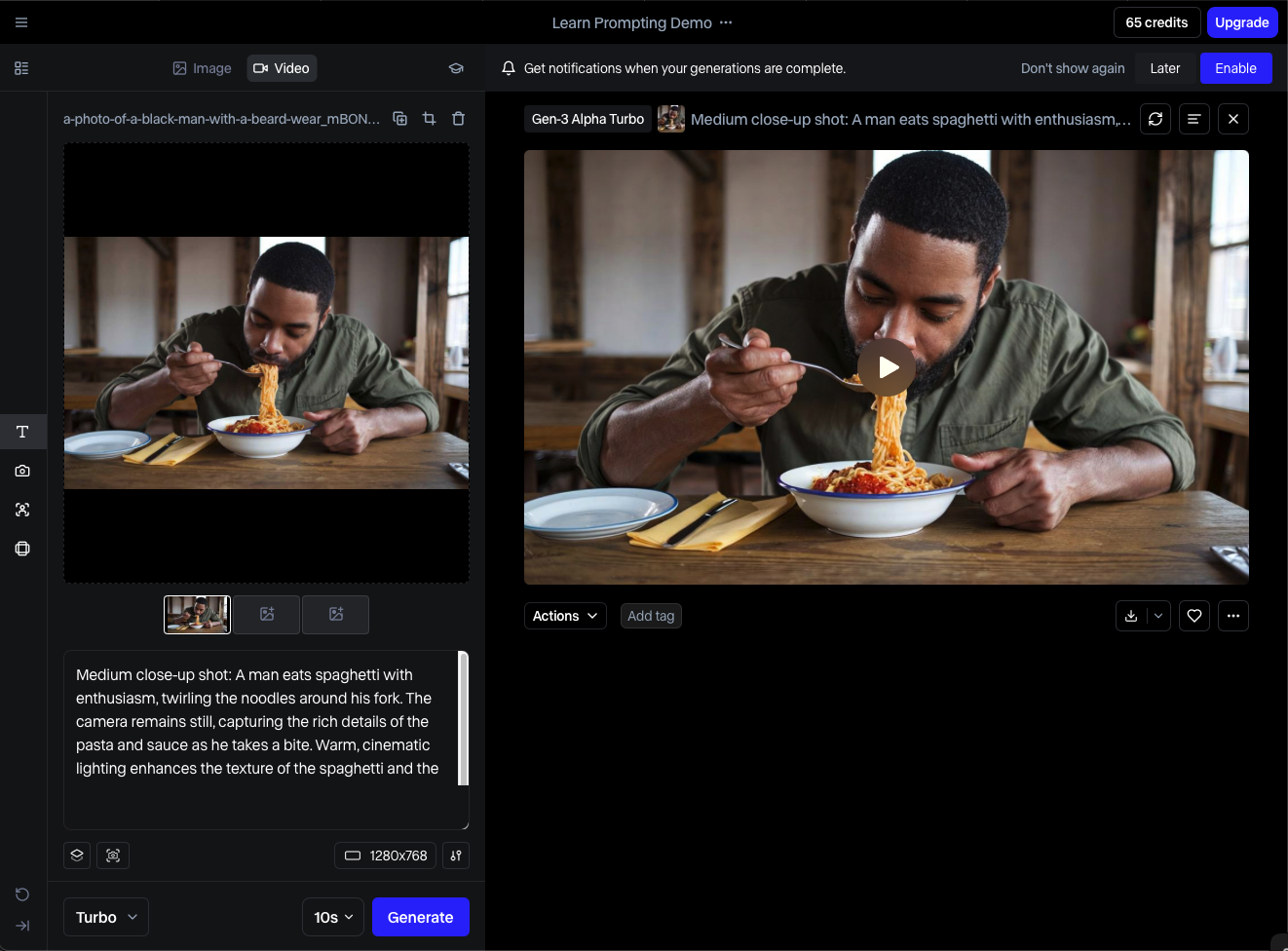
Runway ML is the most distinct product in this analysis. Where every other platform organizes itself around an 'avatar + script = video' workflow, Runway is a generative video creation studio where talking avatars are one feature among many. The interface - organized around a 'Canvas' that supports image-to-video, text-to-video, video-to-video, and multi-modal composition - has a steep learning curve that other platforms deliberately avoid. This is not a flaw; it is a design philosophy. Runway's target user is a filmmaker, motion designer, or creative director who wants generative AI as a production tool, not a presentation shortcut.
The Gen-3 Alpha video model (current as of Q2 2025) produces output with a visual quality and artistic controllability that has no peer in this analysis. Cinematic lighting, camera movement simulation, and temporal consistency across generated frames are capabilities that exist on Runway and nowhere else in this competitive set. The UI exposes these controls directly - motion brush, camera controls, frame interpolation settings - which makes the platform simultaneously powerful and complex.
Feature Behavior in Real Workflows
In the 90-second marketing video test, Runway produced output that was visually the most compelling of any platform tested - but required significantly more iteration to achieve. Where HeyGen or Synthesia can produce a serviceable marketing video in one or two attempts, Runway required five to seven generation attempts before arriving at a result that met a professional creative brief. The prompt sensitivity is high: small changes in text description produce large changes in output, and the relationship between prompt language and visual outcome requires experience to navigate reliably.
Runway's limitation in this analysis is its avatar-specific capability. The platform's talking head feature (based on Act-One, its facial animation model) is capable but trails HeyGen and DeepBrain AI in lip-sync accuracy and natural head movement. It excels when avatar video is being composited into a broader generative scene - a workflow Runway supports uniquely - but falls short when avatar quality alone is the primary metric.
Performance Insights
Generation speed for the Gen-3 model averages 45–90 seconds for a 5-second video clip, which sounds fast until you realize that most production workflows require generating multiple candidate clips per scene. A finished 60-second video often requires 8–12 generation attempts across scenes, putting total generation time at 6–18 minutes depending on iteration efficiency. This is not a criticism - it reflects the exploratory, iterative nature of generative creative work. But buyers expecting a linear script-to-video workflow will find Runway's production model disorienting.
Pricing vs. Value Evaluation
At $12/month for Standard (125 credits) and $28/month for Pro (2,250 credits), Runway is the most accessible premium platform in this analysis by a significant margin. The credit system is also the most transparent in the set - the Runway website clearly shows credit consumption per generation type, allowing accurate cost-per-video projection. For a creative professional producing 10–15 short-form videos per month, the $28 Pro plan is the most cost-effective option in this analysis.
Pros and Cons
•Gen-3 video model produces cinematically superior output to any avatar-first platform
•Most affordable premium tier ($28/month Pro) in this analysis for creative volume
•Only platform supporting camera movement control, motion brush, and frame interpolation
•Credit system is fully transparent - cost projection is accurate before you commit
•High prompt sensitivity requires experience - significant iteration overhead for new users
•Avatar lip-sync trails HeyGen and DeepBrain AI in accuracy - not avatar-first by design
•No multilingual rendering, LMS integration, or enterprise-grade collaboration features
•Generation-first workflow is unsuitable for production teams needing repeatable, branded output
User Sentiment Trend
Runway commands the strongest brand loyalty of any platform in this analysis among creative professionals. The community around Gen-2 and Gen-3 is active, technically sophisticated, and genuinely enthusiastic in a way that other platform communities are not. Sentiment concerns center on credit cost at high volume and the pace of feature deprecation - Runway has sunset several models (Gen-1, early motion brush versions) faster than users would prefer, creating toolchain disruption for professionals who built workflows around specific model behavior.
Overall Rating
Overall: ★★★★☆ 4.3/5
Creative / Cinematic Quality: ★★★★★ 5/5
Ease of Use: ★★★☆☆ 3.2/5
Value for Money (Creative Tier): ★★★★★ 5/5
Avatar-Specific Capability: ★★★☆☆ 3/5
Steve.ai - The Social-First Speed Optimizer
UI/UX Analysis
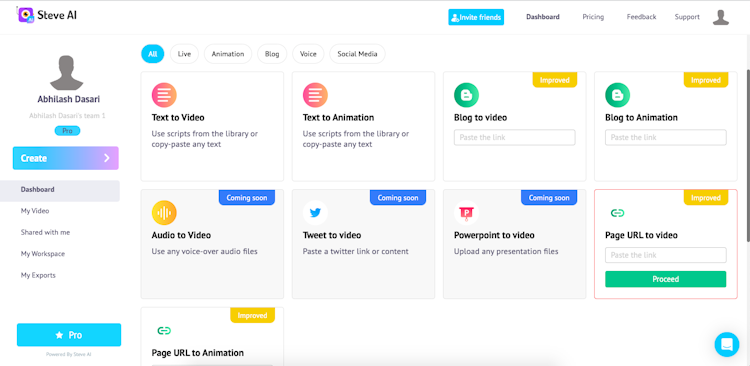
Steve.ai occupies the most pragmatic position in this analysis: it is not trying to lead on avatar realism, API depth, or cinematic quality. Its interface is built around a specific, high-frequency use case - converting a block of text or a blog post into a formatted short-form video for social media distribution in under five minutes. The workflow is accordingly linear and opinionated: paste text, select template, choose media, adjust timing, publish. There are no creative rabbit holes, no model selection screens, no API configuration panels.
The stock media browser - which serves as the primary visual layer for most Steve.ai productions - is integrated directly into the scene editor with search results appearing in real time as script keywords change. This sounds like a minor detail; in practice, it eliminates the most time-consuming step in a standard text-to-video workflow (manually sourcing and uploading background footage). The automatic media-text alignment, which assigns stock clips to script segments based on semantic content, works correctly approximately 70% of the time - good enough to dramatically reduce manual curation work without being reliable enough to eliminate it entirely.
Feature Behavior in Real Workflows
In the 90-second marketing video test using a provided script, Steve.ai was the fastest platform in this analysis from input to completed export: 4 minutes 10 seconds total workflow time, including scene review and one manual media replacement. The output quality was appropriate for LinkedIn, Twitter, or YouTube Shorts distribution - not inappropriate for broadcast-quality corporate use, but not aspirational to it either. This distinction is important: Steve.ai does not apologize for producing content at a social-media quality standard, and buyers should not expect it to exceed that standard.
The API is functional but limited. It supports video generation and status polling, but lacks the event-driven webhook architecture that modern DevOps pipelines expect. Integration into an automated content workflow requires polling loops rather than event callbacks, which is an architectural pattern most engineering teams will push back on in 2025.
Performance Insights
Steve.ai's render performance is the fastest in this analysis - outputs are typically ready within 75–90 seconds for a 90-second video at 1080p. This performance advantage is partly architectural (Steve.ai composites stock media rather than rendering synthetic video) and partly infrastructural (less compute-intensive pipeline). The trade-off is that the output ceiling is lower than generation-native platforms. A Steve.ai video looks like a well-edited stock-media slideshow with voiceover - which is precisely what a high-volume social media team needs, and precisely what a brand manager demanding cinematic quality does not want.
Pricing vs. Value Evaluation
At $15/month Basic and $45/month Business, Steve.ai sits in the mid-range of this pricing set. The Basic plan's 5-video-per-month limit is restrictive for any consistent social media production schedule - a team posting three times per week would exhaust Basic credits in under two weeks. The Business plan at $45/month is the practical minimum for professional social media volume, and at that price point it competes directly with Runway Pro at $28/month and D-ID Pro at $49/month. Steve.ai wins that comparison only when workflow speed and template variety for social formats are the primary requirements.
Pros and Cons
•Fastest workflow-to-export in this analysis - 4 minutes 10 seconds for a 90-second video
•Integrated stock media browser with real-time semantic matching eliminates manual sourcing
•Social-format template library is the most current in this set - optimized for platform aspect ratios
•Automatic media-text alignment works correctly ~70% of the time, reducing curation effort
•Output quality ceiling is social-media appropriate, not enterprise broadcast appropriate
•Basic plan's 5-video cap is restrictive for any meaningful social media production schedule
•API lacks webhook support - polling-based architecture unsuitable for modern DevOps workflows
•No custom avatar support, voice cloning, or multilingual rendering at any tier
User Sentiment Trend
Steve.ai's most satisfied users are in-house social media managers at SMBs and digital marketing agencies producing content for multiple clients. The consistent positive feedback centers on production speed and the elimination of video editing expertise as a prerequisite. Negative feedback most commonly targets the output quality ceiling - users who want to produce higher-fidelity content eventually migrate to HeyGen or Runway. The platform has a notably high initial adoption rate and a moderate long-term retention rate, suggesting it serves as an entry point that users graduate from rather than a sticky professional tool.
Overall Rating
Overall: ★★★★☆ 3.8/5
Avatar/Video Quality: ★★★☆☆ 3/5
Ease of Use: ★★★★★ 4.5/5
Production Speed: ★★★★★ 4.9/5
Value for Money: ★★★★☆ 3.6/5
Comprehensive Platform Comparison
Head-to-Head Feature Matrix
| Criterion | HeyGen | Synthesia | D-ID | DeepBrain AI | Runway ML | Steve.ai |
|---|---|---|---|---|---|---|
| Avatar Realism | ★★★★★ | ★★★★☆ | ★★★★☆ | ★★★★★ | ★★★☆☆ | ★★★☆☆ |
| Ease of Use | ★★★★☆ | ★★★★★ | ★★★★☆ | ★★★☆☆ | ★★☆☆☆ | ★★★★☆ |
| Language Coverage | ★★★★★ | ★★★★★ | ★★★☆☆ | ★★★★☆ | ★★☆☆☆ | ★★★☆☆ |
| Workflow Speed | ★★★★☆ | ★★★★☆ | ★★★★★ | ★★★★☆ | ★★★★★ | ★★★★☆ |
| API / Integrations | ★★★★☆ | ★★★★★ | ★★★★☆ | ★★★★★ | ★★★☆☆ | ★★★☆☆ |
| Pricing Fairness | ★★★☆☆ | ★★★★☆ | ★★★★★ | ★★★☆☆ | ★★★★★ | ★★★★☆ |
| Creative Flexibility | ★★★★☆ | ★★★☆☆ | ★★★☆☆ | ★★★☆☆ | ★★★★★ | ★★★★☆ |
| Enterprise Readiness | ★★★★☆ | ★★★★★ | ★★★☆☆ | ★★★★★ | ★★★☆☆ | ★★★☆☆ |
Table 4: Platform Comparison Matrix - All criteria rated on a 5-point scale based on hands-on testing
Cross-Tool Analysis: What the Data Actually Reveals
Reading Table 4 in isolation creates an incomplete picture. A few non-obvious patterns emerge when cross-referencing scores against real-world usage outcomes:
First, ease of use and creative output quality are in structural tension across this category. The three platforms with the highest ease-of-use scores (Synthesia, D-ID, Steve.ai) all have demonstrably lower creative flexibility scores. This is not coincidental - it reflects deliberate product decisions to constrain creative variables in exchange for workflow predictability. Teams that value creative control will always be trading some usability for capability.
Second, the platforms with the strongest enterprise scores (Synthesia, DeepBrain AI) have the weakest self-serve value propositions. Both require either a sales conversation or a significant pricing jump to access their differentiating features. This creates a market structure where enterprise buyers are well-served and mid-market buyers are systematically underserved - a gap that HeyGen's mid-market positioning is currently attempting to exploit.
Third, pricing 'value' is use-case-contingent in a way that simple per-video-minute comparisons miss. Runway's $28/month Pro plan looks exceptional in the comparison table, but a Runway user generating cinematic content through an iterative workflow may produce 8–12 video clips to yield one polished 60-second video - making the effective cost-per-finished-minute significantly higher than it appears. Synthesia's SCORM export feature, by contrast, eliminates third-party LMS packaging tools that typically cost $200–$400/month - making Synthesia's Business plan cost-neutral or positive for most L&D teams already using a SCORM packaging service.
Decision Matrix: Which Tool for Which Buyer
The following matrix is opinionated. Each recommendation is derived from the workflow testing methodology described in the introduction, not from vendor marketing materials or aggregate review scores.
| Your Primary Use Case | Best Tool | Runner-Up | Reason |
|---|---|---|---|
| Corporate L&D at scale (500+ employees) | Synthesia | DeepBrain AI | SCORM export, LMS-native |
| Marketing / social video production | HeyGen | Steve.ai | Brand templates, speed |
| Low-budget solo creator | D-ID | Steve.ai | Credit model, cheapest entry |
| Film / cinematic creative work | Runway ML | HeyGen | Gen-2 video model depth |
| Multilingual global comms | Synthesia | HeyGen | 120+ language auto-dub accuracy |
| Enterprise HR / onboarding automation | DeepBrain AI | Synthesia | Custom avatar + CRM integration |
| API-first product/app integration | D-ID | HeyGen | REST API depth, low latency |
Table 5: Use-Case Decision Matrix - Recommended Platform by Primary Workflow Requirement
Should You Switch? A Segmented Assessment
This section is specifically for users currently on an existing AI video platform evaluating whether to migrate. The switching cost in this category is non-trivial: template libraries are not portable, custom avatars are not transferable, and production workflows built around platform-specific features require rebuilding. A migration should clear a meaningful benefit threshold to be worth the operational disruption.
| User Profile | Stay With Current Tool If... | Switch To Recommended If... |
|---|---|---|
| Casual content creator | Face-swap & lip-sync is your core need | You need scalable avatar video pipelines |
| Startup marketing team | Budget is under $20/mo and volume is low | You need branded templates + fast turnaround |
| Corporate L&D manager | You only need 1–2 training videos/quarter | You're building a library of 50+ localized videos |
| Developer / product team | Current API meets your latency requirements | You need real-time talking head for web apps |
| Film / creative agency | You mainly do face swaps for social content | You need generative cinematic control |
Table 6: 'Should You Switch' Segmentation Guide
Beyond the matrix, three migration scenarios warrant direct commentary:
•If you are on Vidnoz AI specifically for face-swap and are evaluating an upgrade to scalable avatar video production, HeyGen is the most natural migration path. The UX pattern is recognizable, the feature set is meaningfully broader, and the pricing step-up from a face-swap tool to a professional avatar platform is well-justified at HeyGen's Pro tier.
•If your primary need is API integration for a product feature, evaluate D-ID before anything else. The integration time advantage alone - roughly 4x faster than the nearest competitor - can save an engineering team several days of work in an initial prototype phase.
•If you are in L&D and producing more than 30 training videos per year in multiple languages, the calculus on Synthesia's Business plan becomes strongly positive when you account for SCORM packaging cost elimination, translation cost reduction, and production cycle compression. Build a full TCO model before dismissing the price.
Final Verdict: An Opinionated Ranking and Recommendation
After hands-on testing and rigorous cross-analysis, the platforms rank in the following order for overall professional utility - with the important caveat that the ranking shifts materially based on use case. There is no single 'best' platform in this category. There is only the best platform for a specific buyer profile.
•Synthesia - Best for enterprise L&D and multilingual internal communications at scale. The platform's operational depth, SCORM capabilities, and language support make it the highest-ROI investment for any organization producing structured video training content in three or more languages. Its pricing opacity is a real friction point, but for qualified buyers it earns a decisive recommendation.
•HeyGen - Best for marketing teams and cross-functional content operations. Its template quality, avatar library, and multilingual performance make it the most versatile platform in this analysis for teams that need to produce varied content types across multiple channels without deep technical capability.
•Runway ML - Best for creative professionals and film/video production teams. If generative visual quality and creative control are the primary success metrics for your content, Runway has no peer in this set. Accept the learning curve and the iterative workflow as table stakes for what it delivers.
•D-ID - Best for developer teams and API-first integrations. The fastest integration path to a production-grade talking avatar in an application or product feature, and the best starting point for any team building real-time or near-real-time conversational avatar use cases.
•DeepBrain AI - Best for enterprises requiring photorealistic custom avatars with HRIS workflow integration. The platform demands the highest investment (time and cost) but delivers the highest fidelity for organizations where avatar realism and automated video personalization are mission-critical requirements.
•Steve.ai - Best for social media teams prioritizing volume and speed over visual sophistication. An excellent entry point and a reliable workhorse for high-cadence social content that does not require generative avatar capability.
The meta-conclusion is this: the AI avatar video category has matured beyond the point where any one platform serves all use cases competently. Buyers who approach the selection process with a clear definition of their primary workflow - L&D at scale, creative production, API integration, social media velocity - will find a strong fit in this set. Buyers who approach it seeking a generalist solution will be perpetually dissatisfied with every option because every platform has made deliberate trade-offs that make it genuinely unsuitable for use cases outside its design intent.
The market will consolidate in the next 18–24 months. Based on product trajectory, pricing power, and enterprise customer momentum, Synthesia and HeyGen are best positioned for long-term category leadership. Runway is building toward a broader creative suite that may eventually subsume avatar video as a feature rather than a product. D-ID's survival depends on whether API-first avatar generation remains a distinct product category or gets absorbed by foundational model providers. The next evaluation cycle - in 12 months - will look meaningfully different. The platforms that survive it will be the ones that converted their current technical leads into genuine customer lock-in through workflow depth, not feature novelty.
Post Comment
Be the first to post comment!