Introduction: When "Automated" Stopped Meaning "Simple"
There was a time, not very long ago, when the most sophisticated tool a retail trader could access was a basic moving-average crossover alert. The assumption was that markets required human interpretation, that volatility was something to be feared and reacted to rather than systematically harvested. That assumption is being dismantled in real time.
AI-powered cross-market trading platforms have fundamentally changed what retail and professional traders expect from automation. These tools do not merely execute predefined rules - they scan price inefficiencies across dozens of exchanges simultaneously, learn from market microstructure, detect arbitrage windows that close in under a second, and increasingly connect the dots between asset classes that most traders monitor in isolation. Crypto, equities, forex, and commodities no longer sit in separate mental buckets; for the best platforms in this space, they are interconnected signals feeding a single, unified decision layer.
CrossMarket AI arrived in this landscape with a familiar pitch: passive income through AI-driven arbitrage, positioned for both amateur and experienced investors, with a referral-supported growth model. For many users - particularly in emerging markets like India, Southeast Asia, and parts of Eastern Europe - the promise of automated cross-exchange crypto arbitrage at low entry thresholds was immediately compelling. The platform registered notable early traction, particularly through social channels and Telegram-driven communities.
But compelling pitches have a way of bumping into market reality. Questions around transparency, return consistency, regulatory standing, and depth of actual trading infrastructure have led a growing cohort of users to research what else is available. Not to say CrossMarket AI has no use case - but smart traders evaluate the entire landscape before committing capital. That is the purpose of this article.
The platforms examined here operate in the same general category - AI-assisted, multi-exchange, automated trading and arbitrage - but each solves the core problem differently. Some are built for beginners who want zero-friction setup. Others cater to quantitative traders who need custom scripting, backtesting depth, and professional-grade execution. Understanding where each platform truly delivers (and where each quietly disappoints) is only possible through extended, real-world testing. Consider this that test, written plainly.
Market Context The global AI trading platform market was valued at approximately $14.9 billion in 2025 and is projected to reach $39.4 billion by 2030, growing at a CAGR of 21.4%. Crypto-specific automated trading represents roughly 34% of that figure, with arbitrage-focused platforms capturing an increasingly large share as retail access to multi-exchange infrastructure improves. |
Market Overview: Where the Category Stands in 2026
Adoption Trends and Pricing Benchmarks
Automated crypto trading has moved decisively from a hobbyist niche to a mainstream retail behavior. What once required custom Python scripts, VPS hosting, and exchange API knowledge is now available through polished dashboards with one-click bot deployment. The democratization of this tooling has produced a sharp bifurcation in the market: genuinely capable platforms with institutional-grade execution, and a long tail of marketing-forward tools with thin infrastructure underneath.
Monthly subscription pricing across the category has stabilized around three tiers. Entry-level plans cluster between $15 and $30 per month, offering limited bot counts, exchange connections, and trading volume caps. Mid-tier plans run $49 to $99 and unlock multi-exchange arbitrage, larger capital limits, and more automation depth. Professional-tier plans - aimed at active traders managing $50,000 or more in capital - range from $99 to $300 monthly, with some platforms charging volume-based fees on top of subscription costs.
| Platform | Founded | Active Users (Est.) | Exchanges Supported | Starting Price/Mo |
|---|---|---|---|---|
| Bitsgap | 2018 | ~250,000 | 25+ | $29 |
| Cryptohopper | 2017 | ~500,000 | 17 | $19 |
| 3Commas | 2017 | ~700,000 | 23 | $22 |
| Pionex | 2019 | ~1,000,000 | Built-in exchange | Free (0.05% fee) |
| Hummingbot | 2019 | ~150,000 devs | 40+ (CEX + DEX) | Free (open-source) |
The feature evolution across these platforms has been notable. Two years ago, grid bots and simple DCA automation were headline features. In 2026, the competitive differentiation has shifted to the quality of the AI signal layer, the speed of cross-exchange execution, DEX integration depth, and the transparency of performance reporting. Platforms that cannot credibly answer "how does the bot actually perform, with real documented returns?" are increasingly losing users to those that can.
Bitsgap - The Arbitrage-First Workhorse
Overview & Target Audience
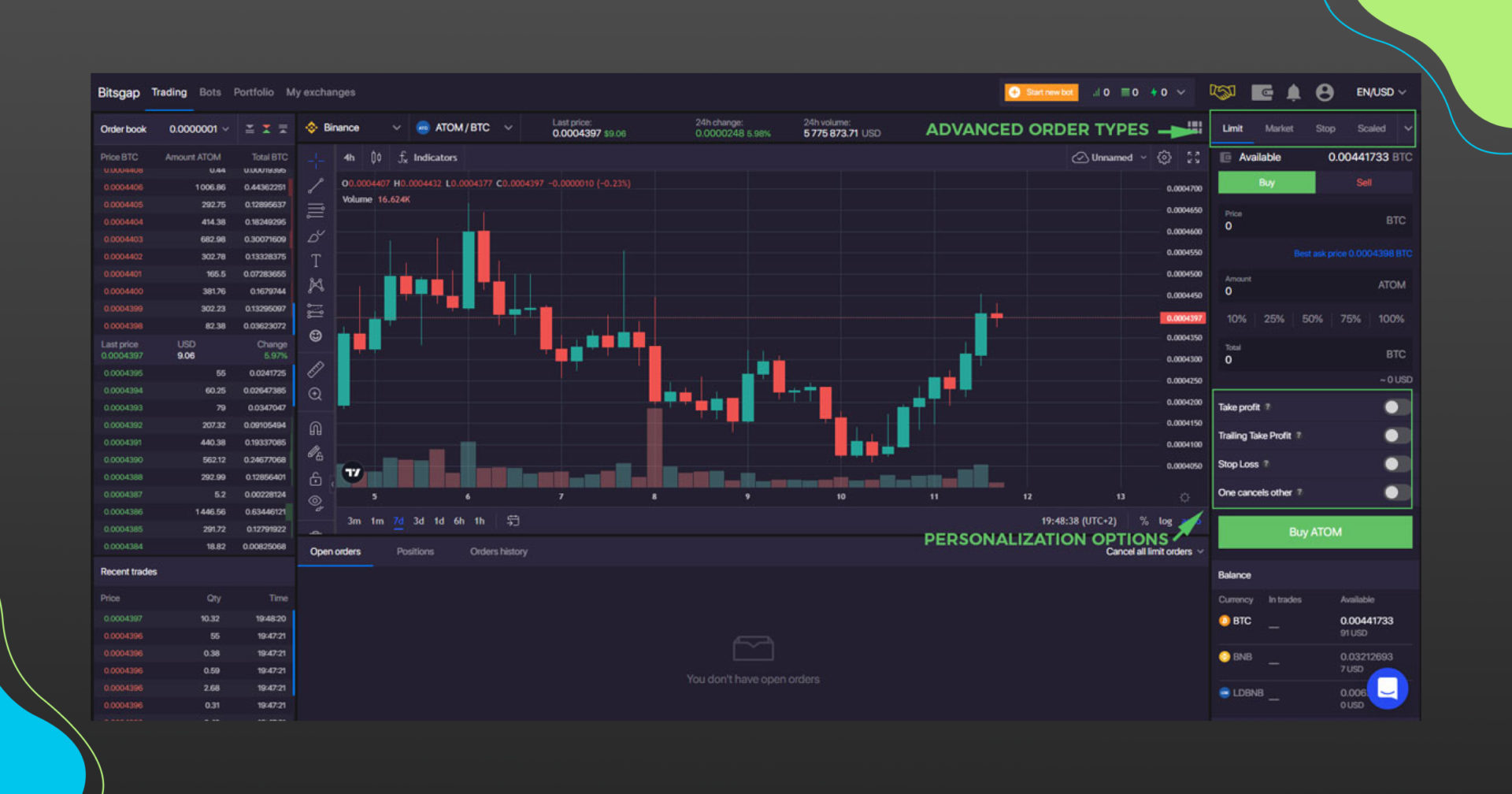
Bitsgap is arguably the closest functional analog to what CrossMarket AI claims to offer. Built from the ground up around cross-exchange arbitrage, it aggregates 25+ exchange accounts into a single interface and applies AI-assisted scanning to identify and act on price inefficiencies in real time. Its target audience leans toward intermediate traders - people who understand what arbitrage is, have accounts on multiple exchanges, and want to automate the execution layer without writing a single line of code.
UI/UX Analysis
The dashboard is dense but not chaotic. First-time users will spend 20–30 minutes orienting themselves, which is appropriate for the complexity of the product. Exchange connection is API-key based and relatively painless for the main venues (Binance, OKX, Kraken, Bitfinex). The bot setup interface walks users through strategy selection, capital allocation, and risk parameters in a linear flow. The portfolio view aggregates positions across connected accounts elegantly. Where it stumbles: the mobile experience lags meaningfully behind the web app, and live arbitrage opportunity views can feel overwhelming without prior filtering.
Feature Deep Dive
Bitsgap's core differentiation is its arbitrage scanner, which monitors spread differentials between spot prices across connected exchanges and surfaces actionable opportunities ranked by projected net profit (after factoring in transfer costs and exchange fees). In practice, profitable arbitrage windows in 2026 are narrow and competitive - the real value of the tool is in capturing the dozens of small-margin opportunities that aggregate meaningfully over time, rather than the dramatic 3–5% spreads that existed in earlier, less efficient market conditions.
Grid bots are the second major pillar. The GRID strategy allows users to set a price range and bot interval, with the system placing a ladder of buy and sell orders that profit from oscillation within the range. The AI component here dynamically adjusts grid spacing based on recent volatility data, which meaningfully improves performance in choppy sideways markets compared to static grid setups.
Backtesting is available and reasonably honest - Bitsgap shows historical hypothetical performance without the survivorship bias that some competitors embed into their showcase results. The demo mode allows paper trading with real market data before committing capital.
Performance Insights
In sideways and oscillating market conditions (which represent roughly 60–70% of crypto market behavior by time), the grid bot performs well, consistently delivering 0.5–1.5% monthly returns on well-calibrated setups. Arbitrage net returns are thinner - typically 0.1–0.3% per successful trade after fees - but the volume of opportunities captured at scale makes the strategy genuinely viable. During strong directional trends, grid bots can face significant drawdown if the market moves outside the configured range. This is an inherent limitation of the strategy, not a flaw unique to Bitsgap.
Pricing & Value Assessment
| Plan | Price/Mo | Active Bots | Key Limits |
|---|---|---|---|
| Basic | $29 | 1 | $25K total positions |
| Advanced | $69 | Unlimited | $100K total positions |
| Pro | $149 | Unlimited | No position cap |
Table 2: Bitsgap pricing tiers as of Q1 2026.
The $69 Advanced plan is where most serious users end up. The $29 Basic tier is effectively a trial - one active bot is too limiting for real arbitrage work. At $69/month, the value proposition is competitive if you are trading $20,000 or more regularly.
Pros & Cons
•25+ exchange integrations - genuinely the widest real-time arbitrage coverage in its tier
•AI-adjusted grid bot parameters outperform static configurations in range-bound markets
•Honest backtesting without inflated hypothetical results
•Position limits on lower plans cap usefulness for even modest portfolios
•Arbitrage margins have compressed significantly; the tool requires scale to be meaningfully profitable
•No DEX support - misses the growing on-chain arbitrage opportunity space
User Sentiment
Broadly positive on Trustpilot and Reddit, averaging 4.2/5 across platforms. Common praise centers on reliability and uptime. Recurring frustrations include customer support response times during volatile market periods and the lack of DEX integration. Long-term users appreciate the product's trajectory - each release cycle meaningfully improves the AI layer.
★★★★☆ 4.0 / 5
Cryptohopper - Strategy Depth for the Tinkerer
Overview & Target Audience
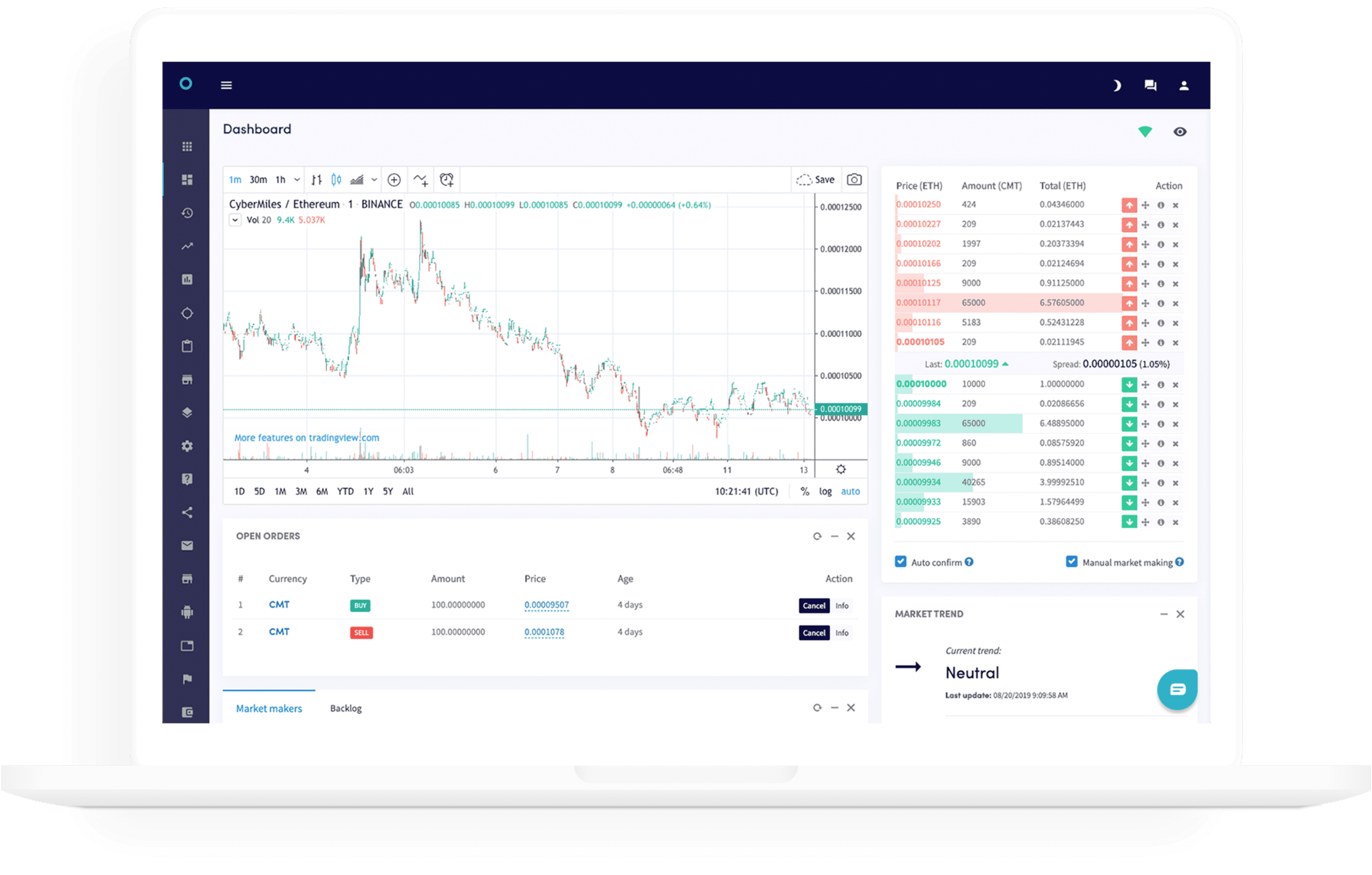
Cryptohopper occupies a distinctive position in this market: it is the most feature-rich platform in terms of strategy customization, appealing to traders who view bot logic as the competitive advantage rather than merely the execution layer. The Strategy Designer - a visual, no-code builder - allows users to construct entry and exit conditions from 100+ technical indicators, chain multiple conditions with AND/OR logic, and attach AI-driven trend detection on top. Its target users are intermediate to advanced traders who are technically literate but not necessarily programmers.
UI/UX Analysis
The interface has come a long way since the clunky 2020 iteration. The current dashboard balances information density with navigability reasonably well. The Strategy Designer is genuinely intuitive for users who understand indicator logic - RSI, MACD, Bollinger Bands, and dozens of others are presented with parameter controls in a drag-and-drop environment. The marketplace, where users can rent pre-built strategies from other traders, is both Cryptohopper's most compelling feature and its most dangerous one: strategy quality varies enormously, and the rating system is not always a reliable signal.
Feature Deep Dive
The arbitrage function in Cryptohopper covers both exchange arbitrage (spotting the same asset priced differently across two connected exchanges) and triangular arbitrage (exploiting rate inconsistencies between three currency pairs on the same exchange). The triangular arbitrage feature is notably rare among retail-accessible platforms and represents meaningful added value for users on large exchanges with many active pairs.
Social trading deserves specific attention. The signal marketplace allows users to subscribe to external signal providers who publish real-time buy/sell signals directly into your bot's execution queue. This creates an interesting accountability dynamic - signal providers are rated publicly, and their track records are visible, which filters out the worst actors over time. That said, signal performance should always be verified independently before capital commitment.
Backtesting on Cryptohopper is solid but has a known quirk: slippage assumptions are optimistic by default. Traders who do not manually adjust slippage tolerances will see backtest results that overstate live performance, sometimes significantly during illiquid market conditions.
Performance Insights
Cryptohopper's actual performance is almost entirely dependent on the quality of the strategy driving it - the platform is a sophisticated executor, not an oracle. Well-configured strategies built by knowledgeable users can achieve 2–4% monthly in favorable conditions. Poor or marketplace-borrowed strategies can easily generate losses. This dual character makes Cryptohopper one of the hardest platforms to assess categorically: it is only as good as its operator.
Pricing & Value Assessment
| Plan | Price/Mo | Positions | Notable Feature |
|---|---|---|---|
| Explorer | $19 | Up to 80 | Basic bot strategies |
| Adventurer | $49 | Up to 200 | Market-making & arbitrage |
| Hero | $99 | Up to 500 | Full arbitrage + signals |
Table 3: Cryptohopper pricing tiers as of Q1 2026.
Pros & Cons
•Triangular arbitrage support is genuinely rare at this price point
•Strategy Designer enables real logic customization without coding
•Social trading marketplace creates an ecosystem, not just a tool
•Optimistic backtest slippage creates misleading expectations for new users
•Strategy quality on the marketplace is wildly variable
•Signal delays reported during peak volatility - the precise moment execution quality matters most
User Sentiment
4.5/5 average on G2, driven largely by the depth of customization options. The most common complaint across forums is the disconnect between backtested and live performance. Active community on Discord tends to self-correct this over time through shared experience.
★★★★☆ 4.0 / 5
3Commas - The Mature Ecosystem Play
Overview & Target Audience
3Commas is the most mature platform in this comparison by active user count, and it shows - in both its polished, well-documented interface and in the breadth of its feature set. It targets a wide range of users by deliberately tiering its complexity: beginners access pre-built DCA bot templates with clear explanations, while advanced users get a Smart Trading terminal that rivals professional desk setups. This breadth is both its strength and occasionally its source of friction.
UI/UX Analysis
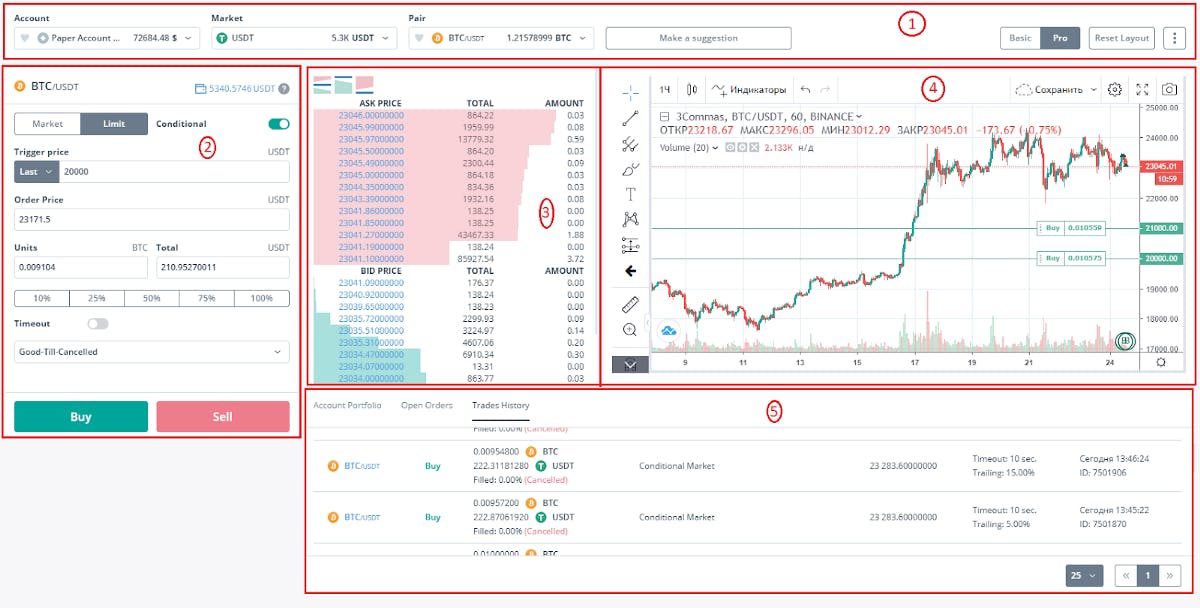
The dashboard is clean and logically organized. The onboarding flow is the best in this category - new users are walked through exchange connection, risk tolerance selection, and initial bot deployment in a structured sequence that takes under 15 minutes. The Smart Trading terminal is genuinely impressive: it supports simultaneous take-profit and stop-loss targets, trailing stops, and conditional order chains from a single position entry. For traders accustomed to TradingView or professional charting environments, the transition to 3Commas feels natural rather than reductive.
Feature Deep Dive
DCA (Dollar-Cost Averaging) bots are 3Commas' flagship feature and remain best-in-class. The system allows users to configure base order sizes, safety order sequences, deviation triggers for safety purchases, and target take-profit levels with extraordinary granularity. A properly configured DCA bot on 3Commas is a genuinely different quality of automation from the simplified DCA available on beginner platforms.
The marketplace and copy-trading functionality follow a similar logic to Cryptohopper's but with better filtering: strategies are ranked by Sharpe ratio, maximum drawdown, and risk-adjusted returns rather than just raw profit percentage. This makes comparative evaluation of strategies meaningfully more informative.
The platform's cross-market awareness is its relative weakness compared to arbitrage-native platforms. 3Commas does not scan across multiple exchanges for price differentials in the same way Bitsgap does. It connects to 23 exchanges but primarily for bot execution, not arbitrage scanning. Traders focused specifically on cross-exchange spread capture will find this limiting.
Performance Insights
The DCA bot is where 3Commas genuinely earns its reputation. In bear or sideways markets, a well-configured DCA setup with appropriate deviation spacing and safety order coverage can deliver consistent 1.5–3% monthly returns by averaging into positions during dips and capturing profit on recoveries. The risk comes in severe extended downtrends - if the asset falls beyond the safety order coverage range, positions accumulate losses. Understanding maximum drawdown configuration is non-negotiable before deploying capital.
Pricing & Value Assessment
| Plan | Price/Mo | Active Bots | Notable Inclusion |
|---|---|---|---|
| Free | $0 | 1 bot | Smart Trading terminal |
| Starter | $22 | Up to 1 DCA | TradingView integration |
| Advanced | $37 | Unlimited | GRID bots + signals |
| Pro | $79 | Unlimited + API | Full feature access |
Table 4: 3Commas pricing tiers as of Q1 2026. A functional free tier exists, which is genuinely rare in this category.
Pros & Cons
•Best-in-class DCA bot with granular safety order configuration
•Free tier with Smart Trading access is a rare and meaningful differentiator
•Risk-adjusted strategy ranking in marketplace is more trustworthy than raw profit metrics
•Not primarily an arbitrage platform - cross-exchange spread scanning is limited
•Advanced plan tier structure means most features require the $37–$79 range
•TradingView dependency for signal integration adds a secondary subscription cost for serious strategy builders
User Sentiment
Consistently 4.4–4.6/5 across major review platforms. Users frequently cite the DCA bot quality and onboarding clarity. The platform has also navigated a 2023 API security incident with enough transparency and remediation to maintain user trust - a non-trivial achievement in this category.
★★★★☆ 4.0 / 5
Pionex - The Zero-Cost Entry Point That Punches Up
Overview & Target Audience
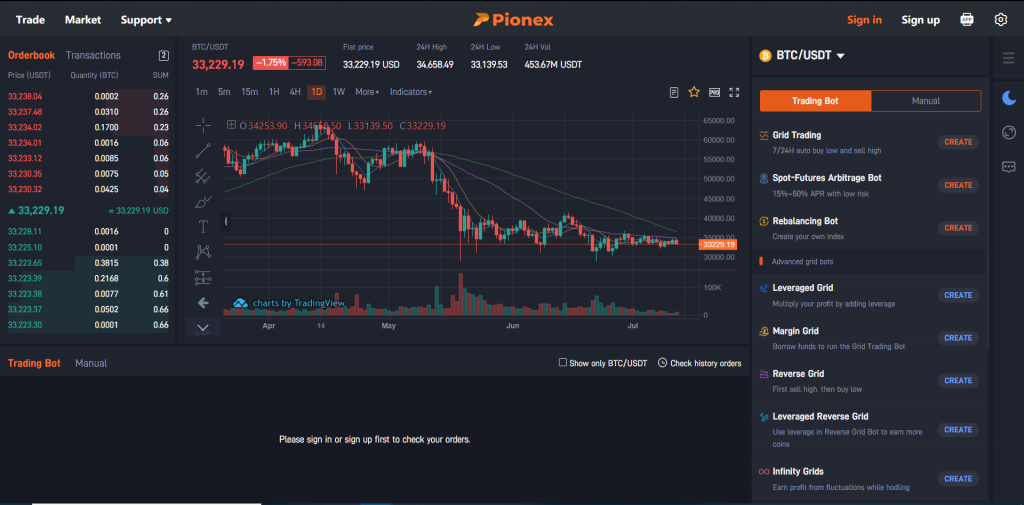
Pionex takes a structurally different approach to the monetization question: rather than charging a subscription fee, the platform operates as its own exchange and earns on trading volume through a 0.05% taker/maker fee. This makes it one of the cheapest platforms to use for moderate traders - and by far the lowest-friction entry point for beginners who want automated crypto trading without a monthly commitment before they have proven results.
UI/UX Analysis
Pionex is among the cleanest, most approachable interfaces in this comparison. The bot selection screen presents 16 pre-built bot types visually, with one-sentence descriptions and estimated use cases. Configuring a grid bot takes under five minutes with the recommended parameter auto-fill, which uses the last 7 days of price data to suggest range boundaries and grid spacing. The mobile app is notably better than its competitors - for a platform used frequently by traders managing positions on the go, this matters considerably.
Feature Deep Dive
Sixteen pre-built bot types is the headline number, and it is genuinely impressive for a fee-free service. Core options include: Spot Grid (oscillation capture), Infinity Grid (unbounded upward capture), Leveraged Grid (amplified returns with proportional risk), Spot-Futures Arbitrage (capturing the spread between perpetual futures funding rates and spot prices), and DCA. The Spot-Futures Arbitrage bot is particularly notable - it exploits the persistent positive funding rate that exists in crypto perpetual markets, delivering what is effectively a risk-managed yield strategy rather than directional trading.
The limitation is customization depth. Pionex bots are powerful for their intended strategies but operate within fixed logical frameworks. Users cannot modify exit conditions, chain strategies, or integrate external signals. For a beginner capturing market oscillation, this is irrelevant. For a sophisticated trader who needs conditional logic, it is a hard ceiling.
Performance Insights
The Spot-Futures Arbitrage bot has been the most consistently cited performing strategy on the platform, with documented user results of 15–30% annualized in favorable market conditions, driven by positive funding rates. Grid bots perform predictably in range-bound conditions and face the same directional trend risk as any grid strategy. The key performance advantage of Pionex vs. subscription platforms is cost: at $0/month, the return hurdle is lower. A strategy earning 1% monthly on a subscription platform generating $50/month in fees needs to clear the fee cost before delivering net profit. On Pionex, there is no such baseline drag.
Pricing & Value Assessment
| Cost Type | Amount | Context |
|---|---|---|
| Subscription | $0 | No monthly fee ever |
| Trading Fee | 0.05% per trade | Applied to both maker & taker |
| Withdrawal Fee | Network-variable | Standard blockchain fees apply |
Table 5: Pionex cost structure. The 0.05% fee is competitive even against exchanges not offering bots.
Pros & Cons
•Zero subscription cost with a genuinely competitive fee structure
•Spot-Futures Arbitrage bot is a rare, low-risk yield strategy at this access level
•Mobile app quality meaningfully exceeds most competitors
•Limited to Pionex's own exchange - no external account integration
•No custom strategy logic, external signals, or conditional chaining
•Customer support reported as slow to respond during high-volume periods
User Sentiment
4.3/5 on major review platforms. Widely praised in beginner crypto communities. The most consistent criticism is the ceiling: intermediate-to-advanced users outgrow the platform quickly and must migrate entirely rather than simply upgrading their plan.
★★★★☆ 4.0 / 5
Hummingbot - The Open-Source Professional's Toolkit
Overview & Target Audience
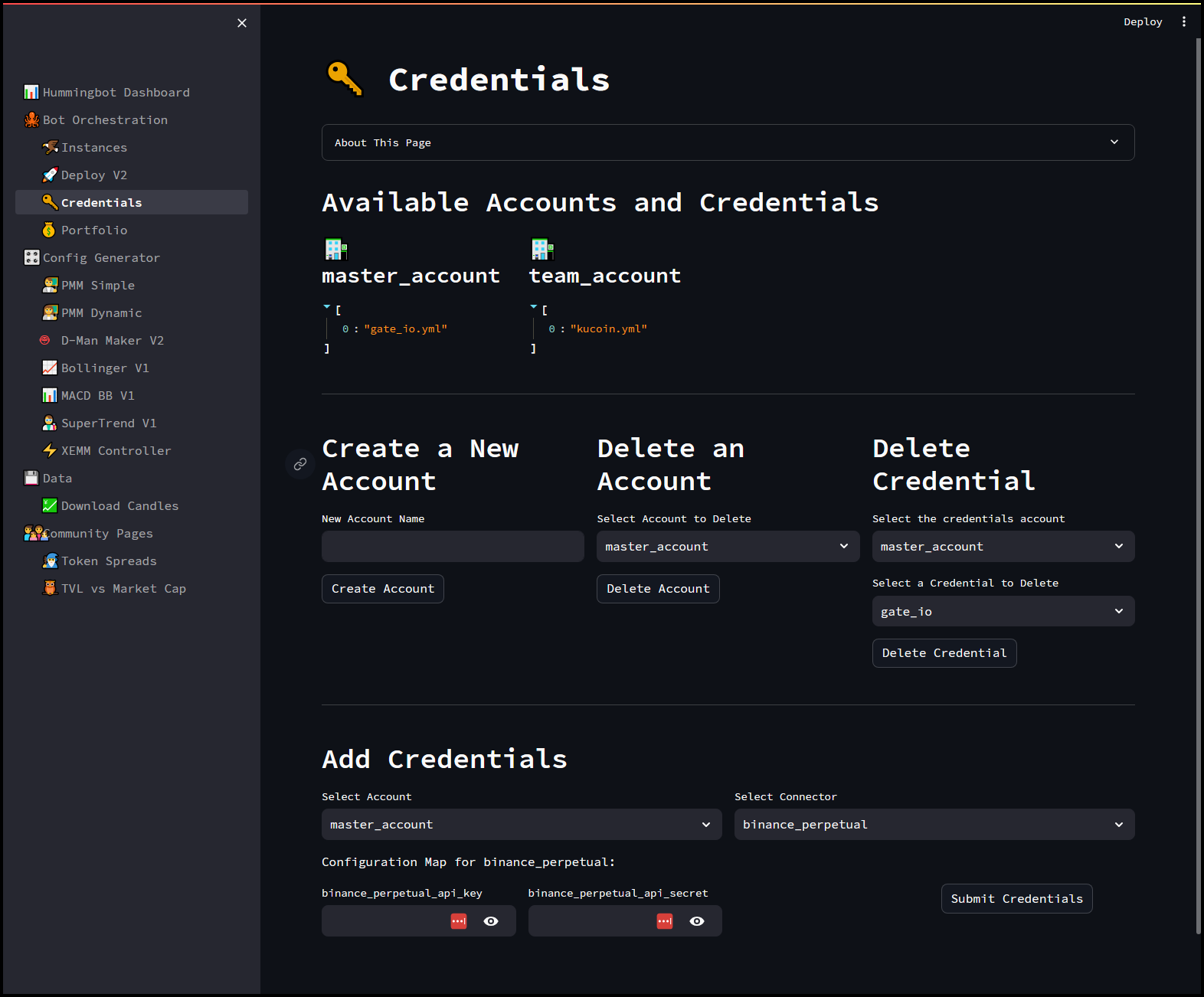
Hummingbot is categorically different from the other four platforms in this comparison. It is free, open-source, Python-based, and built for traders who are comfortable with command-line interfaces and code. It supports over 40 exchanges - more than any other platform here - including both centralized exchanges (CEXs) and decentralized exchanges (DEXs), which positions it as the only tool in this group that can systematically exploit on-chain arbitrage opportunities. Its target audience is quantitative traders, developer-traders, and institutional participants who need full control over strategy logic and execution.
UI/UX Analysis
There is no polished web dashboard. Hummingbot operates through a command-line interface (or a gateway API for programmatic control), and configuration is done through YAML files and Python strategy scripts. For non-technical users, this is a non-starter. For users who are comfortable in a terminal, it is liberating - there is no UI layer constraining what you can configure. The recently developed Dashboard component (web-based, optional) is improving, but the primary interaction model remains CLI-centric.
Feature Deep Dive
The core power of Hummingbot is in its strategy primitives. Market-making, cross-exchange arbitrage, triangular arbitrage, and statistical arbitrage are all available as configurable strategy templates that can be customized at the code level. The community contributes new exchange connectors and strategy scripts continuously - the monthly release cadence means the platform keeps pace with new DeFi protocols and exchange APIs.
DEX integration is where Hummingbot genuinely has no retail competitor. It connects to Uniswap, PancakeSwap, dYdX, Curve, and dozens of other on-chain venues, enabling arbitrage between CEX spot prices and DEX prices in real time. This cross-chain, cross-venue arbitrage space is where early-mover quantitative traders capture meaningful edge that simpler platforms cannot even see.
The cost of this power is infrastructure responsibility. Users must deploy Hummingbot on a server (cloud VPS recommended), manage uptime, handle version updates, debug script errors, and understand their own risk management at a code level. The platform provides tools; it does not manage them.
Performance Insights
Performance is entirely strategy-dependent and entirely operator-controlled. This makes categorical statements about "what Hummingbot returns" meaningless - the answer ranges from negative (misconfigured strategies) to highly positive (sophisticated cross-venue arbitrage capturing 3–8% monthly for expert operators). The published data point from a 2025 cross-chain arbitrage study is instructive: over 240,000 successful arbitrage trades in a single year across Ethereum, BNB Chain, and Arbitrum, generating $868M+ in trading volume. Hummingbot operators represented a meaningful share of that activity.
Pricing & Value Assessment
| Cost Type | Amount | Notes |
|---|---|---|
| Software License | Free (Apache 2.0) | Open-source, no fees |
| Cloud VPS Hosting | $10–$40/month | User-managed infrastructure |
| Exchange Fees | Exchange-variable | Often mitigated by market-making rebates |
Table 6: Hummingbot total cost of ownership is low monetarily but high in time and expertise investment.
Pros & Cons
•40+ exchange connections including full DEX support - category-leading breadth
•Complete strategy customization at the code level - no platform-imposed logic limits
•Market-making strategies can earn fee rebates, creating revenue from exchange incentive programs
•Requires server deployment, Python familiarity, and ongoing maintenance - not for non-technical users
•No support escalation path - community forums are the primary support channel
•Bugs and breaking changes occur; users must stay current with releases or risk strategy failures
User Sentiment
Uniquely bifurcated: developer-traders are deeply positive (4.6/5 sentiment in developer communities), while casual users who attempted to use Hummingbot without technical preparation are predictably frustrated. The GitHub repository has over 7,500 stars and an active contributor base - a reliable signal of genuine technical credibility.
★★★★☆ 4.0 / 5
Head-to-Head: The Full Comparison Matrix
| Category | Bitsgap | Cryptohopper | 3Commas | Pionex | Hummingbot |
|---|---|---|---|---|---|
| Exchange Coverage | 25+ CEX | 17 CEX | 23 CEX | Own exchange | 40+ CEX+DEX |
| Arbitrage Type | Cross-exchange | Cross-ex + Triangular | Limited | Spot-Futures | All types + DEX |
| Starting Price | $29/mo | $19/mo | $0/mo | $0/mo | ~$10/mo VPS |
| Learning Curve | Moderate | Moderate-High | Low-Moderate | Low | Very High |
| Custom Strategy Logic | Limited | Good (no-code) | Good (no-code) | None | Full (code) |
| Backtesting | Yes (honest) | Yes (optimistic) | Yes | No | Manual / scripts |
| DEX / DeFi Support | No | No | No | No | Yes (40+ DEX) |
| Mobile Experience | Average | Good | Good | Excellent | None |
| Regulatory Transparency | High | High | High | High | N/A (open source) |
| Star Rating | 4/5 | 4/5 | 4/5 | 4/5 | 4/5 |
Table 7: Full comparative matrix across key decision dimensions. Green = category leader. Red = notable weakness.
Critical Analysis: What the Matrix Does Not Tell You
The Arbitrage Reality Check
Every platform in this comparison markets arbitrage returns. The honest truth in 2026 is that cross-exchange CEX arbitrage margins have compressed dramatically compared to 2020–2022 levels. When every retail trader has an arbitrage bot running, the inefficiencies get priced out faster. The platforms that remain meaningful are those that extend into arenas where competition is still thin: DEX-to-CEX arbitrage (Hummingbot), spot-futures funding rate harvesting (Pionex), and triangular arbitrage on large exchanges (Cryptohopper). Simple exchange-to-exchange price differential strategies require substantial capital to generate meaningful returns given current margin sizes.
The Transparency Dimension - Why It Matters
Placed alongside CrossMarket AI - which registered its domain in April 2025, conceals its ownership behind a proxy service, promises 0.5–1% daily returns (implying 200%+ annually), and is absent from SEBI, RBI, FCA, and SEC registries - the five platforms in this guide represent a collectively different standard of transparency. Bitsgap, 3Commas, and Cryptohopper publish verifiable company information, have multi-year operational histories, and have navigated regulatory scrutiny in key markets. Pionex is licensed as an exchange. Hummingbot is open-source and auditable at the code level. None of them promise fixed daily returns because no legitimate algorithmic trading platform can. Market returns are not linear, and platforms that claim otherwise are not describing trading - they are describing something else.
Decision Matrix: Four User Scenarios
| Scenario | Best Choice | Runner-Up | Reasoning |
|---|---|---|---|
| New trader, minimal capital, testing automation | Pionex | 3Commas (free tier) | Zero cost, simple setup, no learning curve tax |
| Intermediate trader, $10K–$50K capital, wants arbitrage | Bitsgap | Cryptohopper | Best cross-exchange arbitrage infra at this tier |
| DCA-focused investor, $5K–$20K, long-term crypto accumulation | 3Commas | Pionex | Best DCA configuration depth; risk controls built-in |
| Developer/quant, full strategy control, DEX exposure needed | Hummingbot | Cryptohopper | Only option with genuine DEX arb and full code access |
Table 8: Decision matrix - recommended platform by trader profile and primary goal.
Should You Switch From CrossMarket AI?
For Beginners
If you started with CrossMarket AI because the low entry threshold and automated income pitch were appealing, Pionex is the structurally honest equivalent. You still get automated crypto trading, zero subscription costs, and bots that actually work - but the returns will be market-driven rather than referral-scheme-driven. Start with the Spot-Futures Arbitrage bot and a capital allocation you are comfortable losing entirely during a learning period. The key mindset shift: legitimate automation delivers modest, consistent, market-correlated returns - not fixed daily percentages regardless of conditions.
For Professionals
Active traders who found CrossMarket AI's infrastructure shallow - limited exchange support, opaque execution logic, no API access - will likely end up at Bitsgap (for CEX arbitrage depth), Cryptohopper (for strategy customization), or Hummingbot (for full-stack control). The decision comes down to how much technical involvement you want. Bitsgap is the most turnkey of the three for professional-grade arbitrage without development overhead. Hummingbot is the ceiling of what's possible with code investment.
For Teams
Teams managing pooled capital or running trading operations at scale should look at 3Commas for its sub-account infrastructure and portfolio management features, or Hummingbot for programmatic control across multiple strategies and accounts. 3Commas specifically has built team-friendly features around strategy sharing, performance attribution, and risk limit governance that solo-focused platforms simply have not prioritized. The reporting depth also simplifies performance communication to stakeholders who are not active traders themselves.
For Budget-Conscious Users
This one is clear: Pionex first, 3Commas free tier second. Both deliver real value without a subscription commitment. Pionex is the stronger recommendation for users specifically interested in automated strategies; the 3Commas free tier is better if you primarily want the Smart Trading terminal for manual-but-assisted trade execution. Resist the temptation to compare these against CrossMarket AI's advertised returns - the relevant comparison is risk-adjusted, fee-net, and documented over 12+ months of operation. On that basis, the fee-free platforms deliver substantially better verifiable value.
Final Verdict: The Clearest Path Forward
The AI-powered cross-market trading platform category in 2026 is genuinely rich with serious, well-built tools. The five platforms reviewed here - Bitsgap, Cryptohopper, 3Commas, Pionex, and Hummingbot - collectively represent the most credible and transparently operated options available to traders transitioning from speculative, high-promise platforms toward legitimate automation infrastructure.
Bitsgap is the right choice for traders who need the best-in-class cross-exchange CEX arbitrage experience in a polished, no-code environment. Its AI-adjusted grid system and honest backtesting make it the most directly functional alternative for users who came to CrossMarket AI for multi-exchange price differential automation.
Cryptohopper earns its position as the best platform for strategy-minded traders who want customization depth without writing code. The triangular arbitrage capability and social trading ecosystem create a unique value combination not replicated elsewhere at this price point.
3Commas is the best-balanced platform overall: the deepest DCA configuration in the category, a functional free tier, risk-adjusted marketplace rankings, and the most accessible onboarding experience for users new to bot-driven trading. It is the safest recommendation for the majority of users moving away from CrossMarket AI.
Pionex is the definitive answer for cost-sensitive users, beginners, and mobile-first traders. The Spot-Futures Arbitrage bot alone justifies the platform for users who want genuine, documented yield strategies at zero subscription cost. The ceiling is real but the floor is also higher than most comparable free offerings.
Hummingbot is not a platform - it is an infrastructure. The rewards are commensurate with the investment: full strategic freedom, DEX access, and the ability to capture edge that no polished SaaS product can legally offer at scale. For the right user profile - technical, self-sufficient, operating at meaningful scale - it is the only choice that grows with you indefinitely.
Bottom Line No platform on this list promises fixed daily returns, guarantees passive income through referral networks, or hides its ownership behind proxy registrations. These are not limitations - they are reliability signals. In algorithmic trading, the tools that survive long enough to be genuinely tested are always the ones that tell you the truth about what they can and cannot do. Choose accordingly. |
Post Comment
Be the first to post comment!