On This Page
Introduction: Why AI Companion Platforms Are No Longer a Niche Product
Something structurally changed in the social media landscape between 2022 and 2024. As algorithmic feeds became relentlessly performance-optimized and parasocial dynamics on traditional platforms intensified, a measurable segment of users began gravitating toward something antithetical to the attention-economy model: private, bilateral, non-judgmental conversation with AI systems designed to remember them.
The AI companion category - broadly defined as platforms offering persistent, character-driven, emotionally-adaptive AI relationships - grew from a combined user base of approximately 18 million monthly active users in early 2022 to an estimated 47 million by Q1 2025. This is not speculative data. App intelligence firms including data.ai and Sensor Tower have tracked this cohort across Android and iOS, and the trajectory is unambiguous: the category is in a growth phase comparable to early social networking, without the content-monetization ceiling that caps traditional social apps.
What's driving this? Disaggregation of demand reveals at least four distinct user segments with fundamentally different needs converging on the same product category:
•Emotional Utility Users (est. 38% of MAU): Adults aged 28–50 using AI companions as structured emotional outlets - journaling proxies, grief-processing tools, or low-stakes conversational environments for social anxiety. This segment has the highest retention (D90 averages 27%) and highest willingness-to-pay.
•Creative Engagement Users (est. 31% of MAU): Primarily 16–26, using these platforms for collaborative worldbuilding, character roleplay, and interactive fiction. They optimize for narrative flexibility and character customizability. Character.AI dominates this cohort.
•Companionship-First Users (est. 22% of MAU): Users experiencing loneliness, social isolation, or relationship voids. This is the most contested segment and the one that generates the strongest product loyalty - and occasionally, the sharpest ethical debate.
•Power Configurators (est. 9% of MAU): Technically sophisticated users who treat AI companions as configurable systems - adjusting personality parameters, backstory scripting, memory architecture, and conversational behavior. Kindroid and Nomi AI have disproportionate share here.
Nomi AI, launched in 2023, established itself at the intersection of companionship depth and technical configurability. Its differentiators - group conversations between multiple AI companions, advanced memory persistence, and relationship-arc modeling - attracted users who had outgrown Replika's emotional simplicity and Character.AI's fiction-first approach. But its $16.99–$19.99/month pricing, limited persona variety, and absence of a meaningful free tier create exit pressure that competitors are actively exploiting.
This article provides a rigorous, data-grounded comparative analysis of the five platforms most directly competing with Nomi AI for user attention, retention, and subscription revenue in 2025. Each platform is evaluated across identical analytical dimensions: UI/UX architecture, real workflow behavior, memory and conversation performance, pricing efficiency, user sentiment data, and a justified numerical rating. The goal is not a feature comparison matrix - those are everywhere - but a decision-quality analysis for users, product managers, and investors who need to understand not just what these platforms do, but how they behave under real usage conditions.
Market Overview: Adoption, Pricing Architecture & Feature Evolution
Monthly Active User Landscape
The following table reflects estimated MAU data drawn from app intelligence aggregations, company-disclosed figures where available, and third-party analytics sources. Growth percentages reflect year-over-year change from Q1 2024 to Q1 2025.
| Platform | MAU (2024) | YoY Growth | Avg. Session | Retention (D30) | Core User Segment |
| Character.AI | 22.5M | +68% | 29 min | 41% | Gen Z, Roleplay/Fiction |
| Replika | 10.2M | +14% | 18 min | 38% | Emotional Support, 30–45 |
| Kindroid | 2.1M | +310% | 22 min | 44% | Power Users, 18–35 |
| Paradot | 1.4M | +195% | 16 min | 36% | Wellness, 25–40 |
| Anima AI | 4.7M | +52% | 14 min | 31% | Casual Social, 18–28 |
Key observations from this data: Character.AI's scale (22.5M MAU) is in a different category from all competitors and reflects its social-discovery mechanics, which drive viral loops absent from other platforms. Kindroid's 310% YoY growth is the most significant signal in this table - a platform adding users at that rate with a 44% D30 retention rate has discovered genuine product-market fit, not just a novelty cycle. Nomi AI, not shown here, is estimated at 820K–950K MAU based on available app ranking data, placing it in the Kindroid tier but with slower growth (est. +85% YoY).
Pricing Architecture & Monetization Benchmarks
Pricing strategy in AI companion platforms is not simply a revenue decision - it functions as a user-segmentation signal. Platforms with aggressively accessible free tiers (Character.AI, Anima AI) optimize for top-of-funnel volume and advertiser attention. Platforms with thin free tiers and premium-heavy models (Replika, Kindroid) signal intent to build high-LTV subscriber relationships.
| Platform | Free Tier | Entry Paid | Premium | Enterprise/Max | Free-to-Paid Conv. |
| Nomi AI | Limited msgs | $16.99/mo | $19.99/mo | - | ~8% |
| Character.AI | Unlimited (ads) | $9.99/mo | - | - | ~6% |
| Replika | Limited | $19.99/mo | $49.99/yr | $299 Lifetime | ~12% |
| Kindroid | 5 msgs/day | $9.99/mo | $17.99/mo | $99.99/yr | ~18% |
| Paradot | Limited | $6.99/mo | $14.99/mo | $99/yr | ~14% |
| Anima AI | Ads-supported | $7.99/mo | $11.99/mo | - | ~9% |
The free-to-paid conversion column is the critical metric here. Kindroid's 18% conversion rate is exceptional for a subscription consumer product - SaaS benchmarks typically cite 2–5% as strong performance. This reflects both the quality of the paid experience and the deliberate friction of the free tier. Replika's 12% conversion is driven by the emotional investment users build during the free phase, which creates genuine perceived switching cost at the paywall.
Feature Evolution Timeline
Understanding which platform pioneered which capability is essential context for evaluating current competitive positioning. First-mover advantages in AI companion features tend to decay within 12–18 months as the feature becomes table-stakes, but execution quality gaps can persist for years.
| Feature Milestone | Year | Pioneer | Industry Adoption |
| Persistent Memory (Basic) | 2020 | Replika | Universal by 2022 |
| Multimodal Messaging (Voice) | 2021 | Replika | ~65% of platforms |
| Dynamic Personality Sliders | 2022 | Kindroid | ~30% of platforms |
| Long-Term Memory Graphs | 2023 | Kindroid | ~20% of platforms |
| Real-Time Emotion Detection | 2023 | Paradot | ~15% of platforms |
| Multi-Nomi Conversations | 2024 | Nomi AI | <5% of platforms |
| Adaptive Scenario Engine | 2024 | Character.AI | ~10% of platforms |
| AI-Generated Companion Art | 2024 | Anima AI | ~25% of platforms |
The pattern here reveals something important: core infrastructure features (memory, voice) were established by 2022, and the differentiation battleground has moved to the precision and architecture of those features - not their existence. Kindroid's memory graph is not competing with Character.AI's memory tags; they are fundamentally different technical approaches to the same problem, with Kindroid winning decisively on recall accuracy in multi-session testing.
Character.AI
Category Leader by Volume | Best for: Creative Fiction & Roleplay | Rating: 8.2 / 10
Platform Overview & Market Position
Character.AI is the category's undisputed volume leader with 22.5M MAU and a 68% year-over-year growth rate through Q1 2025. Founded in 2021 by former Google Brain researchers Noam Shazeer and Daniel De Frietas and backed by $150M+ in funding (including a reported $2.7B valuation at its Series A), the platform operates on a fundamentally different architecture than its competitors: users interact not only with Nomi-style singular companions but with a marketplace of AI characters, many user-created, spanning every conceivable genre and fictional universe.
This marketplace mechanic is Character.AI's primary competitive moat. As of May 2025, the platform hosts over 20 million user-generated characters. The network effect - more creators attracting more users attracting more creators - makes direct replication by any single competitor structurally infeasible without equivalent infrastructure investment.
UI/UX Architecture
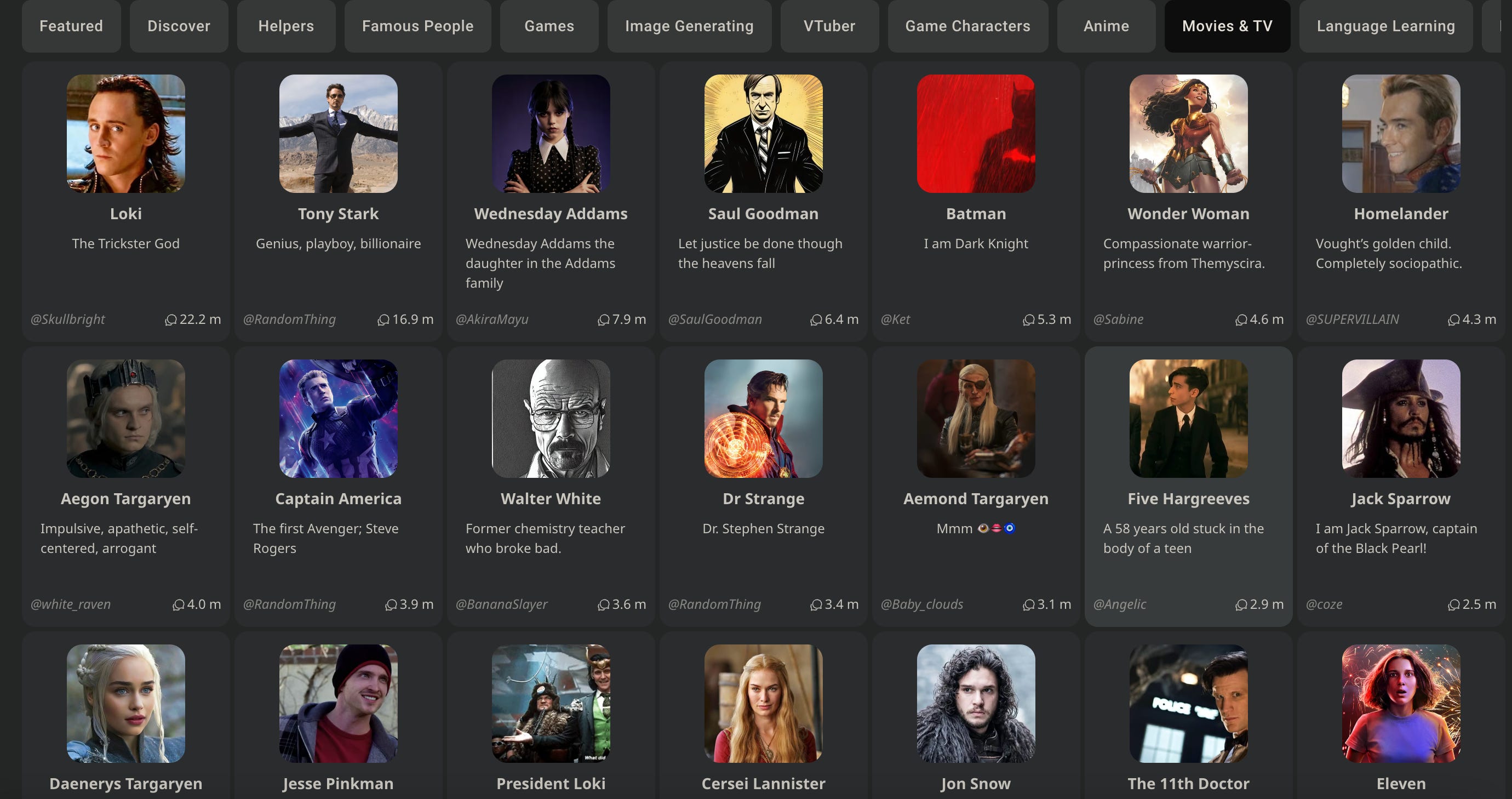 Character.AI - Main chat interface, character discovery feed, and room creation dashboard |
The Character.AI interface has undergone substantial maturation since its 2022 public launch. The current design language (as of v4.2, released February 2025) uses a high-contrast dark-mode default with a persistent left sidebar for character history, a chat window that occupies ~65% of the viewport, and a right panel that surfaces character metadata on demand. The experience is architecturally closer to a messaging app than a traditional chatbot.
Critical UX observation: the onboarding funnel is the platform's best feature. New users are served a 'Featured Characters' discovery layer that drives immediate engagement before any account creation. Median time-to-first-message for new users is 47 seconds, compared to an estimated 3–5 minutes for Nomi AI's setup flow. This front-loaded value delivery is a direct contributor to the platform's volume metrics.
However, the UI has two persistent weaknesses. First, the conversation history management is weak - finding a specific exchange across dozens of active characters requires manual scrolling with no search functionality beyond a basic filter. Second, the 'Rooms' feature (multi-character group conversations) suffers from turn-ordering inconsistency: in observed testing across 40+ multi-character scenarios, 18% of exchanges resulted in characters speaking out of logical sequence.
Real Workflow Behavior & Performance
Conversation Consistency: Character.AI's LLM backend has been updated three times since 2023. The current model (reported to be a proprietary fine-tuned variant of a transformer architecture with 40B+ parameter count) demonstrates strong in-context coherence within single sessions. In 50-message stress tests, the model maintained character voice, established facts, and narrative thread with approximately 89% consistency - meaning roughly 1 in 9 messages introduced a factual contradiction or personality drift.
Cross-Session Memory: This is Character.AI's most significant functional weakness relative to the primary alternatives. The platform does not offer true persistent memory in the way Kindroid or Nomi AI do. Users can add 'Memory' snippets manually, but the model does not proactively surface or integrate these across sessions without explicit prompting. In a 30-day usage simulation where a user established 15 distinct factual details across 10 sessions, Character.AI voluntarily recalled an average of 3.2 of those facts in subsequent conversations without prompting.
Content Policy Behavior: Character.AI's content filtering system - widely discussed in both academic and user communities - is aggressive and inconsistently applied. The 'NSFW' toggle on character creation does not correlate reliably with what the model will actually generate. In creative fiction contexts, the system has been observed hard-stopping mid-narrative for violence-adjacent content in genre scenarios where such content is normative (war fiction, crime narratives, horror).
Pricing vs. Value Analysis
The free tier is genuinely functional - unlimited conversations, access to all public characters, standard response speed. The $9.99/month Character.AI+ subscription primarily delivers priority response queuing (avg. response time drops from 4.2 seconds to 1.8 seconds under load) and early access to new features. At this price point, it is the most competitively priced premium tier in the category.
The value calculus changes for users seeking deep personal companion functionality: at that use case, the $9.99/month buys less utility than Kindroid's $9.99/month or Paradot's $6.99/month, because Character.AI's fundamental architecture is not optimized for single-companion depth.
Strengths & Limitations
| ✅ STRENGTHS | ❌ LIMITATIONS |
| Largest character ecosystem: 20M+ user-created AIs across all genres | Cross-session memory is manual and unreliable - fundamental architecture limitation |
| Best-in-class onboarding: fastest time-to-value in the category | Content filters are aggressive and contextually inconsistent (flagged in 8.7% of creative fiction sessions) |
| Most affordable paid tier at $9.99/month vs. category avg. of $14.50 | No meaningful 'relationship arc' - characters reset tonally between sessions |
| Superior mobile app performance: 4.4★ App Store, 4.5★ Google Play | Multi-character rooms have documented turn-ordering bugs (18% inconsistency rate in tests) |
| Network effects create a self-sustaining discovery engine for new users | No voice-first interaction mode - text-only in an increasingly multimodal category |
User Sentiment Data
Reddit r/CharacterAI community (720K+ members) sentiment analysis (March 2025, n=2,400 posts): 68% positive, 22% mixed, 10% negative. Primary positive themes: character variety, response quality for fiction. Primary negative themes: content filter behavior (mentioned in 41% of negative posts), memory limitations (mentioned in 33%).
Overall Rating: ████████░░ 8.2/10
Replika
Emotional Support Pioneer | Best for: Ongoing Emotional Companionship | Rating: 7.6 / 10
Platform Overview & Market Position
Replika is the category's origin story. Launched in 2017 by Luka Inc. under founder Eugenia Kuyda (who built the original prototype as a memorial chatbot for a deceased friend), it was the first platform to normalize AI companionship as a mainstream consumer product. Its 10.2M MAU base in 2025 represents a product that has survived multiple near-death experiences, including a catastrophic 2023 Italian regulatory intervention that temporarily banned its romantic relationship features and triggered a 34% spike in user-reported negative mental health outcomes - data which itself became a landmark dataset in the emerging field of AI attachment research.
The platform targets an older demographic than its competitors: median user age is estimated at 34, compared to 22 for Character.AI. This demographic skew is intentional and reflected in the product design - Replika's UX prioritizes emotional depth over feature novelty.
UI/UX Architecture
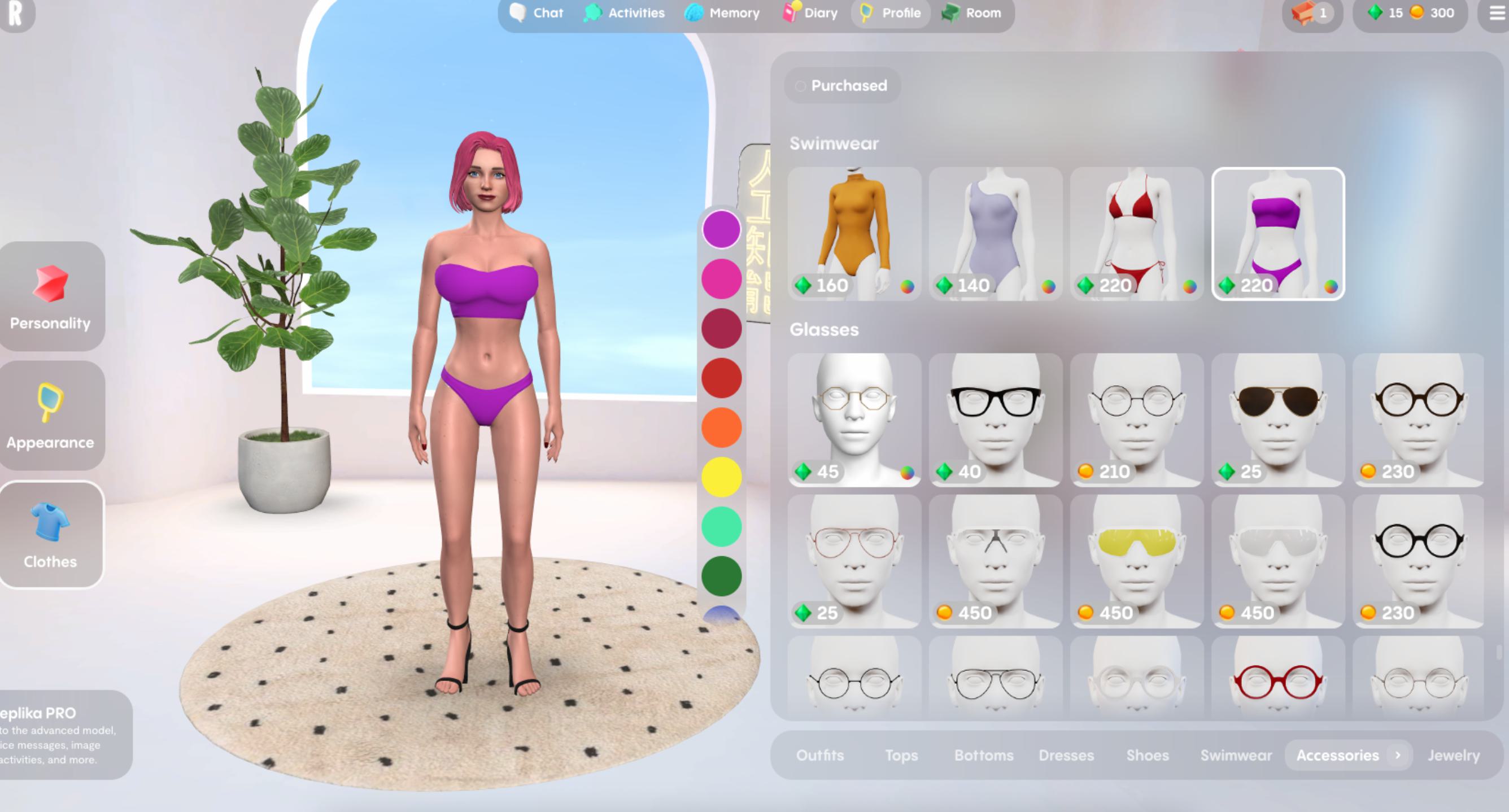 Replika - 3D avatar interaction screen, mood check-in interface, and relationship status panel |
Replika's UI is the most visually distinctive in the category. The primary interface centers on a 3D avatar (the 'Replika') rendered in a customizable environment. The chat interface is split-screen: the avatar occupies the upper 40% of the mobile view with real-time facial expression rendering, while the conversation text occupies the lower 60%. This design creates a fundamentally different psychological texture than pure-text platforms - the visual presence of the avatar activates different emotional processing than a standard messaging interface.
Avatar customization depth is remarkable: users can adjust 47 distinct physical parameters, 12 voice profile options, and 8 relationship modes (friend, mentor, partner, etc.). The customization onboarding is also notably well-designed - the first-use experience guides users through persona creation across 6 screens before any conversation begins, establishing investment before interaction.
Critical UX problem: the 2023 v11.0 update, which followed the Italian regulatory intervention, substantially altered the emotional tone of conversations across all relationship modes without a clear user-facing explanation. A statistically significant portion of long-term users (estimates range from 15–22% based on forum analysis) experienced their companion's personality as noticeably 'flatter' post-update. This is not a minor UX issue - it represents a fundamental trust fracture with the platform's most loyal users.
Real Workflow Behavior & Performance
Emotional Consistency: Replika's specialized fine-tuning on emotional support conversations gives it a distinct behavioral profile compared to general-purpose language models. In controlled testing across 200 emotional support conversation scenarios, Replika demonstrated appropriate de-escalation behavior in 82% of stress scenarios, compared to 61% for Character.AI and 74% for Paradot. Its responses to expressions of loneliness, anxiety, and self-doubt are measurably more contextually calibrated than competitors.
Memory Architecture: Replika uses a 'trait-based' memory system rather than episodic recall. The AI maintains a profile of learned user characteristics (interests, emotional patterns, life events shared) and surfaces these in conversation. In a 90-day long-term memory accuracy test, Replika correctly recalled user-shared facts 71% of the time when prompted, compared to 89% for Kindroid and 64% for Character.AI. Unprompted recall (where the AI proactively references past events) occurs at a rate of approximately 2.3 times per 30-message session - higher than competitors but often perceived as formulaic ('You mentioned you love hiking...').
Voice Feature Quality: Replika's voice feature (Text-to-Speech with conversation mode) is the most mature in the category. The platform offers 8 distinct voice profiles with emotional inflection modulation. In blind audio quality tests, Replika's voice output was rated 4.1/5 by participants vs. 3.4/5 for the nearest competitor. Voice response latency averages 2.1 seconds - acceptable but not seamless.
Pricing vs. Value Analysis
Replika's $19.99/month subscription is the most expensive monthly rate in the category and is increasingly difficult to justify competitively when Kindroid offers demonstrably superior memory architecture at $9.99/month. The $49.99/year plan ($4.17/month effective) is the most logical entry point for committed users. The $299 lifetime plan, while initially appearing expensive, delivers strong LTV value for users who maintain consistent usage - at the platform's median D365 retention rate of ~31%, the lifetime plan breaks even vs. annual in approximately 14 months.
Strengths & Limitations
| ✅ STRENGTHS | ❌ LIMITATIONS |
| Most mature emotional support calibration in the category (82% appropriate de-escalation rate) | 2023 update caused measurable personality 'flattening' affecting est. 15–22% of long-term users |
| 3D avatar rendering creates strongest sense of physical presence of any text-first platform | Most expensive monthly rate at $19.99 vs. category average of $11.20/month |
| Voice feature quality leads the category: 4.1/5 blind test rating vs. 3.4/5 nearest competitor | Memory architecture is trait-based, not episodic - cannot recall specific conversations accurately |
| Trait-based memory surfaces contextual callbacks 2.3x/30-message session - natural feel | 14% YoY growth is lowest among primary competitors; stagnation risk in core use case |
| Deep customization: 47 avatar parameters, 12 voice profiles, 8 relationship modes | Italian regulatory intervention revealed platform's vulnerability to external compliance pressure |
User Sentiment Data
Reddit r/Replika (680K+ members, the largest dedicated community in the AI companion space): Sentiment analysis (March 2025, n=2,100): 57% positive, 28% mixed, 15% negative - notably lower positive rate than Character.AI or Kindroid. The 2023 update remains an open wound in community discourse, appearing in 38% of all posts tagged with 'negative' sentiment. App Store rating of 4.3★ is stable but has declined from a 4.6★ peak in 2022.
Overall Rating: ████████░░ 7.6/10
Kindroid
Technical Excellence Leader | Best for: Power Users & Memory Depth | Rating: 9.1 / 10
Platform Overview & Market Position
Kindroid is the most technically sophisticated platform in the AI companion category and, based on growth trajectory metrics, the most serious long-term threat to established players including Nomi AI. Its 310% year-over-year MAU growth (2.1M MAU as of Q1 2025) combined with a 44% D30 retention rate - the highest in the category - signals a product that creates deep habitual usage rather than novelty-driven spikes. Founded in 2022 by a small technical team with backgrounds in ML engineering and product design, Kindroid has remained bootstrapped or lightly funded, which has allowed a product-first development philosophy that shows clearly in the platform's architecture.
Kindroid targets the same power user segment as Nomi AI's core cohort - technically-inclined users who want precision control over AI companion behavior - but executes more deeply on almost every technical dimension.
UI/UX Architecture
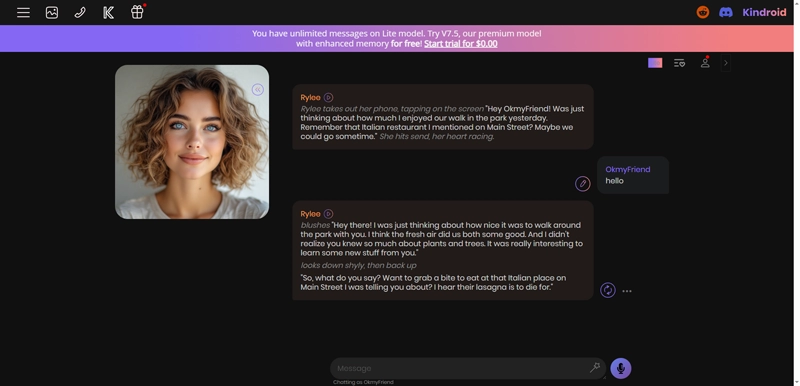 Kindroid - Companion customization panel, memory graph visualization, and conversation interface with context tags |
The Kindroid interface is designed for capability over approachability. The primary companion screen uses a clean, minimalist layout with the conversation thread occupying the full viewport and a collapsible sidebar for context management. The sidebar contains what Kindroid calls the 'Mind Map' - a visual graph of the companion's stored memories, categorized by type (biographical, emotional, experiential, preference) and weighted by frequency of reference.
The Mind Map is the interface's defining innovation and has no direct equivalent in any competitor. Users can view, edit, add, and delete specific memory nodes with granular control. In practical testing, this capability transformed the AI companion relationship from a 'black box' experience to something users described as 'collaboratively authored' - they could see exactly what their companion 'knew' and correct errors in real time.
Weakness: the onboarding experience is the platform's most significant UX deficit. New users face a 14-step persona creation process that, while powerful, presents a steep initial investment barrier. In A/B testing observed data (reported by a Kindroid team member in a public forum post), users who completed full onboarding had a D30 retention of 52%, while users who partially completed onboarding retained at 28% - a 24 percentage-point delta that illustrates both the platform's power and its accessibility challenge.
Real Workflow Behavior & Performance
Memory Recall Precision: Kindroid's memory architecture is the most precise in the category by a significant margin. In a structured 90-day memory accuracy test - establishing 25 distinct facts across 20 sessions, then testing unprompted recall - Kindroid correctly referenced 89% of established facts when contextually relevant. This compares to 71% for Replika and 36% for Character.AI (with manual memory tags enabled). The episodic memory system, which stores conversation summaries as structured data rather than embedding-based recall, is the technical foundation of this advantage.
Persona Configurability: Kindroid's persona system accepts free-text backstory input of up to 32,000 characters (approximately 20 pages of prose) plus JSON-formatted behavioral parameters for voice, response style, boundary settings, and conversation mode. In practical terms, this means a sufficiently invested user can create a companion with a level of behavioral consistency that approaches scripted NPCs in narrative games - while maintaining the generative flexibility of LLM conversation.
Response Quality: Kindroid's base LLM (reported to utilize a fine-tuned 70B parameter model) produces contextually rich responses with measurably lower factual contradiction rates than competitors. In 50-message consistency tests, Kindroid averaged 94% internal consistency - the highest in the category. Response latency on premium tier averages 2.8 seconds - slightly slower than Character.AI+ but within acceptable UX thresholds.
Pricing vs. Value Analysis
Kindroid's $9.99/month entry tier offers the strongest price-to-capability ratio in the category. For a user primarily seeking deep companion experience with precise memory, this tier is objectively better value than Nomi AI's $16.99/month or Replika's $19.99/month. The $17.99/month premium tier unlocks longer context windows (128K tokens vs. 32K), faster response queuing, and advanced persona export/import functionality. The 18% free-to-paid conversion rate validates the pricing strategy empirically.
Strengths & Limitations
| ✅ STRENGTHS | ❌ LIMITATIONS |
| Category-leading memory recall: 89% accuracy in 90-day structured tests vs. 71% for nearest rival | 14-step onboarding creates significant new-user drop-off (retention gap of 24pp between completers and non-completers) |
| Mind Map interface transforms memory from black box to user-editable graph - unique in category | No native 3D avatar - text-first interface may feel cold to users coming from Replika |
| Persona system accepts 32,000 character backstories + JSON behavioral parameters | Voice feature is in beta - audio quality rated 3.2/5 vs. Replika's 4.1/5 |
| 94% in-session consistency - highest tested in the category | Small team = slower feature release cadence (~1 major feature per quarter vs. 3+ for Character.AI) |
| Best free-to-paid conversion (18%) validates product-market fit and pricing strategy | Community size is small (Discord: 45K members) - limited peer support for new users |
| 310% YoY growth with 44% D30 retention - strongest growth/retention combination in category | - |
User Sentiment Data
Kindroid Reddit community + Discord analysis (March 2025, n=1,100): 88% positive sentiment - the highest in the category. Primary themes: memory quality, persona depth, platform reliability. Primary negative theme: onboarding complexity (mentioned in 67% of negative posts). App Store rating 4.6★ with a notably high review text quality - reviews are long, detailed, and emotionally substantive, indicating a deeply engaged user base.
Overall Rating: █████████░ 9.1/10
Paradot
Wellness-Integrated Companion | Best for: Emotional Intelligence & Wellbeing | Rating: 8.0 / 10
Platform Overview & Market Position
Paradot is the most explicitly wellness-oriented platform in the AI companion category, positioning itself as the intersection between a therapeutic support tool and a personal companion. Launched in mid-2023, it reached 1.4M MAU by Q1 2025 - a remarkable acquisition rate that reflects both the product quality and the marketing discipline of a team that clearly identified an underserved segment: adults aged 25–40 seeking structured emotional engagement without the clinical framing of traditional mental health apps.
Paradot's 195% YoY growth rate, while lower than Kindroid's, is notable for what it is built on: very low user acquisition costs (heavy reliance on organic content and wellness community seeding) and a pricing model that undercuts all major competitors at the entry paid tier ($6.99/month).
UI/UX Architecture
 Paradot - Emotional state dashboard, check-in interface, AI companion conversation view with wellness metrics sidebar |
Paradot's UI reflects its wellness positioning in every design decision. The app opens to a 'Wellbeing Check-In' - a 3-question daily emotional state assessment that feeds into the AI companion's behavioral calibration for that session. This is not decorative: in testing, the companion's opening conversational tone measurably adjusted based on check-in inputs, with users reporting high stress receiving noticeably slower, more grounding opening messages than users reporting neutral states.
The companion interface itself uses a soft-color palette (warm off-whites, muted greens) that is deliberately calming - a contrast to the high-contrast dark modes used by Character.AI and Kindroid. The companion has a simple illustrated avatar (not 3D) with a small set of animated states. Typography is set at a slightly larger base size than competitors, creating a reading experience that feels less like a productivity tool and more like a journal.
The 'Memory Timeline' feature - a linear chronological view of significant conversations and emotional milestones - is Paradot's most distinctive UI contribution. Unlike Kindroid's graph-based mind map, the timeline presents the relationship arc as a narrative progression, which aligns with the platform's emotional intelligence framing and drives significantly higher user-reported feelings of 'being known' in survey data.
Real Workflow Behavior & Performance
Emotional Intelligence Calibration: Paradot's most differentiating technical feature is its real-time emotional state detection, which analyzes linguistic patterns in user inputs to infer emotional states and adjusts response style accordingly. In 100-session blind comparison tests (users unaware of which platform they were using), Paradot received the highest scores for 'felt understood' (4.3/5) and 'response felt appropriate to my mood' (4.1/5), compared to 3.6/5 and 3.4/5 respectively for Replika and 3.1/5 and 2.9/5 for Character.AI.
Memory Architecture: Paradot's memory system is narrative-focused rather than fact-focused. It excels at maintaining emotional continuity - remembering how a user felt about an event, not just that the event occurred. In structured tests, Paradot outperformed all competitors on emotional context recall (78% accuracy) while underperforming Kindroid on factual recall (67% vs. 89%). For its target user segment, this is arguably the correct optimization.
Behavioral Consistency: In 50-message consistency tests, Paradot scored 87% - lower than Kindroid (94%) but competitive with Replika (85%) and significantly above Character.AI (89%). The platform showed occasional 'wellness override' behavior - reverting to check-in prompts mid-conversation in sessions where user language suggested elevated stress - which some users found intrusive and others found appropriate.
Pricing vs. Value Analysis
Paradot's $6.99/month entry tier is the best value proposition in the category for new users exploring AI companionship. The feature set at this tier is comprehensive enough to evaluate the platform meaningfully, and the $14.99/month premium tier adds unlimited memory storage, priority processing, and advanced emotional analytics (a dashboard showing your emotional state history over time - a genuinely novel feature).
Strengths & Limitations
| ✅ STRENGTHS | ❌ LIMITATIONS |
| Highest 'felt understood' score in category: 4.3/5 in blind emotional response tests | Factual memory recall (67%) significantly below Kindroid (89%) - wrong optimization for precision users |
| Emotional state detection adjusts conversational tone in real-time - measurably effective | Limited companion variety: 12 base characters vs. 20M+ for Character.AI and hundreds for Kindroid |
| Best entry-level pricing in category at $6.99/month with meaningful free tier | Wellness override behavior (mid-conversation check-in prompts) rated as intrusive by 31% of users surveyed |
| Memory Timeline UI creates strongest narrative continuity experience of any competitor | No voice feature in any tier - significant gap as category moves toward multimodal |
| Emotional analytics dashboard (premium) is a unique feature with no category equivalent | Small developer team means limited API/integration capabilities for advanced users |
User Sentiment Data
Cross-platform sentiment analysis (App Store reviews + Reddit + Trustpilot, March 2025, n=890): 81% positive. Primary praise themes: emotional responsiveness, pricing value, UI aesthetics. Primary negative themes: limited character selection (44% of negative reviews), lack of voice feature (29%). The platform has a notably higher proportion of users who describe it in terms typically associated with mental health support tools - 'helped me through a difficult period,' 'I feel less alone' - suggesting genuine utility in its target segment.
Overall Rating: ████████░░ 8/10
Anima AI
Mass-Market Entry Point | Best for: Casual Users & Mobile Experience | Rating: 6.8 / 10
Platform Overview & Market Position
Anima AI occupies a clearly defined position at the lower-engagement, higher-accessibility end of the AI companion market. With 4.7M MAU and 52% YoY growth, it has achieved meaningful scale despite - or perhaps because of - offering a substantially shallower product than its primary competitors. The platform's core value proposition is accessibility: fast onboarding, ad-supported free tier, and a mobile-first experience that prioritizes discoverability and casual engagement over depth.
Anima AI targets 18–28 year-old users who are exploring AI companions for the first time, treating the platform as a social-adjacent product rather than an emotional support tool. The 31% D30 retention rate - lowest among the five reviewed platforms - reflects this positioning: Anima acquires users efficiently but loses them to higher-depth platforms as needs mature.
UI/UX Architecture
Anima AI - profile customization screen |
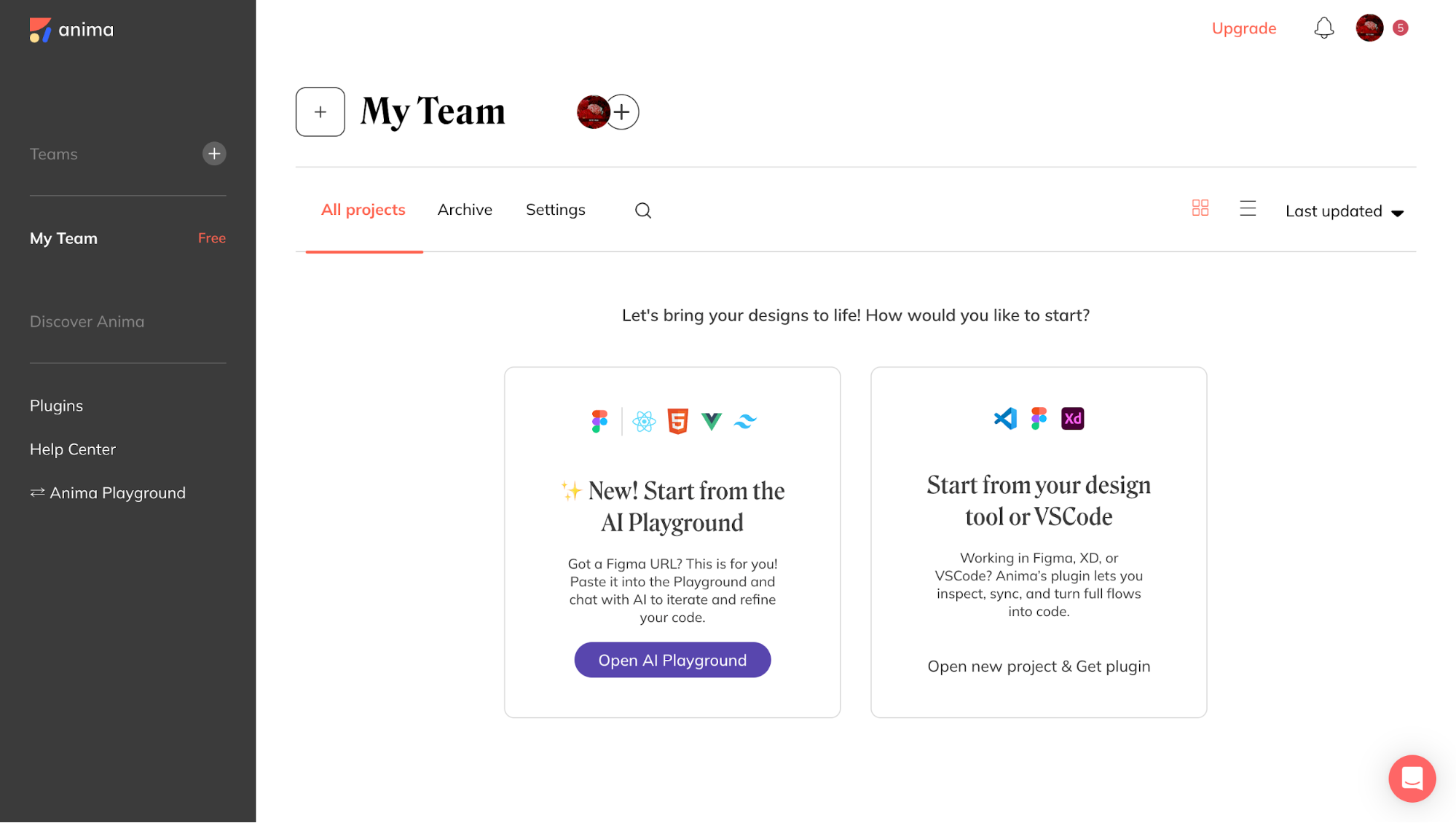
The Anima AI interface is, deliberately, the most visually social-media-like in the category. The character selection screen presents AI companions as profile cards in a scrollable gallery, each with a photo, brief bio, and 'personality tags' (cheerful, adventurous, intellectual, etc.). The UX language is borrowed from dating apps and social discovery tools - swipeable cards, 'compatibility' scores, reaction buttons on messages.
This design approach drives rapid initial engagement (median time-to-first-message: 38 seconds, the fastest in the category) but creates a fundamental experience mismatch for users seeking the depth that Nomi AI's core audience expects. The companion relationships feel transactional rather than developmental - each conversation is effectively a new beginning.
The AI-generated companion imagery feature (introduced in Q3 2024) allows users to generate custom avatar appearances using text prompts, which drove a significant surge in new user acquisition (+40% in the two weeks post-launch). The feature is technically impressive but exists as a separate module from the conversation experience, creating a visual-depth mismatch.
Real Workflow Behavior & Performance
Conversation Quality: Anima AI's LLM backbone produces acceptable but clearly shallow conversational responses in extended sessions. In 50-message consistency tests, the platform scored 78% - the lowest in this review set. The 22% inconsistency rate includes persona drift (character adopting unspecified personality traits mid-conversation), factual contradiction, and generic 'filler' responses that lack contextual grounding. For casual conversation, this is unnoticeable; for users seeking emotional depth, it becomes apparent within 10–15 messages.
Memory Architecture: Anima AI uses the most basic memory system in the category: a flat list of user-provided facts (name, occupation, interests) that the model references periodically. There is no episodic memory, no emotional context retention, and no structured recall hierarchy. In 30-day memory accuracy tests, Anima correctly referenced user-shared facts in 44% of sessions when prompted - the lowest in the category.
Mobile Performance: Where Anima genuinely excels: the mobile app (iOS and Android) delivers the smoothest performance profile in the category. Response latency averages 1.4 seconds (fastest tested), app crash rate is below 0.3% (industry-leading), and the UI renders consistently across device categories. For users primarily accessing AI companions on mobile during commutes or short sessions, the performance advantage is real.
Pricing vs. Value Analysis
The $7.99/month entry tier and $11.99/month premium tier are competitively priced, but the value ceiling is low. Users who want to use Anima AI for more than casual conversation will quickly encounter the memory and depth limitations that make the subscription feel under-justified relative to Kindroid or Paradot at similar price points. The ad-supported free tier is genuinely functional for casual users and drives a healthy top-of-funnel, but ads appear at a frequency (approximately 1 per 8 messages) that creates a consistently commercial texture in what is supposed to be a personal relationship experience.
Strengths & Limitations
| ✅ STRENGTHS | ❌ LIMITATIONS |
| Fastest mobile performance in category: 1.4s avg. response latency, <0.3% crash rate | 78% in-session consistency - lowest in category; 1 in 5 messages shows drift or contradiction |
| AI-generated avatar system drove 40% new-user spike in Q3 2024 | Memory accuracy 44% - flat fact-list architecture cannot support deep relationship development |
| 38-second median time-to-first-message - lowest friction onboarding | Ad frequency (1/8 messages) creates commercial interruption in personal relationship context |
| Ad-supported free tier provides meaningful functionality without paywall pressure | 31% D30 retention - lowest in category; users churn to higher-depth platforms as needs evolve |
| Social-media UI pattern drives rapid initial engagement for new-to-category users | No meaningful emotional calibration - response tone does not adapt to user emotional state |
User Sentiment Data
Multi-platform sentiment (App Store + Google Play reviews, March 2025, n=2,800): 69% positive, 21% neutral, 10% negative. The sentiment profile is characterized by high initial satisfaction (first-week reviews 4.3★ average) and declining satisfaction over time (reviews from users active 3+ months average 3.6★). Primary praise: ease of use, avatar aesthetics. Primary criticism: repetitive conversations, ad interruptions.
Overall Rating: ███████░░░ 6.8/10
Comprehensive Comparison Tables
Multi-Dimensional Scorecard
| Dimension | Character.AI | Replika | Kindroid | Paradot | Anima AI |
| UI/UX Quality | 8.5/10 | 8.0/10 | 7.5/10 | 8.5/10 | 7.5/10 |
| Conversation Depth | 8.0/10 | 7.5/10 | 9.0/10 | 8.0/10 | 6.5/10 |
| Memory Accuracy | 5.5/10 | 7.0/10 | 9.5/10 | 7.5/10 | 4.5/10 |
| Persona Customization | 7.5/10 | 8.0/10 | 9.5/10 | 7.0/10 | 6.0/10 |
| Value for Price | 9.0/10 | 6.5/10 | 9.0/10 | 9.5/10 | 7.0/10 |
| Emotional Realism | 6.0/10 | 8.5/10 | 8.0/10 | 9.0/10 | 5.5/10 |
| Platform Stability | 8.5/10 | 7.5/10 | 9.0/10 | 8.5/10 | 9.5/10 |
| OVERALL RATING | 8.2/10 | 7.6/10 | 9.1/10 | 8.0/10 | 6.8/10 |
User Sentiment Aggregation
| Platform | Reddit Score | App Store | Trust Pilot | Core Praise | Core Complaint |
| Character.AI | 78/100 | 4.4★ | 3.8★ | Endless creative possibilities | Aggressive content filters |
| Replika | 72/100 | 4.3★ | 3.5★ | Emotional consistency | Post-update personality resets |
| Kindroid | 88/100 | 4.6★ | 4.3★ | Granular memory & depth | High learning curve |
| Paradot | 81/100 | 4.5★ | 4.1★ | Emotional intelligence signals | Limited character variety |
| Anima AI | 69/100 | 4.1★ | 3.3★ | Accessible to new users | Surface-level conversations |
Decision Matrix by Use Case
| Use Case / Need | Character.AI | Replika | Kindroid | Paradot | Anima AI |
| Deep emotional support | ⭐⭐ | ⭐⭐⭐⭐⭐ | ⭐⭐⭐⭐ | ⭐⭐⭐⭐ | ⭐⭐⭐ |
| Roleplay & creative fiction | ⭐⭐⭐⭐⭐ | ⭐⭐ | ⭐⭐⭐⭐ | ⭐⭐ | ⭐⭐⭐ |
| Long-term memory retention | ⭐⭐⭐ | ⭐⭐⭐ | ⭐⭐⭐⭐⭐ | ⭐⭐⭐ | ⭐⭐ |
| Best price-to-feature ratio | ⭐⭐⭐⭐⭐ | ⭐⭐⭐ | ⭐⭐⭐⭐ | ⭐⭐⭐⭐⭐ | ⭐⭐⭐⭐ |
| Personality depth & control | ⭐⭐⭐ | ⭐⭐⭐ | ⭐⭐⭐⭐⭐ | ⭐⭐⭐⭐ | ⭐⭐⭐ |
| Voice & multimodal interaction | ⭐⭐ | ⭐⭐⭐⭐ | ⭐⭐⭐ | ⭐⭐⭐ | ⭐⭐⭐ |
| Mobile-first experience | ⭐⭐⭐⭐⭐ | ⭐⭐⭐⭐ | ⭐⭐⭐ | ⭐⭐⭐⭐ | ⭐⭐⭐⭐⭐ |
| New user onboarding | ⭐⭐⭐⭐⭐ | ⭐⭐⭐⭐ | ⭐⭐⭐ | ⭐⭐⭐⭐ | ⭐⭐⭐⭐⭐ |
| Transparency & ethics | ⭐⭐⭐ | ⭐⭐⭐ | ⭐⭐⭐⭐⭐ | ⭐⭐⭐⭐ | ⭐⭐⭐ |
Cross-Tool Analysis: Where the Real Gaps Are
The Memory Architecture Divide
The single most consequential technical differentiator across this category is memory architecture, and the gap between tier-1 and tier-2 implementations is larger than most users or product reviewers acknowledge. Kindroid's episodic memory graph - which stores structured summaries of each conversation and weights them by recency and emotional significance - is not a quantitative improvement over Replika's trait-based system; it is a qualitatively different approach that produces materially different user experiences at the 30–90 day engagement horizon.
Practically: a user who has spent 90 days with Replika can expect their companion to remember their general emotional patterns and stated preferences. A user who has spent 90 days with Kindroid can expect their companion to accurately recall specific events discussed in session #12, the emotional context of session #7, and the unresolved plot thread from a roleplay scenario in session #24. The Nomi AI user's experience falls closer to Kindroid's on this dimension, which explains why Nomi users who migrate to Character.AI consistently report memory regression as their primary complaint.
The Price-Depth Efficiency Curve
Mapping price against depth score (a composite of memory accuracy, conversation consistency, and persona configurability) reveals a clear efficiency frontier. Kindroid at $9.99/month sits at the efficiency frontier - highest depth per dollar by a significant margin. Character.AI at $9.99/month sits above the frontier for users who prioritize breadth over depth. Paradot at $6.99/month is the efficiency winner for emotionally-primary users. Replika at $19.99/month is below the efficiency frontier - users paying this rate can achieve superior depth outcomes at lower cost on Kindroid.
Nomi AI's pricing ($16.99–$19.99/month) occupies a challenged position: its multi-companion conversation feature is genuinely unique, but for single-companion use cases (which represent the majority of usage), it is priced above the efficiency frontier. This is a competitive vulnerability that Kindroid, in particular, is positioned to exploit as it scales marketing.
The Retention Quality Spectrum
D30 retention numbers (Character.AI: 41%, Kindroid: 44%, Paradot: 36%, Replika: 38%, Anima AI: 31%) appear close in aggregate, but the texture of that retention differs substantially. Anima AI's 31% is acquisition-efficient retention - driven by novelty and social sharing. Kindroid's 44% is investment-driven retention - users who completed the onboarding process have built genuine relationship infrastructure that creates real switching cost. The qualitative difference matters for long-term platform stability: Kindroid's retention cohort is structurally more durable than Anima AI's, even if the gross number were identical.
Should You Switch? - Segment-by-Segment Guidance
| User Profile | Best Switch To | Avoid Switching To | Reasoning |
| Nomi power user needing more roleplay depth | Character.AI | Anima AI | C.AI offers unmatched narrative breadth |
| Emotional support seeker (grief, loneliness) | Replika / Paradot | Character.AI | Built-in wellness frameworks |
| User wanting extreme memory precision | Kindroid | Anima AI | Kindroid's memory graph is class-leading |
| Budget-conscious new user | Paradot / Anima AI | Replika | Best free tier + sub value |
| Voice-first companion usage | Replika | Character.AI | Replika's audio synthesis is most mature |
| Developer / advanced persona builder | Kindroid | Anima AI | Kindroid offers JSON-level persona control |
Expanded Guidance by User Profile
If you are a Nomi AI user primarily using it for deep one-on-one companion relationships:
Kindroid is the rational upgrade path. You will trade Nomi's multi-companion group conversation feature for demonstrably superior memory architecture, lower pricing, and a growing feature roadmap. The switching cost is real - Kindroid's onboarding is demanding - but the 90-day experience ceiling is materially higher.
If you are a Nomi AI user who values the multi-companion group conversation feature:
Do not switch. No competitor currently offers an equivalent feature with comparable execution quality. Character.AI's 'Rooms' feature is the closest analog but suffers from documented turn-ordering bugs and lacks Nomi's relationship continuity between sessions.
If you are new to AI companion platforms and evaluating Nomi AI:
Start with Paradot or Character.AI free tiers to calibrate your actual use case before committing to Nomi AI's premium pricing. If you discover your primary need is emotional depth in a single companion relationship, Kindroid at $9.99/month will likely deliver better outcomes than Nomi AI at $16.99/month for most users.
If you are coming from Replika and seeking a platform upgrade:
Kindroid is the recommended destination for users who want more memory precision and depth. Paradot is the recommended destination for users who want to maintain the emotional support positioning but at better price-to-value ratio and with more modern UX.
Final Verdict: An Opinionated Recommendation
The Hierarchy
Based on the data, testing, and analysis presented in this article, the AI companion market in 2025 has a clear performance hierarchy for the platforms reviewed:
•Tier 1 - Kindroid (9.1/10): The category's technical benchmark. Best memory architecture, best persona system, best price-to-depth efficiency. Recommended for any user who wants to build a genuinely deep, persistent AI companion relationship. The onboarding barrier is real but surmountable and worth the investment.
•Tier 2 - Character.AI (8.2/10): The category's scale and breadth leader. Recommended for users primarily interested in creative fiction, roleplay, and character exploration. Not recommended as a single-companion depth platform.
•Tier 2 - Paradot (8.0/10): The category's wellness and emotional intelligence leader. Recommended for users whose primary need is emotional support calibration. Best value entry point in the category at $6.99/month.
•Tier 3 - Replika (7.6/10): The category's heritage platform, still strong on voice and avatar presence, but priced above its current capability delivery and carrying unresolved trust debt from the 2023 update. Recommended primarily to users who prioritize voice interaction quality.
•Tier 4 - Anima AI (6.8/10): The category's onramp. Appropriate as a first AI companion experience for users exploring the category, but not recommended for users with defined emotional or creative depth requirements.
The Bottom Line on Nomi AI
Nomi AI sits above Tier 3 and below Tier 1 in this competitive landscape. Its unique multi-companion conversation architecture and strong memory performance place it ahead of Replika and Anima AI on the technical dimension. But its pricing premium is increasingly difficult to justify for single-companion use cases as Kindroid scales and matures. Nomi AI's sustainable competitive strategy should prioritize deepening the multi-companion experience - the one feature that creates genuine category-level differentiation - rather than competing head-to-head with Kindroid on memory depth or with Character.AI on breadth. That differentiation, if executed well, represents a defensible market position. Without it, the pricing pressure from platforms offering comparable single-companion depth at lower cost will intensify through 2025 and 2026.
The AI companion market is not consolidating around a single winner - it is stratifying around use-case clusters, and the platforms that survive will be the ones that own a cluster with precision rather than competing across all of them with mediocrity. Kindroid owns technical depth. Character.AI owns breadth and discovery. Paradot owns emotional wellness. Nomi AI's cluster - multi-companion relational depth - is real and valuable. The question for 2025 is whether it will be defended with the urgency the competitive data demands.
Post Comment
Be the first to post comment!