On This Page
- The short version
- Ratings and trust signals
- What sets the two tools apart
- How each tool works
- Results and realism
- Strengths and limitations
- Feature face-off
- The market backdrop
- Pricing compared
- Mobile, privacy and everyday use
- How they score, side by side
- Which tool fits which need
- The final verdict
The fear in the barber’s chair rarely changes. A clear picture sits in mind, a fuzzy description comes out loud, and the result lands somewhere in between. AI haircut tools promise to kill that gamble by showing the finished look first. Two names keep coming up, BarberGPT AI and Hairstyle AI, and they chase the same goal from opposite directions.
Three weeks of side-by-side testing, more than two dozen photos, laptop and phone, short fades through bolder color swaps, made the split clear. One behaves like a focused specialist. The other behaves like a broad studio. Neither wins outright, and the breakdown below shows exactly where each one earns its place.
The short version
Quick read before the detail: BarberGPT is the sharper pick for a man previewing a classic short or medium cut on a desktop, while Hairstyle AI is the flexible pick for color, women’s styles, longer hair and phone use.
| What to compare | BarberGPT AI | Hairstyle AI |
|---|---|---|
| Core focus | Men’s short and medium cuts | All-gender styles, cuts and color |
| Platform | Browser only, desktop-first | Browser, comfortable on phones |
| How it works | Paint over hair, then generate | Auto-apply by gender, style, color |
| Free to start | 3 previews, no account needed | 20 credits after a free sign-in |
| Hair color preview | Not supported | More than 30 shades |
| Typical speed | 20 to 60 seconds | Advertised under 10 seconds |
| Pricing model | One-time credit packs | Subscription plus one-time packs |
Ratings and trust signals
Neither tool is an enterprise product, so the familiar software directories tell a thin story. BarberGPT has no profile on Trustpilot, G2 or Capterra, and Hairstyle AI carries only a single Trustpilot review. The signals that carry real weight here come from independent trust scanners and hands-on testing rather than large star counts. The snapshot below reports the actual status on each platform.
| Source | BarberGPT AI | Hairstyle AI |
|---|---|---|
| Trustpilot | No business profile | 1 review, not yet rated |
| G2 | Not listed | Not listed |
| Capterra | Not listed | Not listed |
| Trust scanners (ScamAdviser, Gridinsoft) | Legit and safe, about 95 of 100 | No published score found |
| Independent hands-on reviews | About 4.0 of 5 across tech blogs; 7.2 of 10 in detailed testing | Generally positive across AI tool directories |
Read together, both register as legitimate and low-risk, simply too new and too niche for the big rating pools to mean much yet. One caution worth flagging: hairstyleai.ai is a different product from the similarly named hairstyleai.com, so scattered star ratings online often belong to the wrong site. For a tool that processes a face photo, a clean scanner score and a multi-year domain history arguably carry more weight than a thin handful of star reviews anyway.
What sets the two tools apart
The two embody opposite philosophies: one narrows its focus to nail a single job, the other widens its scope to cover as many looks as possible.
BarberGPT AI, the focused specialist
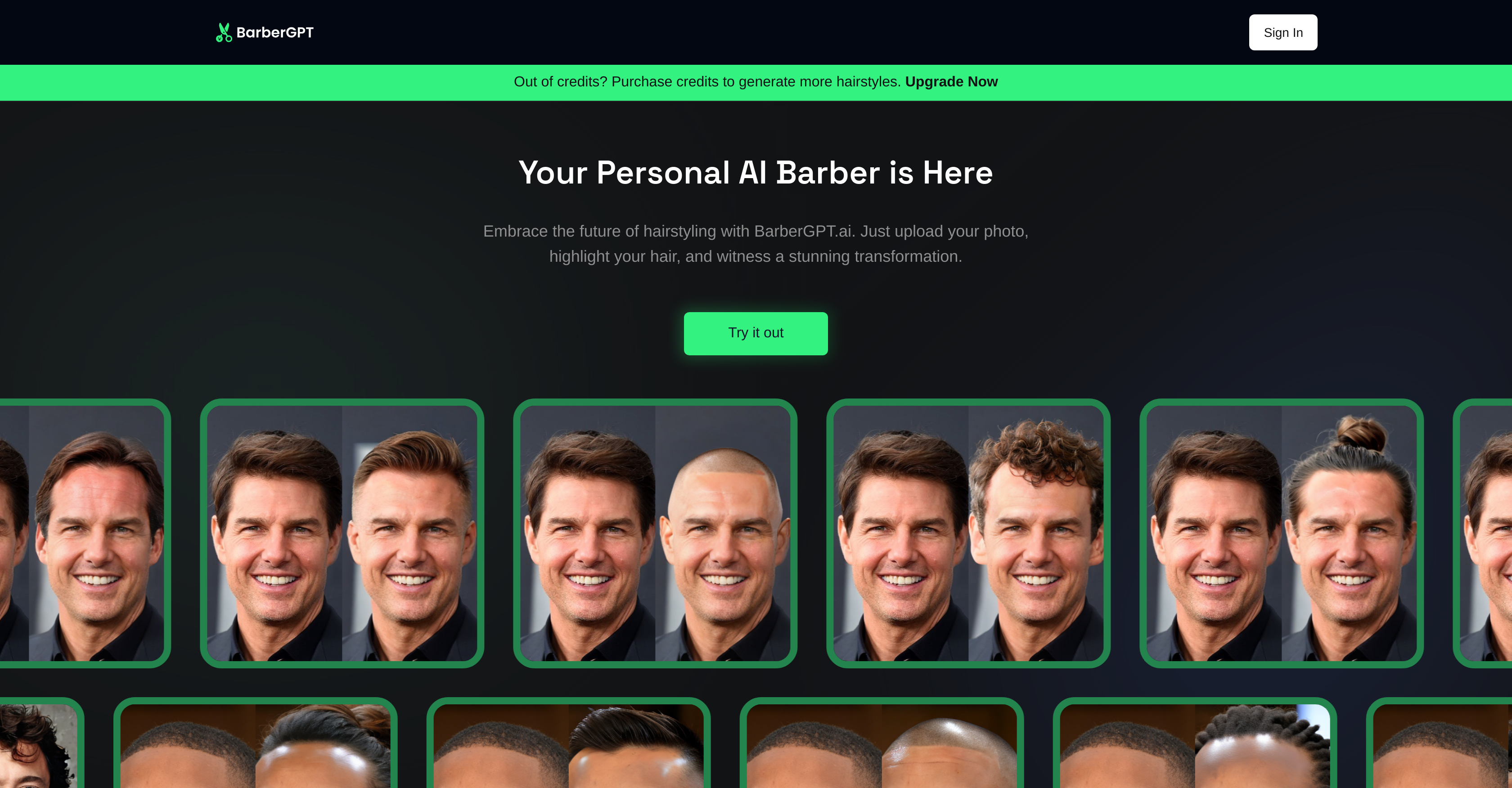
BarberGPT AI is a browser-only tool with a deliberately narrow brief. The essentials:
• Generative re-render of the hair, not a flat filter or pasted wig.
• Manual brush masking puts hairline control in the user’s hands.
• Around 40 styles, weighted to men’s buzz cuts, fades, tapers and crops.
• No color, no beard option and a thin women’s library, but roughly three years live with strong trust scores.
Hairstyle AI, the broad studio
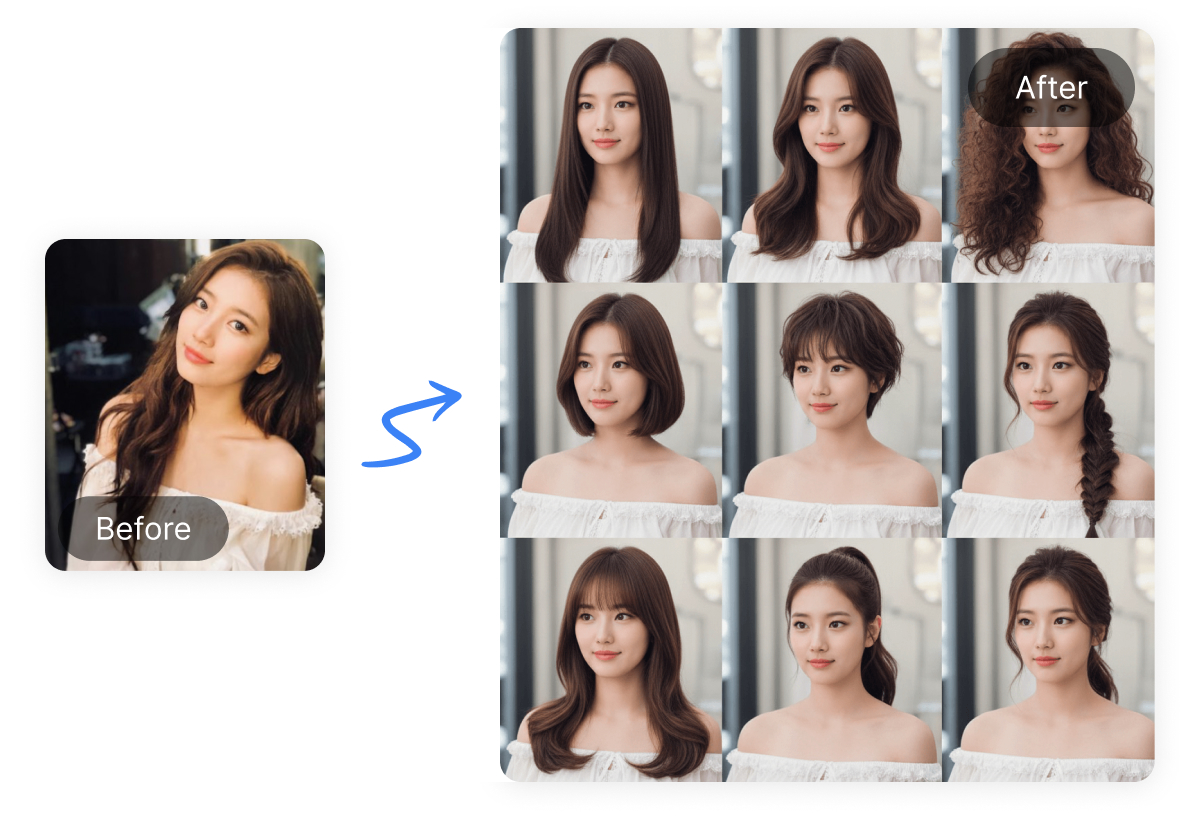
The opposite stance, a broad makeover suite built for speed and reach. The essentials:
• Automatic application by gender, style and color, with no brushwork needed.
• More than 100 styles advertised, including 79 listed for women.
• More than 30 hair colors, from naturals to pastels and metallic tones.
• Sits inside a wider toolkit of AI headshots, portraits, image editing and short video.
How each tool works
Both start from a single uploaded photo, then split on method.
BarberGPT in four steps
1. Upload a clear, front-facing photo in the browser, with no account needed for the trial.
2. Paint a brush over the existing hair to mark the exact area to change.
3. Pick a target cut from the men’s style gallery.
4. Generate, then review the preview in roughly twenty to sixty seconds.
Hairstyle AI in four steps
1. Sign in and upload a photo to claim the free starter credits.
2. Choose a gender, then a style from the large gallery.
3. Select a hair color, from naturals to bold fashion tones.
4. Let the tool apply everything automatically, then download the result.
Results and realism
Output quality was the real test, and it split cleanly by hair type, style and the kind of change requested. Across more than two dozen test photos the same hierarchy held: BarberGPT peaked on a few looks, while Hairstyle AI stayed even across many.
| Scenario | BarberGPT AI | Hairstyle AI |
|---|---|---|
| Short men’s cuts (buzz, fade, taper, crop) | Excellent, photoreal | Good |
| Medium men’s cuts | Strong | Good |
| Long or shoulder-length hair | Weak, softens and blurs | Decent |
| Curly or coily textures | Inconsistent, synthetic edges | Fair |
| Women’s styles | Limited | Strong |
| Hair color and highlights | Not supported | Strong, 30 plus shades |
| Side and angled photos | Good with a careful mask | Decent |
| Lighting and texture match | Tracks the original closely | Generally consistent |
| Drastic changes (shaved head, grow-out) | Strong for big decisions | Good |
| Hairline blending | Excellent, via manual mask | Variable, via auto-detect |
Input quality drove almost everything. A sharp, well-lit, front-facing photo lifted both tools, while a dim or angled shot dragged both down. The deciding factor was recovery: a careful brush in BarberGPT could rescue a hairline that Hairstyle AI’s automatic detection missed, but that control cost extra effort.
The same photo, pushed in two directions, shows the split plainly:
| Requested change | BarberGPT AI result | Hairstyle AI result |
|---|---|---|
| Tight skin fade | Crisp, photoreal fade and hairline | Clean, slightly less defined |
| Shoulder-length waves with copper color | Softer, faintly waxy; no color option | Believable waves plus a convincing copper tone |
The bottom line on results: BarberGPT goes deeper on a narrow set of looks, while Hairstyle AI stays believable across a far wider spread. For the sharpest output on either tool, a clear, front-facing photo in even light matters more than any in-app setting.
Strengths and limitations
The same picture, distilled into what each tool does well and where it falls down:
| Tool | Where it shines | Where it struggles |
|---|---|---|
| BarberGPT AI | Photoreal short and medium men’s cuts; precise hairline control; fast, account-free start; strong privacy; pay-once pricing | No hair color; no beard styling; weak on mobile; curly and long hair distort; thin women’s library; small style set |
| Hairstyle AI | Wide style range; 30 plus colors; works for women and longer hair; smooth on phones; broader AI suite | Short-cut realism only good, not best; subscription-led cost; auto-detection can miss an edge; limited formal review history |
Feature face-off
Read top to bottom, BarberGPT concentrates its strength in a few rows while Hairstyle AI spreads coverage across nearly all of them.
| Capability | BarberGPT AI | Hairstyle AI |
|---|---|---|
| Style library | Around 40 styles | 89 plus (100 plus advertised) |
| Hair color preview | None | More than 30 colors |
| Women’s styles | Limited | Extensive (79 plus) |
| Beard or facial hair | Not supported | Not a dedicated feature |
| Editing approach | Manual brush masking | Automatic application |
| Mobile experience | Weak on touchscreens | Built to work on phones |
| Processing speed | 20 to 60 seconds | Under 10 seconds (advertised) |
| Wider AI suite | Single purpose | Headshots, portraits, video, editing |
| Account to start | Not required for trial | Free sign-in for credits |
The pattern is hard to miss. BarberGPT wins the rows that touch realism and control. Hairstyle AI wins the rows that touch flexibility, color and reach. A reader can almost choose a tool by circling which rows matter most to the decision at hand.
The market backdrop
The reason both tools exist, and keep improving, is a category growing far faster than most. The global virtual try-on market was valued at about 9.17 billion dollars in 2023 and is projected to reach roughly 46.42 billion by 2030, a compound annual growth rate near 26 percent, according to Grand View Research. Beauty and cosmetics specifically ride the same wave, with several analysts tracking double-digit annual growth in AI personalization and virtual mirrors.
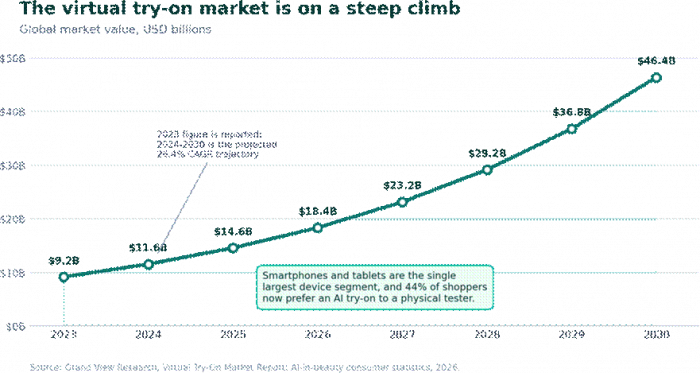
Figure 1. The virtual try-on market is projected to roughly quintuple between 2023 and 2030.
One detail speaks directly to this comparison. Smartphones and tablets form the single largest device segment for virtual try-on, and around 44 percent of shoppers now prefer an AI try-on to a physical tester. Most demand, in short, arrives on a phone screen, which turns mobile usability from a nicety into a core requirement. A desktop-first masking workflow, however accurate, is swimming against where the category is heading.
Pricing compared
Cost structure rewards different habits. BarberGPT charges once, Hairstyle AI leans on a subscription. Figures reflect pricing listed at the time of writing.
| Plan | BarberGPT AI | Hairstyle AI |
|---|---|---|
| Free tier | 3 previews, no account | 20 credits after sign-in |
| Entry paid | 1 dollar for 7 credits | Lite, about 9.90 dollars per month |
| Best-value tier | 15 dollars for 300 credits | Pro, about 19.60 dollars per month |
| Cost per preview | Roughly 0.05 to 0.14 dollars | Bundled into monthly credits |
| Billing | One-time, no auto-renewal | Recurring, with one-time option |
For a single haircut decision, BarberGPT is hard to beat: one dollar covers the experiment, with the 5 dollar pack of 50 credits the practical sweet spot once the mask-and-restyle rhythm sets in. The 1 dollar starter pack is best skipped, since its credits evaporate fast and the per-preview cost is the highest of the tiers. Hairstyle AI costs more upfront, but the spend unlocks color, women’s styles and a full suite of headshots, portraits and video that BarberGPT does not offer at any price, which makes the recurring model the better value for anyone who returns often.
Mobile, privacy and everyday use
Three everyday factors decided which tool felt better to live with:
• Mobile: BarberGPT’s brush masking fights a touchscreen, the most common complaint across reviews, while Hairstyle AI, with no brush, behaves naturally on a phone.
• Speed: Hairstyle AI advertises results in under ten seconds against BarberGPT’s twenty to sixty, though both feel responsive with no queues.
• Privacy: BarberGPT needs no account for the trial and offers manual deletion, while Hairstyle AI encrypts uploads, skips training use and deletes after 24 hours, a solid but more standard posture.
How they score, side by side
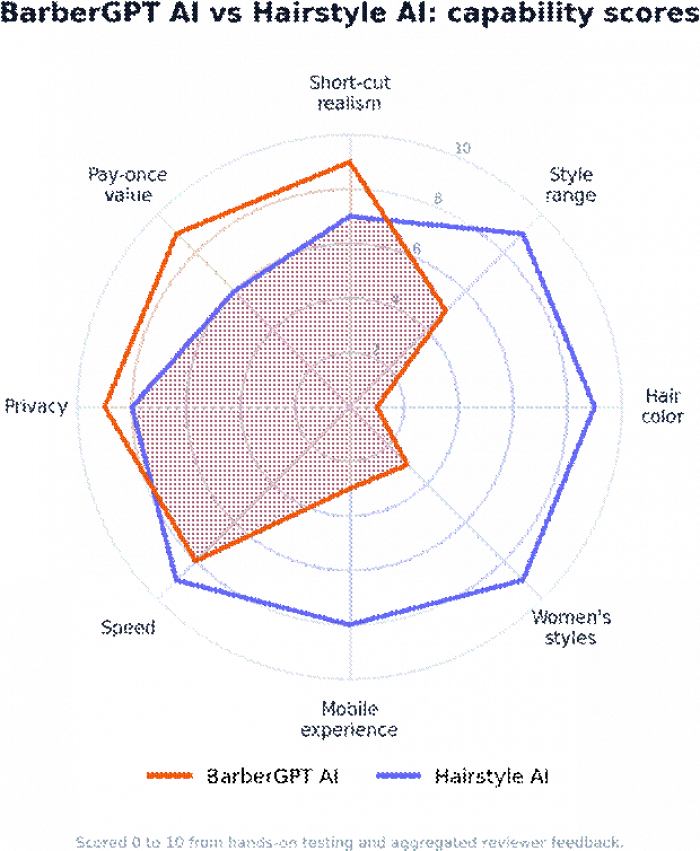
Figure 2. A spiky specialist next to a rounded generalist.
BarberGPT draws a spiky outline, tall on short-cut realism, privacy and pay-once value, but short on color, women’s styles and mobile. Hairstyle AI draws a rounder shape, strong almost everywhere without a single dominant peak. A specialist that goes deep on a few things sits beside a generalist that goes wide on many, and the right choice is whichever silhouette matches the job. The shape, more than any single number, tells the story at a glance.
Which tool fits which need
Matching a single top priority to the better pick makes the decision quick:
| Top priority | Better pick | Why |
|---|---|---|
| Realistic short or medium men’s cut | BarberGPT AI | Most photoreal output in its lane |
| Hair color or highlights | Hairstyle AI | 30 plus shades; BarberGPT has none |
| Women’s or longer, textured styles | Hairstyle AI | Far deeper, more reliable library |
| Mainly a phone | Hairstyle AI | No brushwork, mobile-friendly flow |
| One cheap, one-off decision | BarberGPT AI | One dollar, no subscription |
| Privacy and no new account | BarberGPT AI | Trial needs no sign-in; strong trust scores |
The final verdict
After three weeks of trading photos between the two, the verdict settled into a recommendation for each rather than a single champion. BarberGPT earned lasting respect for doing one hard thing convincingly. For a man with reasonably straight, short-to-medium hair, working on a desktop, weighing a classic cut, nothing here produced more believable previews for less money. It is the tool to open the night before a barber appointment, make one confident call, and close. Within that narrow lane, independent reviewers reached the same conclusion, and the 7.2 of 10 it scored in detailed testing reflects exactly that, strong inside its scope and modest outside it.
Hairstyle AI earned the wider keep. The moment the brief involved color, women’s styles, longer hair or a phone in hand, it was the only one of the two still standing. Its previews were not always the most photoreal in the set, but they were the most useful across the most situations, and the color library alone covers ground BarberGPT does not attempt.
The takeaway is unglamorous but practical. Pick BarberGPT for depth on a narrow job, pick Hairstyle AI for range across a broad one, and match the tool to the haircut and the device. Sent to the right job, neither one disappoints.
Post Comment
Be the first to post comment!