On This Page
- What is an AI tool aggregator?
- Lorka AI: moving beyond directories into workflow aggregation
- Monica.im : an everyday AI workspace
- Other AI aggregators worth mentioning in 2026
- When AI aggregators actually save companies time
- Reducing pilot fatigue
- Preventing tool fragmentation
- Improving procurement decisions
- The biggest mistakes teams make
By 2026, most companies are no longer asking whether they should use AI. That conversation is over. The real challenge now is much more practical: which AI tools should teams actually adopt, and how can they avoid wasting time testing hundreds of similar platforms?
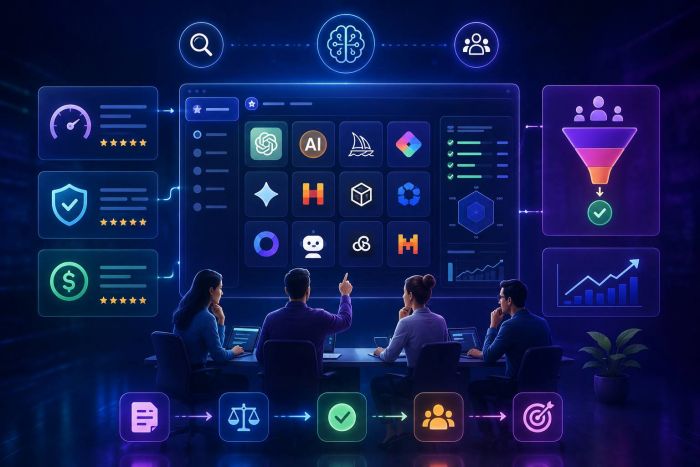
That’s why AI tool aggregators have become increasingly valuable. The best ones don’t simply list thousands of AI apps. They help teams:
● compare tools faster
● identify real differences between platforms
● reduce unnecessary testing
● avoid choosing tools that won’t scale internally
In short: they reduce decision fatigue.
What is an AI tool aggregator?
The term gets used very loosely. In 2026, an AI aggregator can refer to very different things depending on the business need.
1. Traditional AI directories
These platforms help users discover tools by category. They answer questions like:
● What AI tools exist for content creation?
● What are the best AI meeting assistants?
● Which platforms automate customer support?
These directories are useful for broad discovery, but many suffer from outdated listings or rankings based purely on traffic/popularity.
Examples include:
● Futurepedia
● There's An AI For That
● Toolify
These platforms are great for initial research, but teams often need deeper evaluation before making a purchase decision.
Lorka AI: moving beyond directories into workflow aggregation
Lorka AI stands out because it behaves less like a static directory and more like a workflow aggregator.
Instead of simply showing teams what tools exist, it helps centralize AI-powered communication workflows. This is especially useful for teams managing:
● customer support automation
● lead qualification
● messaging workflows
● multi-channel communication
Rather than forcing teams to jump between multiple standalone AI apps, Lorka helps consolidate workflows in one place. That’s why companies focused on operational efficiency often look at platforms like Lorka when the goal is execution, not just discovery.
Monica.im : an everyday AI workspace
Monica serves a different purpose. It’s often used as an all-in-one productivity layer that gives employees access to multiple AI models and tools from a single interface.
Teams typically use Monica for:
● writing assistance
● summarization
● research
● content generation
● daily productivity tasks
Its strength isn’t deep marketplace discovery. Its value comes from convenience: reducing tool fragmentation for employees who need AI support every day. For smaller teams, this can be a faster alternative to managing multiple subscriptions.
Other AI aggregators worth mentioning in 2026
Beyond Lorka and Monica, several platforms continue to dominate AI discovery.
Futurepedia
One of the largest AI tool databases.
Strong for:
● broad discovery
● trend spotting
● category browsing
Weakness:
● sheer volume can create decision paralysis.
There's An AI For That
Very popular for quick searches.
Its search engine helps users quickly identify niche AI tools for very specific tasks.
Great for:
● fast discovery
● niche use cases
● experimentation
Less useful for enterprise procurement decisions.
Toolify
Known for surfacing trending tools quickly.
Useful for staying updated on fast-moving categories like:
● AI video generation
● design tools
● AI agents
● automation platforms
The downside: trends move faster than actual enterprise adoption.
When AI aggregators actually save companies time
Reducing pilot fatigue
Many companies waste months testing too many similar tools. Good aggregators reduce the shortlist faster.
Preventing tool fragmentation
Without centralization:
● marketing buys one tool
● sales buys another
● support buys another
This creates chaos.
Aggregators help standardize tool adoption.
Improving procurement decisions
Modern procurement teams care about:
● security
● compliance
● integrations
● vendor stability
Not just pricing.
For security validation, many companies still rely on frameworks like SOC 2 guidelines.
The biggest mistakes teams make
● choosing tools based on hype
● prioritizing flashy demos
● ignoring integrations
● overlooking compliance requirements
● confusing marketplaces with execution platforms
A tool that looks impressive in a demo can become a long-term operational headache.




headshot
May 13, 2026I’ve noticed the same issue lately where there are just too many AI tools to keep up with, and it gets exhausting trying to figure out which ones are actually useful. The part about companies ending up with fragmented systems after every department buys different tools felt very accurate.