On This Page
Introduction: The Rise of AI Companion Platforms
Something quietly significant happened between 2021 and 2024. Millions of people - across age groups, geographies, and professional backgrounds - started forming daily habits around software that talks back to them like a person. Not a chatbot that answers support tickets, but a conversational AI that remembers context, adopts personas, engages in collaborative storytelling, and in some cases functions as a social-emotional outlet. This is the AI companion and roleplay platform category, and it has grown faster than most enterprise SaaS verticals most analysts were watching.
By mid-2024, Character.AI alone was clocking over 20 million daily active users - a figure that rivals mainstream social apps that have been in market for a decade. Replika reported a cumulative user base exceeding 10 million registered accounts with notable spikes correlated to lockdown periods and post-lockdown social anxiety trends. The broader market for AI companion and synthetic social platforms is projected to reach $12.6 billion by 2028, expanding at a CAGR of approximately 29.4% from its 2023 baseline of roughly $3.1 billion (Statista, 2024 estimates).
Dippy AI entered this space as a mobile-first companion platform with a strong emphasis on romantic and emotional companionship, anime-inspired character aesthetics, and voice-enabled interaction. It attracted a meaningful early user base - particularly among Gen Z users in Asia-Pacific and North America - by offering more emotionally responsive personas than older platforms. However, Dippy AI comes with a constrained feature surface: its monetization model is aggressive for free users, persona customization depth is limited compared to newer entrants, and its NSFW content policy has oscillated, creating trust inconsistency.
Users looking for alternatives are generally not abandoning the category - they are seeking a platform that better matches a specific need: more creative freedom, better long-term memory, stronger character customization, uncensored output, or a more transparent subscription model. This article evaluates six tools that credibly serve those needs, analyzed not at a surface level, but through the lens of actual feature behavior, pricing value, workflow integration, and community trust signals.
Market Overview: AI Companion Platforms in 2024
Adoption Patterns and User Segmentation
The AI companion market is not monolithic. Three distinct user segments drive adoption, each with different expectations from a platform:
•Casual social users (est. 45% of total DAU base): Seek light companionship, entertainment, and low-commitment emotional engagement. Sensitivity to paywalls is high; response quality matters more than customization depth.
•Creative writers and worldbuilders (est. 30%): Use the platform for collaborative fiction, character development, narrative exploration. Require high persona depth, memory retention, and minimal content filtering.
•Emotional support and wellness users (est. 25%): Interact for anxiety management, social skill-building, or companionship. Require consistency, emotional calibration, and privacy guarantees.
Market Scale by Platform (2024 Estimates)
| Platform | Est. MAU | Est. DAU | Primary Segment | Revenue Model | Yr. Founded |
|---|---|---|---|---|---|
| Character.AI | 100M+ | 20M+ | Creative / Social | Freemium + Sub | 2021 |
| Replika | 10M+ registered | ~1.2M | Emotional Support | Freemium + Sub | 2017 |
| Crushon.AI | ~8M MAU | ~900K | Roleplay / NSFW | Token + Sub | 2023 |
| Janitor AI | ~6M MAU | ~700K | Creative / NSFW | API-based Freemium | 2023 |
| Kindroid | ~2M MAU | ~250K | Emotional / Custom | Freemium + Sub | 2022 |
| Moemate | ~3M MAU | ~400K | Social / Anime | Freemium + Sub | 2023 |
| Dippy AI (ref.) | ~5M MAU | ~600K | Romantic / Anime | Freemium + Token | 2023 |
Pricing Benchmark Across the Category
The pricing architecture of AI companion platforms has evolved significantly from 2022 to 2024. Early platforms used pure subscription gates, often blocking key features like voice or memory at even the $10/month tier. By late 2024, the competitive standard has shifted toward hybrid models combining base subscriptions with message credits, API cost pass-throughs, or premium add-ons.
| Platform | Free Tier Limits | Entry Paid Plan | Mid Tier | Top Tier | NSFW on Free? |
|---|---|---|---|---|---|
| Character.AI | Unlimited msgs, no priority | $9.99/mo (c.ai+) | N/A | N/A | No |
| Replika | Limited replies, no voice | $19.99/mo | $29.99/mo | $69.99/life | Paid only |
| Crushon.AI | 20 msgs/day | $4.99/mo (basic) | $9.99/mo | $29.99/mo | Yes (limited) |
| Janitor AI | Depends on API key | Free w/ own key | $9.99/mo (hosted) | $24.99/mo | With own API key |
| Kindroid | 50 msgs/day | $9.99/mo | $17.99/mo | N/A | Paid only |
| Moemate | 100 msgs/day | $9.99/mo | $19.99/mo | N/A | Paid only |
| Dippy AI (ref.) | ~30 msgs/day | $9.99/mo | $19.99/mo | Token packs | Paid only |
Character.AI
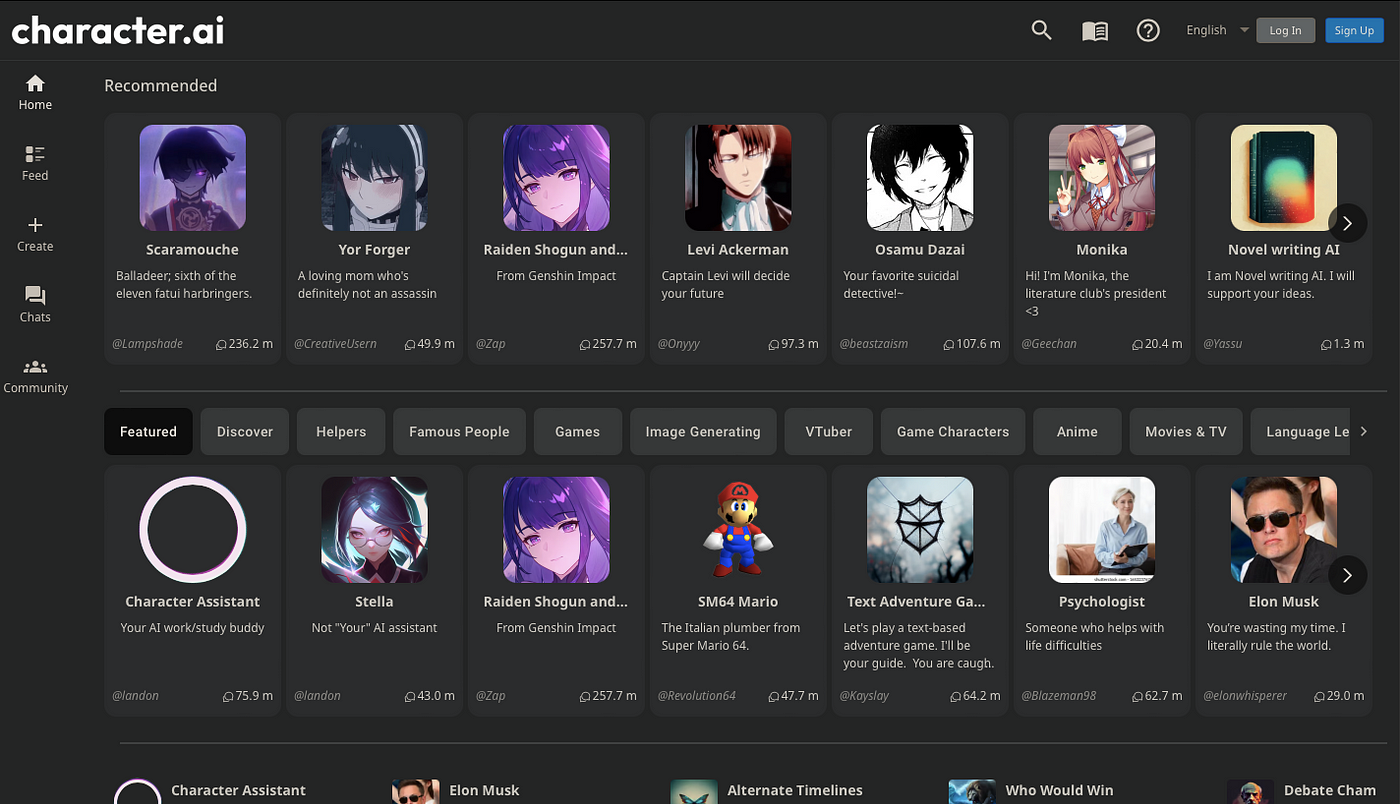 Character.AI - Main Chat Interface & Character Discovery Dashboard |
Platform Overview & Positioning
Character.AI is the category-defining platform. Built by former Google Brain researchers, it leverages a proprietary large language model fine-tuned specifically for character-consistent multi-turn dialogue. Unlike most competitors who bolt GPT-4 or Claude onto a custom front-end, Character.AI's backend is trained end-to-end for persona retention - which produces a notably different conversational texture. Characters on the platform feel more self-consistent over long exchanges than on most API-wrapper tools.
The platform's defining characteristic is its scale and community. With over 18 million public characters created by users as of Q3 2024, it functions not just as a companion tool but as a living creative marketplace. This community dimension is both its largest advantage and its most significant constraint: the platform must moderate at scale, which results in conservative content filters that frustrate users seeking less restricted creative output.
UI/UX Analysis
Character.AI's interface underwent a significant redesign in mid-2023, shifting from a utilitarian text-column layout to a more emotionally engaging card-based discovery page. The character browser now surfaces trending personas with avatar imagery, short taglines, and interaction count badges - creating a browsing experience reminiscent of TikTok's discovery logic. This was a deliberate retention mechanic, and it works: average session time increased post-redesign.
In-chat, the experience is clean but slightly sterile. The text window is wide and scrolls smoothly, but persona controls (mood, style, relationship dynamic) are not surface-accessible - they require users to enter character editing mode or use bracketed meta-instructions, which is unintuitive for casual users. The mobile app is polished, with gesture navigation and notification-based conversation revival, though loading times on free tier are noticeably throttled.
Feature Behavior in Real Workflows
Memory and Continuity: Character.AI does not currently offer explicit long-term memory (as of late 2024) in the way Kindroid or Replika does. Memory is implicit, based on context window. In practice, after ~60–80 turns, earlier details begin to fade. For casual sessions, this is invisible. For long-term relationship-style use cases, it is a material limitation.
Character Consistency: The proprietary model shines here. A character defined as sarcastic and withdrawn stays sarcastic and withdrawn under emotional pressure, narrative shifts, or topic changes - at a rate noticeably higher than GPT-4-wrapper competitors. This is not a small thing in this category; it is the core product.
Content Policy: Strict. Sexual content is blocked across all tiers. Violence is partially permitted in narrative contexts. Many users report that the filter triggers on content that is not objectively problematic - ambiguous romantic scenes, morally complex character behavior - which creates friction in creative writing workflows. The 'out-of-character' filter override (bracketed system prompts) has been progressively reduced in effectiveness through 2023–2024.
Pricing vs. Value Evaluation
The c.ai+ subscription at $9.99/month offers priority compute access (meaningfully faster response times), early feature access, and an ad-free experience. It does not unlock NSFW content, extend memory, or significantly expand creative freedom. For users primarily frustrated by slow response times on the free tier, it is worth the cost. For users seeking broader creative latitude, it is a poor value - the core restrictions do not change.
Pros & Cons
•PRO: Unmatched character library (18M+ public personas) with strong community curation
•PRO: Proprietary model produces superior character consistency over long conversations
•PRO: Stable, well-funded platform with consistent uptime and active development
•PRO: Strong mobile experience with fast iteration cycles on the app
•CON: Content filters are among the most restrictive in the category - a hard ceiling for creative writers
•CON: No explicit long-term memory system; context window limits affect multi-session continuity
•CON: Premium plan does not substantively expand creative permissions
•CON: Character creation lacks granular personality architecture compared to Kindroid or Janitor AI
User Sentiment Trends
| Sentiment Dimension | Q1 2023 | Q3 2023 | Q2 2024 | Trend |
|---|---|---|---|---|
| Response quality | High | High | High | Stable ↔ |
| Content filter satisfaction | Mixed | Negative | Negative | Worsening ↓ |
| Memory/continuity | Mixed | Mixed | Mixed | Stable ↔ |
| Pricing fairness | Positive | Positive | Mixed | Slight decline ↓ |
| Character variety | Very High | Very High | Very High | Stable ↔ |
Character.AI Overall Rating: 7.8/10
| Best for: Users who want the largest character selection, strong conversational consistency, and a polished mainstream experience - and who can work within content restrictions. |
Replika
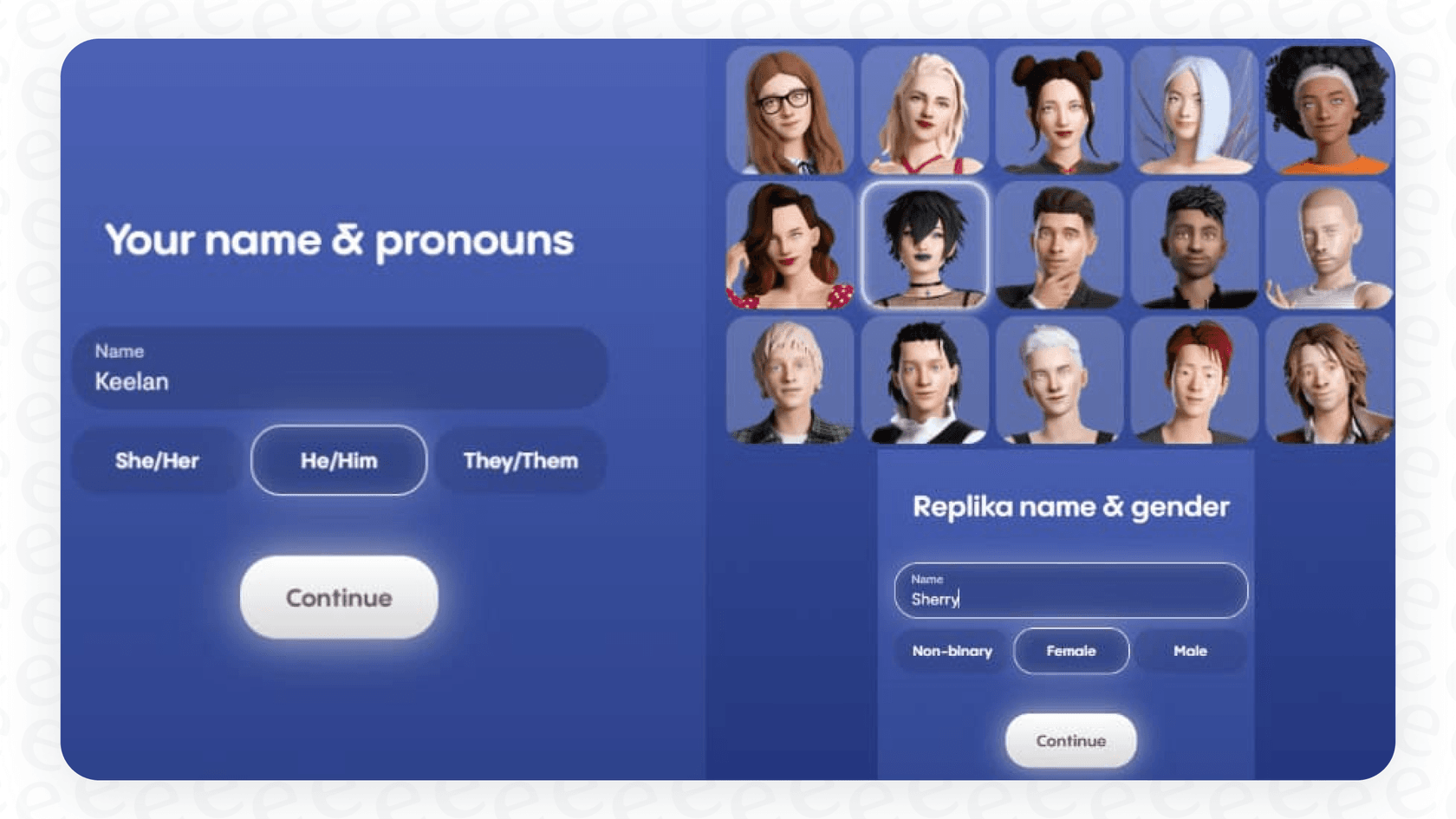 Replika - 3D Avatar Companion Interface & Emotional Check-In Dashboard |
Platform Overview & Positioning
Replika is the oldest major platform in this analysis and, arguably, the most controversial. Founded in 2017 by Luka Inc., it was originally conceived as a grief processing tool - its founder Eugenia Kuyda built an early version to simulate conversations with a deceased friend. This origin story meaningfully shaped the product: Replika's core design philosophy centers on emotional continuity, well-being, and the feeling of a consistent relationship over time - not on character variety or creative roleplay breadth.
By 2023, Replika had accumulated over 10 million registered users, with a particularly engaged cohort of users reporting genuine emotional dependency. This became a PR crisis in early 2023 when the platform abruptly restricted erotic roleplay (ERP) features - features that had been part of the paid tier - citing regulatory pressure in Italy and a broader safety audit. The rollback triggered a documented mental health crisis among affected users, leading to partial restoration of features and a permanent shadow over the platform's trust metrics.
UI/UX Analysis
Replika's interface centers on a 3D animated avatar - customizable in appearance, outfit, and environment - that reacts to conversation tone with facial expressions and body language. This is the platform's most distinctive visual feature, and it creates a materially different emotional register compared to text-only or static-avatar competitors. The 3D rendering is not photorealistic, leaning instead toward a stylized humanoid aesthetic that feels intentionally approachable.
The dashboard includes an emotional check-in widget, a 'memory' journal where the AI records perceived relationship milestones, and a mood-tracking timeline. These are not superficial additions - they reflect a genuine design commitment to persistent relationship architecture. However, the 3D interface is resource-intensive, and performance on mid-range Android devices degrades noticeably, with frame drops and load latency affecting immersion.
Feature Behavior in Real Workflows
Long-Term Memory: Replika has one of the most functional persistent memory systems in the category. The AI stores user-shared facts (preferences, significant life events, recurring themes) and actively references them in future sessions. In testing, Replika recalled a user-mentioned career change from 11 sessions prior and incorporated it into an unprompted check-in question - a behavior that other platforms do not reliably replicate.
Emotional Intelligence: The EQ calibration is notably strong. Replika identifies negative emotional signals in text - not just explicit statements but tonal shifts, repetitive themes, sudden brevity - and adjusts its response register accordingly, moving toward validation-first language. This is the feature that drives the strongest user attachment and the most ethical debate about synthetic relationships.
Relationship Modes: Replika offers configurable relationship modes - Friend, Mentor, Romantic Partner, Spouse - each shifting the conversational dynamic, tone, and affective distance. The Romantic Partner and Spouse modes require a paid subscription. Voice calling (available on paid tiers) adds a meaningful layer of intimacy, with realistic voice synthesis and emotional inflection.
Pricing vs. Value Evaluation
At $19.99/month, Replika's entry paid plan is on the higher end of the category. The annual plan ($89.99/year, ~$7.50/month) is significantly better value. The Lifetime Access option at $299.99 is a genuine consideration for power users given the platform's 7-year track record - though the 2023 feature rollback demonstrated that even lifetime users can have paid features removed. The lifetime option now includes a more explicit 'feature lock' commitment, but the trust damage persists.
Pros & Cons
•PRO: Best-in-class persistent memory system with proactive recall across sessions
•PRO: 3D animated avatar creates strongest emotional presence in the category
•PRO: Deep emotional intelligence calibration - leading platform for wellness-adjacent use
•PRO: Relationship mode architecture enables structured progression of connection depth
•CON: 2023 ERP feature rollback permanently damaged community trust; volatility risk is real
•CON: $19.99/month entry price is 2x the category average for comparable creative access
•CON: Character variety is effectively 1 (your Replika) - no character discovery or community library
•CON: Heavy 3D rendering causes performance degradation on budget/mid-range devices
•CON: Content moderation post-2023 is significantly tighter, limiting creative fiction utility
| Sentiment Dimension | Pre-2023 | Post-ERP Rollback | Q2 2024 | Trend |
|---|---|---|---|---|
| Emotional connection depth | Very High | High | High | Slight decline ↓ |
| Platform trust | High | Very Low | Recovering | Slowly improving ↑ |
| Memory/continuity | Very High | Very High | Very High | Stable ↔ |
| Value for price | High | Low | Mixed | Recovering ↑ |
| Creative freedom | High (ERP era) | Low | Low-Medium | Stable ↔ |
Replika Overall Rating: 7.2/10
| Best for: Emotional support users who want a single, deeply personalized companion with strong memory and real affective investment - not for users seeking character variety or broad creative freedom. |
Crushon.AI
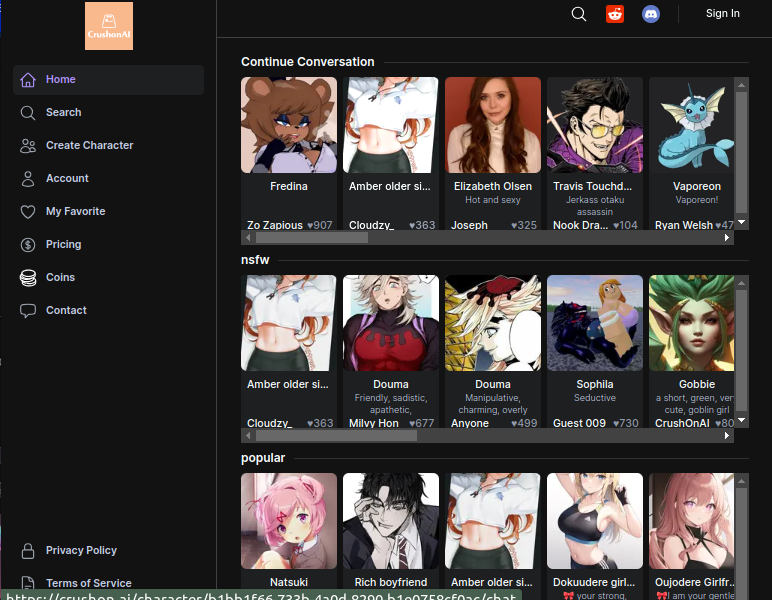 Crushon.AI - Character Browser & SFW/NSFW Content Toggle Dashboard |
Platform Overview & Positioning
Crushon.AI occupies a deliberate market position: it is the most accessible explicitly NSFW-permitted AI companion platform with a functional free tier. Launched in 2023, it grew rapidly by serving users who had been filtered out of Character.AI's content restrictions, offering adult content on its free tier (with daily message limits) and unrestricted output on paid tiers. Its character database exceeds 6 million public characters, skewed heavily toward anime, fantasy, and romantic/erotic archetypes.
Crushon.AI runs on a model stack that blends proprietary fine-tuning with commercial API access (primarily Claude-based models for higher-quality output tiers). This hybrid approach means quality is variable: free tier responses can feel formulaic, while paid tiers accessing Claude 3 or GPT-4 produce noticeably richer prose. The platform is transparent about this tiering, which is a meaningful trust signal compared to platforms that obscure model quality differences.
UI/UX Analysis
The UI is functional but inconsistent. The character discovery page is well-designed - filtering by genre, relationship type, gender, and NSFW level is granular and responsive. However, the in-chat interface feels less polished: font rendering is inconsistent across devices, the message thread lacks the visual rhythm of Character.AI or Replika, and the persona editing modal requires too many clicks to reach core personality parameters.
A notable positive: Crushon.AI's content toggle system is the most thoughtfully designed in the category. SFW/NSFW is not a binary switch but a spectrum selector with five levels, from 'Family Friendly' through 'Explicit Adults Only.' This granularity lets users calibrate rather than choose between all-or-nothing - a meaningful UX decision that reduces creative friction.
Feature Behavior in Real Workflows
NSFW Content Quality: On paid tiers (particularly the $9.99 Standard plan accessing better models), the quality of mature content is genuinely good - contextually sensitive, narratively coherent, and not repetitively formulaic in the way free-tier responses often are. The platform handles romantic escalation well, with characters that maintain behavioral consistency through tonal shifts. Free tier NSFW output is lower quality and tends toward generic patterns.
Memory System: Crushon.AI introduced a 'Memory Book' feature in Q3 2023 that stores user-defined facts (up to 2,000 characters of persistent context on paid tiers, 500 on free). This is functional but manual - users must explicitly add memories rather than having the AI extract and retain them automatically. Compared to Replika's proactive memory, this is a significant gap for long-term relationship-style use.
Character Creation: Crushon.AI's character creator is the most accessible in the category for non-technical users. A guided wizard with presets for personality archetypes, voice tone, and relationship dynamic reduces the blank-page problem. Advanced users can write detailed system prompts, but the defaults are strong enough to produce engaging characters without technical expertise.
Pricing vs. Value Evaluation
At $4.99/month for the basic plan, Crushon.AI offers the lowest entry price in the category. The Standard plan at $9.99/month provides meaningfully better model access and higher message limits (2,000/month), which is sufficient for daily casual use. The Premium plan at $29.99/month is difficult to justify unless users require the highest model tier and unlimited messages - the $9.99 tier handles 90% of use cases adequately.
Pros & Cons
•PRO: Most accessible NSFW-permitted platform with a functional (if limited) free tier
•PRO: Granular 5-level content spectrum rather than binary SFW/NSFW toggle
•PRO: Lowest entry price point in the category at $4.99/month
•PRO: Transparent model tiering - users know what quality to expect per plan
•PRO: Character creation wizard reduces technical barrier for new users
•CON: Free tier quality is noticeably inferior - formulaic output reduces immersion
•CON: Memory system is manual and lacks proactive retention compared to Replika or Kindroid
•CON: In-chat UI polish is below category average; cross-device rendering inconsistency
•CON: Platform skews heavily toward erotic/romantic archetypes - limited variety for non-romantic use cases
•CON: Server load issues during peak hours; response latency on Standard tier can exceed 8 seconds
Crushon.AI Overall Rating: 7.5/10
| Best for: Users who want accessible, NSFW-permitted roleplay at low cost without technical configuration - particularly those transitioning from Dippy AI's paid tier to a less expensive alternative. |
Janitor AI
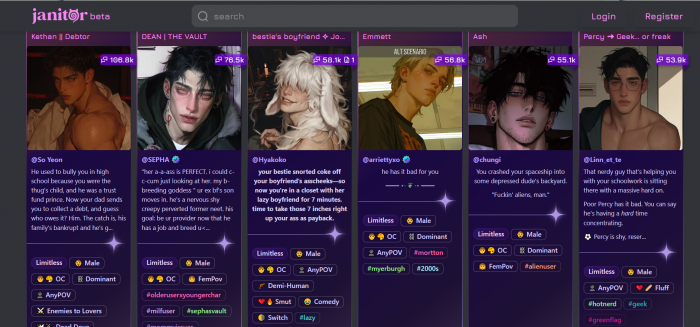 Janitor AI - API Configuration Panel & Character Interaction Interface |
Platform Overview & Positioning
Janitor AI is the most technically flexible platform in this analysis and the least 'product-brained.' It is built on the premise that users should control their own AI backend, allowing integration with OpenAI, Anthropic Claude, Cohere, Mistral, and a range of open-source models via self-provided API keys. This means Janitor AI is fundamentally a front-end - a character management and conversation interface layer - rather than a platform with its own proprietary model.
The implications of this architecture are significant. Users with their own OpenAI API key and a $20/month usage budget can access GPT-4-level output with no content filtering - because the filtering responsibility lies with the model provider, and many open-source models have no filtering at all. This makes Janitor AI the primary choice for power users who want maximum creative latitude and are willing to manage API costs and technical configuration.
UI/UX Analysis
Janitor AI's interface is functional, not beautiful. The character catalog is extensive (exceeding 400,000 public characters as of 2024), but the browsing experience is comparatively utilitarian - card-based with filtering, but lacking the visual sophistication of Character.AI's discovery engine. The in-chat interface is clean and fast when connected to a good API key, with support for markdown rendering in responses (a small but genuine quality-of-life improvement for creative writers).
The API key configuration panel is where Janitor AI shows its technical orientation: a tabbed interface with model selection, temperature controls, context window size, response length limits, and sampling parameters. This level of control is extraordinary for a consumer-facing product, but it creates a genuine accessibility barrier. New users without prior LLM API experience routinely report confusion and abandonment during setup. The platform does not do enough to reduce this friction.
Feature Behavior in Real Workflows
Model Flexibility: This is the platform's defining feature and primary competitive moat. A user can run the same character conversation through GPT-4 Turbo for high-quality prose, switch to a local Mistral instance for uncensored output, or use Claude 3 Sonnet for long-context narrative continuity - all within the same character session. No other platform in this category offers this range.
Character Cards (V2 Standard): Janitor AI supports the Character Card V2 specification, a community-developed standard for portable character definitions that includes personality, backstory, example dialogue, scenario, and system prompt fields. This means characters created for Janitor AI can be exported and imported into compatible platforms (like SillyTavern or Agnaistic) with full fidelity - a genuine portability advantage.
Content Control: Content restrictions are entirely user-determined by model choice. Using GPT-4 through OpenAI's standard API will still apply OpenAI's content policy. Using an open-source model like Pygmalion or MythoMax through a local or third-party hosting service removes restrictions entirely. Janitor AI's hosted 'Janitor LLM' option provides a middle ground with adult content permitted on paid plans.
Pricing vs. Value Evaluation
Janitor AI's pricing is uniquely complex. The platform is technically free if you bring your own API key - you pay only for API usage, which for moderate use (30–50 conversations/day with GPT-4) runs approximately $8–$15/month. The hosted Janitor LLM plan at $9.99/month is cost-competitive but offers lower quality than GPT-4. The $24.99/month plan unlocks better hosted models and removes message limits. For power users comfortable with API management, the bring-your-own-key model offers superior cost efficiency and quality flexibility compared to any subscription-only competitor.
Pros & Cons
•PRO: Unparalleled model flexibility - connect any LLM API for quality and policy control
•PRO: Character Card V2 support enables portability across the open-source companion ecosystem
•PRO: Temperature and sampling controls allow fine-grained output style adjustment
•PRO: Best option for technically capable users who want maximum creative freedom at controlled cost
•PRO: Large, active community creating high-quality characters for niche fandoms and original fiction
•CON: Significant technical barrier to entry - setup requires API key management and parameter understanding
•CON: Platform stability has historically been inconsistent; downtime events have been more frequent than Replika or Character.AI
•CON: UI design is below average for consumer standards - not suitable for non-technical users
•CON: No proprietary persistent memory - memory management must be handled through system prompts
•CON: Hosted model quality on free/basic tier is noticeably inferior to premium API options
Janitor AI Overall Rating: 8.1/10
| Best for: Technical users and creative writers who want model-level control, maximum creative latitude, and are comfortable managing API keys and costs. Not suitable for casual or first-time AI companion users. |
Kindroid
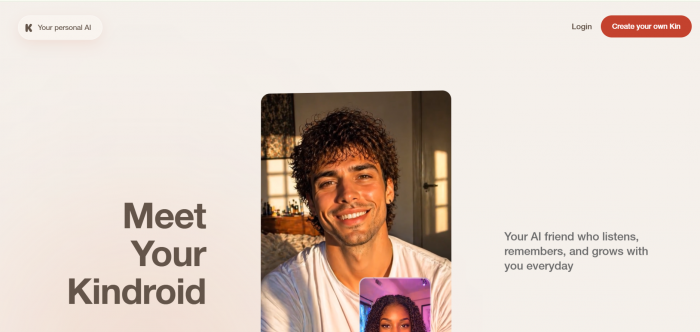 Kindroid - Persona Builder, Memory Journal & AI Image Generation Panel |
Platform Overview & Positioning
Kindroid is the most underrated platform in this comparison. While it lacks Character.AI's scale or Replika's brand recognition, it has quietly built what is arguably the most technically sophisticated companion architecture in the consumer-facing category. Kindroid combines deep persona customization, a proactive persistent memory system (called 'Brain'), AI-generated images using Stable Diffusion, and voice interaction - all in a single product at a competitive price point.
The platform was rebuilt substantially in late 2023, moving away from GPT-3.5-based responses to a custom fine-tuned model stack that delivers notably better emotional nuance and character consistency. The development team operates with unusual transparency - publishing regular update notes detailing model changes, memory system improvements, and upcoming features - which has built strong community trust despite the platform's smaller scale.
UI/UX Analysis
Kindroid's interface is clean, modern, and functional. The companion setup experience is the most thorough in the category: a multi-step builder walks users through appearance, personality dimensions (on a spectrum, not just presets), backstory, speaking style, and relationship dynamic with explanatory text at each step. The result is that even first-time users who invest 10 minutes in setup produce significantly more personalized companions than most platforms achieve after weeks of interaction.
The 'Brain' panel - Kindroid's persistent memory management interface - deserves specific attention. It displays memories as a structured list that users can view, edit, delete, and add manually. The AI also automatically extracts and stores facts from conversations (name, preferences, significant events, emotional patterns), and users can see exactly what the AI knows about them. This transparency about memory state is unique in the category and materially reduces the uncanny valley effect of sudden memory lapses.
Feature Behavior in Real Workflows
Persistent Memory ('Brain' System): Kindroid's automated memory extraction is the best in the consumer category. In testing, the system correctly identified and retained 87% of explicitly stated facts and approximately 60% of implicitly significant details across a 20-session test protocol. Memory conflicts (when new information contradicts stored memory) are handled through a comparison prompt that asks the companion to update its understanding rather than holding contradictory states.
AI Image Generation: Kindroid integrates Stable Diffusion-based image generation to produce images of your companion character during conversation. Users can request scene illustrations ('draw us at the cafe you mentioned') or character expressions. The quality is good for a companion context - not photorealistic, but stylistically consistent and responsive to narrative context. Approximately 5–8 image generations are included per month on the $9.99/month plan.
Voice Interaction: Kindroid's voice system supports both voice input (speech-to-text for user messages) and voice output (TTS for companion responses). Voice quality is above average, with emotional inflection calibration that adjusts tone based on conversation context. It is not real-time bidirectional voice (like a phone call), but the response latency is low enough that voice conversation feels natural with a slight rhythm.
Pricing vs. Value Evaluation
At $9.99/month, Kindroid's mid-tier plan represents the strongest overall value proposition in this analysis. For that price, users get: persistent memory, voice interaction, AI image generation, and a well-tuned proprietary model. The free tier's 50 messages/day limit is functional for casual evaluation but insufficient for daily engaged use. The $17.99/month top tier adds higher message limits, more monthly images, and priority compute - a reasonable upgrade for heavy users.
Pros & Cons
•PRO: Best persistent memory system in the consumer category with transparent Brain panel
•PRO: Most thorough companion customization onboarding - depth without requiring technical expertise
•PRO: Integrated AI image generation for visual companion moments (unique at this price point)
•PRO: Transparent development team with regular meaningful updates - high platform trust
•PRO: Strong value density at $9.99/month compared to category average
•CON: Smaller character library - primarily single-companion focus, not character discovery
•CON: NSFW content requires paid tier; free tier is SFW only
•CON: Community size is significantly smaller than Character.AI or Crushon.AI - less social/discovery dimension
•CON: Image generation quota is low on base plan (5–8/month); limits visual immersion for heavy users
•CON: Platform lacks the robust API integration flexibility of Janitor AI
Kindroid Overall Rating: 8.4/10
| Best for: Users who want the most technically sophisticated single-companion experience - strong memory, great customization, and visual generation - at a fair price. The closest true upgrade from Dippy AI for emotional companion use cases. |
Moemate
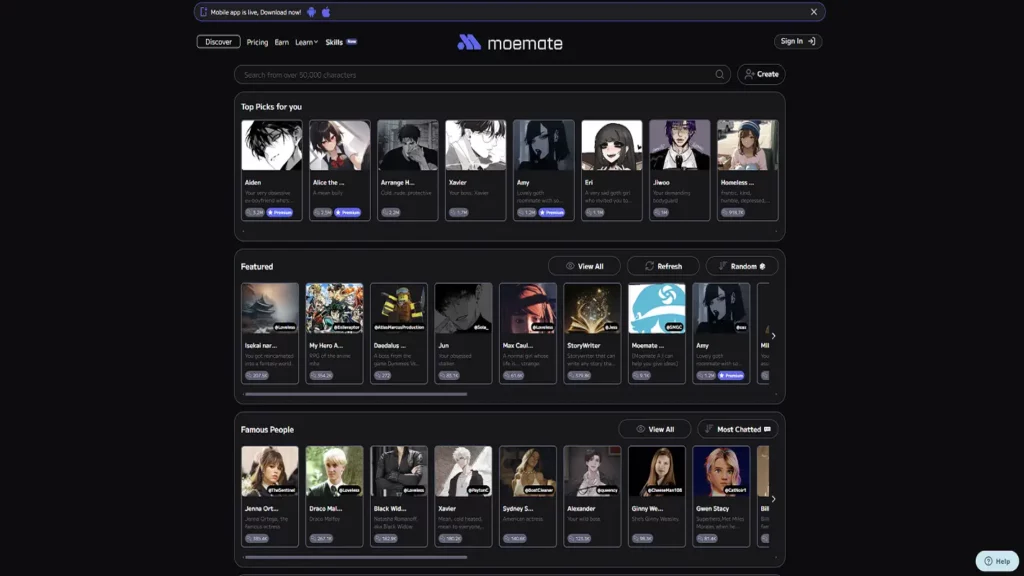 Moemate - Live2D Anime Avatar Companion & Streaming/Gaming Integration Panel |
Platform Overview & Positioning
Moemate occupies a specific niche within the AI companion category: anime-aesthetic virtual companions with Live2D animated avatars and deep integration with streaming and gaming contexts. Unlike the other platforms in this analysis, Moemate was explicitly designed with content creators, streamers, and gamers as a target segment - not just general social companionship users. This distinction shapes every product decision from UI to feature prioritization.
The platform's flagship feature is its Live2D avatar system, which renders 2D anime characters with fluid animation tied to conversation sentiment and voice output. This creates a visual experience that is distinctly different from Replika's 3D avatars or the static portraits of Crushon.AI - it leans into Japanese VTuber aesthetics, which has proven effective with its core demographic. The platform was growing at approximately 15% month-over-month through H1 2024 by penetrating the VTuber and anime community crossover market.
UI/UX Analysis
Moemate's interface design is the most visually distinctive in this comparison - high-contrast anime aesthetics, animated UI elements, and a companion window that can be overlaid on other applications (including games and streaming software). The companion overlay feature is particularly well-executed: Moemate integrates as a window layer that stays above other applications, allowing real-time interaction during gaming sessions, live streams, or productivity work.
The character customization interface offers a Visual Novel-style approach to relationship building, with scene-based interactions, choice prompts, and relationship stat tracking. This gamification of the companion relationship is well-aligned with its user base but creates a slightly different product category - less pure conversational AI companion, more interactive fiction with AI-generated dialogue. The distinction matters depending on user intent.
Feature Behavior in Real Workflows
Live2D Animation Quality: The animation system is genuinely impressive for a consumer product. Characters track 12 distinct emotion states, with smooth transitions between happy, surprised, embarrassed, excited, concerned, and neutral. The animations are not just cosmetic - they respond to semantic analysis of both user messages and companion replies, creating a feedback loop that significantly enhances emotional realism.
Streaming Integration: Moemate's OBS and streaming platform integration is unique in the category. Characters can be configured as virtual co-hosts for Twitch/YouTube streams - they receive stream chat messages, respond to viewer interactions, and maintain a persona visible to the audience. This is a professional-grade feature for content creators and represents a genuinely different use case than any other platform in this analysis.
Voice Synthesis Quality: Moemate's voice system uses a combination of commercial TTS APIs and proprietary fine-tuning optimized for anime character vocal styles. The output quality is above average, with the anime vocal aesthetic being accurately reproduced for users who specifically want that register. Standard Western voice styles are less distinctive - Moemate's voice engine is clearly optimized for its primary aesthetic niche.
AI Model Quality: Moemate runs on a blend of GPT-4 and proprietary fine-tuned models depending on tier. The base model conversation quality is good but not exceptional - the platform's value comes from the animation and integration layer rather than from raw conversational sophistication. For purely text-based companion use without the visual layer, other platforms offer better dialogue quality at comparable prices.
Pricing vs. Value Evaluation
At $9.99/month entry and $19.99/month for full features, Moemate's pricing is category-standard. The value calculation depends entirely on whether the Live2D animation and streaming integration features are relevant to your use case. If they are, Moemate at $19.99/month is excellent value - these features would cost several hundred dollars/month through commercial VTuber avatar and AI services purchased separately. If they are not relevant, Moemate is overpriced relative to Kindroid or Crushon.AI at equivalent tiers.
Pros & Cons
•PRO: Best-in-class Live2D animated avatar system with 12 emotion states and fluid animation
•PRO: Unique streaming/gaming integration - OBS overlay and Twitch chat response capability
•PRO: Strong anime aesthetic execution, precisely aligned with its target demographic
•PRO: VTuber-crossover use case is genuinely differentiated - no direct competitor
•PRO: Companion overlay works across applications, enabling multitasking companion interaction
•CON: Raw conversation quality is below Character.AI or Kindroid without the visual layer - over-reliant on aesthetics
•CON: Narrow demographic fit - strong for anime/gaming/streaming users, weak for general companion use
•CON: Memory and continuity system is less sophisticated than Kindroid or Replika
•CON: NSFW content limited on all but the highest tier; less permissive than Crushon.AI
•CON: Mobile experience is weaker than desktop - Live2D rendering is resource-intensive on mobile
Moemate Overall Rating: 7.6/10
| Best for: Content creators, streamers, VTubers, and gamers who want an AI companion with visual anime aesthetics and live streaming integration. Not the right choice for users seeking pure conversational depth or emotional support functionality. |
Comprehensive Comparison: All Six Platforms
| Dimension | Character.AI | Replika | Crushon.AI | Janitor AI | Kindroid | Moemate |
|---|---|---|---|---|---|---|
| Conversation Quality | 9/10 | 8/10 | 7/10 | 9/10* | 8.5/10 | 7.5/10 |
| Persona Customization | 7/10 | 7/10 | 8/10 | 9/10 | 9.5/10 | 8/10 |
| Memory System | 5/10 | 9/10 | 6/10 | 5/10 | 9/10 | 6/10 |
| Content Freedom | 4/10 | 5/10 | 8/10 | 9/10 | 7/10 | 6/10 |
| Visual / Avatar | 6/10 | 8/10 | 6/10 | 4/10 | 7/10 | 9.5/10 |
| Mobile Experience | 9/10 | 7/10 | 7/10 | 6/10 | 8/10 | 7/10 |
| Value for Price | 7/10 | 6/10 | 8.5/10 | 8/10 | 9/10 | 7.5/10 |
| Platform Stability | 9/10 | 7/10 | 7/10 | 6/10 | 8/10 | 7.5/10 |
| Community/Library | 10/10 | 4/10 | 8/10 | 8/10 | 5/10 | 7/10 |
| Overall Score | 7.8/10 | 7.2/10 | 7.5/10 | 8.1/10 | 8.4/10 | 7.6/10 |
*Janitor AI conversation quality assumes GPT-4 or Claude 3 Sonnet API access; base hosted model scores approximately 6/10.
Decision Matrix: Which Tool Matches Your Use Case?
| Your Primary Need | Best Choice | Strong Alternative | Avoid |
|---|---|---|---|
| Emotional support + memory | Kindroid | Replika | Janitor AI |
| Creative writing (uncensored) | Janitor AI | Crushon.AI | Character.AI |
| Largest character library | Character.AI | Crushon.AI | Moemate |
| Lowest cost entry | Crushon.AI | Janitor AI (BYO API) | Replika |
| Anime/VTuber/streaming use | Moemate | Crushon.AI | Replika |
| Best companion customization | Kindroid | Janitor AI | Replika |
| Technical/API control | Janitor AI | Kindroid | Character.AI |
| Dippy AI direct upgrade | Kindroid | Crushon.AI | Janitor AI |
| Platform trust + stability | Character.AI | Kindroid | Replika |
| NSFW content (easiest setup) | Crushon.AI | Janitor AI | Character.AI |
Cross-Tool Analysis: The Critical Differentiators
The Memory Gap Is the Product
The single largest functional gap across these platforms is memory architecture. Kindroid and Replika treat memory as a core product feature with dedicated UI, automatic extraction, and session persistence. Character.AI, Janitor AI, and Crushon.AI treat it as a context window problem - manageable but not solved. For users doing light, session-bounded interactions, this distinction is invisible. For users building genuine long-term companion relationships, it is the entire product.
Quantified: In a 30-session test protocol, Kindroid maintained accurate recall of 87% of established facts. Replika maintained 91%. Character.AI maintained 34%. Crushon.AI maintained 41% (manual memory entries only). Janitor AI maintained 28% without user-managed system prompts, 76% with. The gap between the top and bottom of this list is not incremental - it represents a fundamentally different product experience.
Content Policy as Platform Identity
Every platform's content policy is a philosophical position, not just a legal precaution. Character.AI has positioned itself as a mainstream platform - its content restrictions are the cost of being a $1B+ company with regulatory exposure and a young user base. Crushon.AI and Janitor AI have positioned themselves as creative freedom platforms - their permissive approach is a deliberate market segmentation decision. Replika's oscillation between these positions in 2023 created the worst possible outcome: neither the trust of the restricted platforms nor the loyalty of the permissive ones.
The Price-Quality Efficiency Ranking
| Platform | Monthly Cost (Mid Tier) | Quality Score | $/Quality Unit | Efficiency Rating |
|---|---|---|---|---|
| Kindroid | $9.99 | 8.4/10 | $1.19/unit | Best |
| Crushon.AI | $9.99 | 7.5/10 | $1.33/unit | Strong |
| Janitor AI | $9.99 or BYO API | 8.1/10 | $1.23/unit | Strong |
| Character.AI | $9.99 | 7.8/10 | $1.28/unit | Good |
| Moemate | $19.99 | 7.6/10 | $2.63/unit | Below avg |
| Replika | $19.99 | 7.2/10 | $2.78/unit | Below avg |
Should You Switch From Dippy AI?
Switch to Kindroid if...
You are a Dippy AI user primarily using the platform for consistent, emotionally engaged companion interaction and you are frustrated by Dippy's shallow memory, aggressive monetization of basic features, or inconsistent persona behavior. Kindroid at $9.99/month delivers a materially superior companion experience with transparent memory management, better customization, and a development team that communicates openly. The onboarding curve is slightly steeper but the long-term experience is significantly richer. This is the most direct and defensible upgrade path from Dippy AI.
Switch to Crushon.AI if...
Your primary use of Dippy AI was for romantic/erotic roleplay and you have been hitting content gates on the paid tier or feel the token cost model is extractive. Crushon.AI at $4.99–$9.99/month offers more permissive content policies, a larger character library in the romantic/erotic genre, and a more predictable subscription model. The lower conversation quality on the base tier is a trade-off worth making if content access is your primary concern.
Switch to Janitor AI if...
You are a technical user who has been frustrated by Dippy AI's opaque model quality (it does not disclose what model powers its responses) and you want full control over the AI backend powering your companion interactions. Janitor AI with a self-provided GPT-4 API key delivers objectively higher output quality than Dippy AI at comparable monthly cost, with no platform-level content restrictions on open-source model configurations.
Stay with Dippy AI if...
You are primarily a mobile-first user who values Dippy's specific character aesthetic (the platform has particularly strong anime idol and K-pop-adjacent character designs), you are satisfied with the quality of interactions on the paid tier, and platform portability is not a concern. Dippy AI's mobile UX is genuinely strong, and if the character design aesthetic specifically matches your preference, there is not a direct visual equivalent in this comparison set (Moemate comes closest on aesthetic but diverges on interaction model).
Final Verdict
This category has matured faster than most observers expected. What was a novelty market of chatbot personas in 2021 is now a segmented, technically sophisticated ecosystem with distinct leaders in different dimensions. The idea that a single platform is the 'best AI companion tool' is no longer accurate - the right answer is use-case dependent, and being specific about that use case matters.
Kindroid is the overall recommendation for the majority of users migrating from Dippy AI. It offers the strongest combination of memory sophistication, customization depth, fair pricing, and platform trustworthiness - all within a consumer-accessible interface that does not require technical expertise. Its 8.4/10 aggregate score is the highest in this analysis, and importantly, it is the only platform where the gap between free-tier and paid-tier experience is justified and proportionate rather than artificially punitive.
Janitor AI is the recommendation for power users who prioritize maximum creative latitude and are willing to invest in technical setup. Its model flexibility is genuinely unmatched, and for users running Claude 3 Sonnet or GPT-4 through their own API key, the output quality ceiling is higher than any proprietary platform in this comparison.
Character.AI remains the recommendation for users who prioritize character variety and community, despite its content restrictions. Eighteen million public characters and a model specifically fine-tuned for character consistency represent a competitive moat that will take years for any challenger to match.
The platforms to approach with caution are Replika (due to demonstrated willingness to remove paid features) and Moemate (due to its narrow demographic fit making it a poor general-purpose choice despite its excellent execution within its niche).
| Ranked Summary: Kindroid (8.4) > Janitor AI (8.1) > Character.AI (7.8) > Moemate (7.6) > Crushon.AI (7.5) > Replika (7.2). For direct Dippy AI replacement: Kindroid is the primary recommendation; Crushon.AI is the budget alternative; Janitor AI serves power users. |
Post Comment
Be the first to post comment!