Let’s start with a small confession. Most AI chat apps today feel like texting a very smart refrigerator. You ask a question, it answers politely, and the conversation politely dies five minutes later. There is rarely a sense of story, emotion, or visual immersion.
Then along came Museland AI, which tried to do something far more ambitious. Instead of being just another chatbot, it attempted to transform AI conversations into something resembling a visual novel or interactive comic. Characters didn’t just reply with text; they responded with illustrations, emotions, and evolving scenes.
For a while, that idea worked surprisingly well. Roleplay communities, anime fans, and creative writers quickly discovered the platform and began building stories with its characters. Museland felt less like chatting with AI and more like directing a tiny animated episode.
But the bigger question today is not just how creative the platform was. It is also whether the experience held up in real use and why the project eventually disappeared from the internet.
Museland AI at a Glance
| Attribute | Details |
| Product | Museland AI |
| Developer | Zulution Intelligence Pte. Ltd |
| Founded | 2023 |
| Headquarters | Singapore |
| Category | AI Character Chat / Roleplay |
| Platforms | Android and iOS |
| Core Concept | AI roleplay with comic-style visuals |
| Free Plan | Yes |
| Premium Plan | Yes |
| Status | Shut down in March 2025 |
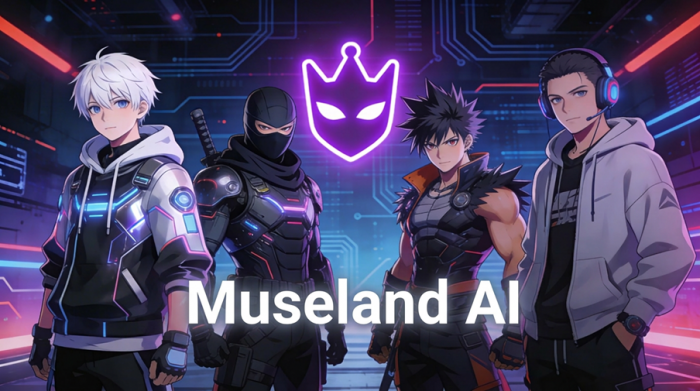
Museland AI was designed as a visual AI storytelling platform, not just a conversational chatbot. Instead of focusing purely on natural language responses, the platform aimed to combine text interaction with visual storytelling elements.
The idea was simple but technically demanding. Every conversation could produce illustrated scenes that matched the dialogue and emotions of the characters. If a conversation turned romantic, the visual scene changed. If the story became dramatic, the art reflected that mood.
For roleplay enthusiasts, this made conversations feel more like collaborative storytelling than casual chatting.
First Impressions and Onboarding Experience
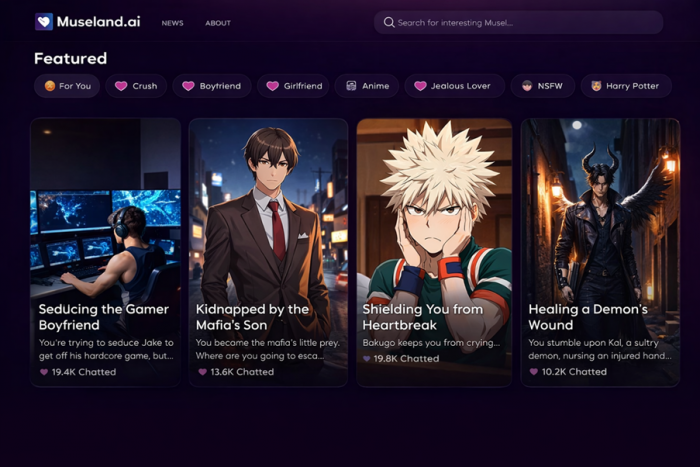
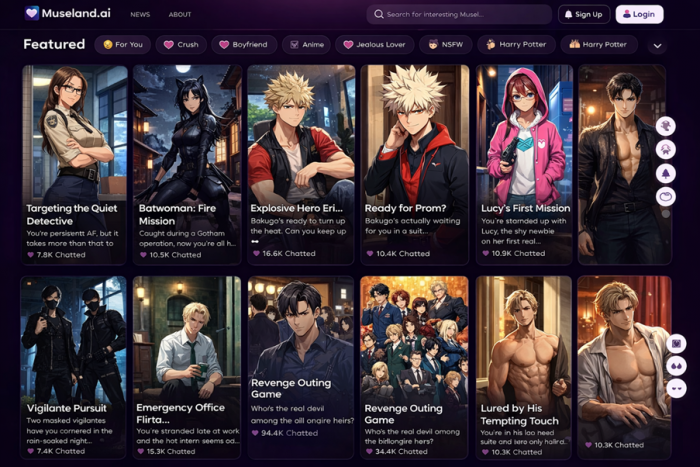
The first thing users noticed about Museland AI was how different the interface looked compared to typical AI chat platforms. Instead of opening to a blank chat window, the homepage displayed a gallery of characters and scenarios. Each character came with artwork, personality descriptions, and story prompts.
This design made the experience feel closer to browsing a library of interactive stories. Users could choose from romance characters, fantasy heroes, rivals, or mysterious strangers before starting a conversation. It immediately framed the platform as a storytelling environment rather than a productivity tool.
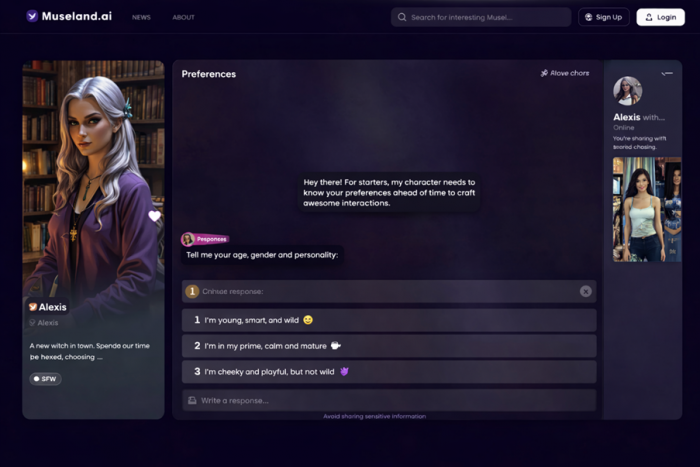
Account creation was also straightforward. Users could register with email or social logins and start chatting within minutes. There were no complicated setup steps, which helped reduce friction for new users who just wanted to experiment with the characters.
The interface itself leaned heavily into anime and visual novel aesthetics. Colors were vibrant, character cards were well designed, and the chat interface felt more like a game dialogue system than a typical messaging window.
Core Features That Made Museland AI Stand Out
Visual AI Storytelling
Museland’s most unique feature was its visual storytelling engine. Each AI response could generate comic-style illustrations that matched the tone of the conversation. Instead of imagining scenes in your head, the platform attempted to render them visually.
For example, a calm conversation might generate a peaceful background scene. A dramatic conflict could appear with intense lighting and expressive character poses. These visual panels made conversations feel dynamic and engaging.
This system created the impression that users were co-writing a graphic novel with the AI. It was particularly appealing for people who enjoy anime storytelling or roleplay scenarios.
However, the visual system also required significant computing power. Generating images for every message meant the platform consumed far more resources than typical text-only chatbots.
Character Creation and Customization
Museland allowed users to create their own characters with a high level of detail. This feature quickly became one of the platform’s most popular aspects because it allowed creators to design unique personalities and storylines.
Users could define elements such as appearance, personality traits, communication style, and character history. These settings influenced how the AI behaved during conversations. Writers could even build elaborate backstories to guide the character’s responses.
The customization system also supported different visual styles. Characters could appear as anime figures, comic-style drawings, or semi-realistic portraits depending on user preferences.
Because community members could share characters publicly, the platform eventually built a large library of user-generated roleplay scenarios.
Voice and Multimedia Interaction
Museland also experimented with voice-enabled characters. Instead of reading text responses, users could listen to AI characters speaking through generated voices. This feature added another layer of immersion for roleplay sessions.
Voice interactions were especially useful for storytelling scenarios where dialogue played an important role. Hearing a character respond rather than simply reading the text made the interaction feel more cinematic.
However, voice features also introduced some technical limitations. Many users noticed that voice responses sometimes sounded robotic during long sessions. Additionally, voice interactions consumed more system resources and credits than text conversations.
Despite these limitations, the feature demonstrated Museland’s ambition to push beyond traditional chatbot experiences.
Chat Quality and AI Performance
The quality of conversations on Museland AI was generally strong during shorter interactions. Characters typically maintained consistent personalities and responded with appropriate emotions depending on the scenario.
For casual storytelling or roleplay sessions lasting a few dozen messages, the experience often felt immersive. Characters reacted dynamically and sometimes surprised users with creative dialogue.
However, longer story arcs exposed some weaknesses. The AI occasionally forgot earlier plot details, which could disrupt narrative continuity. A character might suddenly forget an earlier event or shift tone unexpectedly.
Repetition was another common issue. During extended roleplay sessions, some characters fell into repetitive dialogue patterns. While this is a common limitation across many AI chat systems, it was particularly noticeable in story-driven environments.
Overall, the AI performance was impressive for creative storytelling but less reliable for extremely long narratives.
Pricing and Credit System
One of the most controversial aspects of Museland AI was its credit-based pricing system.
| Plan | Price | Credits | Key Features |
| Free | $0 | Limited daily credits | Basic chats |
| Premium | $9.99 – $18/month | Monthly credits | Voice + visuals |
| Annual | ~$99/year | Discounted plan | Same premium features |
Instead of unlimited conversations, users received credits that were consumed during interactions. Generating images, voice responses, and animated elements required more credits than simple text messages.
This meant immersive story sessions could drain credits quickly. Some users reported running out of credits in the middle of long narrative arcs, which broke the storytelling flow.
Many users suggested that the platform should introduce an unlimited plan for heavy roleplayers. Unfortunately, this adjustment never happened before the platform shut down.
Safety, Privacy and Moderation
Museland AI allowed both safe-for-work and mature storytelling content, though moderation policies attempted to restrict illegal or abusive material. Because the platform relied heavily on community-generated characters, moderation was an ongoing challenge.
According to the platform’s data policies, Museland collected standard account and usage data. This included email addresses, device information, and conversation content used for system improvements.
The platform stated that data was encrypted during transmission and that users could request account deletion if they wanted their data removed. However, like most AI chat platforms, users were advised not to share sensitive personal information.
One point of concern among some reviewers was the gap between the app store content rating and the actual range of community-created characters. This created occasional moderation inconsistencies.
User Reviews Across Platforms
| Platform | Rating | Number of Reviews | Overall Sentiment |
| Google Play | 4.5 / 5 | 1500+ | Very positive |
| Apple App Store | 4.8 / 5 | 3000+ | Positive |
| AppBrain | 4.25 / 5 | 1500+ | Positive |
| Reddit communities | No numeric score | Hundreds of discussions | Very enthusiastic |
Users consistently praised the platform’s creativity and character depth. Many reviewers said the characters felt more emotionally responsive than those on competing AI chat apps.

However, pricing frustrations and memory limitations were recurring complaints. Some users also expressed disappointment when credits interrupted long story sessions.
Despite these criticisms, the overall sentiment remained strongly positive while the platform was active.
User Sentiment Analysis
Positive Themes
- Highly immersive visual storytelling experience
- Strong character customization options
- Large community library of characters
- Creative environment for writers and roleplayers
Mixed Feedback
- AI memory struggled with very long conversations
- Voice responses sometimes sounded robotic
- Story continuity occasionally broke during extended sessions
Negative Themes
- Credit system limited long storytelling sessions
- Credits consumed quickly when visuals were enabled
- Platform shutdown erased user-created content
Pros and Cons
Pros
- Unique comic-style storytelling system
- Deep character customization
- Active creator community
- Cross-platform availability
- Immersive roleplay experience
Cons
- Credit-based pricing frustrated power user
- AI memory limitations during long stories
- Voice quality inconsistencies
- Platform eventually shut down
Museland AI vs Competitors (User Perspective)
| Feature | What Museland Was Good At | What Users Felt It Lacked |
| Storytelling | Visual comic-style storytelling | Long-term story memory |
| Character Design | Detailed customization | Limited AI consistency in long sessions |
| Community Content | Large character library | Moderation consistency |
| Immersion | Visual scenes and voice chat | Credit limits interrupted experience |
| Accessibility | Easy onboarding and simple interface | Sustainable pricing model |
Compared with competitors like Character AI and Replika, Museland offered a more visually immersive storytelling experience. However, other platforms tended to provide more stable long-term conversations.
Why Museland AI Shut Down
Museland AI officially shut down in March 2025 due to financial challenges.
The core problem was infrastructure cost. Generating visual scenes for every AI message required far more computing power than traditional chat systems. This dramatically increased operating expenses.
At the same time, the platform’s credit-based monetization model did not generate enough revenue to support those costs. Many users relied on the free plan, while heavy users often found the credit system frustrating.
Competition also increased. Larger AI platforms introduced new features and attracted larger audiences, making it harder for smaller projects to remain financially sustainable.
Eventually, the developers announced they could no longer maintain the platform’s servers.
Final Verdict
Museland AI was one of the most creative experiments in the AI companion space. By combining visual storytelling, roleplay characters, and interactive dialogue, the platform created an experience that felt very different from typical chatbot applications.
For many users, it was not just a tool but a creative playground. Writers built stories, roleplayers created elaborate narratives, and communities formed around shared characters.
Unfortunately, the same features that made Museland unique also made it difficult to sustain financially. The computational cost of generating images and voice responses proved too high for the platform’s business model.
In the end, Museland AI became a reminder that innovation alone is not enough to guarantee survival. Sometimes the most imaginative projects burn the brightest but for the shortest time.
And for a brief moment, Museland AI showed what AI storytelling could look like when conversations turned into comics.
Post Comment
Be the first to post comment!