The test that matters
There’s a moment, usually around the fifteenth message into an AI character chat, when the illusion either holds or it shatters.
The character either remembers a small detail dropped three turns earlier, a favourite song, an offhand complaint about work, or it doesn’t. And the whole thing reverts to the feel of typing into a vending machine.
That test, repeated across long evenings with both platforms, is what this comparison rests on. Both market immersive characters. Both have growing fanbases. Both have flaws no landing page will mention.
The question worth asking isn’t which has more features. It’s which one, after a long enough session, actually starts to feel like there is someone on the other end.
Short Comparison
The basic facts side by side, drawn from public filings, official documentation, SimilarWeb traffic data, and SEMrush analytics current to early 2026.
| Dopple AI | CrushOn AI | |
|---|---|---|
| Launched | 2023, Dopple Labs Inc. | 2023, Peekaboo Tech Inc. |
| Headquarters | Wilmington, Delaware | Delaware (co-founder in Shenzhen) |
| Funding | $1.88M seed (Sept 2023) | Not publicly disclosed |
| Monthly visits | ~415K (Sept 2025) | ~28.4M (Feb 2026) |
| Avg. session | 7 min 45 sec | 16 min 7 sec |
| Free tier | Yes, with ads and caps | Yes, ~50 messages per day |
| Paid plan | Dopple+ at $9.99/mo or $5.99/mo annual | Standard $5.99, Premium $14.99, Deluxe $49.90 |
| NSFW policy | Premium toggle, partially filtered | Unfiltered, adults only |
| Underlying model | Proprietary LLM | GPT-4o, Claude 3.5 Sonnet, MythoMax |
| Platforms | Web, iOS, Android | Web, iOS, Android |
Table 1. Dopple AI and CrushOn AI on the basic facts.
Dopple AI
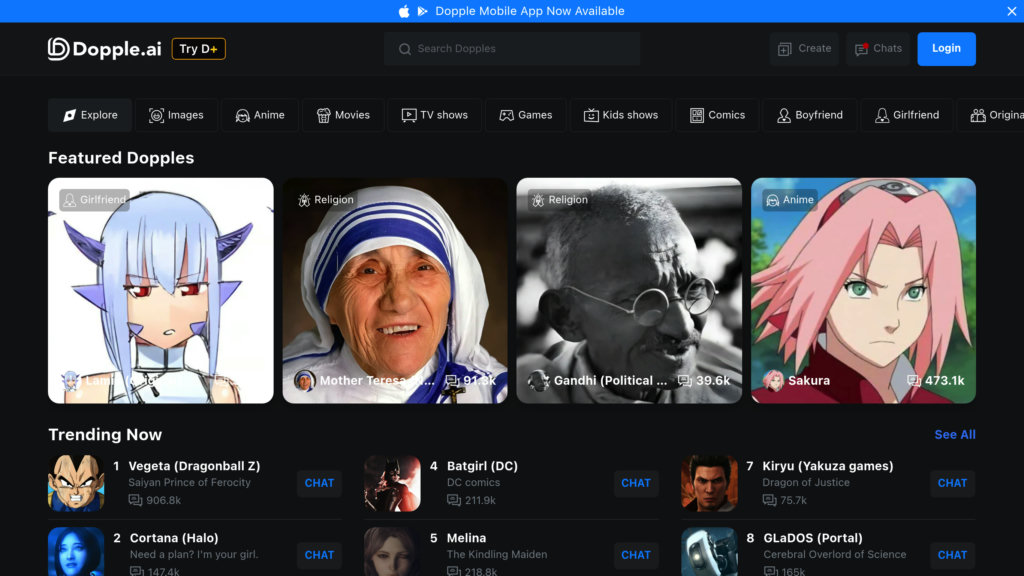
Founded in 2023 by Dopple Labs Inc.,Dopple AI a Wilmington, Delaware startup. $1.88 million in seed funding, roughly eleven employees per aboutchromebooks.com.
The product centres on fictional personas called Doppels, drawn from anime, video games, mythology, and original community creations. There’s no “How can I help you today?” greeting. The homepage drops users straight into a grid of characters.
Conversations are informal by design. The proprietary LLM is tuned for dialogue, handles casual language well, and keeps context within a session.
Free use is available with ads and message caps. Dopple+ at $9.99 per month (or $5.99 per month billed annually) removes both. Available on web, iOS, and Android.
Where it falls short
•Mobile inconsistency. iOS averages 4.5 stars while Android sits at 2.7, mostly over ad load and monetisation pressure.
•Weak memory. Doppels regularly forget details from earlier in the same chat, which breaks immersion past the early window.
•Thin customer-support track record. A verified £54.81 Trustpilot complaint about an inactive annual subscription went unanswered.
CrushOn AI
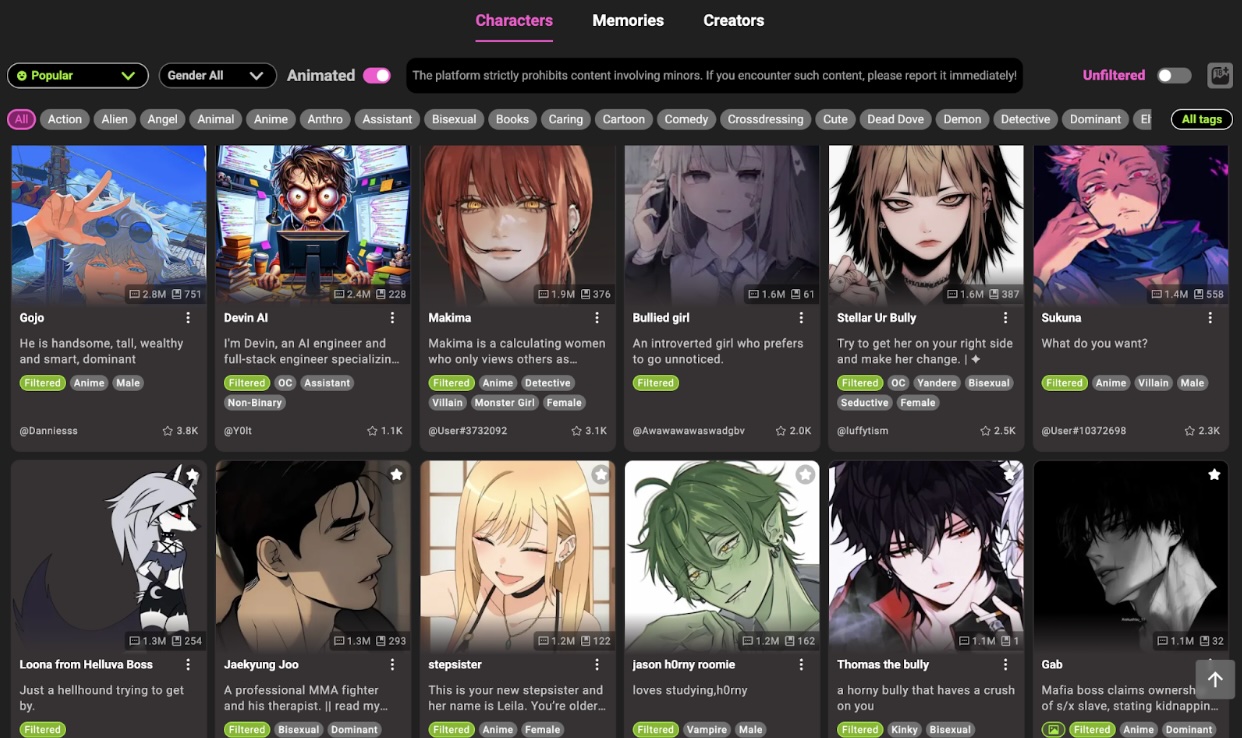
Operated by Peekaboo Tech Inc., CrushOn AI Delaware-registered, with co-founder Yue Zhu based in Shenzhen. Launched in 2023.
Grew quickly by occupying what mainstream platforms wouldn’t touch: unfiltered, adult-permissive character chat. SimilarWeb pegs traffic at roughly 28.4 million monthly visits as of February 2026, with sessions averaging 16 minutes 7 seconds. That session length is among the highest in the entire category.
The standout technical feature is model choice. Depending on tier, conversations route through GPT-4o (OpenAI), Claude 3.5 Sonnet (Anthropic), or open-source models like MythoMax. Most competitors lock users into a single model.
Image generation, voice messaging, and multi-character group chat were added in 2025. Memory is meaningfully better than the free tier of competing platforms: 16K context for paid users versus 8K free.
Where it falls short
•Documented privacy risk. Mozilla’s Privacy Not Included flagged CrushOn in 2025; independent analysis found 45 trackers active within the first sixty seconds.
•Low public trust score. Trustpilot rating sits around 2.1 to 2.3 out of 5 (small sample, mostly one-star).
•Obscured pricing. Tier costs typically only confirm at checkout, with no canonical pricing table on the official site as of early 2026.
Which feels more real
Both produce coherent dialogue. The difference shows over time.
Dopple AI starts strong. The first fifteen to twenty messages with a popular Doppel feel responsive and characterful. Past that window, the cracks show. Characters drift out of voice. A bot established as gruff and stoic might produce a paragraph of warm reassurance two scenes later.
CrushOn AI’s edge is direct and verifiable: the 16K-token context window. A character can still reference what happened forty messages ago without a noticeable seam. Combined with model choice, particularly when routed through Claude 3.5 Sonnet, consistency holds far longer. One reviewer at AI Companion Guides documented a CrushOn character recalling a throwaway joke made forty-seven messages earlier.
But longevity isn’t quality. CrushOn drifts into formula on extended sessions, especially in romantic or adult roleplay, where reviewers note characters falling into rotating stock phrases. Trustpilot complaints at the $40+ Deluxe tier mention responses that “ignored character specifications” or produced “randomly generated nonsense.”
| CrushOn’s characters remember longer. Dopple’s often feel more original in a short window. Which matters more depends on whether the chat is a quick creative escape or a multi-week story arc. |
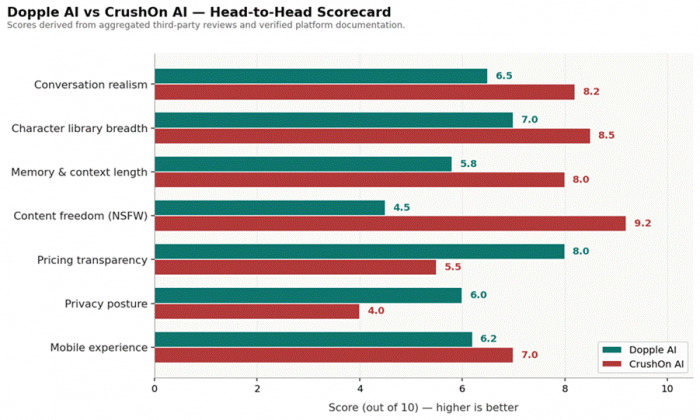
Figure 1. Head-to-head scorecard across seven evaluation dimensions.
Pricing
Dopple’s pricing is transparent. Published rates, predictable billing, no surprise upsells inside the chat flow.
CrushOn’s pricing is the opposite. Tier costs typically only confirm at checkout, and reviewers at Skywork and AI Companion Guides note ongoing reporting discrepancies across third-party sources as of early 2026.
| Tier | Price | Dopple AI | CrushOn AI |
|---|---|---|---|
| Free | $0 | Unlimited free messages on web; ads; ~100/day cap on Android. | ~50 messages per day; 8K context; ads; community character access. |
| Entry | $5.99 to $9.99 | Dopple+ at $9.99/mo or $5.99/mo billed annually ($71.88/yr). Removes ads, expands chat length, unlocks visuals. | Standard at $5.99/mo. 2,000 ultra-speed messages, full NSFW, group chat, 16K context. |
| Mid | $14.99 | Not offered. Dopple uses a single paid plan. | Premium at $14.99/mo. 6,000 ultra-speed messages, priority models, longer responses. |
| Top | $39.99 to $49.90 | Not offered. | Deluxe between $39.99 and $49.90/mo. Reported 20,000 to unlimited messages. Pricing typically confirms at checkout. |
Table 2. Paid tier comparison. Dopple+ uses a single paid plan; CrushOn offers four.
One nuance worth flagging: CrushOn’s free tier was restructured in 2025 from 100 messages per month to 50 per day. A daily user can accumulate roughly 1,500 free messages monthly, far more generous than Dopple’s free experience. The catch is that image generation, group chat, longer context, and the stronger underlying models all sit behind paywalls.
Content freedom
This is the cleanest split between the two platforms.
Dopple’s moderation is inconsistent. Some characters allow flirty dialogue freely. Others stop mid-sentence and reset to a safer track. NSFW mode is gated behind premium accounts with age verification, but enforcement remains unpredictable.
CrushOn is the opposite. Unfiltered is the product. The NSFW toggle removes essentially all restrictions for adult roleplay. The platform openly markets adult content as a feature, not a fringe behaviour.
For SFW roleplay, character writing, or casual fandom chat, Dopple’s positioning fits cleanly. For explicit storytelling that other platforms refuse to handle, CrushOn is built for that purpose.
Privacy and safety
Both platforms have real questions to answer here. The table below collects the public-facing trust signals worth knowing before signing up.
| Trust signal | Dopple AI | CrushOn AI |
|---|---|---|
| iOS App Store | ~4.5 / 5 | ~4.3 / 5 |
| Google Play | ~2.7 / 5 | Varies by region |
| Trustpilot | Limited reviews; one billing complaint | ~2.1 to 2.3 / 5 (small sample, mostly one-star) |
| Mozilla Privacy Flag | Not separately flagged | Flagged 2025; 45 trackers in first 60 sec |
| Data sharing for ads | Permitted per privacy policy | Permitted; includes health and biometric per Mozilla |
| Model training opt-out | Not clearly documented | Exists, mechanics unclear per Mozilla |
Table 3. Trust and safety signals from third-party sources.
Dopple’s privacy policy permits data sharing for advertising and tracks browsing behaviour across sites. CrushOn’s documented practices go further, including health and biometric data categories per Mozilla’s 2025 findings, with chat data feeding model training unless explicitly opted out.
Neither has been independently security-audited. Both retain conversation history by default. The practical advice from Mozilla, Cybernews, and PriveeAI is identical for both products: assume conversations are not private, avoid identifying details, use a dedicated email.
Market context
Zoomed out, the chart below plots both platforms against the broader character-chat market using verified data from SimilarWeb, SEMrush, aboutchromebooks.com, and quantumrun.com.
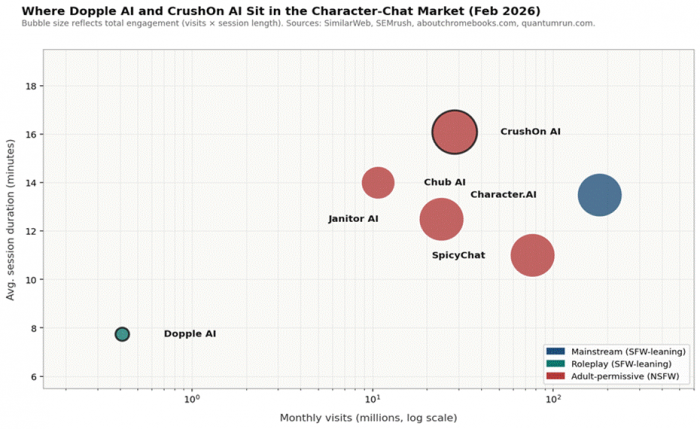
Figure 2. Where Dopple AI and CrushOn AI sit in the character-chat market.
CrushOn AI is midsize by traffic but among the highest-engagement platforms in the entire space. Sessions over sixteen minutes suggest users treat it as a destination, not a casual stop.
Dopple AI sits well below that engagement curve in a different segment: smaller in scale and more SFW-leaning in product intent. For wider context, AI companion app downloads grew 88% year-over-year in H1 2025 per Appfigures, with cumulative downloads crossing 220 million by July 2025. The top 10% of apps capture 89% of category revenue.
The verdict
Neither platform is the right answer for everyone. The choice depends on what kind of conversation is actually being looked for.
For creative roleplay with fictional or fandom characters, building stories, exploring imagined scenarios, writing alongside an AI partner that doesn’t pretend to be a productivity tool, Dopple AI is the more interesting product despite its rougher edges. Distinctive personas. Honest pricing. The feel of a creative sandbox that happens to chat.
For long-form companion-style roleplay, including adult content other platforms refuse, CrushOn AI is more capable. Better memory, more model choice, more advanced features like group chat and voice. But it comes with documented privacy concerns serious enough that responsible use means treating every conversation as potentially public.
Neither feels “real” in any meaningful sense, of course. After enough time, both feel like two different kinds of practiced performance. One trying to be a creative studio. The other a private theatre. Picking between them is less a question of quality than of which room is actually worth walking into.
Post Comment
Be the first to post comment!