The pace of biological discovery has always depended on what scientists can build, not just what they can observe. That gap between imagination and execution is shrinking. Complex DNA is no longer a bottleneck, it is becoming a toolset. What used to take months of cloning and iteration can now happen in a fraction of the time, with a level of precision that changes how researchers think about experiments in the first place. The shift is not subtle. It is reshaping how labs approach everything from disease modeling to synthetic biology.
Designing Beyond Limits
For a long time, DNA work followed a predictable pattern. Researchers designed constructs within narrow constraints because the cost and difficulty of synthesis made risk expensive. That mindset is fading. Scientists can now design longer, more intricate sequences that combine multiple regulatory elements, coding regions, and control switches into a single construct without the same level of compromise.
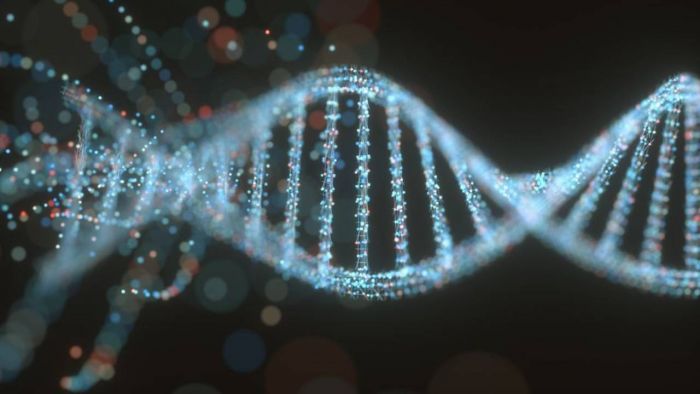
This matters because biological systems rarely operate in isolation. Gene expression depends on context, timing, and interaction with other pathways. When researchers can design DNA that reflects that complexity, they stop approximating biology and start recreating it more faithfully. That leads to cleaner data and fewer rounds of troubleshooting. It also opens the door to experiments that were previously dismissed as too ambitious or impractical.
There is also a psychological shift happening. When constraints loosen, creativity tends to expand. Scientists are beginning to test ideas that would have felt unrealistic even a few years ago, not because the theory changed, but because the tools finally caught up.
Automation In The Lab
The rise of robots and AI is pushing DNA work into a new phase of consistency and scale. Automated liquid handlers, integrated design software, and machine learning models are starting to remove the variability that used to plague molecular workflows. What once depended heavily on individual technique is becoming more standardized.
That standardization does not make research less innovative. It actually frees researchers from repetitive tasks so they can focus on interpretation and design. When machines handle assembly and error checking, scientists spend more time asking better questions. The result is not just faster output, but more thoughtful experimentation.
AI-driven design tools are also helping predict how sequences will behave before they are ever synthesized. That reduces trial and error, which has always been one of the most expensive parts of biological research. Instead of building ten versions and hoping one works, researchers can narrow their options early and move forward with more confidence.
Precision And Replication
One of the biggest advantages of modern DNA synthesis is reliability. The ability to generate clonal DNA that can accelerate your research potential changes how experiments are structured. Instead of dealing with variability introduced during cloning or amplification, researchers can start with uniform material that behaves predictably.
That level of control improves reproducibility, which has been a persistent challenge across many scientific fields. When different labs can work from the same precise sequences, comparisons become more meaningful. It becomes easier to validate findings and build on previous work without second guessing the starting material.
There is also a practical benefit. When DNA arrives ready to use, timelines compress. Researchers can move from design to functional testing without waiting for multiple intermediate steps. That speed is not just convenient, it can be decisive in competitive areas like therapeutics or diagnostics where timing matters.
Scaling Complex Constructs
Complex DNA is not just about individual sequences. It is about how those sequences can be combined and scaled. Multi gene constructs, regulatory networks, and synthetic pathways are becoming more common as researchers look beyond single gene effects. These designs require careful coordination, and they benefit from advances in synthesis accuracy and assembly methods.
Scaling introduces its own challenges. Larger constructs are more prone to errors, and their behavior can be harder to predict. However, improvements in sequence verification and error correction are making it possible to work at these larger scales with confidence. Researchers are starting to think in terms of systems rather than parts.
This shift is especially relevant in fields like metabolic engineering and cell therapy. When multiple genes need to work together, the quality of the DNA construct directly affects the outcome. Being able to design and build these systems with precision changes what is achievable.
Applications Expanding Fast
The impact of complex DNA design is showing up across disciplines. In medicine, it is enabling more sophisticated models of disease that capture genetic nuance rather than relying on simplified systems. In agriculture, it supports the development of crops with improved resilience and yield. In environmental science, it allows for engineered organisms that can address specific challenges like waste breakdown or carbon capture.
What ties these applications together is control. Researchers are gaining the ability to design biological systems with a level of intent that was not possible before. That does not eliminate uncertainty, biology is still inherently complex, but it reduces the guesswork.
There is also a growing feedback loop between design and data. As more experiments are conducted with complex DNA, the resulting data improves predictive models. Those models then inform better designs. It is an iterative cycle that continues to refine itself.
Where It Leads Next
The trajectory suggests that DNA will continue to move closer to a true engineering discipline. Standardization, automation, and predictive modeling are all pushing in that direction. Scientists are not just observing biology anymore, they are building with it in a structured way.
That does not mean the work becomes simple. If anything, it becomes more demanding. Higher precision tools raise expectations. Experiments that once tolerated ambiguity now require tighter control and clearer reasoning. The bar moves up.
At the same time, the barrier to entry is lowering in practical terms. More labs can access advanced synthesis capabilities without building everything in house. That democratization expands the range of people contributing to the field, which tends to accelerate progress.
Complex DNA is shifting from a constraint to a catalyst. As design, automation, and precision continue to improve, the pace of discovery is likely to follow. Scientists who adapt to these tools will not just work faster, they will work differently, and that difference is where the next breakthroughs tend to start.
Post Comment
Be the first to post comment!