Meta has quietly acquired Assured Robot Intelligence (ARI), a humanoid robotics startup focused on building AI systems that allow robots to understand and operate in complex real-world environments. While financial terms of the deal were not disclosed, the acquisition offers one of the clearest signals yet that Meta is expanding beyond digital AI assistants and into physical, AI-powered robotics.
ARI’s team, including co-founders Xiaolong Wang and Lerrel Pinto, will join Meta’s Superintelligence Labs division, the company’s advanced AI research unit. The move suggests that Meta sees humanoid robotics not as a side project, but as part of its broader long-term strategy around artificial general intelligence and next-generation computing systems.
Meta Is Betting on AI That Can Operate in the Physical World
ARI focused on foundation models for humanoid robots, particularly systems capable of adapting to unpredictable environments and learning from real-world interactions. Rather than building narrowly specialized robots, the company was working toward what its founders described as “general-purpose physical agents.”
That approach aligns closely with a growing belief inside parts of the AI industry that future breakthroughs in advanced intelligence will require systems that interact directly with the physical world rather than relying only on internet-scale text and image data.
Meta appears to be buying more than robotics hardware expertise. The acquisition gives the company access to researchers working on robot control, self-learning systems, reinforcement learning, and whole-body humanoid coordination, areas increasingly viewed as critical for long-term AI development.
The Team Behind ARI Brings Deep Robotics Experience
ARI’s founding team arrives with strong academic and industry credentials.
Co-founder Xiaolong Wang previously worked as a researcher at Nvidia and later became an associate professor at UC San Diego, gaining recognition for work in robotics and reinforcement learning. Lerrel Pinto, the startup’s other co-founder, previously taught at NYU and was also involved in Fauna Robotics, a kid-sized humanoid startup that Amazon acquired earlier in 2026 for its own robotics efforts.
The backgrounds of both founders reflect how aggressively major technology companies are now recruiting robotics researchers as competition around physical AI systems intensifies.
Superintelligence Labs Signals Bigger Ambitions
The fact that ARI is joining Meta’s Superintelligence Labs is particularly significant.
That division represents Meta’s highest-end AI research efforts and is closely tied to the company’s broader push into advanced reasoning systems, autonomous agents, and future AI infrastructure. Integrating ARI there suggests Meta views robotics as deeply connected to its AGI ambitions rather than as a standalone hardware business.
Meta has reportedly explored humanoid robotics internally for years. Reports from 2025 pointed to leaked internal discussions around consumer-facing humanoid systems that could combine Meta’s AI models with future hardware platforms.
The acquisition now gives Meta a stronger technical foundation to pursue those goals.
Meta’s Software-First Robotics Strategy
Meta executives have previously hinted that the company may focus more on robotics software than manufacturing physical robots itself.
Meta CTO Andrew Bosworth has compared the company’s ambitions to Android’s role in smartphones, suggesting Meta could build foundational software platforms that robotics companies license and build on top of. He has also described software and control systems, rather than hardware, as the main bottleneck slowing progress in humanoid robotics.
That positioning fits with ARI’s expertise. The startup specialized in models that help robots interpret human behavior, adapt dynamically, and learn from interaction rather than relying entirely on static datasets.
In practice, Meta may be less interested in selling robots immediately and more focused on controlling the AI layer that powers them.
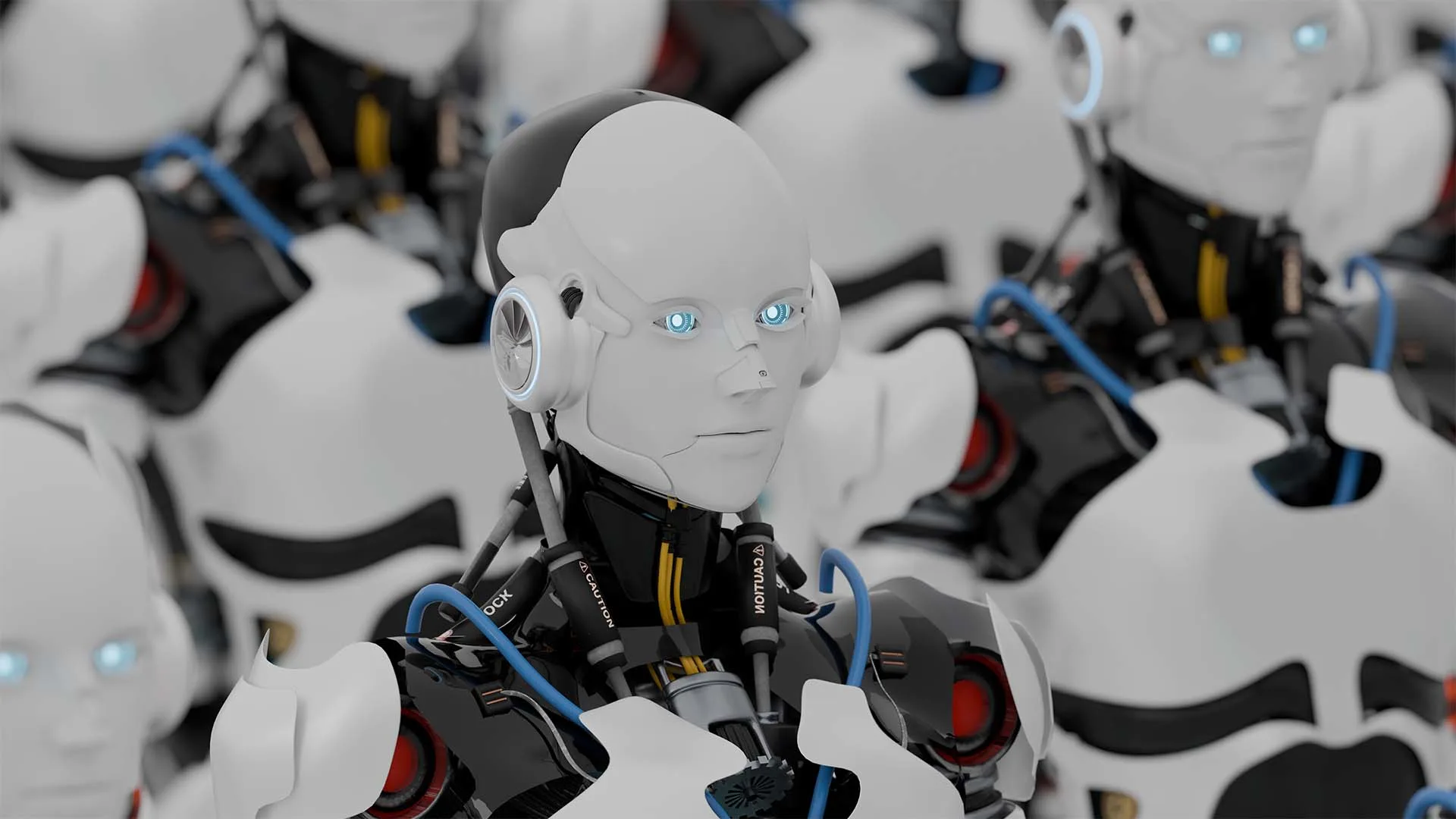
The Humanoid Robotics Race Is Accelerating
Meta’s acquisition lands in the middle of a broader race among major technology companies to develop general-purpose humanoid robots.
Tesla continues to expand development of its Optimus humanoid platform, while Amazon has been increasing its own robotics investments through acquisitions and internal projects. The involvement of AI infrastructure companies and cloud giants suggests humanoid robotics is increasingly being viewed as a major future computing platform rather than a niche research area.
Forecasts around the market vary dramatically. Some analysts estimate the humanoid robotics industry could reach tens of billions of dollars within the next decade, while others believe the long-term opportunity could eventually stretch into the trillions if robots become widely adopted across logistics, household work, manufacturing, and caregiving.
Meta’s Search for the Next Computing Platform
The acquisition also reflects Meta’s broader strategic challenge.
The company has spent heavily on AI infrastructure, virtual reality, augmented reality, and metaverse technologies while facing increasing investor pressure to show where future growth will come from. Humanoid robotics offers a potential bridge between Meta’s software ambitions and physical hardware ecosystems.
If AI assistants eventually move beyond screens and into embodied systems, companies controlling the underlying intelligence models could gain influence over an entirely new category of devices.
That possibility appears to be shaping Meta’s long-term thinking.
What We Still Don’t Know
Despite the significance of the deal, many details remain unclear.
Meta has not disclosed how much it paid for ARI or whether the company plans to launch consumer robotics products in the near future. There is also no public roadmap outlining how the technology will integrate into Meta’s broader AI strategy.
Questions around regulation, labor impact, and safety are also largely unanswered. Much of the public conversation so far has focused on competition and technical ambition rather than the societal implications of large-scale humanoid deployment.
Still, the acquisition sends a strong message about where Meta believes advanced AI is heading next. The company is no longer focused only on digital assistants and virtual environments. It is increasingly positioning itself for a future where AI systems can move, interact, and operate directly in the physical world.
Post Comment
Be the first to post comment!