On This Page
A strange thing happens when you try to research LeiaPix AI in 2026. You can still find its name across tutorials, old reviews, Reddit threads and YouTube walkthroughs. You can even find people recommending it as a quick way to turn flat images into animated depth shots. Yet the moment you try to visit the official site, you are quietly redirected to Immersity AI.
This raises an immediate question.
If the original tool is still being used, why does its homepage no longer exist in the way people expect?
This review focuses less on surface features and more on the broader question of value. Is LeiaPix AI still worth using today, or is it simply the leftover branding of a tool that has already moved on?
Where LeiaPix Came From and Where It Now Lives
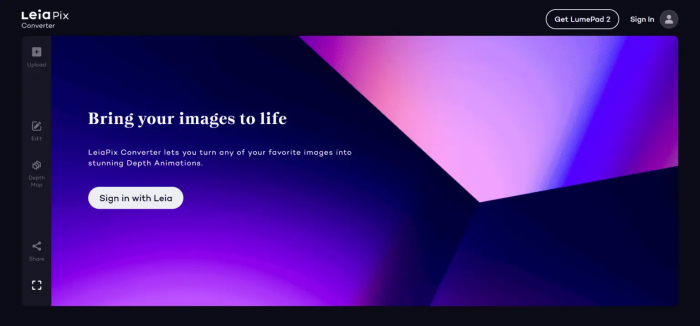
LeiaPix gained attention when it introduced automated 2D to 3D conversion based on depth analysis. It was clean, fast and surprisingly accessible for people who had never animated images before. The underlying tech belonged to Leia Inc, a company known for depth cameras and Lightfield displays.
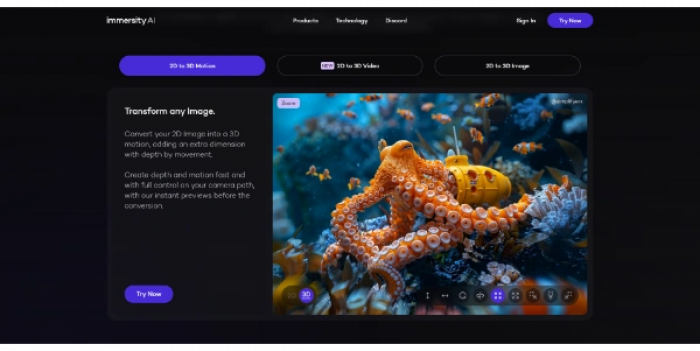
Today this technology sits inside Immersity AI. In practice this means the tool is not dead. It has simply been relocated into a larger environment. The name persists because users still search for it, but the functionality is now part of a broader suite.
For anyone approaching LeiaPix for the first time, this creates confusion. You are not using a self contained product. You are using a feature inside something newer.
How Good Is the 3D Output in Real Use
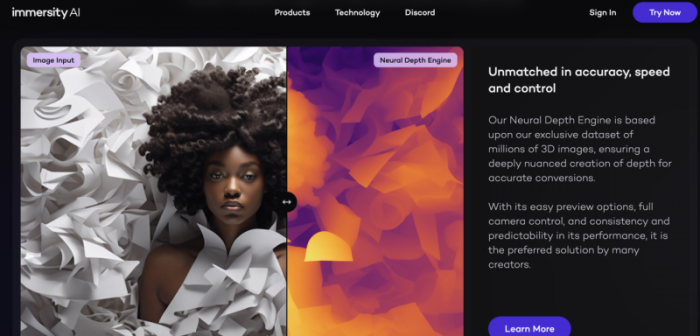
LeiaPix, now accessed through Immersity AI, still performs well for certain types of images. Photos with clear subject boundaries and simple lighting convert smoothly into depth animations. The results feel natural because the underlying engine does more than shift layers. It reconstructs a depth map that allows for subtle perspective shifts.
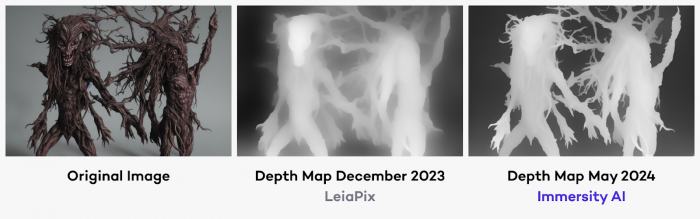
However, the tool becomes less accurate when processing images with:
• soft edges
• heavy shadows
• overlapping shapes
• complex foreground elements
The output remains visually interesting, but the depth may wobble or flatten in unexpected places.
For creators who need reliable 3D conversions for client work, this limitation matters. For social media or lightweight production, the errors are usually acceptable.
Where LeiaPix Fits in a Creator’s Workflow
Instead of treating LeiaPix as a full animation platform, it makes more sense to view it as an effect layer. It works best when you want to bring a still image to life without learning Blender or After Effects.
Good uses include:
• attention grabbing thumbnails
• animated portraits
• product shots
• dynamic storytelling slides
• subtle motion loops for social media
The workflow is simple. Upload a photo. Adjust depth if needed. Select a movement style. Export.
The simplicity is part of its appeal. The tradeoff is reduced control compared to pro tools.
The Pricing Reality After the Move to Immersity AI
The pricing now belongs to Immersity rather than LeiaPix. Plans use credits, and credits determine how many conversions you can make.
Here is a straightforward look at how it works.
| Tier | Cost | Use Case |
| Free | zero | suitable for tests and non commercial experimentation |
| Basic | about five dollars per month | regular 3D creation without watermarks |
| Pro | about fifteen dollars per month | higher resolution exports and larger workloads |
| One time credits | variable | good for people who do not want subscriptions |
The plans are reasonable for light production but may feel restrictive for heavy users who want unlimited rendering.
The Problem of Identity Loss
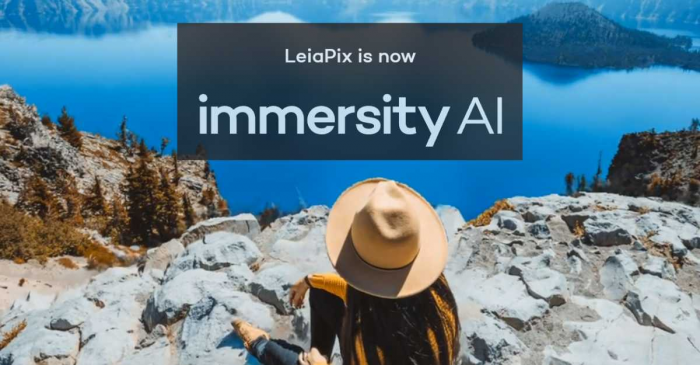
The biggest issue with LeiaPix is not the technology.
It is the fact that its brand no longer stands alone.
A tool loses clarity the moment users cannot tell which product they are actually using. LeiaPix still appears in tutorials and search results, but new users end up inside Immersity AI without warning. This creates a small but important trust gap. People prefer knowing exactly what they are signing up for.
The technology is intact. The brand is not.
Who Should Still Consider Using It
LeiaPix remains a strong option for people who want quick depth animations without studying complex software. It continues to serve photographers, social media creators and marketers who need simple but polished visual effects.
It is less suitable for:
• creators who want fine control over depth maps
• professionals who need guaranteed accuracy
• users who dislike subscription based credit systems
• anyone who wants a standalone tool instead of a merged platform
The value depends on how much control you expect and how often you plan to use it.
Final Verdict: A Good Tool That Outlived Its Name
LeiaPix AI still works, but not as an independent platform. The technology survives inside Immersity AI and continues to produce attractive depth effects when the input image is suitable. The workflow is smooth, the pricing is reasonable for moderate use and the learning curve is minimal.
The tradeoffs are clear.
You lose the comfort of a dedicated product identity.
You must accept limited manual control.
You need to be comfortable with a merged system rather than a standalone app.
So is LeiaPix worth using in 2026?
Yes, but only if you approach it with accurate expectations. It is no longer the flagship product it once was. Instead, it is a useful feature attached to a larger ecosystem. For quick 3D conversions and simple animated visuals, it still performs well. For anything beyond that scope, the tool may feel limiting.
Post Comment
Be the first to post comment!