A new profile of veteran tech investor Neil Shen reveals how significant pools of U.S. dollar capital continue to find their way into China’s fast-growing AI sector, despite tighter investment scrutiny from Washington. The Hong Kong–based financier is increasingly using offshore fund structures to keep global money flowing into Chinese artificial intelligence companies.
A key bridge between two tech worlds
Neil Shen, best known for building Sequoia Capital China, has long been one of the most influential figures in China’s technology investment landscape. After the China arm separated from Sequoia’s U.S. business and rebranded as HongShan, Shen retained deep relationships with both Western limited partners and Chinese founders.
According to recent reporting, Shen is now leveraging Hong Kong–domiciled investment vehicles to raise U.S. dollar funds from American institutions and family offices. That capital is then deployed into Chinese AI infrastructure firms, model developers, and application startups.
The strategy effectively positions Shen as a financial intermediary linking Silicon Valley capital with Beijing’s AI ambitions at a time of rising geopolitical tension.
Hong Kong’s growing role as a capital gateway
Hong Kong has increasingly emerged as a preferred offshore hub for AI-linked financing. Market data shows strong inflows into Hong Kong–listed technology names and AI-focused exchange-traded funds since 2025.
The city’s exchange operator reported roughly $3.7 billion in IPO proceeds in January 2026 alone, with artificial intelligence and semiconductor companies driving much of the rebound in listings. Regional strategists frequently describe Hong Kong as a “superconnector” that matches global investors with Chinese technology firms while maintaining a degree of regulatory separation from the mainland.
Venture and growth funds based in the city are also raising dedicated U.S. dollar pools aimed specifically at Chinese AI opportunities, even as direct cross-border investment faces new scrutiny.
Why global investors are still interested
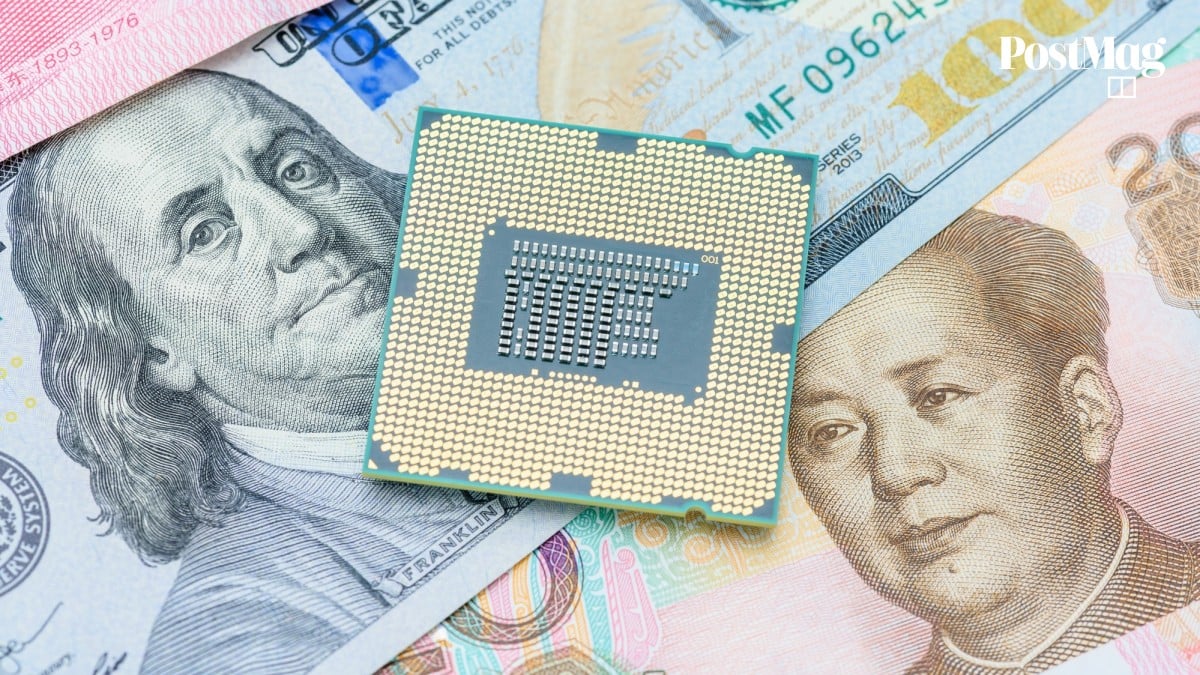
Despite geopolitical headwinds, many international fund managers continue to see China’s AI sector as attractively priced. Some estimates suggest Chinese AI companies trade at valuations significantly below comparable U.S. peers, in some cases near a quarter of the level.
At the same time, China’s domestic push into artificial intelligence, robotics, and advanced computing remains strong, supported by policy incentives and a large addressable market. Funds tracking Chinese AI developers and chipmakers have reportedly attracted multi-billion-dollar inflows, helped by strong market performances from companies such as Moore Threads and MetaX.
Several Asian asset managers have publicly indicated they are shifting allocations toward Chinese AI and robotics, arguing the sector still has substantial room for capital expenditure and revenue growth.
Rising regulatory pressure in Washington
The investment flows come against a tightening policy backdrop in the United States. The Biden administration has introduced outbound investment controls targeting sensitive Chinese sectors, including advanced AI and quantum computing. Lawmakers in Washington have also debated expanding those restrictions.
Recent cross-border deals have already drawn attention to so-called “capital washing” strategies, where Chinese startups restructure internationally to make Western investment easier. Both U.S. regulators and Chinese authorities are watching these arrangements more closely.
In this environment, Hong Kong listings have emerged as a middle path. Companies such as MiniMax and Zhipu AI are exploring or pursuing Hong Kong IPOs that allow them to remain clearly Chinese while still accessing global institutional capital.
A more complex funding landscape
Shen’s evolving strategy illustrates how financial flows are adapting rather than disappearing. By using Hong Kong–based structures and dollar-denominated funds, investors can still participate in China’s AI buildout, albeit through more layered and politically sensitive channels.
For now, the approach underscores a broader reality in global technology finance: even as geopolitical barriers rise, capital tends to find alternative routes to high-growth sectors. The long-term sustainability of these pathways, however, will depend on how aggressively regulators on both sides of the Pacific choose to respond.
Post Comment
Be the first to post comment!