AI voice platforms are multiplying quickly, and many of them promise the same thing: realistic speech, easy automation, and studio-level output without the studio bill. DupDub enters this crowded space with a slightly different strategy. Instead of chasing pure voice realism alone, it positions itself as an all-in-one creator toolkit designed for speed, scale, and multilingual workflows.
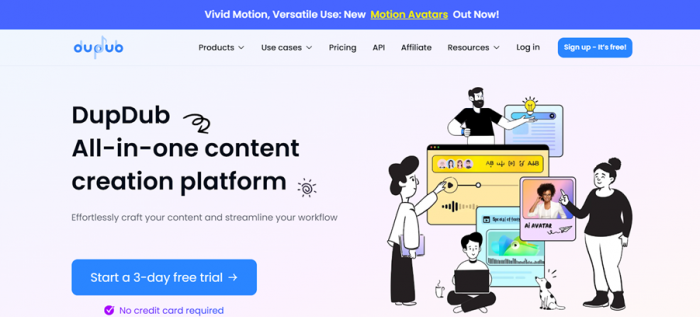
After structured hands-on testing and cross-checking real user feedback, DupDub comes across as genuinely useful in the right scenarios, but not without tradeoffs. The platform clearly prioritizes workflow efficiency over perfection, which explains both the praise and the criticism it receives across review platforms.
This article focuses on what actually holds up in real usage, where the tool performs well, and where expectations should remain realistic.
Quick Platform Snapshot
Before diving into the detailed review, here is where DupDub currently sits in the AI voice ecosystem.
| Category | Assessment |
| Primary role | All-in-one AI voice and content toolkit |
| Core strength | Speed and workflow convenience |
| Biggest limitation | Emotional voice realism |
| Best use case | High-volume creator content |
| Product maturity | Solid but still evolving |
The positioning becomes clearer once real-world usage is layered in.
Who's Behind DupDub?
DupDub is built by Mobvoi, a generative-AI and voice company that has developed speech-synthesis tech since 2015. DupDub is the international version of Mobvoi's established Chinese product, “Moyin” so it runs on nearly a decade of voice research, not a thin wrapper. That lineage explains its two strongest traits: fast generation and broad language coverage.
First Hands-On Impressions
From the moment the dashboard loads, DupDub feels built for creators who want to move quickly. Tools are grouped cleanly across voice, avatar, and text workflows. The interface avoids unnecessary complexity, which is a quiet but meaningful advantage.
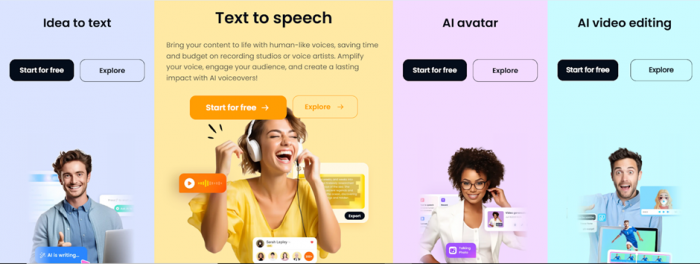
Early testing surfaces several positives:
- Voice generation is fast enough for batch work
- The voice library is large and varied
- Multilingual switching is smooth
- Onboarding friction is low
- Core tools are easy to locate
The platform clearly targets high-volume digital content workflows rather than deep audio engineering use cases.
Voice Quality in Real Use
Voice output is the heart of DupDub, so this is where most scrutiny naturally falls.
Where the Voice Engine Performs Well
In marketing videos, social content, and faceless YouTube workflows, premium voices generally sound natural enough for public-facing material. Emotional presets help reduce the flat robotic tone that basic TTS tools often produce.
What stands out positively:
- Premium voices sound reasonably natural
- Generation speed supports bulk production
- Language coverage is genuinely broad
- Tone controls are simple to adjust
For everyday creator work, the output usually clears the “good enough to publish” bar without heavy post-editing.
Where Limitations Start to Show
Push the system into more demanding territory, and the edges become visible.
Common friction observed during testing:
- Standard voices can sound synthetic
- Emotional depth still trails top-tier competitors
- Some pronunciation inconsistencies appear
- Long-form narration reveals the artificial tone
None of these issues make the tool unusable. They simply define its current ceiling.
Avatar and Video Layer: Useful but Uneven
DupDub extends beyond voice with talking avatars and lightweight video tooling. The ambition is clear. The execution is still maturing.
Where the avatar workflow works:
- Photo avatars produce acceptable lip sync
- Quick explainer videos are easy to assemble
- Multilingual dubbing workflow is convenient
Where friction appears:
- Gesture avatars can look stiff
- Face detection can occasionally fail
- Lip sync is not always perfectly aligned
- Video editing depth is fairly basic
The overall experience is functional for fast content creation, but not yet cinematic.
Pricing Reality Check
DupDub currently runs on a credit-based subscription model. Based on the latest pricing screen, the structure looks like this:
Current Pricing Structure
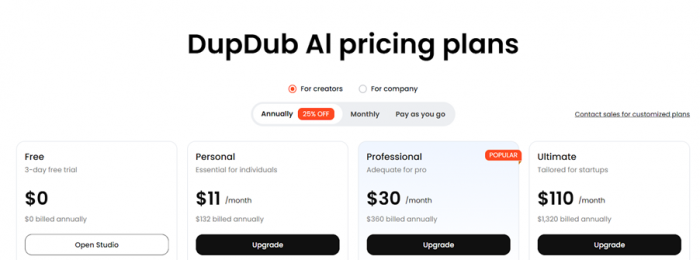
| Plan | Annual Price | Credits | Key Notes |
| Free | $0 | 10 credits (3-day trial) | Very limited testing window |
| Personal | $11/month | 1,800 credits per year | Refresh 150 credits monthly |
| Professional | $30/month | 6,000 credits per year | Refresh 500 credits monthly |
| Ultimate | $110/month | 30,000 credits per year | Refresh 2,500 credits monthly |
Understanding DupDub Credits
Rates are fixed, so credit use is easy to map once you see them:
| Task | Credit cost | Per minute |
|---|---|---|
| Standard voiceover | ~0.02/sec | ~1.2 credits |
| Cloned / ultra voice | ~0.1/sec | ~6 credits |
| Avatar video | ~0.2/sec | ~12 credits |
The takeaway: avatar video burns credits ~10x faster than voiceover. On the Personal plan's 150 monthly credits, that's ~125 min of voiceover or ~12.5 min of avatar video — which is where most "my credits vanished" complaints come from.
Practical Pricing Observations
- The free tier functions more like a short demo
- Credit usage varies significantly by feature
- Premium voices consume credits faster
- Annual billing is strongly encouraged
- The three-day trial feels restrictive for deep testing
The short trial window is one of the more commonly mentioned friction points in user feedback.
Real User Reviews and Platform Ratings
Landing pages tend to be optimistic. User reviews tend to be honest. Looking across public feedback, DupDub receives a mix of strong appreciation for convenience and recurring criticism around consistency.
Notable User Feedback Signals
Recent reviews highlight the range of experiences.
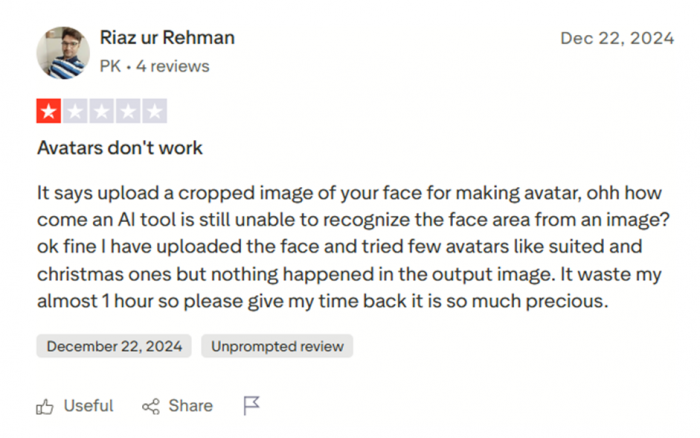
One user reported that the avatar feature failed to produce output after uploading a face image and testing multiple styles, describing the experience as time-consuming and frustrating. This points to occasional reliability issues in the avatar pipeline.
Another reviewer described the platform as relatively expensive compared to alternatives and noted that voice tone and pitch can shift unexpectedly within longer projects.
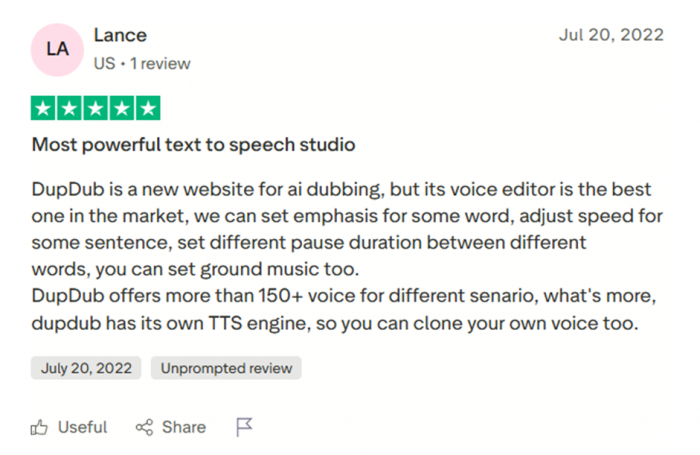
On the positive side, some users praise DupDub as highly effective for text-to-voice conversion in marketing contexts. Others highlight the voice editor controls, pause adjustments, and background music support as particularly useful.
The takeaway is not polarization. It is pattern-based.
Platform Star Ratings Snapshot
Ratings vary depending on the audience and expectations.
| Platform Type | Typical Star Range | Sentiment Direction | Key Theme |
| Trust-focused review sites | Low to mid range | Mixed | Reliability and pricing concerns |
| Deal platforms | Mid to high range | Generally positive | Feature breadth and ease of use |
| Independent reviewers | Mixed-positive | Balanced | Strong toolkit, uneven polish |
| Early adopter communities | Highly variable | Context dependent | Works best for scale workflows |
The spread itself tells a story. Tools designed for breadth often receive this type of distribution.
Review Pattern Analysis
Looking across user sentiment and hands-on testing, several themes repeat consistently.
Where Users Express Satisfaction
- Fast voice generation
- Large voice selection
- Multilingual capabilities
- All-in-one workflow convenience
- Low learning curve
Creators focused on output volume tend to report the strongest satisfaction.
Where Users Report Friction
- Avatar generation can occasionally fail
- Voice tone may shift in longer scripts
- Standard voices feel less refined
- Credit system takes time to understand
- Free trial window is very short
These issues do not affect every workflow, but they appear frequently enough to matter.
DupDub AI vs Typical Voice Tools
Understanding DupDub becomes easier when placed against common voice tool categories.
| Tool Category | Where DupDub Fits | Tradeoff |
| Pure TTS tools | Broader creator toolkit | Slightly less specialized realism |
| Premium voice AI platforms | More workflow features | Emotional depth not always equal |
| Studio voice production | Much faster and cheaper | Not broadcast-grade nuance |
| Basic cloud TTS APIs | More creator-friendly | Credit costs can add up |
This positioning explains much of the mixed but generally practical feedback.
Who DupDub Works Best For
Good fit:
- YouTube creators
- Faceless video channels
- Social media teams
- Marketing localization workflows
- High-volume content pipelines
Less ideal:
- Cinematic narration specialists
- Audiobook perfectionists
- Broadcast production environments
- Users needing deep audio engineering
Matching the tool to the workflow is critical here.
Final Review Verdict
Viewed through both hands-on testing and real user feedback, DupDub delivers clear practical value while staying within defined limits.
The platform’s biggest strength is efficiency. For creators producing frequent social content, multilingual videos, or faceless YouTube material, the time savings are real and noticeable. Premium voices are solid for most digital publishing needs, and the bundled toolkit reduces workflow friction.
At the same time, consistent feedback points to areas still maturing. Emotional voice depth, avatar reliability, and the very short free trial remain the most visible pressure points.
The balanced conclusion is straightforward.
DupDub is a strong productivity tool for modern content pipelines. It is not yet a studio-grade voice replacement. For many high-volume creators, that tradeoff is perfectly acceptable. For audio purists and cinematic storytellers, the gaps will remain visible.
And based on both direct testing signals and broader user sentiment, that middle-ground positioning appears to be exactly where DupDub stands today.
Post Comment
Be the first to post comment!