The reason people switch is not features. It is friction that shows up at scale.
Metricool performs extremely well in the early stages of social media management. It combines scheduling, analytics, and ad tracking into a single system at a price point that undercuts most competitors. For solo users or small teams, that combination feels efficient and cost-effective.
The shift begins when workflows become layered. Managing multiple brands introduces approval cycles. Engagement volume increases. Reporting expectations become more structured. At that point, the limitations are not theoretical. They show up in daily operations. Collaboration becomes fragmented, inbox management requires manual handling, and scaling costs start compounding.
The alternatives below are not general replacements. Each one solves a specific problem that Metricool struggles with.
Market Snapshot: What Data and Reviews Show
| Tool | Avg Rating (G2 / Capterra) | Core Strength | Core Limitation |
| Metricool | ~4.5 / 5 | Analytics + ads integration | Weak collaboration |
| Buffer | ~4.3 / 5 | Simplicity | Limited analytics |
| SocialBee | ~4.6 / 5 | Content automation | No inbox |
| Publer | ~4.5 / 5 | Cost efficiency | Weak reporting |
| SocialPilot | ~4.4 / 5 | Scaling workflows | UI polish |
| Sendible | ~4.5 / 5 | Client-facing features | Expensive scaling |
| Agorapulse | ~4.6 / 5 | Engagement management | High pricing |
📊 Insight:
Across platforms, ratings remain consistently high. The decision is not quality-based. It is workflow-fit based.
Buffer
The Simplest Alternative That Works Until Strategy Matters

Buffer is built around one principle: remove complexity. The interface strips social media management down to scheduling, basic analytics, and queue-based publishing. There is almost no learning curve. A user can start scheduling posts within minutes.
This simplicity is the reason Buffer consistently scores high on usability across review platforms. Most users highlight how quickly they can move from idea to scheduled content. For creators posting a few times a week, this reduces cognitive load significantly.
The limitation appears when deeper analysis is required. Buffer does not provide competitor tracking, ad performance data, or advanced reporting. Analytics remain surface-level, focusing on engagement metrics rather than strategic insights. This creates a ceiling where the tool stops being sufficient for growth-focused teams.
Data-backed breakdown
| Factor | Buffer Performance |
| Ease of use | Very high |
| Analytics depth | Low |
| Scheduling efficiency | High |
| Strategy support | Limited |
What users consistently say
- Easy to learn and use immediately
- Lacks depth for campaign-level decisions
Where Buffer fits best
Small teams, solo creators, and workflows where publishing consistency matters more than analysis.
SocialBee
The Automation Layer That Reduces Content Creation Pressure
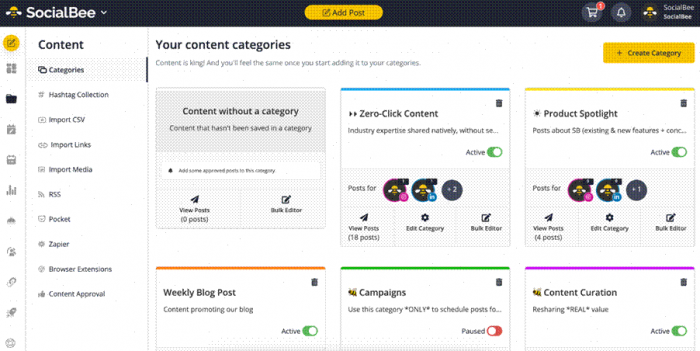
SocialBee approaches social media from a different angle. Instead of focusing on analytics or engagement, it focuses on content lifecycle management. Content is organized into categories and recycled automatically over time.
This becomes highly effective for businesses that struggle with content volume. Instead of creating new posts daily, a single piece of content can generate multiple variations and be reused across weeks or months. Review data shows that this significantly reduces content creation time.
However, SocialBee is not designed as a full management tool. It lacks a unified inbox, meaning engagement still needs to be handled elsewhere. Analytics are also limited compared to Metricool, focusing more on publishing performance than strategic insights.
Data-backed breakdown
| Factor | SocialBee Performance |
| Content automation | Very high |
| Content reuse efficiency | High |
| Inbox functionality | None |
| Analytics depth | Basic |
What users consistently say
- Saves hours by recycling content
- Not suitable for engagement-heavy workflows
Where SocialBee fits best
Content-driven workflows where the main bottleneck is creation, not management.
Publer
The Cost-Efficient Alternative That Trades Depth for Flexibility
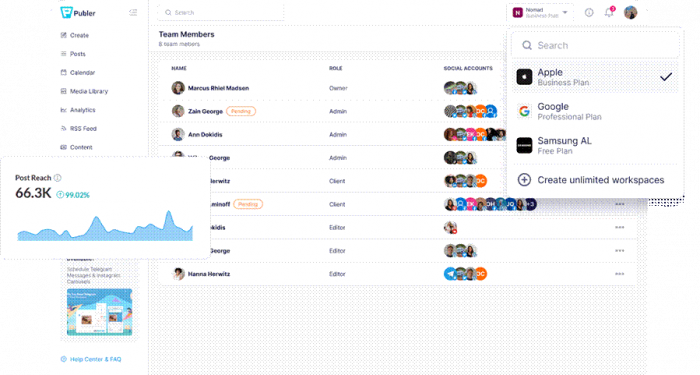
Publer is structured around affordability and flexibility. Its workspace model allows multiple clients to be managed under separate environments without heavy per-brand pricing. This makes it attractive for agencies operating on tight margins.
The scheduling system is robust, supporting bulk uploads and automated posting. For operational workflows, this reduces repetitive tasks and improves efficiency.
The tradeoff becomes clear in analytics. Reporting is limited to post-level insights and lacks competitor tracking or deeper performance metrics. For teams that rely on data to guide strategy, this becomes a significant limitation.
Data-backed breakdown
| Factor | Publer Performance |
| Pricing efficiency | Very high |
| Multi-client management | Strong |
| Analytics depth | Low |
| Strategic insights | Limited |
What users consistently say
- Strong value for money
- Not ideal for data-driven reporting
Where Publer fits best
Agencies that prioritize cost control and operational efficiency over analytics depth.
SocialPilot
The Scaling Tool Built for Volume Over Polish
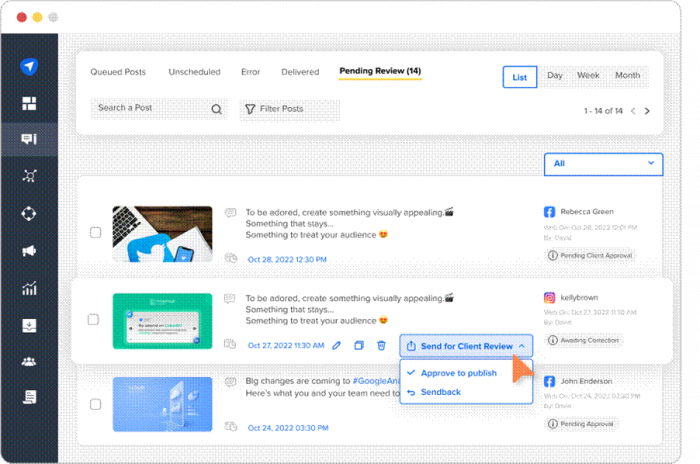
SocialPilot is designed for high-volume workflows. Its bulk scheduling capability allows hundreds of posts to be uploaded and scheduled at once. This significantly reduces manual effort for agencies managing multiple accounts.
Collaboration is another area where it improves over Metricool. Approval workflows include structured feedback, making client communication more efficient.
The limitation lies in refinement. The interface is functional but lacks polish. AI tools and analytics exist but are not industry-leading. This makes SocialPilot highly effective operationally, but less impressive strategically.
Data-backed breakdown
| Factor | SocialPilot Performance |
| Bulk scheduling | Very high |
| Collaboration workflows | Strong |
| Interface experience | متوسط |
| Analytics depth | Moderate |
What users consistently say
- Efficient for managing many accounts
- Feels less refined compared to competitors
Where SocialPilot fits best
Agencies handling large content volumes that need operational efficiency.
Sendible
The Client-Facing Alternative That Prioritizes Presentation
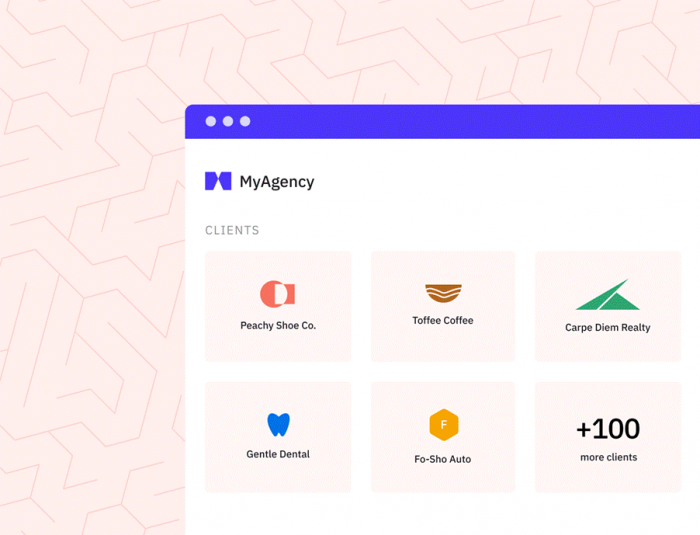
Sendible focuses on how work is presented rather than just how it is executed. Its white-label capabilities allow agencies to create branded dashboards and reports for clients.
This improves client communication and professionalism. Reports can be customized, and dashboards can reflect the agency’s branding rather than a third-party tool.
The limitation is cost. As the number of profiles increases, pricing rises significantly. This makes Sendible less efficient for large-scale operations compared to tools like SocialPilot.
Data-backed breakdown
| Factor | Sendible Performance |
| White-label capability | Very high |
| Client reporting | Strong |
| Cost scalability | Weak |
| Performance stability | Moderate |
What users consistently say
- Excellent for client reporting
- Expensive at scale
Where Sendible fits best
Agencies that prioritize client presentation and reporting quality.
Agorapulse
The Engagement-Focused Alternative That Fixes Metricool’s Biggest Gap

Agorapulse addresses the most common complaint about Metricool: inbox limitations. It provides a unified system for managing comments, messages, and mentions across platforms.
Features like tagging, assignment, and automation rules reduce manual effort. Teams can track conversations, assign responsibilities, and manage engagement at scale.
This makes it one of the highest-rated tools for engagement workflows. However, the cost is significantly higher than most alternatives, which limits its accessibility for smaller teams.
Data-backed breakdown
| Factor | Agorapulse Performance |
| Inbox capability | Very high |
| Automation | Strong |
| Reporting depth | High |
| Pricing | High |
What users consistently say
- Best-in-class inbox system
- Expensive but justified for engagement-heavy workflows
Where Agorapulse fits best
Teams managing large volumes of interactions and customer engagement.
Core Patterns Across All Alternatives
| Pattern | What Data Shows | Impact |
| Ratings similarity | Most tools score above 4.3 | Quality is not differentiator |
| Workflow specialization | Each tool excels in one area | No all-in-one solution |
| Scaling cost issues | Common complaint across reviews | Budget planning matters |
| Feature tradeoffs | Strength always paired with weakness | Selection must be intentional |
Key Decision Pointers
- Choose Buffer if simplicity is the priority
- Choose SocialBee if content production is the bottleneck
- Choose Publer if cost efficiency is critical
- Choose SocialPilot if scaling content volume is required
- Choose Sendible if client reporting matters
- Choose Agorapulse if engagement and inbox workflows are the focus
Final Interpretation
Metricool is not being replaced by better tools. It is being replaced by more specialized systems.
The data shows a consistent pattern. No platform dominates across all categories. Each alternative solves a specific limitation that appears as workflows evolve.
The correct approach is not to look for a superior tool. It is to identify where the current system fails and adopt a tool that resolves that exact point of friction.
That is the only comparison that produces a meaningful decision.
Post Comment
Be the first to post comment!