Why this guide exists
Jungle AI has earned attention for turning PDFs, slides, and videos into flashcards, multiple-choice questions, diagram questions, and spaced-repetition review sessions. But it is not perfect. Its free plan is tight, its value depends heavily on how often you upload material, and some students eventually want more flexibility, stronger collaboration, better note systems, or broader tutoring features. This guide takes a different writing structure from the earlier file: less list-heavy in the opening, more judgment-driven, and more focused on why a student would realistically switch.
In plain terms, Jungle AI is strong when you want fast conversion from passive content into active recall material. It is weaker when you need wider ecosystem support, cheaper premium access, richer class collaboration, or a more all-in-one study environment.
Jungle AI snapshot
| Metric | What Jungle AI offers |
| Core use case | Turns notes, PDFs, lecture slides, and videos into flashcards, quizzes, explanations, and spaced repetition study sets |
| Free plan | 10 generations/month, 30 pages per document, 30 video minutes, limited advanced and diagram questions |
| Paid plan | Super Learner with unlimited generation, unlimited pages and video minutes, more questions, unlimited document chat, Anki export |
| Best fit | Students who want quick AI-made practice from source material |
| Main friction points | Tight free tier, limited collaboration depth, less flexible ecosystem than some rivals |
The five strongest competitors
| Platform | Starting price | Best for | Why it can beat Jungle AI |
| Knowt | $12.49/mo annual or $24.99 monthly | Students replacing Quizlet + wanting AI workflows | Broader study modes, Quizlet import, large free ecosystem |
| Quizlet | $7.99/mo or about $35.99/yr | Mainstream learners and classrooms | Huge content library, polished UX, Q-Chat tutoring |
| StudyFetch | $7.99/mo annual base | Lecture-to-study workflow | Broader formats, tutor mode, live lecture features |
| Revisely | About $12/mo monthly or about $5/mo annual | Exam-focused users | Strong test-first workflow and low annual cost |
| Mindgrasp | $9.99/mo | All-in-one AI study assistant | Summaries, notes, tutor, flashcards, and question answering in one place |
Charts and stats
Pricing is where Jungle AI starts to look vulnerable. Some competitors ask for a similar amount, but they package more flexibility around imports, note taking, tutoring, or classroom use.

User sentiment also matters. The strongest competitors tend to win not only on features, but on how frictionless they feel during actual exam season. That is where tools like Knowt and Quizlet often pull ahead.
often pull ahead.

Figure 2. Average public ratings across review sources.

Figure 3. Expert value score based on pricing, depth, flexibility, and student usefulness.
Knowt — the most practical switch for most students
Star rating: 4.6/5
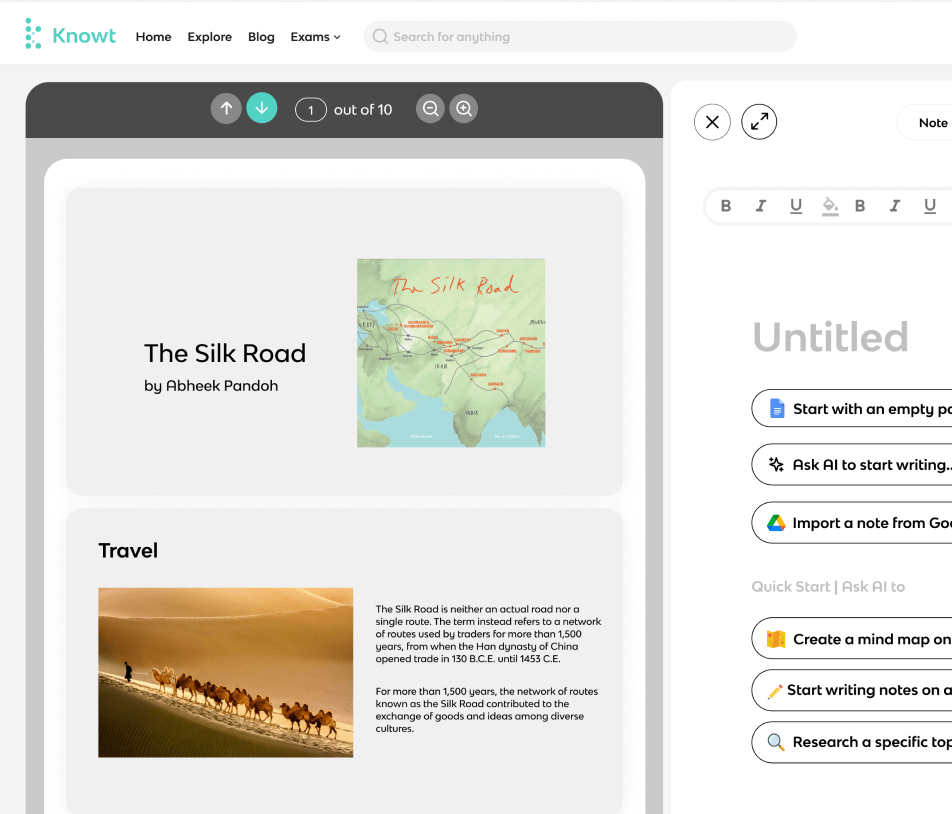
Knowt is the most obvious Jungle AI competitor because it attacks the same problem from a more flexible angle. It helps students create notes and flashcards, import Quizlet sets, use learn mode, and access AI study tools inside a much broader study ecosystem. That matters because Jungle AI is very good at generation, but Knowt feels more like a study hub you can stay inside for an entire semester rather than a conversion tool you visit when you need material built quickly.
Why it can be better than Jungle AI
Knowt wins on ecosystem breadth. Its free tier is more usable, its import flows are easier for students already living in Quizlet-style study habits, and it has enough structure to work for solo learners while still feeling accessible to teachers. Jungle AI feels more intentionally guided around active recall generation; Knowt feels more open and flexible. For many students, that flexibility is exactly the point.
Core features
· Quizlet import
· AI summaries and notes
· Flashcards and learn mode
· Practice tests and exam prep
· Large note and flashcard library
· Teacher tools and monitored AI activities
Pricing snapshot
| Plan | Price | What you get |
| Basic | Free | Core notes, flashcards, free study modes |
| Ultra Annual | $12.49/mo billed $149.99 | Unlimited AI summaries, Kai chats, assessments |
| Ultra Monthly | $24.99/mo | Same premium features without annual commitment |
Pros
· Very strong free ecosystem
· Better for students already using Quizlet-style decks
· More rounded for semester-long studying
· Good balance of AI and traditional study tools
Cons
· Less guided than Jungle AI in adaptive pacing
· Monthly premium is expensive
· AI depth may feel broad rather than specialized
What reviews suggest
Students often describe Knowt as the tool that removes friction. The common praise is that it lets them build, import, and revise quickly without feeling boxed into generation limits. The common criticism is that Jungle AI can feel more intentional for spaced repetition and practice design.
Is it worth switching?
If a student is frustrated by Jungle AI limits and wants a broader, freer study environment, switching to Knowt makes sense almost immediately.
Quizlet — the polished mainstream alternative
Star rating: 4.7/5
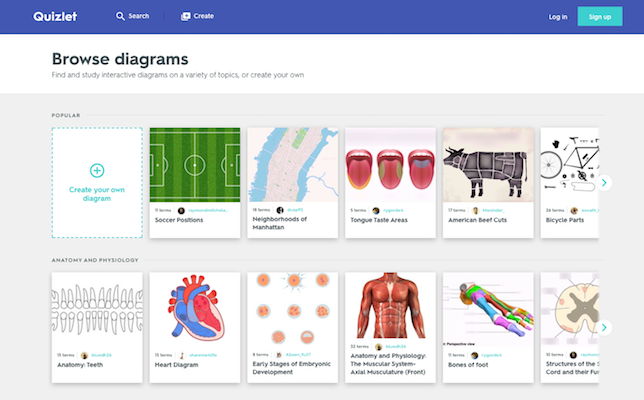
Quizlet is not the newest player, but it remains one of the strongest competitors because it combines brand trust, classroom adoption, huge content volume, and now AI-powered help through Q-Chat. Jungle AI may feel more purpose-built for turning a document into active recall material, but Quizlet is still the easier recommendation for students who want familiarity, speed, and a giant library of existing sets.
Why it can be better than Jungle AI
Where Quizlet beats Jungle AI is polish. The interface is cleaner, the learning curve is lower, and the sheer volume of existing study sets means many students do not have to generate everything from scratch. Q-Chat also changes the equation because it makes Quizlet feel less like a flashcard app and more like an adaptive tutor.
Core features
· Huge shared flashcard library
· Q-Chat AI tutor
· Magic Notes and scan-based tools
· Learn, Test, Match, and class-friendly modes
· Strong app experience on mobile
· Very familiar student workflow
Pricing snapshot
| Plan | Price | What you get |
| Free | $0 | Basic flashcards and limited practice rounds |
| Quizlet Plus | $7.99/mo or about $35.99/yr | Unlimited study modes, ads removed, AI features |
Pros
· Lowest friction for new users
· Massive content library
· Very strong for schools and classrooms
· AI tutor adds more depth than older Quizlet versions
Cons
· Free version is more limited than before
· Can feel generic if you need highly custom source-grounded questions
· Less specialized than Jungle AI for document-to-quiz conversion
What reviews suggest
Students consistently praise Quizlet for ease of use and reliability. Reviews around Q-Chat are especially positive because it pushes students to explain answers instead of only recognizing them. The criticism is predictable too: power users sometimes outgrow it and want more source-grounded generation.
Is it worth switching?
Choose Quizlet over Jungle AI if you value polish, ready-made content, and mainstream classroom usability more than specialized generation depth.
StudyFetch — the better all-in-one class companion
Star rating: 4.3/5
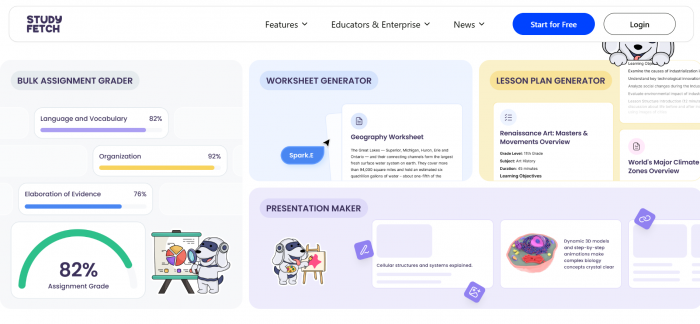
StudyFetch sits closer to an all-in-one AI study workspace than Jungle AI does. It can build study sets from uploaded material, run AI tutor interactions through Spark.E, and support lecture-heavy workflows. This gives it a stronger appeal for students who want help before, during, and after class rather than only during revision.
Why it can be better than Jungle AI
The biggest reason StudyFetch can be better than Jungle AI is range. Jungle is excellent at turning material into practice. StudyFetch tries to support the whole study cycle: uploading, tutoring, organizing, quizzing, and even live lecture support on higher plans. That range makes it more useful for students juggling multiple classes and messy note systems.
Core features
· Spark.E AI tutor
· Uploads from class material
· Study set generation
· Lecture and note support
· Group study and collaboration on higher plans
· Works across broader classroom-style workflows
Pricing snapshot
| Plan | Price | What you get |
| Free | $0 | 10 Spark.E chats, 1 study set, 2 uploads |
| Base | $7.99/mo or $4.99/mo annual | 100 chats, 100 study sets, 10 uploads |
| Premium | $11.99/mo or $7.99/mo annual | Unlimited chats, live lecture features, group study |
Pros
· More complete study workflow than Jungle AI
· Good value on annual plans
· Useful tutor mode for concept clarification
· Better for students who want one platform for many tasks
Cons
· Free tier is restrictive
· Monthly premium can feel pricey depending on source
· Product messaging can be confusing
What reviews suggest
StudyFetch reviews usually highlight convenience. Students like having tutor chat, uploads, and study set generation in one place. The weak spot is pricing clarity and the fact that some limits arrive fast on free use.
Is it worth switching?
Switch if Jungle AI feels too narrow and you want one tool that can act like study assistant, tutor, and revision engine together.
Revisely — the exam-first alternative
Star rating: 4.2/5
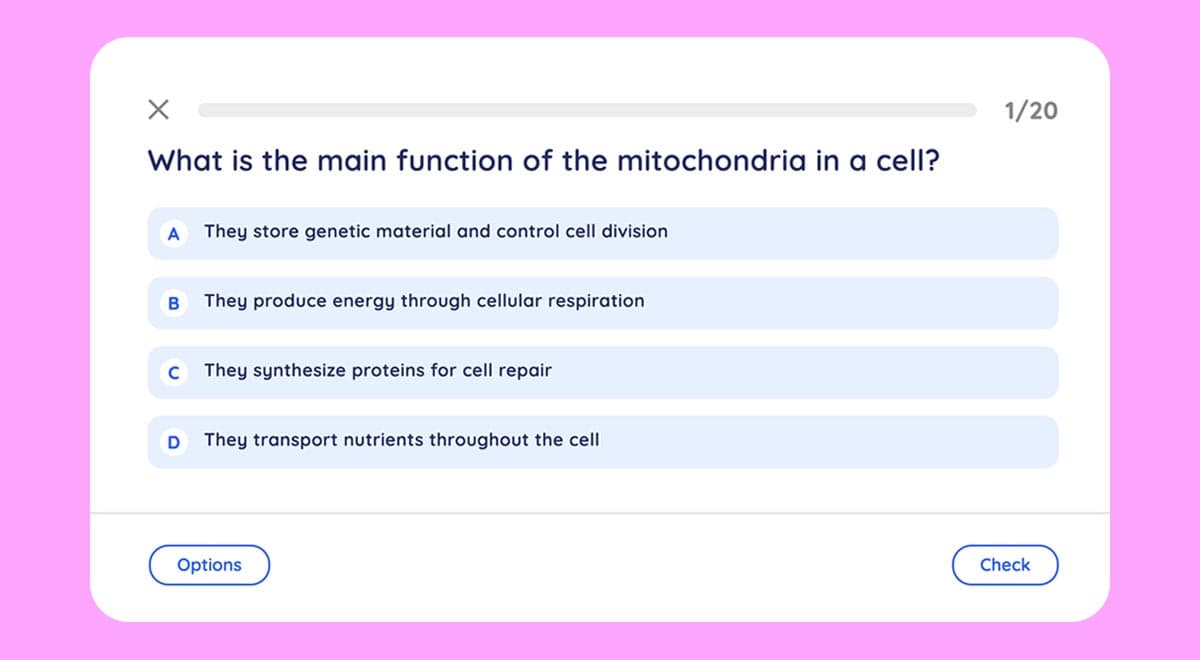
Revisely is the kind of tool that appeals to students who care less about having a flashy AI brand and more about producing revision material quickly for tests. It focuses on flashcards, quizzes, and notes from study content, and its annual pricing can be more attractive than Jungle AI for budget-conscious students.
Why it can be better than Jungle AI
Why is Revisely sometimes better than Jungle AI? Because not every student wants a full study ecosystem. Some just want a fast exam-prep machine. Revisely leans into that simplicity. It is not as broad or polished as Quizlet, and it is not as flexible as Knowt, but it often feels more direct for pure revision work.
Core features
· AI flashcard generation
· Quiz and note creation
· Simple exam-oriented workflow
· Freemium structure
· Lower annual price than many rivals
Pricing snapshot
| Plan | Price | What you get |
| Basic | Free | Highly limited generation |
| Monthly | About $12/mo | Full features for short-term use |
| Annual | About $5/mo billed yearly | Best value |
Pros
· Affordable annual pricing
· Straightforward for exam prep
· Fewer distractions than broader platforms
· Good for students who want simple outputs fast
Cons
· Free plan is very limited
· Less ecosystem depth
· Less mainstream trust and fewer integrations
What reviews suggest
Public commentary around Revisely usually frames it as practical rather than exciting. Students who like it talk about speed and exam focus. Students who leave often want more depth, collaboration, or better study modes.
Is it worth switching?
Switch to Revisely if your main issue with Jungle AI is cost and you mainly want lean exam-prep output rather than a richer learning environment.
Mindgrasp — the best alternative for understanding, not just memorizing

Star rating: 4.4/5
Mindgrasp stands apart from Jungle AI because it is not only trying to generate revision assets. It is trying to help you understand content. It converts lectures, documents, and videos into summaries, notes, flashcards, quizzes, and AI answers. That makes it a better fit for university students dealing with dense material where comprehension matters as much as recall.
Why it can be better than Jungle AI
Mindgrasp can be better than Jungle AI when the bottleneck is not card generation but conceptual clarity. A student reading a difficult theory-heavy PDF may get more value from summaries, explanation workflows, and assistant-style questioning than from flashcards alone. Jungle AI still wins for focused active recall flows, but Mindgrasp wins when you want help thinking through the material.
Core features
· AI summaries and notes
· Flashcards and quizzes
· Interactive AI tutor
· Lecture and video support
· Library organization
· Live recording on higher plans
Pricing snapshot
| Plan | Price | What you get |
| Basic | $9.99/mo | Unlimited AI assistant questions, uploads, storage |
| Scholar | $12.99/mo | Adds math expert, extension, 5 hours live recording |
| Premium | $14.99/mo | Adds more live recording and image analysis |
Pros
· Best for understanding complex material
· Strong all-in-one academic assistant
· Useful for university lectures and readings
· Clear value if summaries matter to you
Cons
· Pricier than some budget options
· Less specialized for spaced repetition than Jungle AI
· Can feel broader than needed for simple memorization
What reviews suggest
Mindgrasp reviews are often strongest among college students and heavy readers. They talk about time saved on lectures and difficult readings. The downside is that pure flashcard-focused learners may see it as overbuilt.
Is it worth switching?
Switch from Jungle AI to Mindgrasp if your biggest problem is not generating practice questions but actually digesting dense academic content.
Who should choose which tool?
| If you are... | Best choice |
| A student who wants the most practical all-round switch | Knowt |
| Someone who values polish, classroom use, and familiar study sets | Quizlet |
| A lecture-heavy learner who wants an AI tutor built in | StudyFetch |
| An exam-focused student on a tighter annual budget | Revisely |
| A college learner dealing with dense readings and concept-heavy material | Mindgrasp |
Final take
Jungle AI is still a strong product. It turns passive study material into active recall work quickly, and that alone makes it valuable. But the market around it is now more mature. If you want broader study modes, Knowt is the strongest general switch. If you want a polished mainstream option, Quizlet remains hard to beat. If you want richer tutoring and class workflow support, StudyFetch is more ambitious. If price matters more than ecosystem, Revisely deserves attention. And if deep understanding matters more than memorization, Mindgrasp is the smartest move.
The right switch depends less on feature checklists and more on what type of student you are when exams get close. That is the honest way to evaluate these tools.
Post Comment
Be the first to post comment!