Let's be honest - Gizmo AI is a genuinely impressive product. Built by three Cambridge University alumni in 2021, it does something no other app at launch was doing at scale: it takes your PDFs, lecture recordings, YouTube videos, and handwritten notes, then spits out study-ready flashcards in seconds. The gamification layer - live leaderboards, study streaks, game-style quizzes - makes it feel less like a chore and more like a session of Duolingo for every subject you can imagine.
But Gizmo has real friction points that drive users away. The free tier throttles your sessions with a life-based system that punishes wrong answers with a 10-minute lockout - exactly when you're in study flow mode. The weekly paid plan ($13.99/week) is, by most students' standards, brutally expensive if you're not on the annual plan. And the spaced repetition algorithm, while functional, draws consistent criticism from power users who find it less responsive than Anki's gold-standard FSRS.
This piece isn't a hit job on Gizmo. It's a fair, thorough look at the tools that genuinely compete - and in some cases beat it at specific jobs. We've pulled user reviews from Trustpilot, Reddit, G2, Capterra, and app stores, and cross-referenced them with real pricing data as of April 2025. Whether you're a medical student, a high school student cramming for A-Levels, or a language learner, there's a different tool that might serve you better.
Quick Context: Who Uses Gizmo? Gizmo's search volume hit record highs in September–October 2025, driven heavily by back-to-school season. Its viral TikTok presence (@gizmo.ai, 6,500+ likes on top posts) targets Gen Z learners aged 15–25. A 2024 Digital Education Council global survey found that 86% of students now use AI in their studies - which is why this entire category is booming. |
Head-to-Head: Feature Comparison at a Glance
Before we dive into each tool individually, here's a side-by-side of how they stack up across the features students actually care about. We'll unpack each column in detail below.
| Feature | Gizmo AI | Anki | Quizlet | Knowt | RemNote |
| AI Flashcard Gen | ✅ Yes | ⚠️ Add-ons | ✅ Yes | ✅ Yes | ✅ Yes |
| Spaced Repetition | ✅ Yes | ✅ Best-in-class | ⚠️ Basic | ✅ Yes | ✅ Yes |
| Note-Taking | ❌ No | ❌ No | ❌ No | ✅ Yes | ✅ Full |
| Gamification | ✅ Yes | ❌ No | ✅ Yes | ⚠️ Limited | ❌ No |
| Free Tier | ⚠️ Limited | ✅ Free PC | ⚠️ Ads | ✅ Generous | ✅ Yes |
| Offline Mode | ❌ No | ✅ Yes | ⚠️ Paid only | ❌ No | ✅ Yes |
| PDF / Video Import | ✅ Yes | ⚠️ Plugins | ✅ Yes | ✅ Yes | ✅ Yes |
| Mobile App | ✅ iOS+Android | ✅ Yes | ✅ Yes | ✅ Yes | ⚠️ Limited |
| Starting Price | Free / $2.99/wk | Free | $7.99/mo | Free / $9.99/mo | Free / $6/mo |
| Best For | Gamified learners | Medical/advanced | Casual students | Budget-first | Research & notes |
Table 1: Feature comparison across Gizmo AI and its top 5 competitors (April 2025)
Pricing Reality Check
Pricing in the edtech space is notoriously confusing - free tiers with aggressive limits, monthly plans that sound cheap but add up fast, and annual plans buried three clicks deep. Here's the unvarnished breakdown:
| Tool | Free Tier | Paid From | Annual Savings |
| Gizmo AI | 15 lives/day, 10 AI quizzes | $2.99/week or $7.99/mo | ~$36/yr yearly plan |
| Anki | Fully free (desktop + Android) | $24.99 iOS one-time | N/A – mostly free |
| Quizlet | Ads, no Learn mode | $7.99/month ($35.99/yr) | Save ~$60 vs monthly |
| Brainscape | Free with limits | $7.99/month | Lifetime deal available |
| Knowt | Generous – most modes free | $9.99/month (Ultra) | Best free value |
| RemNote | Unlimited notes + cards | $6–$8/month (Pro) | $395 lifetime option |
1. Anki - The Gold Standard That Refuses to Die
Best for: Medical students, language learners, and anyone studying 500+ cards regularly.
Rating: ★★★★☆ 4.5/5 App Store 4.8 | Play Store 4.6 | Reddit 9/10 community score
Pricing: Free on desktop and Android • $24.99 one-time purchase on iOS
What Anki Actually Is
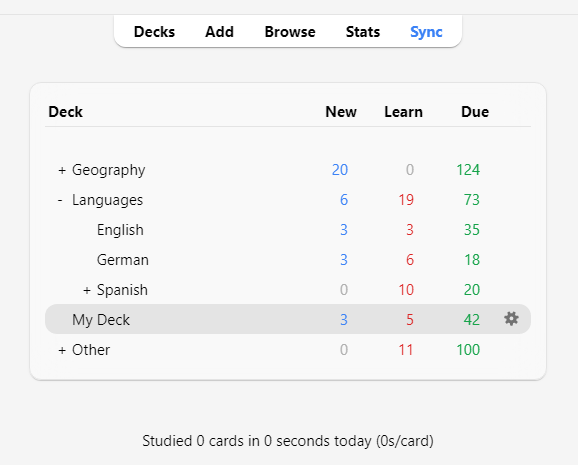
Anki is open-source flashcard software that's been around since 2006 - which makes it ancient by tech standards but battle-tested in a way no VC-backed startup can replicate overnight. More than 84% of medical students globally use Anki, according to published academic surveys. It's not flashy. There is no AI flashcard generator baked in. The UI looks like it was designed in Windows XP. And yet, Anki remains the single most recommended study tool across every serious learning community on the internet.
The reason is its spaced repetition algorithm - now upgraded to FSRS (Free Spaced Repetition Scheduler), a machine-learning-trained system built on hundreds of millions of review data points. When Gizmo's spaced repetition draws complaints that it "keeps repeating the same cards" (actual App Store review, November 2025), Anki users are drilling with precisely optimized intervals for their personal forgetting curve.
Key Features
• FSRS Algorithm - the most researched spaced repetition system in existence, trained on real-world review data
• AnkiHub integration - community-maintained shared decks like AnKing (medical) with 50,000+ pre-made, peer-reviewed cards
• Full offline mode - study on a plane, in a basement, anywhere with zero connectivity required
• Add-on ecosystem - 3,000+ community-built plugins for image occlusion, LaTeX, audio, stats dashboards, and more
• Cross-device sync via AnkiWeb - free cloud sync across desktop, Android, and iOS
• Completely customizable card templates - HTML/CSS card editing for advanced users
• Detailed statistics - retention graphs, learning heatmaps, forecast charts for upcoming reviews
Pros & Cons
| ✅ Pros | ❌ Cons |
| • Completely free on desktop and Android | • UI looks dated and intimidating for beginners |
| • Best-in-class spaced repetition (FSRS) | • No built-in AI flashcard generation (needs add-ons) |
| • Massive library of pre-made decks (AnKing, language, law) | • iOS app costs $24.99 (a surprisingly common complaint) |
| • Full offline functionality - no internet needed | • Setup takes hours to configure properly |
| • Infinite customization via HTML/CSS card templates | • No gamification or social features |
| • Active 20-year community; extensive documentation | • Add-on compatibility can break between versions |
| • No AI paywalls or life-throttling systems | • No video/YouTube import without third-party tools |
Real User Reviews
"I've been using Anki for 4 years in medical school. The interface is ugly but the algorithm is unbeatable. I passed Step 1 with a 250+ and Anki was 80% of my preparation." - Reddit r/medicalschool, 2024
"Compared to Gizmo, Anki takes way longer to set up but the spaced repetition is leagues ahead. Gizmo kept showing me cards I already knew perfectly while ignoring cards I was forgetting. Switched back to Anki." - App Store reviewer, November 2025
"It's like Linux - powerful but you have to want to learn it. Once you do, nothing else comes close." - Reddit r/learnmath, August 2025
How It Beats Gizmo AI
Where Gizmo throttles free users with a life system, Anki is completely unrestricted and free.
Where Gizmo's AI-generated cards sometimes lack clinical depth (a common criticism from nursing and medical students who note they have to manually edit 30-40% of generated cards before using them), Anki's community decks like AnKing are peer-reviewed and maintained by hundreds of medical educators. If your study goal is high-volume memorization for high-stakes exams, Anki wins outright.
Bottom Line: Switch to Anki if budget is a concern, you're a medical/law/language learner, or you want the most powerful SRS algorithm available. |
2. Quizlet - The Flashcard Giant with a Paywall Problem

Best for: Casual students who want access to a massive existing library of study sets without building from scratch.
Rating: ★★★☆☆ 3.5/5 G2 4.5/5 | Trustpilot 1.4/5 (pricing complaints) | Capterra 4.5/5
Pricing: Free (with ads) • Quizlet Plus $7.99/month or $35.99/year
What Quizlet Actually Is
Founded in 2005 by a 15-year-old to help him study French, Quizlet grew into one of the world's largest educational platforms with over 500 million study sets and more than 60 million active users. It's the household name in the flashcard world - the tool your teacher probably told you about, the one your older sibling used for SAT prep, the one everyone recognizes.
The problem is what happened between 2021 and 2024: Quizlet progressively moved features that used to be free - Learn mode, practice tests, offline access - behind a paywall. Trustpilot reviews dropped from a respectable 3.5 to 1.4/5 stars, driven almost entirely by students furious about what one reviewer called "predatory pricing that preys on broke students." The irony is thick for a tool founded by a teenager.
That said, Quizlet's AI features - Magic Notes (PDF and handwritten note import), Q-Chat (AI tutor), and AI-generated quiz questions - are genuinely good. In testing, around 85% of Q-Chat responses required no editing, which is notably better than Gizmo's medical card generation. The library of pre-made sets is unmatched; for common subjects like high school biology, AP History, or Spanish vocabulary, you can almost always find a quality deck someone else already built.
Key Features
• 500M+ pre-existing study sets - the largest flashcard library in the world by a significant margin
• Magic Notes - upload PDFs or handwritten notes to auto-generate flashcard sets with AI
• Q-Chat AI tutor - conversational AI that explains concepts, quizzes you, and adjusts difficulty
• Study modes - Flashcards, Learn, Match, Gravity, Scatter, and Spell for varied practice
• Quizlet Live - classroom-ready multiplayer game for group study sessions
• Mobile apps (iOS and Android) with offline access on paid plans
• Spaced repetition scheduling in the Learn mode (basic, not Anki-level)
Pros & Cons
| ✅ Pros | ❌ Cons |
| • World's largest pre-made study set library | • Trustpilot 1.4/5 - paywall backlash is severe |
| • AI Magic Notes generates solid flashcards from PDFs | • Learn mode now requires Plus subscription |
| • Q-Chat AI tutor provides accurate, helpful explanations | • Practice tests and offline access behind paywall |
| • Familiar UI - most students already know how it works | • Free tier shows ads that interrupt study sessions |
| • Quizlet Live great for classroom engagement | • Spaced repetition is basic compared to Anki or RemNote |
| • Strong mobile app experience on iOS | • Data export is difficult (locks you into ecosystem) |
| • Supports multimedia cards (audio, images) | • Q-Chat occasionally gives inaccurate answers (~13% error rate) |
Real User Reviews
"Quizlet's saving grace is its massive library of user-made flashcards. Saved my butt a few times when I needed quick reviews." - Capterra, August 2025
"Things that used to be free are locked behind paywalls, and the website feels like a shell of itself because of it." - Trustpilot reviewer, December 2025
"We literally have to pay to study now. It's sad." - Kimola sentiment report citing student reviews, 2025
"Magic Notes accuracy was about 85% of generated cards needing no editing - impressive for a mainstream tool." - Independent testing, January 2025
How It Compares to Gizmo AI
Quizlet and Gizmo AI are closer competitors than Gizmo vs. Anki. Both use AI flashcard generation, both offer gamified elements, and both have aggressive freemium models. The key difference: Quizlet's library is vastly larger (500M sets vs. Gizmo's 1M+ public decks), making Quizlet better for students who want to find, not create, study material. Gizmo is better for students with proprietary notes - lecture recordings, personal PDFs - that need converting.
Worth switching from Gizmo? Yes, if you're a student who relies heavily on community-created content. No, if you're uploading your own lecture material.
Bottom Line: Great flashcard library. Frustrating paywall. Best for students who need existing decks, not those building from personal notes. |
3. Brainscape - Science-First, No-Nonsense Learning

Best for: Students preparing for structured exams (MCAT, USMLE, bar exam, GRE) who want expert-certified content with solid spaced repetition.
Rating: ★★★★☆ 4.2/5 Trustpilot 3.9/5 | App Store 4.4/5 | G2 4.3/5
Pricing: Free (with limits) • Pro from $7.99/month • Lifetime plan available
What Brainscape Actually Is
Brainscape was founded in 2010 around a single cognitive science insight: self-rating confidence works better than binary correct/incorrect feedback for long-term memory formation. Instead of marking a card "Good" or "Hard" like Anki, Brainscape asks you to rate your confidence from 1 to 5. The algorithm adjusts review intervals based on that self-assessment, meaning cards you rate a 1 (barely knew it) come back fast, while cards you rate a 5 (nailed it) get pushed weeks out.
The result is an experience that feels more honest and reflective than Gizmo's gamified system. You can't game Brainscape by lucky-guessing - if you said you only half-knew something, it comes back tomorrow. This makes it particularly effective for clinical and professional exam prep where "kind of knowing" an answer is just as dangerous as not knowing it.
Brainscape's certified content library is a real differentiator. Unlike Quizlet's ocean of unverified user decks or Gizmo's million public decks (quality varies wildly), Brainscape's paid certified courses are reviewed by subject matter experts. There are MCAT, USMLE, nursing boards, real estate, and bar exam decks that students trust because professionals built them.
Key Features
• Confidence-Based Repetition (CBR) - proprietary 1-to-5 self-rating that drives the scheduling algorithm more accurately than pass/fail systems
• Expert-certified content - professionally built and vetted decks for MCAT, USMLE, bar exam, nursing boards, and 100+ other high-stakes exams
• Clean, distraction-free interface - no ads, no games, no social feeds cluttering the study session
• Collaborative deck sharing - educators can share classes and decks with entire student cohorts
• Cross-platform sync - web, iOS, and Android with seamless sync between sessions
• Progress analytics - class-by-class completion percentages showing exactly how much you've mastered
• Unlimited card creation on free tier - make your own decks at no cost
Pros & Cons
| ✅ Pros | ❌ Cons |
| • Confidence-based SRS is genuinely more intuitive than pass/fail | • No AI flashcard generation from PDFs or videos |
| • Expert-certified decks for major professional exams | • Certified decks require premium purchase |
| • Clean UI with zero ads or distracting gamification | • Cannot archive or hide old decks easily (scroll fatigue) |
| • Unlimited DIY card creation on free tier | • Less gamified - not ideal for students who need motivation |
| • Excellent for medical and professional exam prep | • Smaller community vs. Anki or Quizlet |
| • Class sharing works well for educators | • Mobile app crashes reported by some Android users |
| • No life-based throttling that ruins study sessions | • Weaker import options vs. Gizmo or Quizlet |
Real User Reviews
"I had never heard of Brainscape before medical school. The confidence-based rating is so much more intuitive than Anki's Good/Hard buttons. I know exactly where I stand at any moment." - Medical student review via Medium, 2023
"For MCAT prep, Brainscape is the move. The certified MCAT decks are better than anything I could find on Quizlet. Worth every penny of the subscription." - Reddit r/MCAT, 2024
"Brainscape is my secondary resource alongside Anki. I use the expert decks to fill in concepts and then drill them in Anki. Best of both worlds." - UK medical student, The Student Room
How It Compares to Gizmo AI
Brainscape doesn't try to be Gizmo. There's no viral TikTok presence, no lecture recording feature, no gamified leaderboard. What it offers instead is a more cognitively grounded learning experience. Gizmo's life-based system punishes wrong answers with lockouts; Brainscape treats wrong answers as data - they simply come back sooner.
If you're studying a subject where partially-knowing is dangerous (pharmacology, legal principles, clinical symptoms), Brainscape's confidence-based approach is meaningfully better. If you want to import your own lecture notes and have AI convert them - Gizmo still wins that battle.
Bottom Line: The serious learner's tool. No AI generation, but the best confidence-based SRS for high-stakes exam prep. Worth it for pre-med and law students. |
4. Knowt - The Generous Free Alternative That's Growing Fast
Best for: Budget-conscious students who want Gizmo-like AI features without the premium paywall. Especially high school and college students.
Rating: ★★★★☆ 4.4/5 App Store 4.6/5 | G2 4.7/5 | 5M+ students and teachers on platform
Pricing: Free (most features) • Ultra $9.99/month - Most generous free tier in this category
What Knowt Actually Is
Knowt is the scrappy underdog that quietly became one of the most-used study tools among high school and college students - largely by doing what Quizlet stopped doing: being genuinely free. When Quizlet moved Learn mode, practice tests, and spaced repetition behind its paywall in 2022-2023, Knowt stepped in and said "those features are free here." The response from students was immediate and enthusiastic.
Today, Knowt has over 5 million students and teachers on the platform. During the May 2025 AP exam season, over 700,000 students used Knowt for test preparation - a staggering number for a tool most adults have never heard of. It generates flashcards from typed notes, PDFs, YouTube videos, and web pages. Its Chrome extension enables one-click import from Quizlet. And unlike Gizmo, most of its study modes - including spaced repetition, learn mode, matching games, and practice tests - are available at zero cost.
Key Features
• AI flashcard generation from notes, PDFs, YouTube videos, and web pages - equivalent to Gizmo's core feature, free
• Direct Quizlet import via Chrome extension - painless switching for existing Quizlet users
• Spaced repetition - free, not throttled, not gated behind a paywall
• Practice tests with AI-generated MCQ and written questions from your notes
• Learn mode - adapts to your performance just like Quizlet's premium Learn mode, at no cost
• Matching game - timed challenge mode for quick review sessions
• Teacher tools - class management, assignment tracking, student progress dashboards
• Google Classroom integration - syncs assignments and study materials
Pros & Cons
| ✅ Pros | ❌ Cons |
| • Most generous free tier in the AI flashcard category | • Some advanced AI features gated behind Ultra plan |
| • AI generation comparable to Gizmo's at zero cost | • No offline mode - requires internet connection |
| • Quizlet import makes switching painless | • UI feels slightly less polished than Gizmo or Quizlet |
| • 5M+ user base with active community decks | • No gamification layer (no leaderboards, no streaks) |
| • Spaced repetition and practice tests are free | • Library of shared decks smaller than Quizlet's 500M |
| • Strong teacher tools for classroom use | • Mobile app less feature-rich than desktop version |
| • 700K+ students used it during AP season 2025 | • No lecture recording feature (Gizmo advantage) |
Real User Reviews
"Would 100% recommend Knowt - it's pretty much Gizmo, Quizlet, and Anki put together. It's completely free and I've used it through all of Year 11. Life-saver." - The Student Room, UK student forum
"I moved from Quizlet when they started charging for Learn mode. Knowt literally does the same thing for free. I don't understand why more people don't use it." - Reddit r/studytips, 2024
"The AI note-to-flashcard conversion is genuinely impressive. I uploaded a 30-page biology PDF and had a usable deck in under 2 minutes." - G2 reviewer, 4.7/5, 2025
How It Compares to Gizmo AI
This is the most direct head-to-head of the entire piece. Knowt and Gizmo AI are targeting essentially the same user - a student with their own notes and lecture materials who wants AI to do the heavy lifting of creating study material. The key differentiator is the free tier.
Gizmo's free plan limits you to 15 lives per day and 10 AI-generated quizzes - meaning you hit a wall quickly during serious study sessions. Knowt keeps almost everything free. The only real categories where Gizmo maintains an edge are gamification (Gizmo Live, leaderboards, streaks that keep students engaged) and the lecture recording feature that directly transcribes audio into flashcards.
For the price-sensitive student: Knowt is a better value than Gizmo on almost every dimension.
Bottom Line: The best free Gizmo AI alternative available in 2025. If you're paying for Gizmo's weekly plan and only using basic features, switch immediately. |
5. RemNote - The Power User's All-in-One Knowledge System
Best for: Graduate students, researchers, and serious learners who want note-taking, PDF annotation, and spaced repetition in one unified system.
Rating: ★★★★☆ 4.6/5 App Store 4.8/5 | Capterra 4.6/5 | G2 4.5/5 | Overall: 92% user satisfaction
Pricing: Free (unlimited notes/cards) • Pro $6–$8/month • Life-Long Learner $395 one-time
What RemNote Actually Is
RemNote is a different category of tool from the others in this list - and understanding that difference is crucial before you decide to try it. It is not primarily a flashcard app. It is a knowledge management system with spaced repetition built deeply into the note-taking workflow. You don't create flashcards and then study them. You write notes, and as you write, you can flag certain pieces of information as "Rems" - atomic knowledge units that automatically become flashcard-ready.
The result is something genuinely remarkable: a study system where your notes and your revision material are the same document. No more copying from Google Docs into Quizlet. No more importing PDFs into Gizmo and hoping the AI captured the right concepts. You highlight something in a RemNote document and it's immediately in your spaced repetition queue.
RemNote also includes a knowledge graph - a visual map of how your notes connect to each other, similar to Obsidian's graph view. For researchers and grad students who need to see relationships between concepts across hundreds of documents, this is a feature no flashcard-first app comes close to offering.
Key Features
• Bidirectional linking - notes reference each other, building a web of connected knowledge that surfaces related concepts during study
• Integrated spaced repetition - flashcards emerge directly from notes without any manual export or import step
• PDF annotation with flashcard creation - highlight text in a PDF, convert to flashcard instantly
• Knowledge graph - visual network of all note connections, updated dynamically as you add content
• AI flashcard generation - highlight text and AI creates optimized question-answer pairs
• Cross-platform offline access - desktop-first with iOS and Android support, works without internet
• Pro+AI plan - 20,000 AI credits/month for heavy AI feature users
• Life-Long Learner package - $395 one-time for permanent desktop Pro access (excellent value long-term)
• 25% student discount - automatically applied with educational email addresses
Pros & Cons
| ✅ Pros | ❌ Cons |
| • Best integration of note-taking and spaced repetition in any app | • Steep learning curve - takes days to become fluent |
| • PDF annotation to flashcard in a single workflow | • Mobile app is notably weaker than desktop version |
| • Knowledge graph is unique - no competitor offers this | • Sync issues occur (noted across multiple independent reviews) |
| • Offline mode works well on desktop | • Interface feels cluttered and busy for beginners |
| • Free tier is genuinely usable for most learners | • No gamification - poor for students who need external motivation |
| • Lifetime plan ($395) is excellent value for long-term users | • AI credits are limited (1,000/month on base Pro plan) |
| • 92% user satisfaction score - highest in this comparison | • Not beginner-friendly - documentation is dense |
| • Student discount reduces Pro to ~$4.50/month |
Real User Reviews
"Game-changer. 5 minutes learning RemNote saved me literally hundreds of hours of studying." - RemNote user, Shabab Bin M., verified review
"Great app, way easier than Anki. Looks cleaner and saves me time switching between apps. All my notes and flashcards in one place. Used to waste hours a week copying notes from Notion into Quizlet." - Verified user review, RemNote.com
"The mobile app is disappointing. Slow, sync doesn't always work, and creating flashcards on your phone isn't pleasant. RemNote is clearly designed desktop-first. If you work on the go a lot, that's a problem." - ToolGuide.io independent review, December 2025
"For $8 a month you get a complete learning system. That's cheaper than Notion and more powerful than Obsidian for this specific purpose. But you have to invest time in it." - ToolGuide.io, 2025
How It Compares to Gizmo AI
RemNote and Gizmo AI serve fundamentally different learners. Gizmo is built for the student who wants quick wins - import, generate, quiz, done. It's low-friction and fast. RemNote is built for the learner who wants depth - someone building a personal knowledge base they'll reference for years, not just cram for next Tuesday's exam.
If you're a PhD student, a medical resident, or a professional learner building a knowledge base that compounds over time, RemNote is the superior long-term investment.
If you're a high schooler who needs to pass a test in three days, Gizmo's lecture-to-flashcard pipeline is faster and more accessible.
Bottom Line: The most powerful study system in this comparison - but not for everyone. If you're building a serious long-term knowledge base, nothing else comes close. |
So... Who Should Actually Switch?
The Honest Summary No single tool wins everything. The right choice depends on what you study, how you study, and what you're willing to pay. Here's a plain-language guide to help you decide in 30 seconds. |
| If You Are... | Choose This Tool |
| A medical/dental/nursing student with 1,000+ cards | Anki - FSRS algorithm + AnKing community decks are unbeatable for volume memorization |
| A broke student who wants AI features for free | Knowt - most features Gizmo charges for are free. No throttling, no weekly billing. |
| Studying for MCAT, bar exam, or nursing boards | Brainscape - expert-certified decks for major standardized tests. Confidence-based SRS. |
| A grad student / researcher building a knowledge base | RemNote - bidirectional notes + SRS + PDF annotation in one system. Worth the learning curve. |
| A casual student who needs existing decks fast | Quizlet (free tier) - 500M pre-made sets. Just don't pay for Plus unless you really need it. |
| A Gizmo fan who wants to keep gamified learning | Stick with Gizmo - but go annual ($2.99/week equivalent). The gamification and lecture recording are genuinely unique. |
Is It Worth Switching From Gizmo AI? The Real Answer
Here's the thing nobody tells you: switching study tools has a real cost. You lose your existing cards, your streaks, your muscle memory with the interface, and the hours you've already invested. Switching should only happen when the gain clearly outweighs that cost.
The answer is yes if:
• You're on Gizmo's weekly plan ($13.99/week) - that's $728/year. Anki is free, Knowt is free, and RemNote Pro is $72/year. The math is brutal.
• You're a medical student hitting Anki's community decks - AnKing alone justifies staying in Anki's ecosystem regardless of Gizmo's better UI.
• You need serious long-term knowledge management - RemNote's bidirectional linking is a feature class Gizmo doesn't compete in.
• You're a teacher building class materials - Knowt's educator tools and Google Classroom integration are better than Gizmo's.
The answer is no if:
• Gizmo's gamification keeps you studying - if leaderboards and streaks are the reason you open the app, that motivation is hard to replicate elsewhere.
• You use the lecture recording feature - no other tool in this list directly transcribes audio to flashcards as seamlessly.
• You're on the annual plan already - $2.99/week is competitive pricing for what Gizmo delivers.
Final VerdictGizmo AI is a good product with a frustrating free tier and a strong gamification layer. Its real competitors - Anki, Knowt, Brainscape, Quizlet, and RemNote - each win at specific jobs. The best study tool isn't the one with the best AI; it's the one you'll actually open every day. Pick one, commit to it for 30 days, and track your results. |
Post Comment
Be the first to post comment!