On This Page
- How Vapi AI Fits Into the Market
- The 10 Best Vapi AI Alternatives in 2026
- 1.Retell AI – API‑First Voice Agents
- 2. Synthflow – No‑Code Voice AI Builder
- 3. ElevenLabs – Ultra‑Realistic AI Voices
- 4. Kore.ai – Enterprise Conversational AI
- 5. Five9 Intelligent Cloud Contact Center
- 6. Nextiva Contact Center
- 7. Talkdesk – AI‑First Cloud Contact Center
- 8. Asana with AI – Work Management Layer
- 9. UiPath – Automation Behind the Calls
- 10. MirrorFly & Other Voice‑First APIs
- How to Choose the Right Vapi AI Alternative
Voice AI is no longer a “nice-to-have” add‑on; in 2026, it sits at the heart of contact centers, sales outreach, and service automation. Businesses that started on Vapi AI are now actively exploring tools that offer sharper latency, richer integrations, or more flexible pricing models.
This guide walks through 10 of the best Vapi AI alternatives in 2026, focusing on where each tool fits best, from enterprise‑grade contact centers to agile AI voice agents for startups. You will find positioning, use cases, and standout capabilities so you can shortlist the right platform faster.
How Vapi AI Fits Into the Market
Vapi AI is known for building AI voice assistants that can handle high volumes of concurrent calls while integrating deeply with existing systems. Its orchestration layer focuses on low latency, often in the 500–700 ms range, which matters when you want human‑like, back‑and‑forth conversations instead of robotic delays.
However, different teams outgrow Vapi for different reasons: some want no‑code builders, some need enterprise‑grade compliance, and others want a better price‑to‑volume ratio for outbound campaigns. That is where a mix of voice‑first platforms and AI‑enhanced contact centers enters the picture.
The 10 Best Vapi AI Alternatives in 2026
1.Retell AI – API‑First Voice Agents
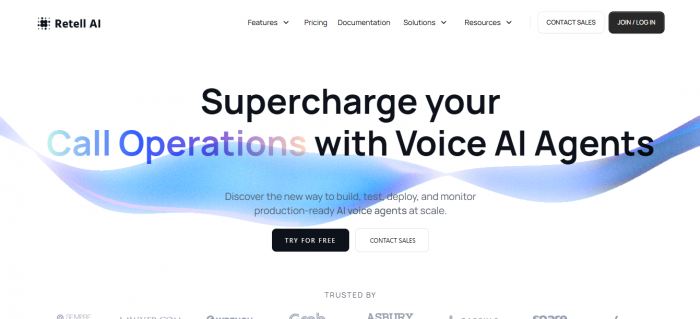
- Description: Retell AI lets you build human‑like voice agents via simple APIs with low‑latency, natural conversations for sales and support.
- Features: Real‑time STT/TTS, LLM‑driven call flows, call recording, webhooks, and multi‑language support.
- Best for: Developer‑led teams wanting usage‑based, programmable voice agents instead of a full contact‑center suite.
- Pricing: Usage‑based, typically low cents per call‑minute plus per‑message chat, with trial‑friendly entry levels.
2. Synthflow – No‑Code Voice AI Builder
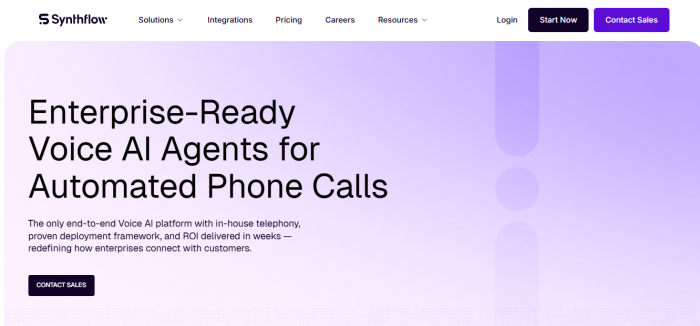
- Description: Synthflow enables non‑technical teams to design and deploy AI phone agents through a visual, no‑code interface.
- Features: Drag‑and‑drop flows, 200+ integrations, analytics, call routing, enterprise security controls.
- Best for: Agencies and SMEs needing quick call automation without deep engineering involvement.
- Pricing: Tiered monthly plans with bundled minutes and higher tiers for more usage and concurrent calls.
3. ElevenLabs – Ultra‑Realistic AI Voices
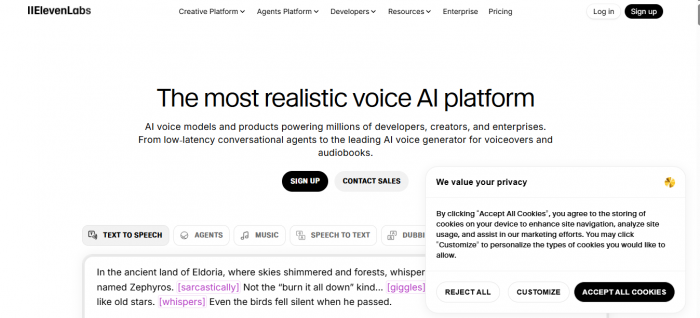
- Description: ElevenLabs focuses on text‑to‑speech and voice cloning to generate highly natural voices in many languages.
- Features: Multilingual TTS, emotion and style controls, custom voice cloning, flexible API.
- Best for: Teams that already have telephony/contact‑center tooling and want premium AI voice quality.
- Pricing: Free character‑limited tier plus paid plans scaling by character volume and commercial usage.
4. Kore.ai – Enterprise Conversational AI
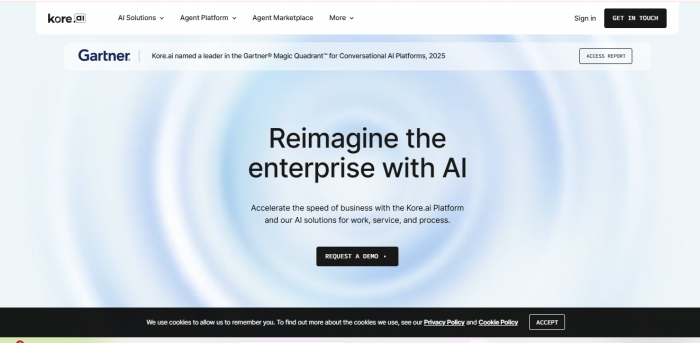
- Description: Kore.ai delivers enterprise‑grade virtual assistants across voice and digital channels for complex CX environments.
- Features: Omnichannel bots, intelligent virtual assistants, sentiment analysis, AgentAssist, and deep CCaaS/CRM integrations.
- Best for: Large organizations standardizing self‑service and assisted service on a single AI platform.
- Pricing: Custom, quote‑based enterprise pricing (per‑bot, per‑interaction, or per‑seat models).
5. Five9 Intelligent Cloud Contact Center
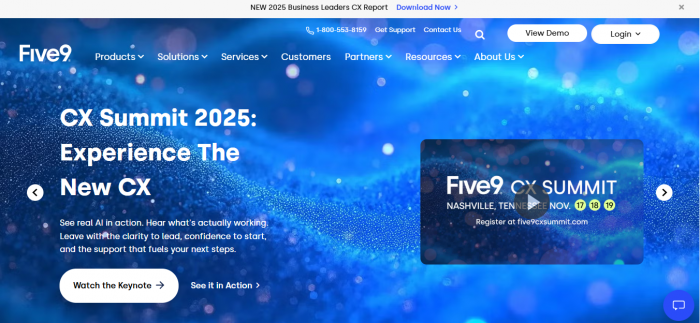
- Description: Five9 is a cloud contact‑center platform enhanced by the Genius AI suite for smarter sales and support operations.
- Features: Intelligent virtual agents, AI Agent Assist, predictive dialing, AI summaries, omnichannel routing and analytics.
- Best for: Mid‑market and enterprise contact centers modernizing from legacy systems.
- Pricing: Per‑user/contact‑center licenses with premium AI modules available as add‑ons.
6. Nextiva Contact Center
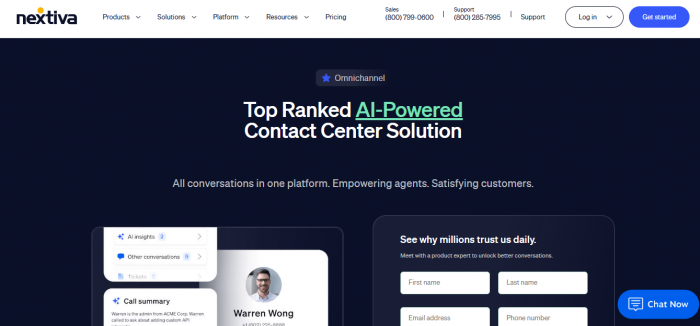
- Description: Nextiva combines business phone, UCaaS, and AI‑powered contact‑center tools in one platform.
- Features: Voice and digital channels, IVR, AI routing, summaries, analytics, CRM integrations.
- Best for: Businesses wanting a single vendor for telephony plus an AI‑enabled contact center.
- Pricing: Tiered per‑user monthly plans, with advanced AI features on higher tiers or as extras.
7. Talkdesk – AI‑First Cloud Contact Center
- Description: Talkdesk is a cloud contact‑center solution built around automation‑first, AI‑driven customer experiences.
- Features: AI virtual agents, workflow automation, quality management, integrations with leading CRMs and CX tools.
- Best for: Organizations prioritizing strong self‑service and AI routing in regulated or customer‑centric industries.
- Pricing: Enterprise contact‑center packages with AI bundled into premium plans.
8. Asana with AI – Work Management Layer
- Description: Asana uses AI to turn goals, projects, and inputs from calls or tickets into structured, trackable work.
- Features: AI‑generated tasks, document analysis, goal/portfolio mapping, workflow automation.
- Best for: Teams that need a central hub to manage follow‑ups and projects created from customer conversations.
- Pricing: Free core tier plus per‑user paid plans (Starter/Advanced) and enterprise options.
9. UiPath – Automation Behind the Calls
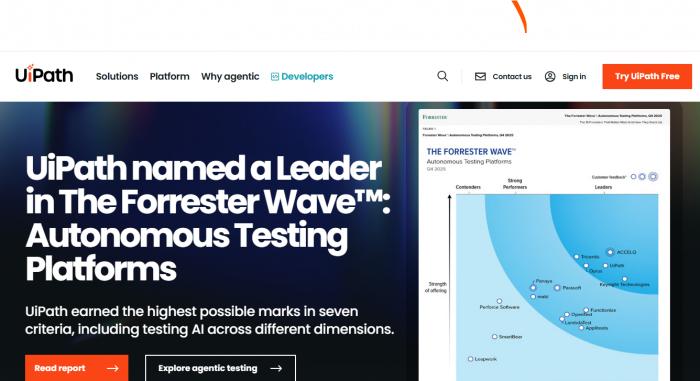
- Description: UiPath provides RPA and AI workflows to automate repetitive tasks triggered by customer interactions.
- Features: Low‑code automation designer, AI document processing, attended/unattended bots, connectors to major business apps.
- Best for: Companies extending automation from voice agents into CRMs, ERPs, billing, or onboarding.
- Pricing: Mix of per‑user and per‑robot licenses, usually negotiated for business/enterprise deployments.
10. MirrorFly & Other Voice‑First APIs
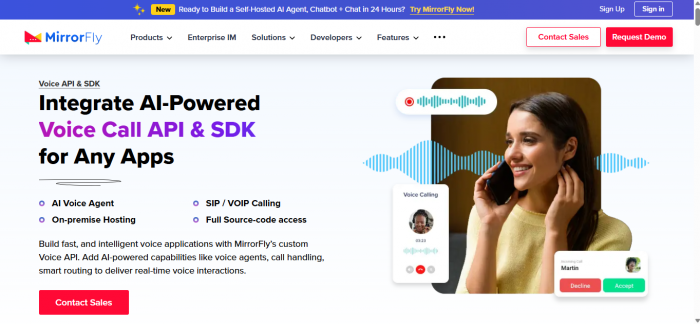
- Description: Providers like MirrorFly and similar platforms offer programmable voice, chat, and video APIs and SDKs.
- Features: Real‑time voice, in‑app chat, video, WebRTC, custom call flows, and optional AI routing or bots.
- Best for: Product and dev teams needing granular control of in‑app communication experiences.
- Pricing: Usage‑based (per‑minute or per‑message) with volume discounts and optional platform/support fees.
How to Choose the Right Vapi AI Alternative
When you evaluate these Vapi AI alternatives, it helps to structure your decision around three core dimensions:
- Interaction layer: Do you primarily need voice calls, omnichannel support, or deep digital messaging? Retell, Synthflow, and ElevenLabs sit closer to pure voice, whereas Five9, Nextiva, and Talkdesk lean into full contact center orchestration.
- Operational complexity: Enterprise platforms like Kore.ai and Five9 are ideal if you have multiple business units and heavy compliance requirements; lighter tools better suit startups or product teams that iterate quickly.
- Automation depth: Pairing contact center tools with work management (Asana) and RPA (UiPath) lets you push automation beyond the call itself into internal approvals, ticketing, and finance workflows.
As AI voice ecosystems mature, the “best” option often turns into a stack rather than a single product combining a voice agent, a contact center layer, and a workflow engine, so every conversation leads to measurable business action.
Post Comment
Be the first to post comment!