Marketing technology is crowded with platforms that promise clarity yet deliver dashboards that only complicate the picture. Into this landscape steps AI Insights DualMedia, a system that claims to listen to customer behavior across both digital and physical environments and then translate it into something coherent. The claim is bold because most platforms struggle to understand customers even when they stay in one channel. The question becomes simple. Can DualMedia actually interpret real behavior or does it only retell the story companies already believe.
Below is a closer look at the system without the glossy optimism that usually surrounds AI tools.
What DualMedia Says It Can Do
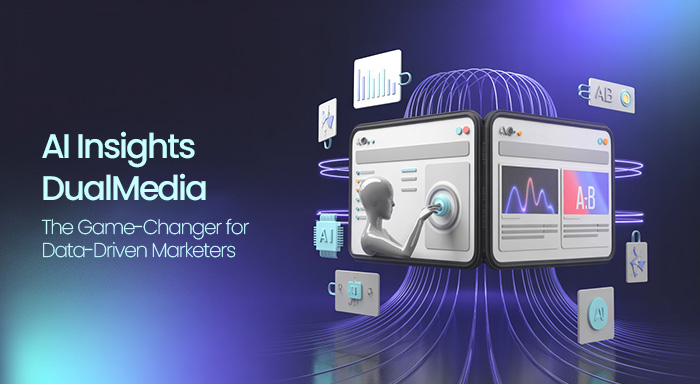
DualMedia’s central idea revolves around unifying online and offline signals. Website clicks, email opens, store visits, event interactions, and purchase history feed into a shared behavioral model. Machine learning then attempts to detect patterns in motivation, timing, and sentiment.
The platform uses predictive modeling, real time data streaming, and automated content recommendations to tell marketers who is likely to convert, who is drifting away, and which channel deserves attention. It also promotes its ability to keep messaging consistent across social platforms, search campaigns, email sequences, and physical touchpoints.
On paper this is one of the most difficult challenges in marketing. Human behavior does not sit neatly inside platforms. It unfolds across environments where data is incomplete, delayed, or shaped by emotion.
Where the System Shows Real Promise
Some parts of DualMedia’s approach genuinely align with the reality of modern customer behavior. The strongest feature is its use of behavior clusters instead of channel based milestones. Customers do not think in categories and neither should the systems that track them.
A few areas where DualMedia appears credible include:
| Strength | Why It Matters |
| Pattern recognition across mixed data | Identifies cross channel triggers that traditional analytics overlook |
| Real time optimization | Adjusts campaigns based on live behavior rather than weekly summaries |
| Predictive scoring | Helps teams spot churn and purchase likelihood before visible symptoms appear |
| Omnichannel consistency | Reduces the fragmentation that often confuses customers |
This pattern based method reflects the way people actually move in and out of the buying process. Someone may see a message in store, react to an ad later that night, and complete the purchase days later while reading reviews. Systems built on isolated touches cannot interpret this.
Where the Confidence Starts to Outrun the Evidence
Despite promising mechanics, several weaknesses show up once the system meets real world data. DualMedia depends on clean offline information, something many companies cannot provide. Purchase history is often incomplete. Event data is inconsistent. Emotional signals are difficult to measure outside controlled environments.
These gaps create interpretation risks. If the base data is flawed, the model can generate highly confident yet inaccurate conclusions. Some examples include:
● Overestimating the influence of digital ads when offline signals are missing
● Misreading emotional tone when the text sample is too small
● Crediting the wrong channel because the customer journey was only partially captured
● Predicting churn based on correlation rather than true causation
DualMedia can create a useful narrative, but the correctness of that narrative depends heavily on what the company feeds into it.
What Marketers Using the Platform Actually Report

Most feedback points to the same mixed reality. The platform improves alignment across teams, strengthens audience targeting, and cuts down on repetitive manual adjustments. Yet it also requires more operational discipline than many expect.
Below is a consolidated view of reported outcomes.
| User Observation | Practical Meaning |
| Better cross channel visibility | Teams finally see how digital and physical cues interact |
| Higher campaign efficiency | Automated adjustments reduce wasted budget |
| Demanding data setup | Quality control becomes a continuous responsibility |
| Difficult to verify emotional insights | Sentiment based predictions still feel abstract to many users |
The results suggest a tool that works best for organizations willing to mature their internal processes rather than those looking for a quick shortcut.
The Structural Problem Many Teams Ignore
DualMedia can only function as intended if a company is able to operate beyond its own silos. Social teams, retail teams, paid media teams, and analytics teams must share resources and accept fluid attribution. This is rarely the case.
The system may credit an in store conversation for a sale that digital channels believed they drove. It may reveal that a print flyer triggered a conversion that was previously attributed to search. These reassignments challenge internal politics. If the organization is not prepared for that shift, the insights lose their power.
The obstacle is not the algorithm. It is human resistance to reassigning influence.
A Grounded View of What DualMedia Actually Offers
DualMedia positions itself as a solution to a problem that has challenged marketers for years. It moves beyond surface level metrics and tries to understand the rhythm of customer behavior across any environment. In this sense it is genuinely forward facing and represents an evolution from traditional attribution tools.
However, the platform is not a universal decoder of human intent. It is an interpreter, and like all interpreters, it works within the limits of the information provided. When the data is strong, the insights feel meaningful. When the data is uneven, the platform becomes speculative.
Closing Perspective
AI Insights DualMedia is not a shortcut to perfect marketing clarity. It is a system that attempts to piece together a more honest picture of human behavior, and in many cases it succeeds more than traditional analytics tools. The value depends entirely on whether the organization is ready to treat insights as a guide rather than absolute truth. Teams that maintain consistent data practices and embrace flexible collaboration are likely to benefit the most.
DualMedia moves the industry in a thoughtful direction, but the responsibility of making that direction useful still belongs to the marketers who rely on it.
Post Comment
Be the first to post comment!