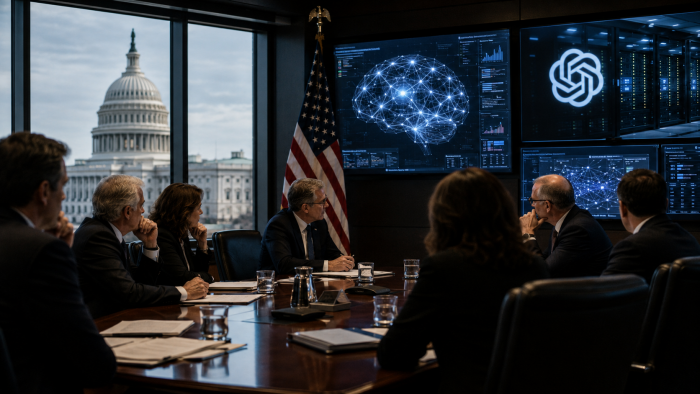
The Trump administration has unveiled a new initiative called Tech Corps, a specialized track within the U.S. Peace Corps designed to expand the global footprint of American artificial intelligence technologies. The program aims to deploy technically trained volunteers to partner countries, where they will help implement U.S.-built AI tools across sectors such as agriculture, education, healthcare, and small business development.
A Peace Corps Model for the AI Era
Tech Corps is structured as a STEM-focused volunteer pathway that will recruit engineers, computer science graduates, and mathematics specialists. These volunteers will provide what officials describe as “last-mile” implementation support. In practical terms, that means working directly with government agencies, ministries, and local institutions to integrate American AI software and hardware into real-world use cases.
Typical assignments are expected to run between 12 and 27 months. Participants serving abroad will receive housing, healthcare coverage, a living stipend, and a volunteer service award. The program also includes options for virtual deployments, reflecting the hybrid nature of modern technical assistance.
A dedicated Tech Corps website is already live and accepting applications on a rolling basis, signaling that recruitment is underway.
Part of a Larger AI Export Strategy
The initiative is one pillar of the broader American AI Exports Program, launched by executive order in 2025. That whole-of-government strategy is designed to promote what officials call “full-stack” U.S. AI internationally, covering chips, cloud infrastructure, foundation models, and downstream applications.
Alongside Tech Corps, the program includes three additional components:
- National Champions Initiative: Partnerships with leading AI companies in participating countries to bundle them into U.S. export packages.
- International financing tools: Expanded support from the Export-Import Bank and a World Bank-linked funding mechanism to help countries finance AI infrastructure purchases.
- AI Agents Standards Initiative: A standards effort led by NIST aimed at shaping global norms around trusted AI systems.
Within this framework, Tech Corps volunteers are expected to function as on-the-ground enablers, helping turn AI exports from a purely commercial transaction into a development-driven partnership.

India Emerges as a Key Early Focus
The program was highlighted internationally at the India AI Impact Summit 2026 in New Delhi, where White House Office of Science and Technology Policy Director Michael Kratsios formally presented the initiative.
U.S. officials have indicated that India is likely to be among the first major destinations for Tech Corps deployments. The Commerce Department has publicly supported India’s participation in the AI Exports Program, framing the collaboration around helping partner nations build sovereign AI capabilities using American technology.
The messaging aligns with India’s own push for domestic AI infrastructure and comes amid a broader wave of U.S. cloud, semiconductor, and data-center investments in the country.
Soft Power Meets AI Competition
Strategically, Tech Corps reflects Washington’s growing concern over China’s expanding influence through its Digital Silk Road and AI exports. By embedding AI specialists in development-style placements, the U.S. is attempting to combine technology promotion with long-term relationship building.
Officials and analysts say the goals are threefold:
- Encourage adoption of U.S. AI ecosystems in emerging markets
- Demonstrate the reliability and safety of American AI tools
- Build durable technical partnerships with governments and local developers
The approach has been widely summarized by observers as a modern twist on a familiar model: using Peace Corps-style engagement to advance technological influence in the AI age.
What Comes Next
The success of Tech Corps will likely depend on how quickly the U.S. can recruit qualified technical volunteers and how receptive partner countries are to adopting American AI stacks. Implementation challenges such as infrastructure readiness, data governance, and local talent integration will also shape outcomes.
Still, the launch marks a notable shift in how the United States is blending development policy, technology exports, and geopolitical strategy. If executed at scale, Tech Corps could become a central instrument in the global competition over who builds the AI infrastructure of the future.
Post Comment
Be the first to post comment!