European semiconductor giant STMicroelectronics revealed on Monday that it has shipped more than 5 million radio frequency chips to SpaceX for its Starlink satellite constellation over the past decade, a figure the company expects to double within the next two years. The announcement marks the first time STMicroelectronics has publicly disclosed the sheer scale of its partnership with Elon Musk’s aerospace company, underscoring the critical role the chipmaker plays in the rapid expansion of global satellite internet.
The collaboration, which began following a meeting between Musk and STMicroelectronics executives ten years ago, has become a cornerstone of the chipmaker's specialized aerospace business. The chips, specifically radio-frequency front-end modules and BiCMOS-based antenna elements, are essential components in Starlink’s consumer user terminals, allowing them to communicate with thousands of low-Earth orbit satellites overhead.
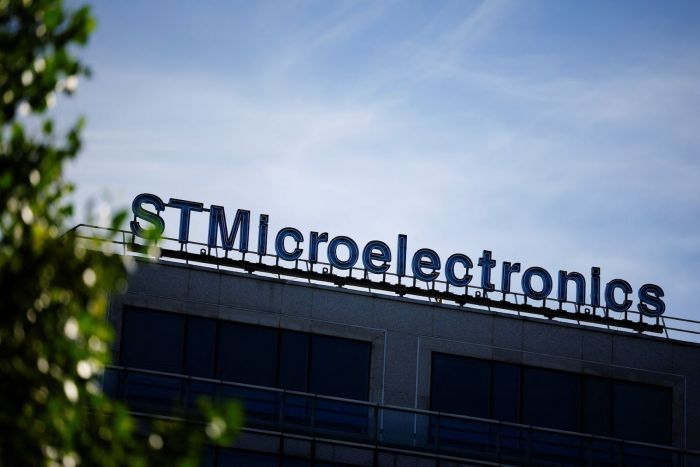
Remi El-Ouazzane, president of STMicroelectronics' microcontrollers and digital integrated circuits division, stated in an interview that the volume of chips delivered in the past decade could be matched and surpassed in just the next 24 months. He noted that the acceleration is driven by the booming commercial space sector, where companies are moving away from traditional government-led projects toward agile, high-volume consumer networks.
The exponential growth in chip shipments aligns with Starlink’s expanding footprint. The satellite network now serves approximately 8 million users across more than 150 markets globally, having scaled rapidly from its initial beta phase. As SpaceX prepares to deploy its next-generation satellites and expand its user base, the demand for robust, high-frequency semiconductors has surged.
STMicroelectronics is also set to deepen its involvement by supplying advanced microcontrollers for SpaceX’s inter-satellite laser link systems, which enable satellites to communicate directly with one another in space to reduce latency. Industry analysts point to this partnership as a bellwether for the broader satellite communications market. With competitors like Amazon’s Project Kuiper and Eutelsat’s OneWeb ramping up their own constellations, the demand for specialized, space-grade components is expected to tighten. STMicroelectronics executives expressed confidence that their early dominance with Starlink positions them to capture a significant share of this emerging "New Space" economy, which requires components that can handle high data rates while surviving the harsh thermal and radiation environments of space.
Post Comment
Be the first to post comment!