Nvidia used Computex 2026 in Taipei to make one of its clearest moves yet into the personal computer CPU market, unveiling RTX Spark, a new AI-focused PC superchip designed to power Windows laptops and compact desktops capable of running advanced AI agents locally.
The announcement puts Nvidia deeper into a market long shaped by Intel, AMD and, more recently, Qualcomm. Nvidia has already become the defining hardware company of the AI data center boom. With RTX Spark, it is now trying to bring that AI computing story into personal computers, where the next upgrade cycle may depend less on traditional speed gains and more on what machines can do with local AI.
TechCrunch framed the move as Nvidia chasing a $200 billion CPU opportunity, with early RTX Spark systems expected from Microsoft Surface, Dell, HP, ASUS, Lenovo and MSI. Acer and GIGABYTE models are expected to follow later. Nvidia says the first Windows PCs using RTX Spark will arrive this fall.
The core message from Nvidia and Microsoft is that the PC is shifting from a normal productivity device into a local AI workstation. The next premium laptop, in this vision, will not simply open apps and browse the web. It will run personal AI agents, process private files, generate media, assist with coding and coordinate tasks directly on the machine.
What RTX Spark is built to do
RTX Spark is Nvidia’s new superchip for AI PCs. According to Nvidia, it combines a Blackwell RTX GPU, a 20-core Grace CPU, NVLink-C2C interconnect, up to one petaflop of AI performance and up to 128GB of unified memory.
That specification matters because RTX Spark is not being positioned as a conventional laptop processor. It is built to handle demanding AI, creative and computing workloads directly on a personal device. Nvidia says RTX Spark PCs will be able to run large language models with up to 120 billion parameters, support 4K AI video generation, handle 12K 4:2:2 video editing, render large 3D scenes and play AAA games at 1440p above 100 frames per second.
Those claims put RTX Spark in a different category from the first wave of AI PCs. Many early AI PCs focused on features such as summaries, background effects, image editing and assistant shortcuts. RTX Spark is aimed at heavier local workloads: AI agents, developer tools, creator software, gaming and high-end productivity.
The chip was developed with MediaTek, giving Nvidia an Arm-based route into the PC market. That is strategically important because Nvidia has historically dominated graphics processors, while Intel and AMD have controlled much of the traditional x86 CPU market. RTX Spark lets Nvidia push closer to the full PC platform rather than remaining an add-on graphics supplier inside someone else’s architecture.
Why Nvidia wants CPUs now
The larger reason is agentic AI. Nvidia’s argument is that future AI systems will not only respond to prompts. They will use tools, write code, operate applications, generate media, search local files and manage multi-step workflows. Those tasks need graphics acceleration, but they also need CPUs that can coordinate work across the system.
That is why Nvidia CEO Jensen Huang has increasingly emphasized CPUs as part of the company’s next growth market. The $200 billion figure is not just a headline number. It reflects Nvidia’s view that AI workloads are becoming more complex and that CPUs will be central to orchestrating those systems.
During the first phase of the AI boom, the market focused heavily on GPUs because large models required enormous parallel compute. Nvidia dominated that wave. The next phase may require more integrated systems, where CPUs, GPUs, memory and software all work together to support agents running across data centers, workstations and personal devices.
RTX Spark is one piece of that plan. Nvidia is also promoting Vera, its CPU for AI agents, and the Vera Rubin platform for data centers. The broader strategy is clear: Nvidia wants to shape more of the AI computing stack, from cloud infrastructure to desk-side systems to laptops.

Microsoft gives RTX Spark its Windows platform
Microsoft is central to Nvidia’s PC push. RTX Spark is being positioned as a Windows AI PC platform, with Nvidia and Microsoft working to “reinvent Windows PCs for the age of personal AI.”
The collaboration matters because Microsoft has already been pushing Copilot+ PCs, a category built around local AI processing. But the early AI PC story has been uneven. Some features have felt useful but incremental, while others have raised privacy questions. Microsoft’s Recall feature, for example, drew criticism over how it captured and stored user activity before shipping with stronger safeguards and as an optional feature.
Nvidia and Microsoft are now trying to make the pitch more powerful. Instead of selling a laptop that can run a handful of small AI features, they are talking about machines designed for serious local agents. That shifts the category from “AI-assisted computer” to “computer that can run AI workflows.”
That shift also makes security more important. If an AI agent can access local files, operate applications or automate tasks, users need clear controls over what it can see, store and change. Local AI may improve privacy by reducing cloud dependence, but it also creates new risks if permissions are poorly handled.
PC makers and software partners line up
RTX Spark systems are expected this fall from ASUS, Dell, HP, Lenovo, Microsoft Surface and MSI, with Acer and GIGABYTE joining later. That broad partner list suggests Nvidia is not treating Spark as one experimental machine. It wants the chip to become a premium platform across major PC brands.
The first devices are likely to target creators, developers, technical professionals, AI builders, gamers and enterprise users. That makes sense. RTX Spark’s memory capacity, GPU-CPU design and AI performance are best suited for high-end systems where buyers can justify paying more for local compute.
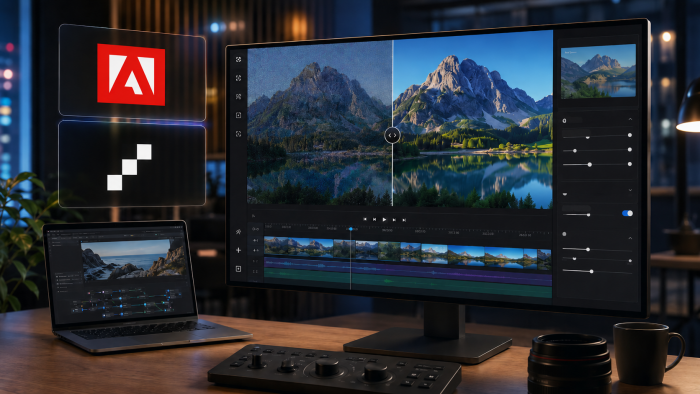
Nvidia is also leaning on software partners to make the hardware useful. The company has highlighted support from Adobe, Blackmagic Design, Blender, CapCut, ComfyUI and OTOY. Nvidia says Adobe is updating Photoshop and Premiere to take advantage of RTX Spark, with up to two times faster AI and graphics performance in some workflows.
That kind of support could decide whether RTX Spark becomes a real platform or just another premium chip. AI PC hardware only matters if the software can use it in ways people notice.
A direct challenge to Intel, AMD and Qualcomm
Nvidia’s move puts pressure on several chipmakers at once. Intel and AMD remain deeply embedded in the PC market. Qualcomm has been trying to push Arm-based Windows laptops through Snapdragon chips. RTX Spark brings Nvidia into that same fight with a different message: the future PC should be judged by AI performance, local model support and creator acceleration, not only CPU benchmarks or battery life.
The market reaction showed the stakes. Business Insider reported that after the RTX Spark announcement, AMD, Intel and Qualcomm shares fell while Nvidia gained. Investors appeared to read the launch as a sign that Nvidia wants a larger role in the PC market rather than staying confined to GPUs.
That does not mean Nvidia will quickly displace the established players. Intel and AMD have mature platforms, long-standing manufacturer relationships and enormous installed bases. Qualcomm has a strong efficiency story for portable devices. But Nvidia has the AI brand, developer ecosystem and GPU software stack that could matter more if AI agents become a real reason to buy a new PC.
The AI PC still has to prove itself
The biggest unanswered question is demand. The AI PC category is promising, but not fully proven. Some PC makers have reported stronger sales from AI-focused machines, while others have said early demand missed expectations.
Cost, battery life, memory pricing, component availability and software maturity will all affect adoption. So will user behavior. Everyday buyers may not upgrade for AI features unless those features solve obvious problems. Creators, developers and businesses are more likely to see the value first.
Still, RTX Spark gives the AI PC category a sharper argument. It is not just about adding a chatbot to Windows. It is about moving meaningful AI work onto the machine itself.
If Nvidia’s bet works, the PC market could shift from a CPU-centered contest to a full AI platform contest. The laptop of the future may be judged not only by how fast it runs apps, but by how well it runs agents, protects local data and handles creative AI workloads without leaning entirely on the cloud.
Post Comment
Be the first to post comment!