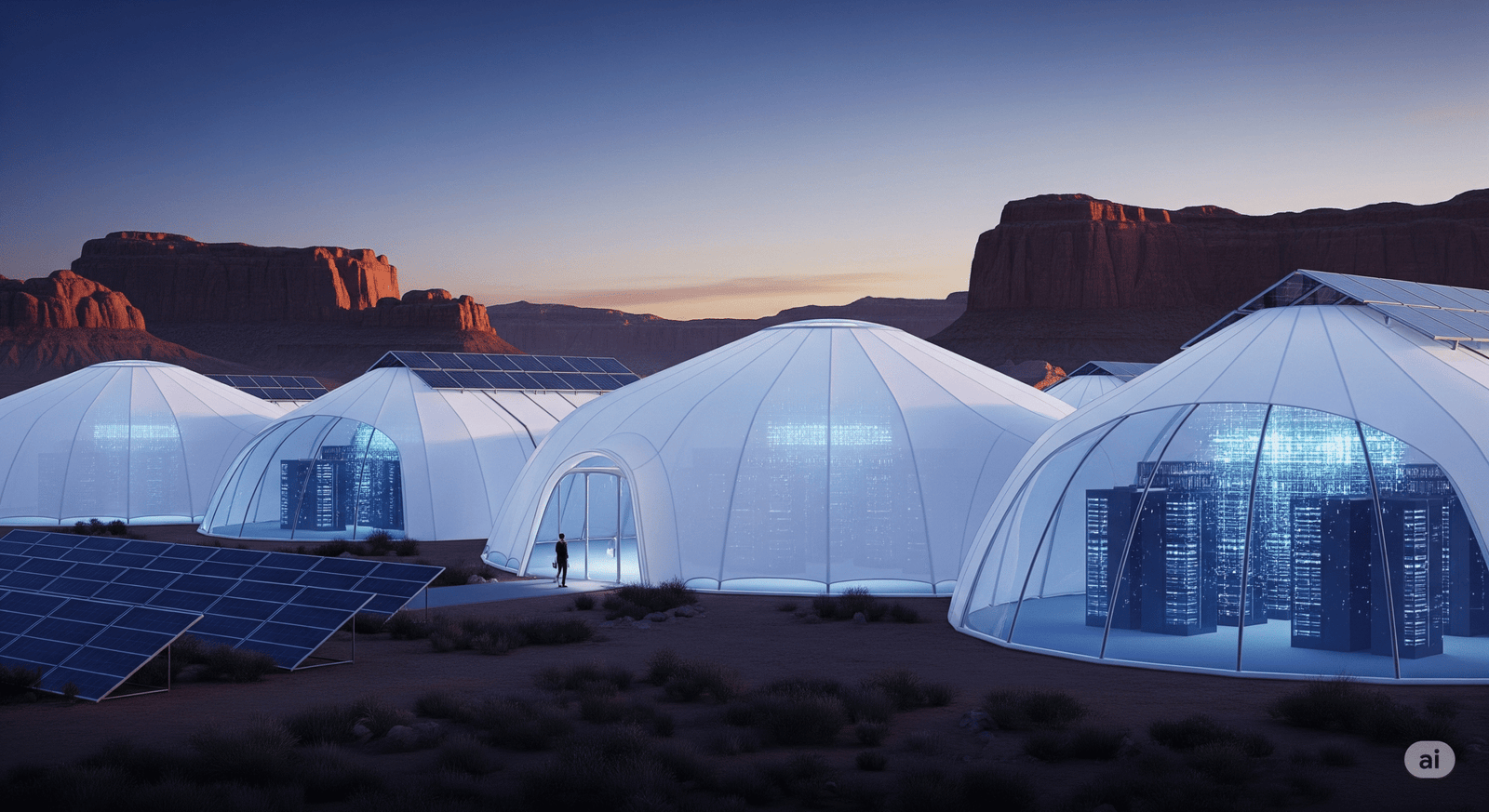
Meta is reportedly using temporary, tent-like structures as part of its AI data center buildout, a sign of how urgently Big Tech is trying to bring new computing capacity online.
The company is using lighter and faster-to-deploy structures for parts of its AI infrastructure. The idea is not that Meta is replacing traditional data centers with camping-style tents. The point is speed. AI companies need massive clusters of GPUs, power systems, cooling, networking gear, and physical space, and conventional data center construction can take years.
Meta appears to be borrowing from a familiar playbook. The move has been compared to Tesla’s earlier use of temporary tent structures during the Model 3 production ramp, when the automaker needed to expand capacity quickly. In Meta’s case, the production crunch is not cars. It is compute.
The company is racing to support a growing list of AI products and research projects, from Llama models and Meta AI to AI features across Facebook, Instagram, WhatsApp, smart glasses, ads, recommendations, and internal tools. The more Meta turns AI into a core product layer, the more pressure it faces to secure the infrastructure behind it.
Why tents are part of a much bigger strategy
The tent-style approach fits into Meta’s wider push to treat compute as a strategic advantage. In January 2026, Mark Zuckerberg announced Meta Compute and said the company planned to build “tens of gigawatts” of infrastructure this decade, with the possibility of “hundreds of gigawatts or more” over time.
That language is unusually large even by hyperscaler standards. It shows that Meta is thinking about AI infrastructure less like normal cloud expansion and more like industrial-scale capacity building. Advanced AI models require huge training clusters, but serving AI products to billions of users may become an even larger long-term challenge.
The reported tent-style structures are a response to that pressure. Instead of waiting for every component of a hardened, traditional data center to be completed, Meta can use faster modular structures, prefabricated power and cooling systems, and less conventional layouts to reduce the time between ordering GPUs and putting them to work.
Some infrastructure reporting has described Meta’s newer design approach as focused on speed, with tent-style structures, less redundancy, prefabricated systems, and on-site substations. That suggests Meta is not only building more data centers. It is rethinking how quickly AI capacity can be deployed.
AI data centers are changing the old rules
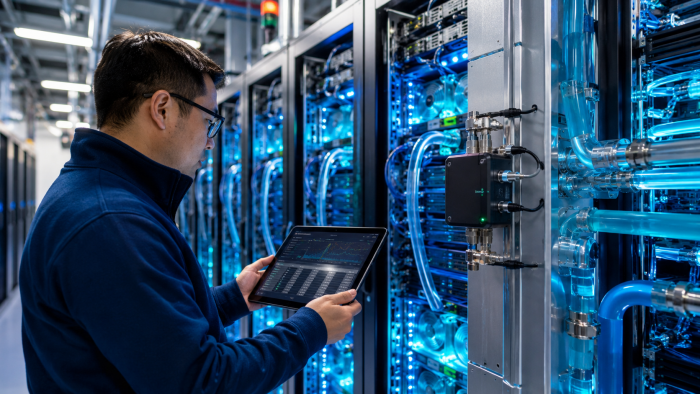
AI data centers are not the same as older cloud facilities. Traditional data centers were built around enterprise reliability, uptime guarantees, storage, web services, and general computing. AI clusters are more power-dense, more heat-intensive, and more dependent on high-speed networking between GPUs.
That changes the design equation. AI training workloads can sometimes tolerate different reliability tradeoffs than conventional cloud hosting. A model-training job may be restarted or shifted if part of the system fails. That can make companies more willing to experiment with designs that prioritize speed and density over the full redundancy expected in older enterprise environments.
The source material notes that some newer Meta sites may reduce traditional backup infrastructure, including skipping diesel generators in some cases, while relying on site-level power strategy, prefabricated modules, and workload management. That would be a notable shift if adopted at scale because it suggests AI infrastructure may evolve around different operational assumptions.
The central question is whether these fast-build designs can deliver enough capacity quickly without creating reliability, safety, or regulatory problems. For Meta, the bet appears to be that speed matters enough to justify new design tradeoffs.
Prometheus, Hyperion and the scale of Meta’s ambition
Meta’s infrastructure push is no longer abstract. Its largest AI projects now have names. Zuckerberg has described one major cluster, Prometheus, as expected to come online in 2026. Another project, Hyperion, could scale to as much as 5 gigawatts over several years.
Hyperion is especially notable because of its size. The source material points to a $10 billion data center project in Richland Parish, Louisiana, where Meta is reportedly developing a facility that could reach 1.5 gigawatts of IT power by the end of 2027, with a larger buildout expected later.
Those numbers explain why temporary or semi-temporary structures are entering the conversation. Meta is not trying to solve a small server-capacity issue. It is trying to build AI infrastructure at a scale closer to energy and industrial planning than normal corporate IT.
The company also raised its full-year 2026 capital expenditure guidance to $125 billion to $145 billion, up from an earlier range of $115 billion to $135 billion. Meta said the increase reflected higher component pricing and additional data center costs needed to support future capacity.
Power is becoming the real bottleneck
The biggest constraint in the AI infrastructure race is not only GPUs. It is electricity.
AI data centers require enormous power supply, and utilities are struggling to keep up with demand from hyperscalers, cloud providers, and AI labs. Grid connections can take years. Gas turbine delays are affecting power projects. Local communities are increasingly asking how new data centers will affect water use, electricity costs, land use, and environmental commitments.
Meta is already pursuing dedicated energy strategies. The source material notes that Enbridge is developing the Cowboy solar and battery project near Cheyenne, Wyoming, to support Meta’s data center operations. The project includes 365 megawatts of solar generation and a 200 megawatt, 1,600 megawatt-hour battery system, with Tesla involved as a battery supplier and service provider.
Meta has also announced work with Overview Energy and Noon Energy on more experimental power solutions, including space-based solar concepts and long-duration energy storage. Those projects show how AI companies are becoming power-market players, not only software companies.
The tent-style data center story sits inside that larger shift. AI infrastructure now depends on construction speed, utility access, energy contracts, batteries, cooling systems, and land strategy as much as model design.
The wider AI infrastructure race
Meta is not alone in this buildout. Microsoft, Google, Amazon, Oracle, xAI, OpenAI partners, and other AI infrastructure players are all racing to secure GPUs, power, land, cooling equipment, and grid connections.
The industry is moving from capital-light software economics toward a much more capital-intensive model. Companies that once competed mostly on product design and software talent are now competing on logistics, energy procurement, construction timelines, and supply chain control.
For Meta, the stakes are especially high. Infrastructure scale could help it train better models, serve AI features to billions of users, reduce dependence on external cloud providers, and attract top AI researchers who need guaranteed access to large compute clusters. But the spending also creates pressure. Investors will want proof that hundreds of billions of dollars in AI infrastructure can generate returns.
Regulators and communities will also scrutinize the buildout more closely. The European Union is already discussing energy-efficiency standards and sustainability labeling for data centers, while U.S. communities are watching how AI facilities affect power and water demand.
The AI race becomes a construction race
Meta’s reported use of tent-style data centers is not a gimmick. It is a visible sign of how much pressure the AI race is putting on physical infrastructure.
The next phase of AI competition will not be decided only by model benchmarks or chatbot features. It will also be decided by who can build, power, cool, and operate the largest AI systems fastest.
Temporary structures may help Meta shorten the time between planning and capacity. But they also show how extreme the race has become. AI is pushing tech companies into the world of substations, batteries, solar projects, modular buildings, permitting battles, and grid constraints.
For Meta, faster compute could strengthen its position in AI. For the broader industry, the message is clear: artificial intelligence may feel digital to users, but the companies building it are now fighting a very physical race.
Post Comment
Be the first to post comment!