On This Page
- The feeling of hosting a Gimkit session from start to finish
- Some patterns repeat almost every time:
- Game modes change classroom psychology
- What I observed over time:
- Engagement is real, but it is not evenly distributed
- The difference between free and paid feels small at first, then very real
- With paid access, I noticed:
- The moments where Gimkit genuinely helps learning
- The frustrations that only appear after repeated hosting
- How Gimkit feels when placed next to other classroom game platforms
- Hosting Gimkit over time changes how you see it
- The quiet realization after enough sessions
I Hosted Gimkit Dozens of Times. Here’s What It Actually Does to a Classroom
The first time I hosted a Gimkit game, it felt chaotic in a way that was oddly promising.
Students were excited, louder than usual, and immediately competitive. A few figured out the mechanics faster than I expected. A few tried to break the system. One student asked, halfway through, “Wait, are we supposed to be learning right now?”
That question ended up staying with me through dozens of hosted sessions.
Because Gimkit is not hard to like at first glance. It looks modern, playful, and clearly designed by people who understand how students interact with games. But hosting Gimkit repeatedly, across different classes, subjects, and energy levels, reveals a more complicated reality. One that is not bad, but not automatically great either.
This article is not based on feature lists or marketing pages. It is based on hosting real games, watching how students behave over time, testing free and paid limits, adjusting settings mid-class, and dealing with the quiet friction that only shows up after the novelty wears off.
The feeling of hosting a Gimkit session from start to finish
Hosting Gimkit is not passive. That becomes clear almost immediately.
From the moment you launch a game, you are not just a facilitator. You are part moderator, part referee, part technical support, and part behavioral manager.
The setup itself is smooth. Creating a kit, choosing a mode, and generating a join code takes less than a minute once you know where things are. Students join quickly. Faster than with most platforms I have used.
But the real work starts after the countdown ends.
Once gameplay begins, the room changes. Students stop looking at you and start looking at their screens. Attention becomes fragmented. Engagement increases, but focus becomes less predictable.
Some patterns repeat almost every time:
1. A few students get deeply invested and play strategically.
2. A few click rapidly without reading.
3. One or two discover loopholes or exploits and lean into them.
4. Others fall behind early and emotionally check out.
As a host, you constantly make micro-decisions:
Should I pause the game?
Should I reset scores?
Should I adjust pacing?
Should I let this chaos ride or intervene?
Gimkit gives you control, but it also gives students agency. And that balance is fragile.
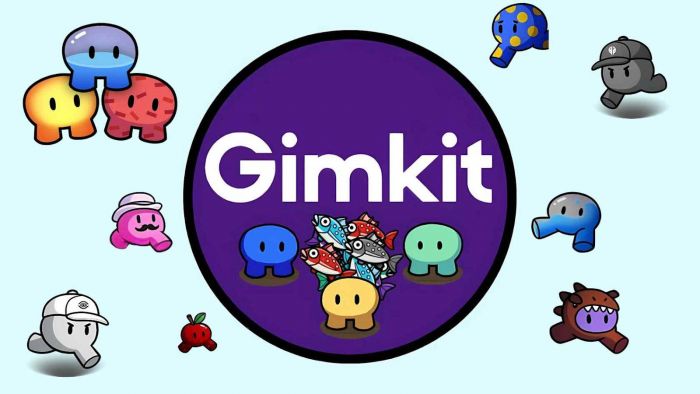
Game modes change classroom psychology
On paper, Gimkit’s modes look like variations on the same idea. In practice, they shape behavior more than content ever does.
Classic mode is the most straightforward. Answer questions, earn currency, upgrade. It works well for quick reviews, especially when the goal is repetition.
But even here, the incentives matter. Students quickly realize that speed often beats accuracy. Some optimize for guessing fast rather than thinking carefully.
More complex modes like Trust No One, Tag, or Capture the Flag introduce collaboration and deception. These modes feel exciting, but they also shift the classroom dynamic.
What I observed over time:
1. Competitive modes amplify strong personalities.
2. Cooperative modes expose uneven participation.
3. Strategy-heavy modes reward game literacy more than subject mastery.
In one session, a student who rarely participates academically dominated the leaderboard because they understood the game mechanics better than anyone else. That was impressive, but it raised an uncomfortable question.
Was I measuring learning, or was I measuring adaptability to Gimkit itself?
Engagement is real, but it is not evenly distributed
Gimkit undeniably increases visible engagement. Students lean forward. They talk. They react.
But engagement is not the same as learning, and it is not evenly shared.
After hosting multiple sessions across weeks, certain patterns became hard to ignore:
1. High performers often stay high performers.
2. Struggling students often fall further behind once points accumulate.
3. Students eliminated early in certain modes disengage quietly.
This does not mean Gimkit fails as a tool. It means it behaves like a game first and a learning tool second.
When it works well, it works because:
1. The content is already familiar.
2. The game reinforces recall.
3. The session is short and tightly controlled.
When it struggles, it is usually because:
1. The content is new or complex.
2. The session runs too long.
3. Competition overshadows comprehension.
The difference between free and paid feels small at first, then very real
At a glance, Gimkit’s free plan seems generous. You can create kits, host games, and explore basic modes.
But repeated hosting exposes the limits quickly.
The free experience feels like driving a car capped at a low speed. You can move, but you are always aware of what you cannot do.
Some practical differences that matter in real classrooms:
1. Limited game modes restrict variation over time.
2. Class management tools are thinner.
3. Advanced settings that control pacing and fairness sit behind paywalls.
The paid version does not magically fix pedagogical issues, but it does reduce friction.
With paid access, I noticed:
1. More flexibility in choosing modes that fit class energy.
2. Better control over time limits and pacing.
3. Less pressure to rush sessions due to constraints.
The question is not whether paid is better. It is whether the improvement justifies the cost for your specific context.
For occasional use, free may be enough. For regular hosting, the limits become noticeable.
The moments where Gimkit genuinely helps learning
Despite the criticism, there are moments where Gimkit shines in ways traditional tools struggle to replicate.
It works best in specific situations:
1. Reviewing vocabulary or factual recall.
2. Reinforcing concepts students already understand.
3. Breaking monotony after long lectures.
4. Energizing low-energy classes.
Some of the most effective sessions I hosted were short, focused, and intentionally framed.
I would tell students upfront:
“This is practice, not a test. Accuracy matters more than points.”
When framed that way, behavior shifted. Students slowed down. They read questions more carefully. The leaderboard mattered less.
Gimkit is strongest when used as reinforcement, not discovery.
The frustrations that only appear after repeated hosting
Most reviews mention excitement and engagement. Fewer talk about fatigue.
After repeated use, certain issues quietly accumulate.
Technical friction shows up occasionally:
● Lag on older devices.
● Sync issues when many students join at once.
● Occasional freezes that break momentum.
Behavioral issues appear more consistently:
● Students focusing on exploits rather than content.
● Trash talk escalating in competitive modes.
● Pressure on quieter students to perform publicly.
There is also teacher fatigue.
Hosting Gimkit requires energy. You cannot simply launch it and sit back. You are constantly adjusting, observing, and intervening.
After a while, I found myself asking:
Is this adding clarity, or just noise?
How Gimkit feels when placed next to other classroom game platforms
It is impossible to evaluate Gimkit honestly without comparing it to familiar alternatives.
Here is how it feels in practice when placed beside Kahoot and Quizizz.
| Aspect | Gimkit | Kahoot | Quizizz |
| Game depth | High | Low to medium | Medium |
| Strategy influence | Strong | Minimal | Moderate |
| Learning focus | Mixed | Recall focused | Practice focused |
| Student chaos level | Medium to high | High but short | Lower |
| Teacher control | Moderate | Limited | Strong |
| Fatigue over time | Higher | Medium | Lower |
Kahoot feels faster and louder. It is excellent for quick bursts but rarely sustains meaningful engagement.
Quizizz feels calmer. It allows self-paced play and often supports deeper practice.
Gimkit sits between them. It is more complex than Kahoot, more game-like than Quizizz, and more demanding than both.
Which is better depends on what you want from the session.
Hosting Gimkit over time changes how you see it
The first few sessions feel exciting. The middle sessions feel productive. Later sessions feel revealing.
Over time, Gimkit stops feeling like a novelty and starts feeling like a tool with strengths and limits.
It rewards intentional use. It punishes careless use.
It can elevate review sessions. It can also distract from learning if overused or poorly framed.
What surprised me most was not how students reacted, but how my own expectations changed.
I stopped asking, “Is Gimkit fun?”
I started asking, “What is this specific session supposed to achieve?”
When I had a clear answer, Gimkit helped.
When I did not, it often got in the way.
The quiet realization after enough sessions
Gimkit is not a replacement for teaching. It is not a shortcut to engagement. It is not automatically effective because students enjoy it. It is a tool that amplifies whatever structure you bring into the room.
If the goal is clear, the content is appropriate, and the session is short, Gimkit can feel genuinely useful.
If those conditions are missing, it becomes noise wrapped in points and animations.
After hosting many sessions, that became the clearest lesson.
Not that Gimkit is good or bad. But it is honest.
It reflects the intent behind how it is used.
And in 2026, that honesty may be its most important feature.
Post Comment
Be the first to post comment!