They talk, but they don’t feel like they mean anything.
The lips move. The eyes blink. The script plays. But something is off. It feels like watching a presentation made by someone who has never actually spoken before.
That gap between “it works” and “it feels real” is exactly where tools like HeyGen and D-ID compete.
Both promise AI avatars. Both generate talking videos. But they are built for very different outcomes. One is trying to replace production. The other is trying to scale communication.
Understanding that difference is what actually decides which one works for you.
Before comparing features, understand the intent
| Layer | HeyGen | D-ID |
| Core idea | Video production tool | Avatar infrastructure |
| Starting point | Script → polished video | Image → talking avatar |
| Target user | Marketers, creators, teams | Developers, platforms |
| Output goal | Ready-to-publish videos | Scalable avatar interactions |
This is not just positioning. It directly affects workflow, quality, and limitations.
When you use HeyGen, you are producing a video
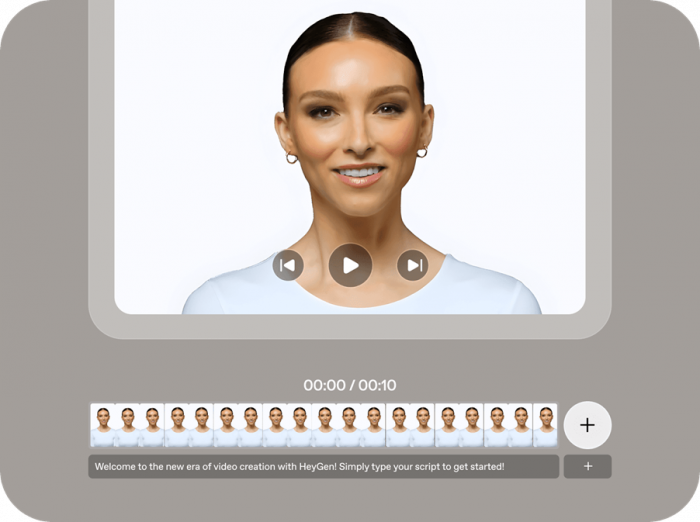
Website: https://www.heygen.com/
HeyGen behaves like a lightweight production studio.
You start with a script, choose an avatar, select voice, and structure scenes. The system then generates a video that is already close to something you would publish.
The onboarding is straightforward. The interface is built around templates and use cases like marketing videos, training modules, and social content. You are not figuring things out from scratch. You are assembling a video.
What stands out is consistency. The avatars maintain stable expressions. Lip sync is generally reliable. The pacing feels intentional rather than generated. This makes it usable for business content where clarity matters more than experimentation.
Compared to D-ID, HeyGen feels finished. You are not building a system. You are creating an output.
The limitation appears when flexibility is required. You cannot deeply customize behavior or integrate it into external systems. It is designed for output, not infrastructure.
Where HeyGen actually performs well vs where it struggles
| What Actually Works | Where It Breaks |
| Produces polished, ready-to-use videos with minimal editing required | Limited flexibility for custom workflows or integrations |
| Lip sync and facial expressions are more stable than most competitors | Avatar variety can feel limited after repeated use |
| Strong for marketing, onboarding, and explainer content | Not suitable for real-time or interactive use cases |
| Templates reduce production time significantly | Less control over fine motion or scene-level behavior |
When you use D-ID, you are building a system, not just a video
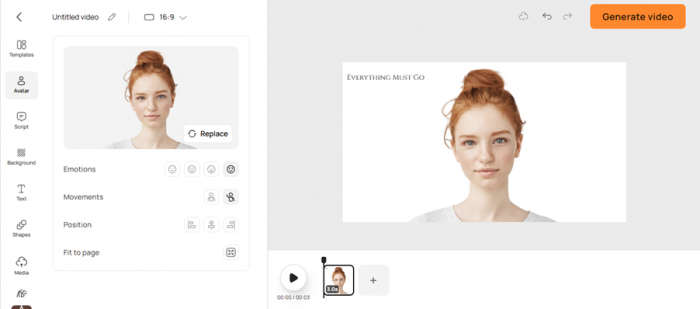
Website: https://www.d-id.com/
D-ID approaches the problem from the opposite direction.
Instead of helping you create a polished video, it gives you a way to animate faces at scale. You upload an image, add a script or audio, and generate a talking avatar.
The experience is less guided than HeyGen. The studio interface exists, but the real strength lies in its API. This allows businesses to embed avatars into apps, customer service tools, or training platforms.
This is where D-ID becomes powerful. It is not limited to one video. It can generate thousands.
But that flexibility comes with tradeoffs.
The output can feel less refined. Lip sync is decent but not always precise. Expressions are more mechanical. The system prioritizes scalability over polish.
Compared to HeyGen, D-ID feels like a toolkit rather than a finished product.
Where D-ID actually performs well vs where it struggles
| What Actually Works | Where It Breaks |
| Highly scalable avatar generation through API integration | Output quality is less polished compared to HeyGen |
| Works well for apps, automation, and large-scale deployment | Lip sync and facial realism can feel slightly off |
| Flexible input system with images and audio | Requires setup effort for non-technical users |
| Suitable for interactive and dynamic use cases | Not ideal for high-quality marketing videos |
The output difference is more obvious than the feature difference
| Factor | HeyGen | D-ID |
| Lip sync accuracy | More consistent and aligned | Slight delays or mismatches occasionally |
| Facial realism | Smoother expressions and motion | More rigid, sometimes mechanical |
| Voice integration | Feels more natural in final output | Functional but less refined |
| Scene structure | Built-in and organized | Minimal, depends on user setup |
| Repeat quality | Stable across multiple videos | Can vary depending on input |
This is where most decisions are actually made.
Not in features, but in how the final video feels.
Pricing is not just about cost, it is about how you are charged
| Tool | Starting Price | Pricing Model | What You Actually Pay For |
| HeyGen | ~$29/month | Subscription (video minutes) | Completed video output |
| D-ID | ~$5–$20/month (entry API tiers) | Credit/API usage | Avatar generation per request |
HeyGen charges you for producing videos.
D-ID charges you for generating interactions.
That difference becomes important when scaling.
Choosing between them depends on where your workflow starts
| If your goal is… | Choose | Why |
| Creating marketing or YouTube videos | HeyGen | More polished output with minimal effort |
| Building avatar-based apps or systems | D-ID | API-driven scalability |
| Producing training or explainer videos | HeyGen | Structured workflow and consistency |
| Automating avatar responses at scale | D-ID | Flexible and programmatic |
The real difference after repeated use
The first video from both tools can look impressive.
The difference appears after 10 or 20 videos.
HeyGen remains consistent. The output looks similar in quality each time, which is valuable for branding but can feel repetitive.
D-ID becomes more powerful at scale. It may not look perfect, but it integrates into workflows where volume matters more than polish.
This is where most users naturally separate.
Final take: polish vs scale
HeyGen is built for output. It gives you something you can publish.
D-ID is built for systems. It gives you something you can build on.
If you care about how the video looks, HeyGen is the better choice.
If you care about how the avatar functions across multiple use cases, D-ID becomes more relevant.
Both tools solve the same problem at different layers.
And choosing the right one depends less on features, and more on what you are actually trying to do.
Post Comment
Be the first to post comment!