A demonstration at the India AI Impact Summit 2026 in New Delhi has triggered a sharp backlash after a robot dog presented by Galgotias University was widely identified as an imported Chinese product rather than an in-house innovation.
The controversy has raised fresh questions about attribution standards at high-profile technology events and the reputational risks of overstating domestic AI capabilities.
What Happened at the Summit
The incident unfolded at Bharat Mandapam during the government-backed India AI Impact Summit 2026, positioned as a flagship global AI showcase.
At the Galgotias University booth, communications professor Neha Singh presented a four-legged robot dog branded “Orion.” During an on-camera interaction with DD News, she described the robot as developed by the university’s Centre of Excellence under a ₹350 crore AI initiative.
The demonstration gained wider visibility after Union IT Minister Ashwini Vaishnaw shared a promotional video on X highlighting India’s “Sovereign Models,” where the robot appeared as part of the country’s innovation narrative.
Within hours, online users and tech observers began questioning the claim.
The Robot’s Actual Origin
Open-source analysis by journalists and technology enthusiasts quickly matched the Orion unit to the Unitree Go2, a commercially available quadruped robot produced by Chinese robotics firm Unitree.
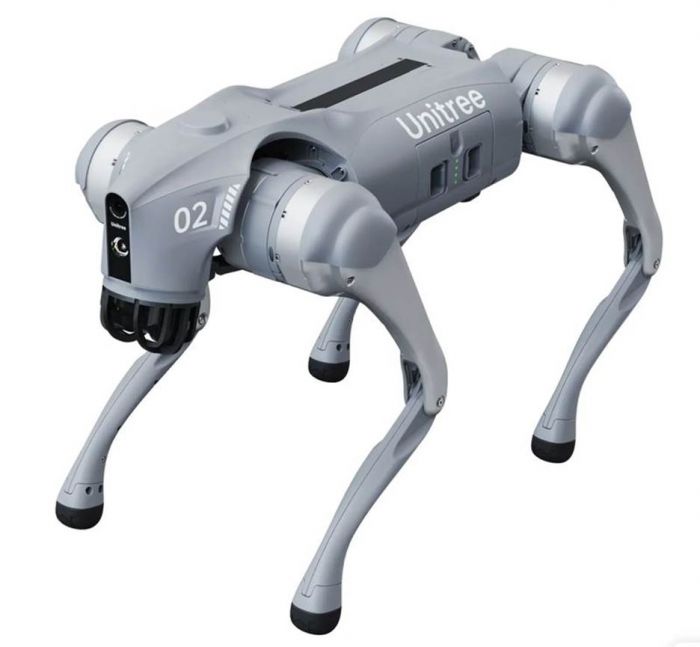
The Unitree Go2 is an off-the-shelf platform used globally for research, surveillance, and robotics experimentation. It features a 4D LiDAR L2 sensor and onboard AI navigation capabilities. Market pricing typically starts around 2800 US dollars, roughly ₹2.3 lakh.
The visual match strongly indicated that the hardware on display was imported rather than developed by the university.
Government Response and Booth Removal
As the clip spread across social platforms, criticism intensified, with many users accusing the university of presenting foreign hardware as indigenous innovation.
According to multiple media reports citing government sources, authorities instructed Galgotias University to dismantle its booth and withdraw from the summit over concerns of misrepresentation.
India’s IT Secretary S. Krishnan publicly reinforced the position, stating that exhibitors must not display items that are not their own. By mid-week, reporters noted that the Galgotias stall stood empty following the directive.
The episode quickly became one of the most discussed moments of the summit.
Galgotias University’s Shifting Explanation
Initial position
The university first stated that it never claimed to have built the robot. It described Orion as a purchased Unitree platform used as a student learning tool and experimental testbed.
Officials framed the device as a “classroom in motion” intended to expose students to global robotics systems.
Fact-check pressure
However, an X Community Note highlighted the earlier DD News interview in which the professor explicitly described the robot as developed by the university team, creating a visible contradiction.
Apology and internal action
Under mounting scrutiny, Galgotias issued an apology, attributing the situation to an “ill-informed” representative who had not articulated the details clearly. Reports indicate the university has distanced itself from the professor’s comments and asked her to step aside, although formal disciplinary clarity remains limited.
Professor Neha Singh later acknowledged that the communication may not have been handled properly.
Why the Controversy Matters
The episode has implications that extend beyond a single university booth.
Credibility risk
Presenting imported technology as domestic innovation at a globally attended AI summit risks undermining India’s positioning as a serious AI development hub.
Political fallout
Opposition leaders used the incident to criticize the government’s AI narrative, arguing that the episode exposed gaps between messaging and execution.
Event scrutiny
The summit had already faced operational criticism on its opening day, including reports of long queues and logistical issues. The robodog controversy added to the perception challenges.
Academic transparency
The government’s warning sets a clearer expectation that institutions must disclose when showcased systems rely on commercial or imported hardware.
Current Status
Galgotias University
- Booth dismantled and presence withdrawn from the summit
- Public apology issued
- Maintains the robot was procured for student learning
- Internal accountability steps reported but not fully detailed
Government and organizers
- Reiterating strict guidelines against misrepresentation
- Continuing efforts to position the summit as a credible global AI platform
The Larger Signal
The Orion episode is emerging as a cautionary moment for universities and exhibitors participating in India’s fast-growing AI showcase circuit.
As global attention on India’s AI ambitions increases, expectations around attribution, transparency, and technical claims are tightening. Demonstrations that blur the line between integration and invention are likely to face far closer scrutiny going forward.
For academic institutions and startups alike, the message from this incident is increasingly clear: in high-visibility AI forums, precision in claims is no longer optional.
Post Comment
Be the first to post comment!