European satellite operator Eutelsat has placed a major order with aerospace giant Airbus for 340 new low Earth orbit (LEO) satellites, a decisive move designed to solidify its position against Elon Musk’s Starlink. The deal, announced by both companies on Monday, marks a critical expansion of the OneWeb constellation and ensures the network remains a formidable competitor in the rapidly growing market for global satellite internet.
The new spacecraft will be manufactured at Airbus’s facilities in Toulouse, France, on a newly installed production line designed to speed up assembly. These units are intended to refresh and extend the existing OneWeb network, guaranteeing service continuity as the first generation of satellites launched roughly six years ago begins to approach the end of its operational life. This order follows a separate contract for 100 satellites signed in late 2024, bringing Eutelsat’s total commitment to 440 new spacecraft with deliveries scheduled to commence in late 2026.
While the companies declined to disclose specific financial terms for this latest tranche, Eutelsat had previously estimated that its broader extension program covering the period from 2024 to 2029 would require an investment of approximately €2 billion to €2.2 billion ($2.3 billion to $2.6 billion). The substantial capital injection underscores the strategic importance of Eutelsat to European sovereignty in space, as it operates the only major LEO constellation outside of SpaceX’s Starlink.
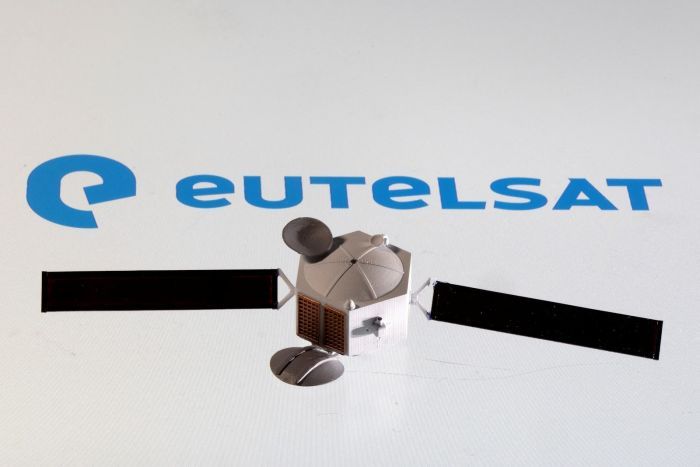
The new satellites represent a significant technological leap forward rather than a simple replacement of aging hardware. According to Airbus, the spacecraft will feature major upgrades including advanced digital channelizers that boost onboard processing power, offering greater flexibility and efficiency in how data is managed and beamed back to Earth. Unlike Starlink’s consumer-heavy focus, Eutelsat’s OneWeb division has successfully carved out a niche serving businesses, governments, and maritime sectors that demand guaranteed service levels and security, a reputation the upgraded fleet is expected to cement.
Jean-François Fallacher, CEO of Eutelsat, emphasized that the new satellites are essential for maintaining the "unparalleled performance" of their low-latency network. For Europe, maintaining an independent, sovereign satellite capability is a key geopolitical priority to reduce reliance on non-European providers for critical communications infrastructure. As the race for orbital dominance heats up, this partnership signals that Europe is investing heavily to ensure it remains a global power in space-based connectivity.
Post Comment
Be the first to post comment!