Email has always been considered one of the main business communication tools. In particular, by the way your email address looks, your potential clients and partners will be able to identify your business’s reliability and its organizational level. Actually, this is why the difference between using free email services and professional corporate ones is so significant.
According to Forbes’ recent report on email marketing effectiveness, despite the rise of social media and instant messaging, email continues to deliver the highest ROI among all digital communication channels.
Key Factors Playing in Favor of a Professional Business Email
So, what are the benefits of using the best email service? Let's figure it out.
Building an image and trust
An email address like mycompany@gmail.com usually creates the impression that your business is just starting to grow and isn’t ready to invest in basic tools. Often, this becomes a red flag for further cooperation, because recipients may ask themselves questions like: “If a company saves even on email, how reliable will it be in more serious things?” At the same time, a corporate email with a company domain immediately demonstrates that your business is willing to invest in infrastructure and cares about its image. Moreover, such an address enhances brand memorability, since recipients will see the company name even before the email is read.
For small teams building their digital brand presence, automation tools such as Sintra AI can help ensure consistent outreach and strengthen your professional image across platforms.
Guarantee of data control and security
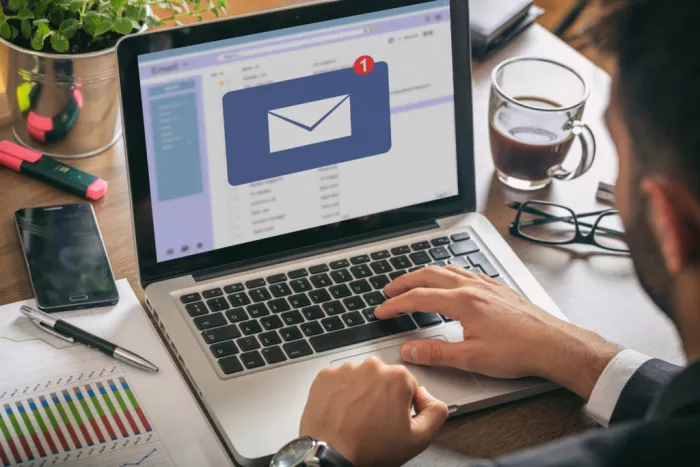
Free email services are easy to use, but they also limit your control over the data you receive and send. In particular, this data is stored on third-party servers, so you won’t be able to influence how the information is processed. In turn, if your account is blocked or there are technical failures, your business risks losing access to correspondence and contacts. To prevent this from happening, it’s much better to use professional email services that provide advanced security tools (like multi-level authentication, centralized management, advanced encryption, backup, access control, etc.).
Creating optimal conditions for team scaling
As your business and its team scale, you’ll have to create new mailboxes for employees, manage access rights, and track correspondence within projects. The problem is that no free service is tailored for such tasks, while business solutions will allow you to centrally add and delete accounts, set up aliases, and assign roles and access rights. As a result, all communications within your teams will become more transparent, and you’ll get complete control over business correspondence, even with high staff turnover.
Simplified integration with third-party tools
Modern email platforms include many useful business tools or provide easy integration with those from third-party vendors (including calendar, video conferencing, collaborative work with documents and contacts, etc.). As a result, your employees will be able to work in a single space without wasting time switching between dozens of separate apps and services. Free solutions cannot boast such functionality, so the advantage of business email is also obvious here.
Driving Innovation Through Intelligent Tools
Beyond reliability, AI-driven solutions are reshaping how businesses use professional email ecosystems. Platforms like Rosebud AI demonstrate how artificial intelligence can personalize digital communication and enhance engagement across content formats, from newsletters to client reports.
Compliance with legal and regulatory aspects
For companies operating in highly regulated sectors, compliance with legal requirements for user data protection is a must. Free email services don’t provide a guarantee of compliance with these standards, which, in turn, can lead to fines and legal risks. At the same time, professional analogs take into account the requirements of industry regulation and allow for fine-tuning.
High percentage of email delivery
Finally, corporate mail provides a high percentage of message delivery. The fact is that free services often fall under their spam filters, especially when it comes to mass mailings to cold leads. As a result, your emails may not reach recipients, which naturally harms sales and communications. That’s why having your own domain is much better, because it increases trust on the part of the mail services used by recipients.
According to Statista’s insights on U.S. email usage, over 90% of internet users still rely on email for both personal and professional communication, underscoring how critical deliverability remains in 2025.
Conclusion
Saving on email infrastructure might seem like a practical short-term decision, but it can cost your business in lost trust, poor deliverability, and potential data risks.
Investing in a professional business email service builds credibility, improves communication security, supports scalability, and aligns your company with modern compliance standards. In a world where first impressions are often made in the inbox, professional email isn’t a luxury, it’s a necessity.
Post Comment
Be the first to post comment!