Elon Musk has redrawn the boundaries of his empire. On February 2, 2026, Elon Musk confirmed that SpaceX has formally acquired xAI, creating a single, vertically integrated organization built to operate across orbit, data, and artificial intelligence at a planetary scale.

The deal values the combined entity at roughly $1.25 trillion, instantly placing it among the most valuable private companies ever assembled, and setting the stage for what could become the largest IPO in history.

One structure, many platforms

Under the new corporate arrangement, Space Exploration Technologies Corp. becomes the managing member of X.AI Holdings. The consolidation effectively brings SpaceX, Starlink, xAI’s Grok platform, and X (formerly Twitter) under a single strategic umbrella. Tesla remains separate, though newly entangled financially.

The valuation math behind the merger combines SpaceX’s estimated $800 billion valuation from a December 2025 secondary sale with xAI’s $230 billion valuation from its January 2026 funding round, plus an added premium for integration and long-term synergy.

AI compute goes orbital

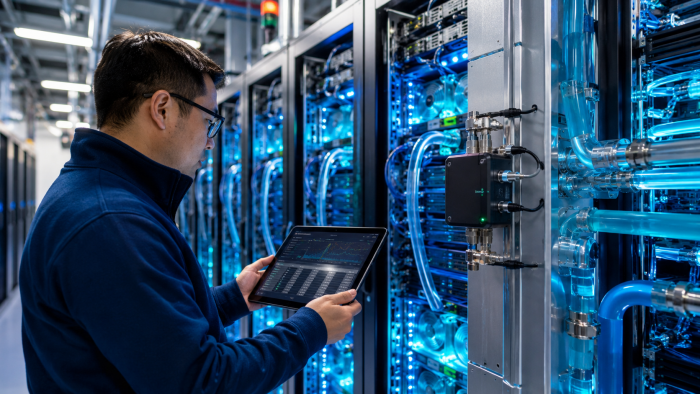
At the center of the merger is a radical infrastructure shift. Musk has argued that Earth-based data centers are approaching hard limits, constrained by power grids, cooling costs, and land availability. His answer: move AI compute into space.

Regulatory filings submitted in late January outline plans for up to one million AI-enabled satellites, effectively turning low Earth orbit into a distributed data center. These platforms would rely on near-continuous solar power and passive radiative cooling in the vacuum of space—eliminating two of the largest costs in terrestrial AI operations.

Internal projections suggest that within two to three years, space-based compute could become the cheapest source of large-scale AI processing.

Starship as the backbone

None of this works without launch capacity. The strategy hinges on Starship V3, SpaceX’s next iteration of its fully reusable heavy-lift vehicle. Musk has publicly targeted an eventual cadence approaching one launch per hour, a pace designed to deploy massive volumes of AI hardware at unprecedented speed.

If achieved, the combination of reusable launch, orbital power generation, and modular AI satellites would give the merged company control over both the compute stack and the logistics required to scale it.

IPO plans take shape

Market chatter suggests the new SpaceX–xAI entity is preparing for a public debut in mid-to-late 2026. Analysts expect an IPO raise of $30 billion to $50 billion, potentially eclipsing Saudi Aramco’s record-setting listing.

Leaked estimates point to a tentative IPO price near $527 per share, though final pricing would depend heavily on launch progress, Starship reliability, and early demonstrations of orbital AI capability.

For early xAI backers, the merger offers a clear liquidity path, folding a capital-intensive AI startup into SpaceX’s already profitable and contract-backed business.

Profits fund ambition

Financially, the pairing balances extremes. SpaceX is reported to have generated $2–5 billion in profit in 2025, driven largely by Starlink subscriptions and government contracts. xAI, by contrast, is still burning billions annually to compete with OpenAI and Google.

The merger allows Musk to funnel SpaceX’s steady cash flow into xAI’s high-risk development cycle without relying solely on external funding. That logic gained extra weight just days earlier, when Tesla disclosed a $2 billion investment in xAI, giving Tesla shareholders indirect exposure to the newly merged entity.

Beyond Earth

Musk framed the merger in characteristically long-term terms, calling it an “innovation engine” aimed at pushing humanity toward a Kardashev Type II civilization. The far horizon includes manufacturing AI satellites using lunar resources and deploying them into deep space via electromagnetic mass drivers.

For now, the focus is closer to home, orbit, IPO filings, and execution. But with space launch, global connectivity, and artificial intelligence now bound together inside one company, Musk has made clear that the next phase of AI may not be grounded on Earth at all.

Post Comment

Be the first to post comment!

Related Articles
AI News

Google Pushes AI Agents Into the Mainstream, but Consumers May Need More Convincing

Google is preparing a wider consumer rollout of AI agents bu...

by Vivek Gupta | 3 days ago
AI News

Spotify Adds ElevenLabs AI Audiobook Creation Tool for Authors

Spotify is expanding its audiobook strategy with a new AI-po...

by Vivek Gupta | 3 days ago
AI News

Figma Brings AI Directly Onto the Design Canvas With New Collaborative Agent

Figma is expanding its AI ambitions with the launch of a new...

by Vivek Gupta | 4 days ago
AI News

Stability AI Launches Stable Audio 3.0 With Six-Minute AI Music Generation

Stability AI has introduced Stable Audio 3.0, a new generati...

by Vivek Gupta | 4 days ago
AI News

Google Bets Gemini 3.5 Flash on the Future of AI Agents

Google is positioning Gemini 3.5 Flash as the engine behind...

by Vivek Gupta | 5 days ago
AI News

SandboxAQ Brings AI Drug Discovery Models Into Claude

SandboxAQ has integrated its advanced scientific AI models d...

by Vivek Gupta | 6 days ago