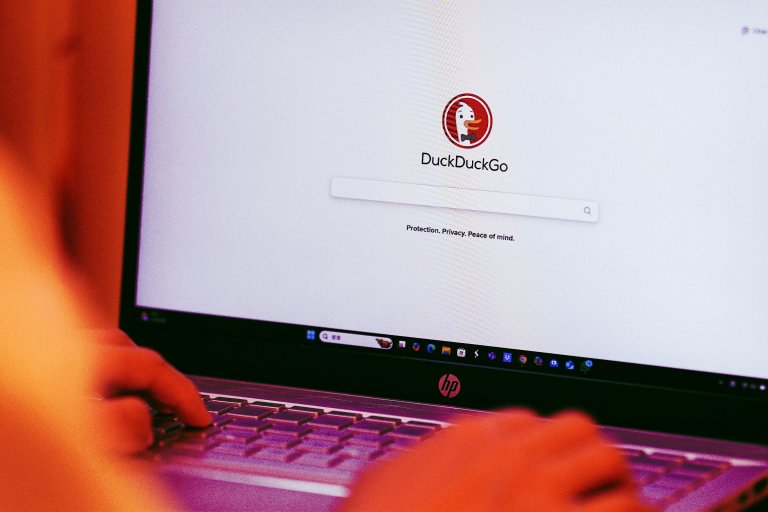
DuckDuckGo is turning its AI-free search experience into a more visible product, launching new browser extensions for Chrome and Firefox that let users make noai.duckduckgo.com their default search engine.
The move comes as frustration grows over AI-heavy search results, especially after Google’s latest push to place AI-generated answers more prominently inside Search. According to TechCrunch, DuckDuckGo’s No-AI search page has seen a sharp rise in traffic since Google’s recent AI search announcements. DuckDuckGo said visits to the page hit a new high on May 28, 2026, reaching roughly three times their earlier level, while average visits were running about 84% above baseline.
That surge gives DuckDuckGo a clear opening. The company has long positioned itself around privacy. Now it is adding another message: search should still give users a choice over how much AI they see.
The new extensions do not create a separate search engine. They make DuckDuckGo’s existing No-AI page easier to use every day. Instead of manually visiting the page, users can route their searches through the AI-free version by default in Chrome or Firefox.
What DuckDuckGo’s No-AI search removes
DuckDuckGo’s No-AI page works like regular DuckDuckGo Search, but with AI features switched off by default. According to the company’s help information summarized in the source material, noai.duckduckgo.com turns off Search Assist, Duck.ai, and AI-generated images. It also filters out AI-generated images by default.
That distinction is important. DuckDuckGo is not saying AI has no place in search. The company offers its own AI products, including Duck.ai and Search Assist. Its argument is more specific: AI should be optional, visible, and adjustable rather than forced into the main search experience.
This gives DuckDuckGo a different position from Google. Google is trying to make AI a deeper part of search itself, with expanded AI Overviews, conversational follow-ups, AI Mode, and more predictive behavior. DuckDuckGo is taking the opposite route for users who want a simpler experience: fewer generated answers, fewer AI images, and more traditional links.
The company is also planning to bring No-AI controls into its existing DuckDuckGo Privacy Essentials extensions for Chrome, Firefox, Edge, and Opera. That shows the AI-free option is not being treated as a small side page. It is becoming part of DuckDuckGo’s core browser-extension strategy.
Google’s AI search push creates the opening
The timing is directly tied to Google’s AI search rollout. At Google I/O 2026, Google presented a more AI-centered version of Search, expanding AI Overviews and AI Mode while making generated answers a more prominent part of the results experience.
For some users, the problem is not that AI exists. It is that AI increasingly appears before the traditional web links they came to search for. Critics argue that this changes search from a source-finding tool into an answer engine, often without giving users enough control over whether they want that format.
DuckDuckGo CEO Gabriel Weinberg criticized Google’s approach, saying Google was “force-feeding AI with no way to opt out,” according to the source material. DuckDuckGo then reported that its U.S. app installs rose 18.1% week over week on average from May 20 to May 25, peaking at 30.5% on May 25. On iOS, install growth averaged 33% and peaked at 69.9%.
Third-party data also pointed in the same direction. TechCrunch reported that Apptopia found a 29% increase in average daily U.S. downloads and a 12% global increase over the same period. That does not prove every new user came because of Google’s AI changes, but it does show that the install spike was visible beyond DuckDuckGo’s own numbers.
Why users are pushing back
The backlash around AI search is partly about control and partly about trust. AI-generated answers can be useful when they quickly summarize a topic. But they also raise questions about accuracy, source visibility, and whether users are being shown a narrowed version of the web before they see original sources.
Publishers have their own concern. If AI Overviews answer a question directly, fewer users may click through to the articles, forums, documentation pages, or reference sites that supplied the information. That turns AI search into a business issue for media companies and web publishers, not only a design debate.
The source material cites recent research that gives some weight to those concerns. One 2026 empirical study found that Google AI Overviews appeared for 51.5% of representative real-user queries in its dataset and were displayed above organic search results. The same study found that AI Overview sources differed substantially from traditional Google search sources and that AI-generated results were less consistent across repeated runs and small query changes.
Another 2026 study estimated that exposure to Google AI Overviews reduced daily traffic to English Wikipedia articles by about 15%, using a matched multilingual comparison design. That finding supports the fear that AI summaries can satisfy quick informational searches before users visit the source page.
DuckDuckGo uses choice as its selling point
DuckDuckGo is not likely to threaten Google’s search dominance soon. Google remains the default search habit for most users, and TechCrunch noted that DuckDuckGo has historically held only about 2% of the U.S. search market.
But DuckDuckGo does not need to overtake Google for this move to matter. It needs to own a clearer identity at a moment when some users feel mainstream search is becoming less familiar. AI-free search gives DuckDuckGo a sharper message than privacy alone.
That message is especially useful because DuckDuckGo is not anti-AI. Duck.ai gives users private access to AI chat models without requiring an account, and TechCrunch reported that it includes access to models from providers such as Anthropic, Meta, Mistral, and OpenAI. DuckDuckGo says it protects privacy by stripping IP addresses before requests reach model providers and by preventing chats from being used for training.
That lets the company occupy a middle ground. Users can choose AI chat when they want it, but they are not forced to see AI-generated answers inside every search result.
A small shift with bigger meaning
The launch of No-AI browser extensions shows how AI-free search is becoming more than a hidden setting. It is turning into a product category.
For users, the appeal is practical. Researchers, students, journalists, developers, privacy-conscious users, and anyone who prefers original sources may want a search experience that starts with links rather than generated answers. DuckDuckGo’s limitation is that its search quality may not match Google for every query, but its value proposition is now clearer.
For publishers, the trend is worth watching because it reflects growing anxiety about referral traffic and the future of the open web. If more users seek AI-free search, even in small numbers, it could create more demand for source-first discovery.
DuckDuckGo’s latest move is not about beating Google in scale. It is about turning a moment of AI search frustration into a defined alternative. As Google makes Search more agentic and answer-driven, DuckDuckGo is betting that a meaningful group of users will want the opposite: private search, fewer generated answers, and an easier way to keep AI out of the results page.
Post Comment
Be the first to post comment!