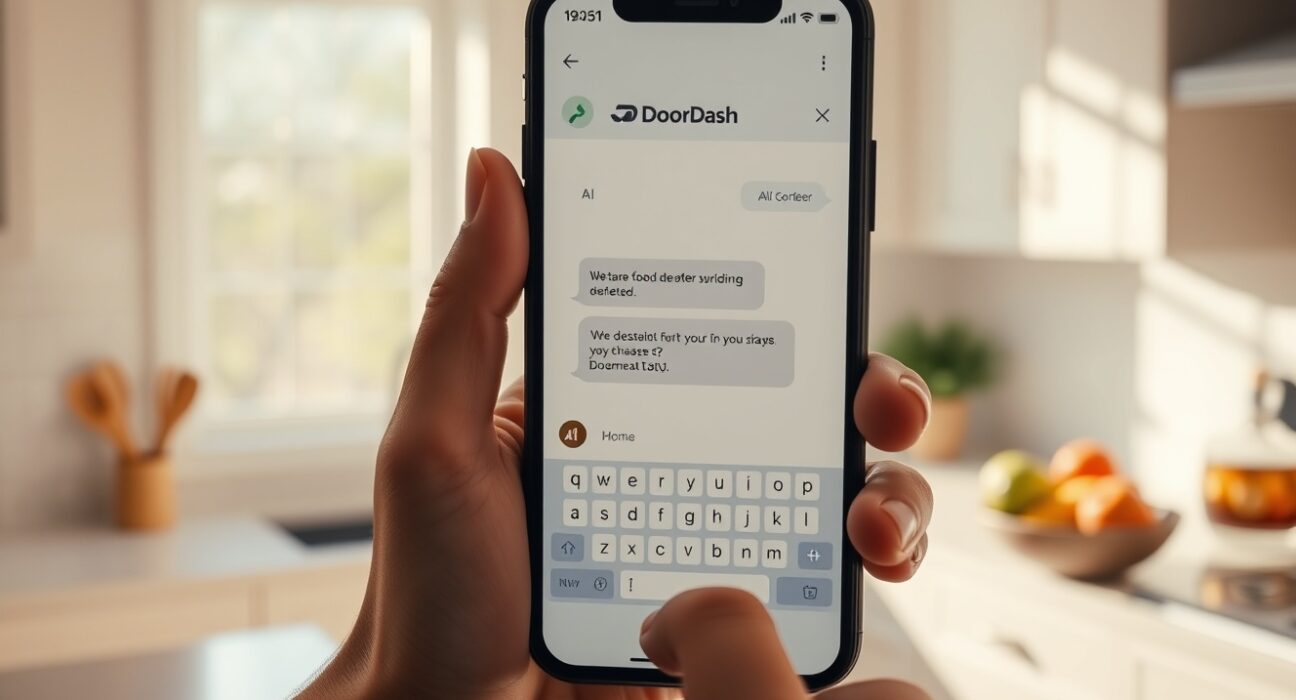
DoorDash is adding an AI chatbot to its app, giving users a new way to search for meals, build grocery carts and find restaurant reservations without manually scrolling through endless menus and product listings.
The new feature, called Ask DoorDash, lets users describe what they want in natural language, upload photos, paste recipe links, scan cookbook images or share grocery-list images. DoorDash then turns those inputs into restaurant suggestions, grocery carts or reservation options.
The feature was announced on June 11, 2026, and is currently available in select areas on iOS for restaurant search and grocery shopping. DoorDash says it will expand the tool to more users across the United States in the coming weeks, with reservation support also coming soon.
The launch marks a bigger shift in how delivery apps want users to shop. Instead of forcing people to search by restaurant name, dish, store category or exact grocery item, DoorDash is trying to make ordering feel more like asking an assistant for help. A user can type something broad, such as a filling dinner for a family of four, and the app can return options with short explanations for why they match the request.
DoorDash wants to reduce the scroll
The problem DoorDash is trying to solve is not a lack of choice. It is too much choice.
DoorDash says the average U.S. user has access to an estimated 800,000 menu items and grocery products eligible for delivery through the platform. That level of inventory gives customers flexibility, but it can also make the app harder to navigate. Finding the right meal or building a grocery cart can still require several searches, filters, menu comparisons and substitutions.
Ask DoorDash is designed to shorten that process. The assistant appears through an Ask button inside the app’s search bar. From there, users can describe what they are craving, ask for help with a meal plan, upload a recipe image or request a certain type of restaurant.
For food delivery, the assistant can handle vague or situational prompts. A user could ask for vegetarian restaurants with mild options for kids, a quick high-protein lunch, or dinner ideas under a certain budget. The app can then suggest restaurants and help build a cart based on dietary preferences, group size, past orders or other context.
That makes the feature less like a traditional search box and more like a guided ordering layer.
Grocery shopping becomes more automatic
The grocery use case may be one of the most practical parts of Ask DoorDash.
DoorDash says users can upload a grocery-list image, scan a cookbook page or paste a recipe link, and the assistant can turn that input into a cart with the needed ingredients and quantities. Instead of manually searching for each item, the user can let the system interpret the list and match it to available products.
The assistant can also ask whether users already have basic pantry items such as butter, salt, sugar or flour before adding them to the cart. That small step matters because recipe-based grocery shopping often leads to duplicate purchases. A smarter assistant can help reduce waste and make the order feel more tailored.
This moves DoorDash closer to meal-planning territory. The app is no longer only delivering restaurant food or groceries on demand. It is trying to sit earlier in the decision process, when a user is still figuring out what to cook, what they already have and what they need to buy.
For a delivery company trying to grow beyond restaurant orders, that is strategically important.
Photos and recipes become shopping inputs
One of the most notable changes is that Ask DoorDash accepts visual and external inputs, not just typed prompts.
A user can upload a cookbook photo, a grocery-list photo or a recipe link. Reports also indicate that the assistant can handle voice, written and visual inputs, with responses that include buttons for adding items directly to the cart.
That kind of workflow reflects where commerce apps are heading. Search is becoming less dependent on exact keywords and more dependent on intent. A user may not know the right grocery item name, restaurant category or dish description. But they may have a photo, a recipe page or a rough idea of the meal they want.
DoorDash is trying to convert those signals directly into action. If the assistant can understand the input well enough, it can take the user from idea to cart more quickly than a normal search result page.
Reservations are the next layer
DoorDash also plans to bring Ask DoorDash into restaurant reservations.
The upcoming reservation feature will let users describe the kind of dining experience they want. Someone could ask for a table for two downtown around 8 p.m., then refine the results by asking for a quieter setting, a stronger cocktail list or a more intimate atmosphere.
That makes reservations another part of DoorDash’s broader move from delivery app to local commerce platform. The company does not only want to help users order food at home. It wants to help them decide where to eat, what to buy, what to cook and where to go.
If the reservation feature works well, it could make DoorDash more competitive with restaurant discovery and booking platforms, especially for users who already open DoorDash when thinking about food.
The AI commerce race is getting crowded
DoorDash is not alone in turning shopping into a conversational experience. Uber Eats has launched AI-powered cart assistance, while Instacart has been building AI shopping tools for grocers. Amazon, Google and other commerce platforms are also experimenting with AI search, visual discovery and prompt-based shopping.
The reason is clear. Shopping apps are packed with inventory, but users do not always want to browse. They want the app to understand intent. A prompt like “healthy dinner for two with leftovers” or “snacks for a kids’ birthday party” can be more useful than a keyword search for one item at a time.
For delivery platforms, AI assistants could also increase order size. If a chatbot can help complete a grocery list, suggest missing ingredients or build a full meal cart, users may buy more in a single session. That makes the technology useful not only for convenience, but also for business growth.
DoorDash’s timing also fits its broader expansion beyond restaurant delivery. The company has been growing grocery and retail categories while competing with Uber Eats, Instacart and other delivery platforms. In that context, Ask DoorDash is not just a consumer feature. It is part of a larger effort to make DoorDash the starting point for more kinds of local shopping.
The challenge will be trust and accuracy
The test for Ask DoorDash will be whether it can produce useful results without frustrating users.
AI shopping assistants can sound helpful, but the details matter. A grocery cart built from a recipe needs correct quantities and sensible substitutions. Restaurant recommendations need to respect dietary preferences, distance, budget and availability. Reservation suggestions need to reflect real openings and the kind of experience the user requested.
If the assistant misunderstands a list, adds unnecessary items or recommends weak matches, users may return to manual search. If it gets the details right, it could make ordering feel faster and less repetitive.
That is the broader stakes of the launch. DoorDash is trying to replace browsing with conversation, but conversation only works if the assistant can reliably turn intent into checkout.
Ask DoorDash shows where food delivery is heading. The app is becoming less like a catalog and more like a shopping assistant. Users may still browse menus and stores, but the company is betting that the next phase of delivery will begin with a prompt, a photo or a recipe, not a search filter.
Post Comment
Be the first to post comment!