Cognition CEO Scott Wu is pushing back against one of the most common fears surrounding AI coding agents: that they are being built to replace human software engineers.
Wu’s comments come as Cognition, the company behind the AI software engineering agent Devin, has become one of the most closely watched startups in the coding automation race. The company recently raised more than $1 billion at a reported $25 billion pre-money valuation, a major jump from its $10.2 billion post-money valuation after a $400 million round just eight months earlier.
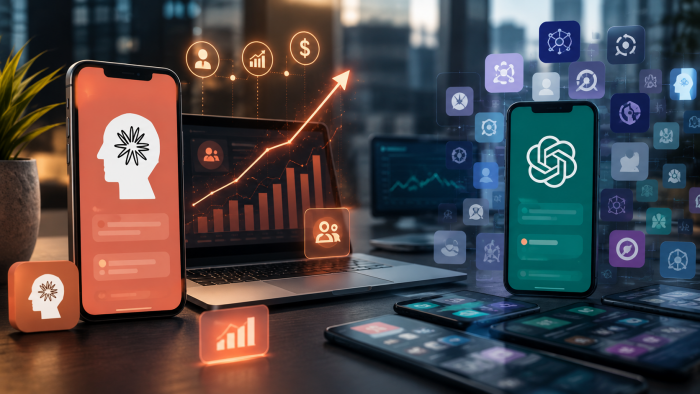
That rapid rise has made Cognition a symbol of where software engineering may be heading. Devin is marketed as an AI software engineer capable of taking on complex engineering tasks, inspecting codebases, making changes, running tests, and producing work closer to a pull request than a simple code suggestion. For many developers, that sounds exciting. For others, it sounds like the start of a hiring slowdown.
Wu’s answer is more measured. In a TechCrunch interview, he said Cognition has “never thought about it as replacing humans.” Instead, he framed Devin as a system that can take ownership of engineering tasks inside workflows still shaped by human judgment, product direction, and architectural decisions.
The distinction matters because the debate over AI coding is no longer theoretical. Companies are already using AI tools to speed up software development, and investors are pouring money into agents that promise to handle larger parts of the engineering process.
Devin is built for tasks, not full accountability
Devin became widely known because it was presented as one of the first truly autonomous AI software engineering agents. Unlike autocomplete tools that suggest code inside an editor, Devin is designed to accept a task, understand a codebase, make changes, test its own work, and collaborate through an engineering workflow.
That makes it far more ambitious than earlier coding assistants. It also explains why the job-replacement question follows Cognition so closely. A tool that can own work from task to output naturally raises questions about how many engineers a company will need if such agents become reliable.
Cognition’s public positioning tries to draw a clear line. The company says its goal is to help engineers operate more like architects, with agents taking on repetitive implementation work while humans focus on strategy, system design, product tradeoffs, and problem solving.
That is a different vision from a simple “AI replaces coders” story. In Wu’s version, the engineer does not disappear. The engineer moves higher in the workflow, spending less time on routine coding and more time deciding what should be built, how it should fit into a system, and whether the output is good enough to ship.
The timing makes the message important
Wu’s comments arrive at a moment when the technology industry is openly debating whether AI coding agents will reduce hiring, compress junior engineering roles, or reshape software teams.
Some executives have already linked AI coding tools to lower hiring needs. Salesforce CEO Marc Benioff, for example, reportedly said the company has barely hired engineers over the past two years because of productivity gains from AI coding agents. Those kinds of comments have intensified anxiety among developers, especially early-career engineers who worry that routine coding tasks may be the first to be automated.
Against that backdrop, Wu’s position is notable because he leads one of the companies most associated with autonomous coding agents. He is not arguing that the technology is limited or insignificant. He is arguing that its value comes from changing the structure of engineering work, not removing engineers from it entirely.
The difference is important. A company using AI agents responsibly may ask developers to supervise more output, review more changes, and focus more deeply on design and reliability. A company using them aggressively may try to replace headcount before the surrounding systems for quality, testing, security, and accountability are ready.

Software engineering is larger than writing code
The replacement debate often reduces software engineering to code generation. That is too narrow. Writing code is a central part of the job, but it is not the whole job.
Engineers define requirements, understand user needs, make architecture decisions, debug production problems, evaluate tradeoffs, protect security, manage technical debt, and communicate with designers, product managers, and customers. In large codebases, the hardest work is often not creating new code but understanding why existing systems behave the way they do.
AI agents can help with many of those tasks, but they do not remove the need for accountability. A model may generate a patch, but a human team still has to decide whether the patch is safe, maintainable, scalable, and aligned with the product. That responsibility becomes even more important when agents produce code quickly.
Academic researchers have made a similar point, warning that software engineering is broader than code generation and that maintaining large, reliable systems remains difficult for LLM-based tools. The danger is not only that AI writes bad code. It is that teams may trust output too quickly because it arrives polished and fast.
Faster coding can create new bottlenecks
The rise of AI coding agents also brings a second concern: software quality. If AI allows teams to ship more code faster, the bottleneck may move from writing code to reviewing, testing, deploying, and recovering from failures.
Recent industry coverage has noted that heavy users of AI coding tools can move faster but may also face more deployment issues when their review and incident-response processes are not strong enough. That context makes Wu’s argument more practical than philosophical. If agents increase output, humans may become more important as validators, reviewers, and system owners.
There is also a risk of over-reliance. A 2026 research paper on agentic coding assistants warned that developers may become less actively engaged as AI agents take over more of the task flow. The researchers argued that future tools should support reflection, verification, and human reasoning rather than simply automate execution.
That warning sits neatly alongside Wu’s message. The strongest version of agentic coding is not one where humans stop thinking. It is one where humans think at a higher level while agents handle more of the mechanical work.
What this means for developers
For developers, the message is not to ignore AI agents. The better reading is that the job is changing quickly.
Routine implementation, boilerplate, test generation, maintenance tickets, and simpler fixes are likely to become more automated. But architecture, debugging judgment, system design, code review, product understanding, security awareness, and agent orchestration are becoming more valuable.
In practical terms, future engineers may spend more time writing specifications, reviewing agent output, setting constraints, designing systems, and deciding when the AI is wrong. The skill set becomes less about typing every line of code and more about directing technical work with clarity and judgment.
That may be uncomfortable for parts of the profession, especially junior developers who traditionally learned by handling smaller implementation tasks. But it also suggests that engineering knowledge remains central. AI agents can produce work, but they still need people who know what good work looks like.
A more realistic future than full replacement
Cognition’s rise shows that investors believe agentic software development will become a major market. Devin’s ambition also shows that AI coding tools are moving far beyond autocomplete. They are becoming systems that can plan, act, test, and collaborate across real engineering environments.
But Wu’s comments draw a line around what that should mean. AI coding agents may replace some tasks, but they should not replace the full role of a software engineer. The human responsibilities around direction, review, system judgment, and accountability remain too important to remove.
The real question is not whether AI will write code. It already does. The harder question is who controls that work, who checks it, and who takes responsibility when the code affects real products and users.
For now, Wu’s answer is clear: coding agents should expand what engineers can do, not make engineers irrelevant. In a market eager for automation, that may be the more important message.





David A
Jun 1, 2026Quick question, have you ever Googled **"[company name] reddit"**? A lot of buyers do before paying. They want to see real experiences, recommendations, complaints, comparisons, etc. The thing is, most companies keep showing up in the same old ranking threads or conversations they’re not part of. It matters even more now because AI tools increasingly pull recommendations and sentiment from Reddit when answering users. If you want to increase the number of positive, credible Reddit discussions that appear when people search for your brand, I can help. Worth a quick chat?