For years, the relationship between a developer and their code has been one of painstaking manual labor. You write a line, you hit a bug, you search documentation, and you repeat. Yesterday, Apple decided that cycle is officially outdated.

With the release of Xcode 26.3, the "Integrated Development Environment" (IDE) has become something more like a "Collaborative Workspace." By inviting OpenAI and Anthropic’s most advanced agents into the heart of the Mac, Apple is signaling the end of "coding" as we know it, and the beginning of "orchestrating."

The Rise of the "Vibe Coder"

The buzzword of the week is "vibe coding." It sounds lighthearted, but the implications are heavy. In the new Xcode, a developer can simply describe a feature in plain English: "I want a photo gallery that fetches images from the user’s library and applies a sepia filter." Instead of the IDE merely offering a few Swift suggestions, the AI agents, Claude and Codex, now roll up their digital sleeves. They navigate your project folders, update your build settings, write the logic, and then, in a move that feels almost human, they take a "screenshot" of the preview to check if the filter actually looks good. If the app crashes, the agent doesn't wait for you; it reads the error log, fixes the typo, and tries again.

A Rare Open Door

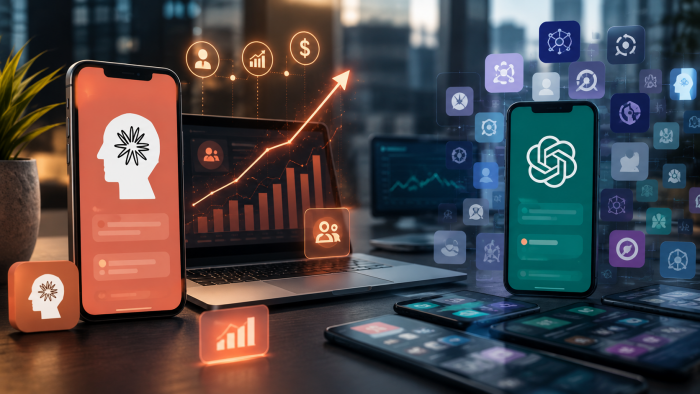
In a surprising departure from its historically closed ecosystem, Apple isn't just sticking to its own silicon-based intelligence. By adopting the Model Context Protocol (MCP), they’ve essentially built a universal "plug" for AI. Whether you prefer the nuanced reasoning of Anthropic’s Claude or the raw power of OpenAI’s GPT-5 series, the choice is yours.

"Agentic coding supercharges productivity," said Susan Prescott, Apple’s VP of Worldwide Developer Relations. "It allows developers to focus on innovation rather than the plumbing."

The Safety Net

Of course, handing the keys to a machine is terrifying for any seasoned engineer. To counter the "black box" fear, Apple has introduced a "Project Transcript." It’s essentially a play-by-play diary of the AI’s thoughts. If you don't like a decision the agent made, a new "Milestones" feature acts as a time machine, allowing you to revert the entire project to exactly how it was before the AI took over.

The Verdict

Is this the end of the programmer? Likely not. But it is the end of the programmer-as-typist. As we move into 2026, the value of a developer is shifting away from knowing where the semicolons go and toward knowing how to guide an intelligent system to build something meaningful.

The barrier to entry for making an iPhone app just hit an all-time low. For the veterans, the speed of development just hit an all-time high. In Xcode 26.3, the "vibe" is clear: the future of software isn't just written, it's directed.

Post Comment

Be the first to post comment!

Related Articles
AI News

Tesla Expands Grok AI to Europe Amid Rising Scrutiny

Tesla is beginning a broader European rollout of its Grok AI...

by Vivek Gupta | 44 minutes ago
AI News

As AI Agents Gain Power, Security Becomes the Real Test

As artificial intelligence systems become more capable, a ne...

by Vivek Gupta | 22 hours ago
AI News

Reddit’s Human Edge in an AI-Heavy Internet

As AI-generated content spreads rapidly across the web, Redd...

by Vivek Gupta | 23 hours ago
AI News

Alibaba Bets on Agents With Qwen3.5

Alibaba has unveiled Qwen3.5, the newest generation of its Q...

by Vivek Gupta | 1 day ago
AI News

OpenClaw Hype Meets Reality Check

The rapid rise of OpenClaw has captured attention across the...

by Vivek Gupta | 1 day ago
AI News

Hollywood’s New Classroom: Inside the Rise of AI Film Schools

A quiet but consequential shift is underway in the entertain...

by Vivek Gupta | 1 day ago