On This Page
- What Defines a Strong FakeYou Alternative
- Key Factors for Comparing Voice Generators
- Quick Comparison of the Best FakeYou Alternatives
- ElevenLabs: The Leading Alternative for Voice Realism
- PlayHT: A Strong Choice for Content Creators
- Uberduck AI: The Closest Alternative to FakeYou
- Murf AI: Built for Professional Voiceovers
- Resemble AI: Best for Advanced Voice Cloning
- Voice Realism Comparison
- When FakeYou Still Makes Sense
- Choosing the Right Alternative
- Final Thoughts
For years, AI voice generators sounded like a polite GPS system trying its best to narrate Shakespeare. The technology worked, but the results often felt mechanical. Platforms like FakeYou helped change that by making voice cloning accessible, especially for character voices and internet memes.
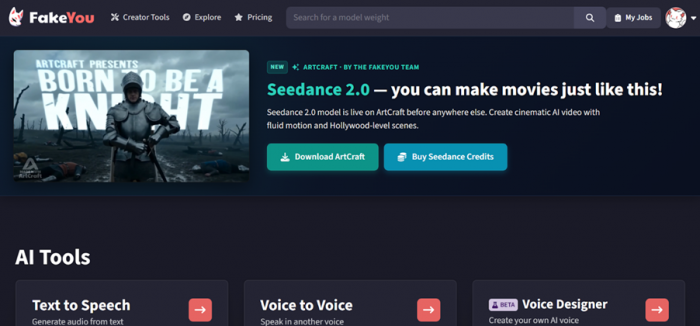
FakeYou built a large following thanks to its community-driven voice models. The platform allows users to generate speech that mimics celebrities, fictional characters, or popular meme voices. For creative projects, parody videos, and experimental audio, it remains one of the most recognizable tools in the AI voice generation space.
However, as AI speech technology matured, many creators began looking for alternatives that deliver higher voice realism, faster generation speeds, and professional licensing options. Developers also need better APIs and scalable infrastructure for building voice-enabled applications.
This guide explores some of the strongest FakeYou alternatives available in 2026. Each platform approaches voice generation from a different perspective, ranging from entertainment voices to enterprise-grade speech synthesis.
What Defines a Strong FakeYou Alternative
The quality of an AI voice generator depends on several technical and practical factors. Some platforms prioritize hyper-realistic narration, while others focus on creative character voices or developer-friendly tools.
Voice realism remains one of the most important metrics. Tools with stronger neural voice models produce speech that closely resembles natural human tone, pacing, and emotional expression. This difference becomes obvious in longer audio clips such as narrations or podcasts.
Speed is another major factor. FakeYou users often encounter generation queues, especially on the free plan. Modern voice platforms aim for near-instant audio generation, sometimes under a second for short clips.
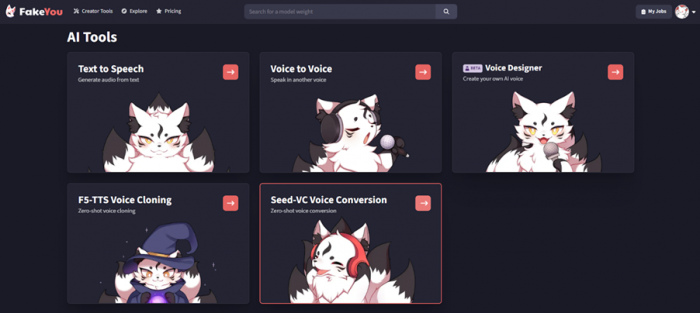
Customization also matters. Advanced tools allow users to adjust tone, pacing, emotional expression, and even generate multi-speaker dialogue. These capabilities make AI voices more useful for professional production workflows.
Key Factors for Comparing Voice Generators
| Factor | Why It Matters |
| Voice Realism | Determines how natural the generated voice sounds |
| Voice Cloning | Ability to replicate specific voices or styles |
| Generation Speed | Faster generation improves workflow efficiency |
| API Access | Important for developers integrating voice tech |
| Commercial Licensing | Enables use in monetized content and apps |
Quick Comparison of the Best FakeYou Alternatives
Several AI voice platforms now offer capabilities that surpass FakeYou in certain areas. The following overview highlights some of the most widely used alternatives.
| Tool | Best For | Voice Quality | API Access | Starting Price |
| ElevenLabs | Ultra-realistic narration | Excellent | Yes | $5/month |
| PlayHT | Podcast and content narration | Very Good | Yes | $31/month |
| Uberduck AI | Meme and character voices | Good | Yes | Free/Paid |
| Murf AI | Professional voiceovers | Excellent | Yes | $19/month |
| Resemble AI | Custom voice cloning | Excellent | Yes | Usage-based |
Each of these platforms addresses a different gap in FakeYou’s functionality, ranging from studio-quality speech to advanced voice cloning tools.
ElevenLabs: The Leading Alternative for Voice Realism
ElevenLabs has become one of the most recognized AI voice platforms thanks to its exceptional speech realism. The platform focuses on generating voices that closely resemble natural human speech, with expressive tone and emotional nuance.
One of the platform’s standout features is its advanced neural voice models. These models allow users to control tone, pacing, and emphasis, making them ideal for narration and storytelling. The result often feels closer to a human voice actor than a synthetic generator.
Developers also benefit from a robust API ecosystem. ElevenLabs supports integrations for applications, voice assistants, and interactive tools. Compared with FakeYou’s limited API capabilities, this flexibility makes it suitable for larger production environments.
Content creators frequently use ElevenLabs for audiobooks, video narration, and educational content where voice realism matters more than novelty voices.
| Feature | Details |
| Voice Realism | Extremely high |
| Voice Cloning | Supported |
| Languages | 70+ |
| Use Cases | Narration, voiceovers, AI assistants |
PlayHT: A Strong Choice for Content Creators

PlayHT focuses heavily on narration and audio production for digital content. The platform converts written text into studio-quality speech suitable for podcasts, videos, and educational materials.
One advantage of PlayHT is its large voice library. Users can select voices with different accents, tones, and speaking styles. This variety allows creators to match voice characteristics with specific content formats.
Another strength lies in its workflow integrations. PlayHT connects with publishing tools such as WordPress and design platforms like Canva, which simplifies content production.
Compared with FakeYou, PlayHT places less emphasis on character voices and more on professional narration quality.
Key Advantages of PlayHT
• High-quality narration voices
• Strong integration ecosystem
• Custom voice cloning options
• Commercial licensing for content creators
Uberduck AI: The Closest Alternative to FakeYou
Uberduck AI shares many similarities with FakeYou, particularly in the area of character voice generation. The platform supports community-generated voice models and meme-style speech outputs.
Users often choose Uberduck for creative audio projects. The platform supports voice generation for music, rap generation, and stylized speech, which makes it popular in online content communities.
In addition to entertainment features, Uberduck provides developer APIs that allow voice generation to be integrated into applications or games. This capability expands its usefulness beyond casual experimentation.
For users who enjoy FakeYou’s creative style but want additional technical features, Uberduck represents one of the closest alternatives.
Key Strengths of Uberduck
• Community voice models
• Rap and music generation tools
• Developer-friendly API access
• Fast generation for short clips
Murf AI: Built for Professional Voiceovers

Murf AI targets businesses and professionals who need high-quality voiceovers. The platform focuses on clarity, pronunciation accuracy, and consistent narration quality.
One of Murf’s major strengths is its library of professional voices. These voices are designed for corporate presentations, marketing videos, and educational courses. Many organizations use Murf for internal training content or product explainers.
The platform also includes features such as AI dubbing and voice editing. These tools allow users to translate and localize video content into different languages.
Compared with FakeYou, Murf prioritizes enterprise-grade functionality rather than entertainment voices.
| Feature | Murf AI Capability |
| Voice Library | 200+ voices |
| Languages | 35+ |
| Pronunciation Accuracy | ~99% |
| Target Users | Businesses and educators |
Resemble AI: Best for Advanced Voice Cloning

Resemble AI focuses on voice cloning technology rather than simple text-to-speech generation. The platform allows users to create custom voices using short audio samples.
This capability is particularly useful for game development, virtual assistants, and film production where consistent character voices are required.
Resemble also emphasizes ethical safeguards. The platform includes watermarking and detection tools designed to prevent misuse of synthetic voices.
Compared with FakeYou’s imitation-based voice models, Resemble AI focuses more on authentic synthetic voice creation.
Voice Realism Comparison
Different platforms prioritize voice quality in different ways.
| Tool | Realism Score (Approx.) |
| ElevenLabs | 9/10 |
| PlayHT | 8/10 |
| Murf AI | 8/10 |
| Uberduck | 7/10 |
| FakeYou | 5/10 |
The difference often comes from the training datasets and neural model architecture used by each platform.
When FakeYou Still Makes Sense
Despite the rise of advanced alternatives, FakeYou still serves a specific niche.
The platform remains extremely popular for meme voices and parody content. Its large library of community voices allows users to generate speech that mimics well-known characters.
For hobby projects or experimental audio, FakeYou continues to be a convenient option. The free access also makes it appealing for casual creators who do not need professional voice quality.
Situations Where FakeYou Works Well
• Meme and parody voice generation
• Casual creative experiments
• Character-based voice clips
• Free experimentation with AI speech
Choosing the Right Alternative
Selecting the best voice generation tool depends largely on the intended use case. Some tools excel at realism, while others prioritize creativity or developer integrations.
Content creators often prefer tools with high narration quality. Developers typically prioritize APIs and scalability. Entertainment creators may prefer platforms with character voice libraries.
| Need | Recommended Tool |
| Ultra-realistic narration | ElevenLabs |
| Podcast or YouTube voiceovers | PlayHT |
| Meme or parody voices | Uberduck |
| Corporate voiceovers | Murf AI |
| Custom voice cloning | Resemble AI |
Final Thoughts
AI voice technology has evolved rapidly over the past few years. Platforms that once produced robotic speech can now generate highly realistic voices that sound remarkably human.
FakeYou played an important role in popularizing AI voice generation for everyday users. Its community voice models helped introduce millions of people to synthetic speech tools.
However, newer platforms now offer more specialized capabilities. Some focus on professional narration, while others provide advanced cloning technology or developer-friendly APIs.
The best choice ultimately depends on how the technology will be used. For creative experimentation, FakeYou still offers unique charm. For professional voice production, alternatives like ElevenLabs, PlayHT, or Murf AI provide significantly more powerful tools.
Post Comment
Be the first to post comment!