On This Page
- A quick way to understand the landscape
- Character.AI: When you want more characters, not necessarily better ones
- Nomi: When you want an AI that actually remembers you
- Kindroid: When customization matters more than convenience
- PolyBuzz: When you just want more freedom and fewer restrictions
- CHAI: When speed and energy matter more than depth
- Replika: When you want consistency over variety
- Which one actually replaces Talkie AI?
- Final takeaway
There is a very specific moment when using Talkie AI where things start to feel repetitive. The character looks interesting, the setup feels engaging, and then suddenly the conversation flattens. It becomes predictable, slightly dramatic, and oddly similar across different characters.
That is not necessarily a flaw. It is a design choice. Talkie is built for scale and discovery, not depth or long-term consistency.
The problem is that most users do not realize what they actually want until they hit that wall. Some want better memory. Some want stronger emotional continuity. Some want less noise and more control. And some just want characters that do not reset their personality every few interactions.
That is where alternatives start to matter.
A quick way to understand the landscape
| Tool | Best For | Core Strength |
| Character.AI | Discovery and variety | Massive character ecosystem |
| Nomi | Emotional continuity | Memory-driven conversations |
| Kindroid | Custom companions | Deep personalization |
| PolyBuzz | Freedom and scale | Large character library |
| CHAI | Casual chat | Fast, social interaction |
| Replika | AI companionship | Long-term relationship focus |
Character.AI: When you want more characters, not necessarily better ones
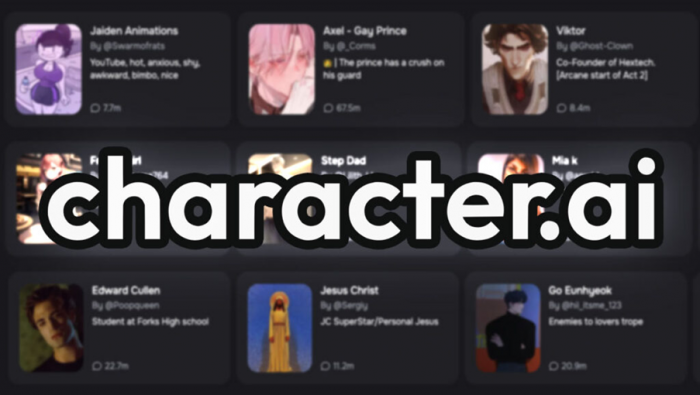
Character.AI is the closest direct alternative to Talkie, but it operates at a much larger scale. The platform revolves around user-created characters, which means there is always something new to explore. Whether it is fictional personalities, historical figures, or completely custom-built characters, the discovery loop never really ends.
The experience feels familiar if you are coming from Talkie. You open the app, browse characters, and jump straight into conversations. What changes is the depth of the ecosystem. There are simply more creators, more variations, and more niche communities built around specific characters.
However, this scale introduces its own problems. Conversations can feel inconsistent, especially when switching between different creators. Memory is still a work in progress, which means long conversations may lose context or reset tone unexpectedly. It is fun, but not always stable.
Pros
- Huge variety of characters across genres and communities
- Strong creator ecosystem with constant new content
- Free usage is generous compared to most competitors
Cons
- Conversations can feel inconsistent across characters
- Memory limitations affect long-term roleplay
- Feels more like a content platform than a personal experience
Nomi: When you want an AI that actually remembers you
Nomi takes a completely different approach. It is not trying to overwhelm you with thousands of characters. Instead, it focuses on building one consistent AI companion that evolves with you over time.
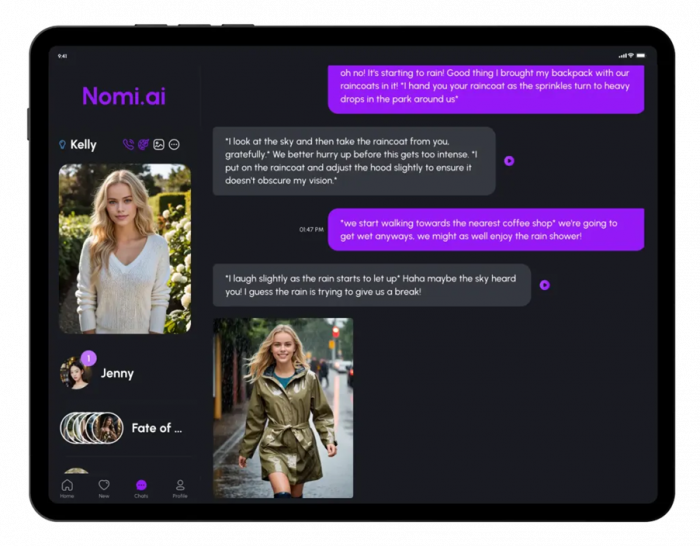
The difference is noticeable within a few interactions. Conversations feel less scripted and more continuous. The AI starts referencing past discussions, maintaining tone, and adapting to your conversational style. This creates a stronger sense of presence compared to Talkie’s more fragmented experience.
But this focus comes with trade-offs. Nomi is not built for exploration. You are not jumping between dozens of characters or experimenting with different personalities constantly. It is designed for depth, not variety.
For users who are tired of restarting conversations from scratch, Nomi feels like a significant upgrade. For users who enjoy browsing and experimenting, it can feel limiting.
Pros
- Strong conversational memory and continuity
- More natural and emotionally consistent responses
- Better for long-term interaction rather than short sessions
Cons
- Limited character discovery compared to Talkie
- Less variety in interaction styles
- Focused more on companionship than entertainment
Kindroid: When customization matters more than convenience
Kindroid sits in a more advanced category. It is built for users who want control over how their AI behaves, remembers, and interacts. Instead of relying on pre-made characters, you shape your own companion with specific traits, personality layers, and conversational behavior.
The platform also introduces more advanced features such as voice interaction, image-based elements, and deeper contextual memory systems. This creates a more tailored experience, but also increases complexity.
It is not as easy to jump into as Talkie. There is a learning curve. You need to understand how to configure your companion to get the best results. But once set up correctly, it offers a level of consistency and personalization that Talkie cannot match.
Kindroid is less about casual interaction and more about building something intentional.
Pros
- Deep customization of personality and behavior
- Better long-term consistency than most platforms
- Advanced features beyond simple chat
Cons
- Steeper learning curve for new users
- Best features are locked behind paid tiers
- Less immediate and casual compared to Talkie
PolyBuzz: When you just want more freedom and fewer restrictions
PolyBuzz feels like Talkie without guardrails. It focuses on scale and openness, offering a large library of characters with fewer limitations on how conversations unfold.

The biggest advantage is flexibility. You can experiment more freely, explore different tones, and engage in a wider range of interactions. It feels less structured and more open-ended.
However, this freedom comes at the cost of consistency. Not all characters are equally well-designed, and quality can vary significantly. Some conversations feel immersive, while others feel shallow or repetitive.
PolyBuzz works best for users who prioritize experimentation over polish.
Pros
- Large and diverse character library
- More flexible interaction style
- Less restrictive conversation environment
Cons
- Quality varies across characters
- Less consistency in responses
- Can feel unstructured or chaotic at times
CHAI: When speed and energy matter more than depth
CHAI is built for quick, high-volume interactions. It feels more like a social app than a traditional AI platform. Conversations are fast, characters are plentiful, and the overall experience is designed to keep you engaged rather than grounded.
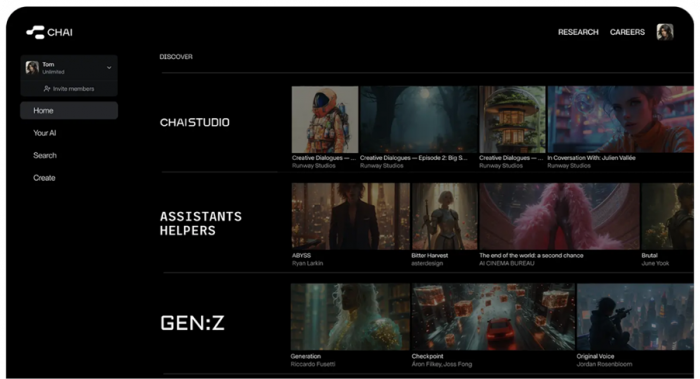
This makes it ideal for casual usage. You can jump in, have a conversation, switch characters, and repeat without much effort. It is less about building something meaningful and more about staying entertained.
The downside is depth. Conversations rarely build into something long-term. Memory is limited, and the experience can feel repetitive if used extensively.
CHAI is effective, but not particularly refined.
Pros
- Fast and engaging chat experience
- Large number of available characters
- Easy to use with minimal setup
Cons
- Weak memory and continuity
- Conversations feel short-lived
- Less depth compared to companion-focused apps
Replika: When you want consistency over variety
Replika represents a more traditional approach to AI companionship. Instead of focusing on character variety, it builds around a single AI that learns and adapts over time.
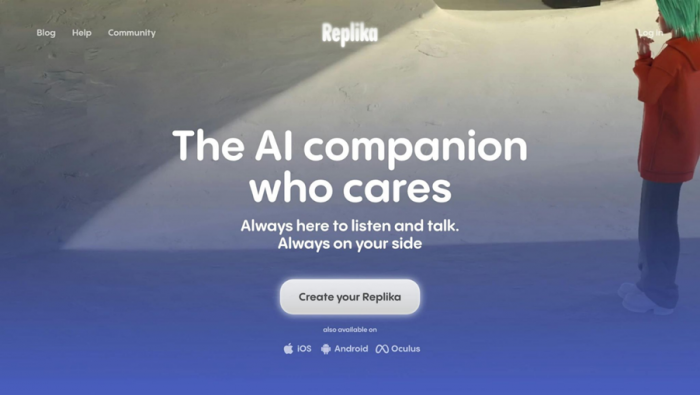
This creates a more stable experience. Conversations feel consistent, and the AI develops a recognizable personality. It is designed to simulate companionship rather than roleplay.
However, this also limits flexibility. You are not exploring different characters or experimenting with different tones. The experience is focused and narrow.
For users who want something steady and predictable, Replika works well. For users who enjoy variety, it can feel restrictive.
Pros
- Strong long-term conversational consistency
- Focused companion experience
- More stable than multi-character platforms
Cons
- Limited variety compared to Talkie
- Premium features required for full experience
- Less dynamic interaction style
Which one actually replaces Talkie AI?
The answer depends entirely on what you felt was missing.
If the issue is repetition, Character.AI or PolyBuzz offer more variety.
If the issue is shallow conversations, Nomi or Kindroid provide depth.
If the issue is inconsistency, Replika offers stability.
If the issue is boredom, CHAI delivers speed and energy.
Talkie tries to balance all of these, but ends up being average at most of them.
Most alternatives do the opposite. They pick one strength and push it further.
Final takeaway
There is no perfect replacement for Talkie AI because it is built as a hybrid platform. But that is also why it becomes replaceable.
Once you figure out what you actually want from an AI interaction, the choice becomes much clearer.
And in most cases, the best alternative is not the one with more features. It is the one that fixes the exact problem that made you leave Talkie in the first place.
Post Comment
Be the first to post comment!