On This Page
- Not all alternatives solve the same problem
- Quick overview of Monica AI alternatives
- ChatGPT: Removing complexity instead of adding features
- Claude: When depth matters more than speed
- Perplexity AI: Built for answers that can be verified
- Sider AI: A more grounded browser assistant
- Merlin AI: A cleaner version of the same idea
- Jasper AI: When writing becomes the entire workflow
- Writesonic: Structured output at speed
- Feature comparison
- Scenario-based recommendations
- Pros and cons that actually matter
- Final take: the shift away from “everything in one place”
At first glance, Monica AI solves a real problem. It brings multiple AI models, writing tools, summarization, and browser integration into a single interface. It feels like the perfect productivity layer until you actually rely on it every day.
The friction does not come from missing features. It comes from how those features are organized. You switch between models without always understanding their output differences, hit usage caps on tasks you depend on, and spend more time navigating the tool than using it.
That is usually the turning point. Not frustration, but inefficiency. The moment where users start asking a more practical question. What tool actually fits the way I work instead of trying to reshape it.
Not all alternatives solve the same problem
Looking for a Monica alternative is not about finding a clone. It is about identifying what part of the workflow feels broken.
Some tools remove complexity and focus on consistency. Others go deeper into writing, research, or structured thinking. A few replicate the browser assistant model but refine how it behaves in real use.
This is why comparisons often feel confusing. These tools are not competing on features alone. They are competing on how work gets done.
Quick overview of Monica AI alternatives
| Tool | Best For | Core Strength | Main Limitation |
| ChatGPT | General workflows | Consistent output across tasks | No native browser layer |
| Claude | Long-form work | Deep reasoning and structure | Limited integrations |
| Perplexity | Research | Real-time sources and citations | Less creative flexibility |
| Sider AI | Browser + documents | Strong page and PDF handling | Browser dependent |
| Merlin AI | Monica-like usage | Cleaner extension experience | Still usage capped |
| Jasper AI | Marketing writing | Controlled brand output | Expensive and narrow |
| Writesonic | SEO content | Structured content generation | Less flexible |
ChatGPT: Removing complexity instead of adding features
ChatGPT works as an alternative not because it offers more, but because it removes unnecessary layers. Instead of forcing users to navigate between tools and models inside a sidebar, it keeps the interaction simple and predictable.

This creates a very different working rhythm. Tasks feel more linear. You prompt, refine, and iterate without interruption. Over time, this reduces decision fatigue, which is one of the subtle problems inside Monica’s multi-feature environment.
It is particularly strong when tasks shift frequently. Writing, summarizing, brainstorming, or problem-solving can all happen within the same interface without requiring context switches.
The limitation is structural rather than functional. It does not sit inside your browser or interact with pages directly. That means users who rely on in-page assistance may find it less convenient despite its stronger output quality.
Claude: When depth matters more than speed
Claude approaches the problem from a completely different angle. It prioritizes understanding and structure rather than feature breadth.
The difference becomes clear when working with long inputs or layered prompts. Claude maintains context more effectively and produces responses that feel more organized and deliberate. It handles nuance better, especially in writing-heavy or analytical workflows.
This makes it a strong choice for users dealing with long documents, research tasks, or structured writing. It does not attempt to assist everywhere. It focuses on doing fewer things with greater depth.
Its limitation is visibility within everyday workflows. Without strong browser integration or real-time assistance across tabs, it feels more like a dedicated workspace than a background tool.
Perplexity AI: Built for answers that can be verified
Perplexity shifts the workflow from generation to validation. Instead of focusing on producing answers quickly, it prioritizes sourcing and real-time information.

This creates a different kind of trust. The output is not just an answer but a traceable one. Users can see where the information comes from, which makes it significantly more useful for research and fact-based queries.
Compared to Monica, this removes ambiguity. There is less guessing about whether the response is accurate because the references are visible.
However, this focus also narrows its use. It is not designed for creative writing or nuanced content generation. It works best when the goal is clarity and verification, not expression.
Sider AI: A more grounded browser assistant
Sider feels closest to Monica in terms of workflow, but more grounded in execution. It stays focused on what users actually do in the browser rather than expanding into too many directions.

Its strength lies in handling real content. Webpages, PDFs, and documents can be processed smoothly, making it more practical for reading-heavy workflows. Instead of acting as a general assistant, it behaves more like a productivity layer over existing content.
This makes it particularly useful for professionals and students who spend significant time analyzing information rather than generating it.
The limitation is tied to its strength. It depends heavily on the browser environment. Outside of that context, it loses much of its value.
Merlin AI: A cleaner version of the same idea
Merlin positions itself very close to Monica but with a noticeable difference in execution. It offers a similar extension-based experience while reducing visual and functional clutter.
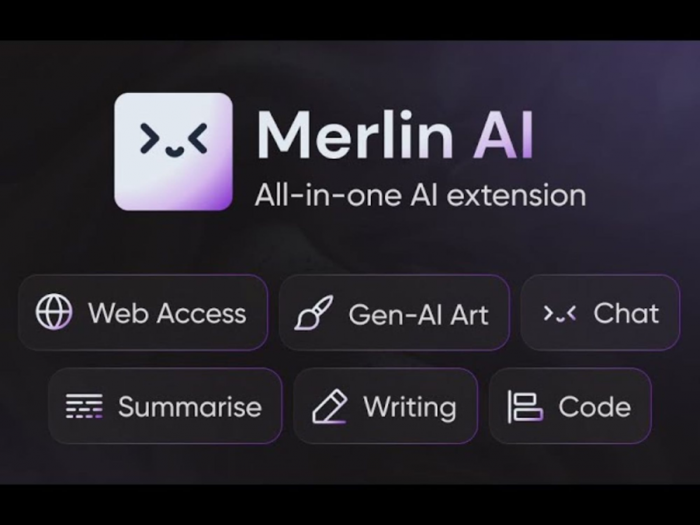
The interface feels lighter, and tasks feel more direct. This makes it easier to use consistently without feeling overwhelmed by features.
For users who liked Monica’s concept but struggled with its complexity, Merlin often feels like a refined version rather than a completely new tool.
At the same time, it does not fully escape the limitations of this category. Usage caps and dependency on models still exist, which means it improves the experience but does not fundamentally change it.
Jasper AI: When writing becomes the entire workflow
Jasper takes a more focused approach by building entirely around content creation. It is designed for structured writing tasks such as marketing copy, blog posts, and campaign content.

This specialization shows in how it works. Instead of open-ended prompting, it guides users through predefined workflows that produce more controlled and consistent results.
For teams or creators working with brand voice and repeatable formats, this becomes highly valuable. The output feels aligned with real-world use cases rather than generic generation.
Its limitation is scope. Outside of writing, Jasper offers little flexibility. It is not designed to handle general AI tasks, and its pricing reflects its professional positioning.
Writesonic: Structured output at speed
Writesonic focuses on reducing the time it takes to produce usable content. It sits between general AI tools and specialized writing platforms by offering guided workflows for blogs, ads, and SEO content.
This structure makes it easier for users who do not want to experiment with prompts. The system leads them toward a result instead of requiring exploration.
Compared to Monica, it removes uncertainty and speeds up production. Users spend less time figuring out how to ask and more time reviewing outputs.
The tradeoff is flexibility. When tasks fall outside predefined structures, the tool becomes restrictive. It performs best within its intended scope and struggles beyond it.
Feature comparison
| Feature | Monica AI | ChatGPT | Claude | Perplexity | Sider | Merlin |
| Workflow clarity | Medium | High | High | High | High | High |
| Writing quality | Moderate | High | Very High | Moderate | Moderate | Moderate |
| Research capability | Moderate | High | High | Very High | Moderate | Moderate |
| Browser integration | Strong | Weak | Weak | Moderate | Strong | Strong |
Scenario-based recommendations
| Scenario | Best Choice | Reason |
| Daily AI usage across tasks | ChatGPT | Most balanced and predictable |
| Deep writing and analysis | Claude | Strong context handling |
| Research and factual queries | Perplexity | Source-backed answers |
| Browser-based productivity | Sider | Better document workflows |
| Monica-like experience | Merlin | Cleaner extension approach |
| Marketing content creation | Jasper | Structured and consistent output |
Pros and cons that actually matter
| Tool | Specific Advantages | Real Limitations |
| ChatGPT | Maintains consistent quality across writing, coding, and general tasks without requiring users to switch modes or tools | Lacks native browser integration, so workflows involving live webpages require manual switching |
| Claude | Handles long documents and complex prompts with better structure and fewer breakdowns in context | Limited ecosystem and integrations make it less suitable for fast, multi-tab workflows |
| Perplexity | Provides source-backed answers, making it reliable for research, fact-checking, and current information | Not ideal for creative or persuasive writing where tone and originality matter |
| Sider AI | Integrates directly into browser workflows, making it efficient for reading, summarizing, and working with documents | Heavily dependent on browser usage and less useful as a standalone AI tool |
| Merlin AI | Offers a streamlined version of Monica’s concept with a cleaner interface and simpler workflow | Still relies on usage limits and does not significantly improve output quality over competitors |
| Jasper AI | Produces structured, brand-aligned content suitable for marketing teams and repeatable workflows | Expensive for individuals and lacks versatility outside content creation |
| Writesonic | Speeds up content production with guided workflows that reduce the need for prompt engineering | Less flexible for custom or complex tasks that fall outside predefined templates |
Final take: the shift away from “everything in one place”
Monica AI represents a stage in how AI tools are evolving. The idea of combining everything into one assistant is appealing, but in practice, it often introduces friction instead of removing it.
The strongest alternatives succeed by doing less, but doing it better. They focus on specific workflows, reduce decision fatigue, and create more predictable outputs.
That shift is becoming more visible. Users are moving toward tools that align with how they actually work rather than tools that try to reshape that behavior.
And once that alignment clicks, going back to a crowded, multi-purpose interface rarely feels like progress.
Post Comment
Be the first to post comment!