Apple Teleport is a speculative, buzzworthy concept that blends Apple’s real work in AR/VR with sci‑fi ideas of instant “teleportation,” but there is no confirmed Apple product or working teleportation device today. Most discussions online treat it as a futuristic vision built on mixed reality, quantum‑inspired storytelling, and AI hype rather than a near‑term launch.
Apple Teleport: Concept, Not Product
Apple Teleport is usually described as an immersive experience where you “beam” into remote places, meetings, or events using advanced AR/VR instead of physically traveling. Think of it less as Star Trek‑style matter teleportation and more as ultra‑realistic presence powered by spatial computing and intelligent software.
Articles frame Apple Teleport as a hypothetical “teleportation machine” that lets you attend concerts, offices, or distant locations from home via mixed reality hardware.
In practice, this idea builds on Apple Vision Pro, ARKit, and Apple’s broader push into spatial computing rather than any proven matter‑transfer tech.
Why The Idea Went Viral
The Teleport buzz exploded because it sits at the intersection of viral AI content, Apple rumors, and genuine breakthroughs in quantum research. AI‑generated images, fake promo videos, and speculative blogs made the concept feel closer to reality than it actually is.
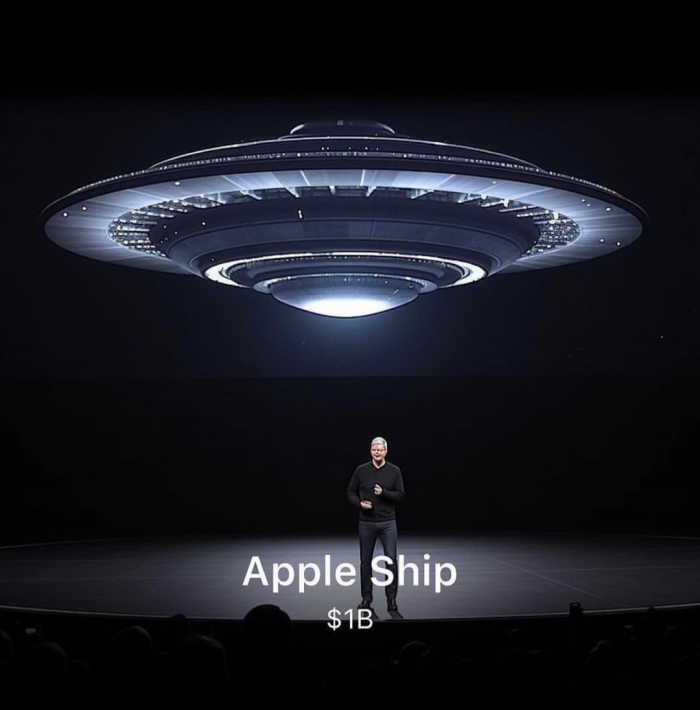
Some viral clips even feature edited Tim Cook “announcing” an Apple teleportation era, but these are tied to generative AI videos, not real product keynotes.
Concurrently, quantum teleportation of information (not people) in labs gives the media an easy narrative bridge between real science and Apple‑style consumer products.
How It Would (Realistically) Work
If Apple Teleport ever materializes in a consumer‑friendly way, it is far more likely to be a spatial computing stack than a physical teleporter.
- Hardware layer: Headsets or glasses (evolving from Vision Pro) delivering high‑resolution mixed reality with precise eye, hand, and body tracking.
- Software layer: ARKit‑based apps plus AI‑driven avatars, 3D environments, and spatial audio that recreate the feeling of “being there” in real time.
- Network layer: Low‑latency, high‑bandwidth connectivity (5G/6G, fiber, cloud rendering) to support live shared worlds and realistic telepresence.
This stack would “teleport” your presence, your vision, voice, and gestures into remote digital spaces instead of transporting your physical body.
Fiction vs Reality: What’s Actually Possible?
Teleporting people or objects, as in classic science fiction, would require dismantling and reconstructing matter with quantum‑level precision, something far beyond today’s engineering capabilities. What exists now is quantum teleportation of information between entangled particles, mainly inside research labs and experimental networks.
Quantum teleportation can transfer the state of a particle across distance, not the particle itself, and certainly not a full human body.
Articles stressing an “Apple teleport machine” or “time travel device” clearly label the idea as speculative or fictional for the foreseeable future.
Potential Use Cases If It Evolves
Even as a concept, Apple Teleport fits neatly into the roadmap of spatial computing and could reshape how people interact with digital spaces if parts of it become real.
- Remote work and meetings: Life‑like virtual offices where colleagues appear at true‑to‑scale around your desk, replacing flat video grids.
- Events and entertainment: Teleporting into courtside seats, concert front rows, or global expos through photorealistic volumetric captures.
- Education and training: Students “visiting” ancient cities, laboratories, or hazardous industrial environments in fully simulated safety.
- Accessibility: Immersive participation for people with limited mobility, enabling rich experiences without long‑distance physical travel.
Risks, Ethics, and Misinformation
- The Apple Teleport chatter also highlights how fast generative AI can blur lines between marketing fantasy and factual reporting.
- Hyper‑real AI videos and blogs can be misread as leaks, pulling users into believing a fully engineered teleportation device is imminent.
- Over‑promising sci‑fi capabilities around “teleportation” risks user disappointment, regulatory scrutiny, and erosion of trust in tech communication.
- Responsible coverage usually stresses that Apple Teleport is an imaginative framing of spatial computing and AI, not a shipping product.
Post Comment
Be the first to post comment!