Amazon Web Services is exploring a major shift in its AI chip strategy by discussing the possibility of selling its in-house Trainium chips to outside companies for use in their own data centers. The talks are still at an early stage, and no customers have been named, but the move could mark an important change in how Amazon competes in AI infrastructure.
Until now, AWS has mainly offered Trainium through its own cloud platform. Customers could access the chips by renting compute inside AWS rather than buying the hardware directly. If Amazon begins selling Trainium racks to third-party data centers, it would move closer to becoming an AI chip supplier, not just a cloud provider.
That would put Amazon in more direct competition with Nvidia, AMD, Broadcom, Google’s TPU ecosystem, and other companies trying to control the future of AI computing.
Why Amazon Is Looking Beyond AWS
Amazon has spent years building custom chips to reduce its dependence on outside suppliers. Its internal silicon portfolio includes Trainium for AI training and inference, Inferentia for inference workloads, Graviton for general cloud computing, and Nitro for cloud networking and infrastructure.
The logic is simple. If AWS can run more workloads on chips it designs itself, Amazon can lower hardware costs, improve cloud margins, and offer customers cheaper AI compute. That matters because AI training and inference are becoming some of the most expensive parts of modern cloud computing.
Amazon’s chip business is already large. The company has said its chip operations, including Graviton, Trainium, and Nitro, are running above a $20 billion annual revenue rate. It has also suggested that if the unit were treated like a standalone chip business serving both AWS and outside buyers, it could be closer to a $50 billion annual run rate.
That number explains why external Trainium sales are being considered. Amazon may see custom silicon not only as a way to strengthen AWS, but also as a much larger business opportunity.
The Nvidia Problem
Nvidia remains the clear leader in AI chips. Its GPUs dominate training and inference workloads across major AI labs, cloud platforms, startups, and enterprises. The company’s biggest advantage is not only hardware performance. It also has CUDA, developer tools, libraries, and a mature software ecosystem that AI teams already know how to use.
Amazon is unlikely to replace Nvidia quickly, and AWS is expected to keep supporting Nvidia hardware for customers that prefer it. The more realistic goal is to give customers another option, especially when cost, availability, or workload design makes Nvidia less attractive.
That is where Trainium comes in. Amazon wants the chip to become a serious alternative for large AI buyers that need lower-cost compute at scale. If Trainium can deliver strong price-performance and enough software compatibility, it could capture workloads that might otherwise run entirely on Nvidia GPUs.
Trainium Becomes More Important
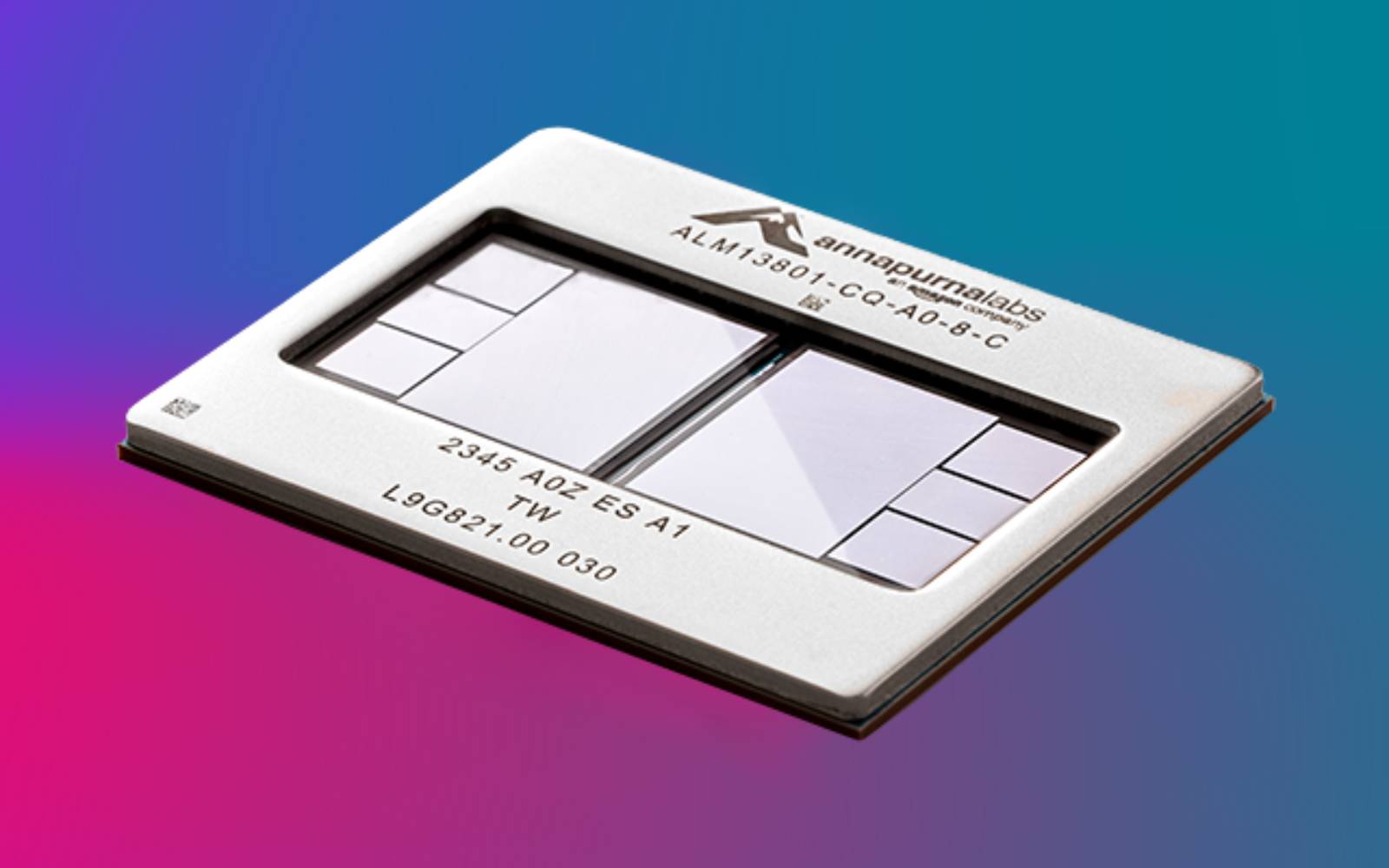
Trainium is no longer only about training large models. Amazon is also using it heavily for inference, which is the process of running AI models after they have been trained. Inference is becoming a major cost center as chatbots, coding assistants, image tools, enterprise agents, and AI applications serve millions of users.
Amazon says much of the inference workload on its foundation model platform already runs on Trainium. Demand also appears strong. Trainium2 capacity has largely sold out, Trainium3 is nearly fully subscribed, and a meaningful part of Trainium4 capacity has already been reserved even though it is still far from broad availability.
This demand shows why Amazon may be cautious about external sales. If AWS is already struggling to meet internal and cloud customer demand, selling hardware directly to outside data centers would require much larger production capacity.
The Hardware Race Gets Bigger
Amazon’s latest Trainium roadmap shows how seriously it is taking the chip race. Trainium3 is designed with high-bandwidth memory, faster compute throughput, and large-scale server configurations built for demanding AI workloads. AWS is also focusing heavily on networking because modern AI systems require thousands or even millions of chips to communicate efficiently.
The next generation, Trainium4, is expected to bring another major performance jump, with improvements in low-precision AI compute and memory bandwidth. It is also being designed to work more easily inside mixed AI infrastructure environments, which could make it more useful for companies that do not want to fully abandon existing GPU systems.
That interoperability matters. The future of AI infrastructure may not be one chip replacing another. It may be a mixed market where companies use Nvidia GPUs, hyperscaler chips, custom ASICs, and specialized inference hardware depending on workload, cost, and availability.
Why AWS Has Been Careful
Selling chips directly is not an obvious move for AWS. The company’s cloud model works best when customers run workloads inside its platform. That allows Amazon to earn revenue from compute, storage, networking, databases, security, monitoring, and related cloud services.
If a customer buys Trainium racks and runs them in its own data center, AWS may lose some of that broader cloud revenue. That is one reason Amazon has historically preferred renting compute rather than selling hardware.
But AI demand is changing the equation. Large companies are spending enormous sums on training, inference, power, data centers, and networking. Some want more control over their own infrastructure. Others want alternatives to Nvidia because GPU supply and cost remain major concerns.
What This Means
Amazon’s Trainium push is not about defeating Nvidia overnight. It is about turning a cloud cost advantage into a broader AI infrastructure business. If AWS sells Trainium racks externally, Amazon will be competing in a more direct hardware market while still using the chip to improve its own cloud economics.
The larger story is cost pressure. AI workloads are becoming too expensive for the market to rely on one dominant chip supplier forever. Amazon is betting that Trainium can become one of the serious alternatives for companies building large-scale AI systems.
If that bet works, AWS will not just rent AI compute. It could become one of the companies shaping the hardware foundation of the AI economy.
Post Comment
Be the first to post comment!