On This Page
- A New Approach to a $150 Billion Industry
- How Simile Creates AI “Agentic Twins”
- From Stanford Research to Enterprise Adoption
- CVS Uses AI Twins to Study Customer Behavior
- Testing Real-World Scenarios with AI Participants
- Expanding the Digital Population
- Polling and Survey Companies Are Also Getting Involved
- The Next Step: Multi-Agent Simulations
- Experts Say Human Data Still Matters
- Guardrails and Validation Are Critical
- AI May Change Market Research, Not Replace It
Artificial intelligence is beginning to reshape a massive corner of the business world that most consumers rarely see: market research. A new startup called Simile is developing AI systems designed to mimic real people, allowing companies to simulate customer behavior and opinions without always conducting traditional surveys or focus groups.
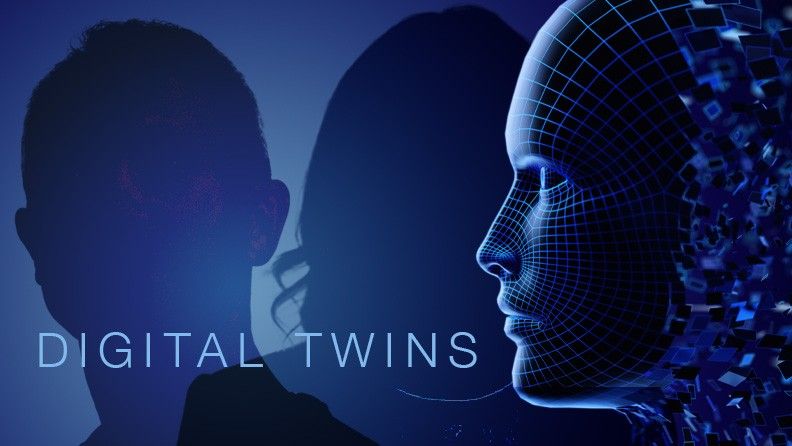
The technology centers on what Simile calls “agentic twins”. These are AI agents modeled on real individuals using behavioral data, personality traits, and purchasing patterns. Instead of asking thousands of people questions directly, companies can interact with these digital counterparts to test ideas, marketing strategies, and product concepts.
The concept is attracting serious attention. Simile recently secured $100 million in Series A funding, led by venture capital firm Index Ventures, signaling growing investor confidence that AI-driven simulations could change how companies understand their customers.
A New Approach to a $150 Billion Industry
Market research is a huge global business, estimated to be worth around $150 billion annually. For decades, companies have relied on traditional methods such as surveys, focus groups, and consulting studies to understand consumer behavior.
These processes are often expensive and time-consuming. A single research project can take months to organize, conduct, and analyze.
AI startups like Simile believe they can dramatically shorten that timeline. Instead of gathering responses from large panels of people every time a question arises, companies can query AI agents that simulate real individuals.
According to Seema Amble, a partner at venture capital firm Andreessen Horowitz, the appeal is simple: AI-generated participants offer faster and more affordable access to insights that previously required extensive human research.
In effect, companies can explore consumer questions instantly rather than waiting weeks or months for traditional studies.
How Simile Creates AI “Agentic Twins”
Simile’s technology works by building digital models of real people.
The company begins by interviewing human participants to capture details about their personality, preferences, attitudes, and behaviors. That information is then combined with additional data sources such as purchasing habits and behavioral patterns.
Once trained, the resulting AI agents function as digital replicas of those individuals.
Simile’s chief executive and co-founder, Joon Park, describes these agents as digital twins that represent how real people think and behave. The idea is not simply to create generic AI characters but to build models grounded in real-world human data.
The startup also developed its own AI model focused specifically on predicting human behavior, which it combines with open-source language models to generate responses and simulate decision-making.
Through this system, businesses can ask questions to a large virtual population of AI participants and analyze the responses as they would with traditional market research.
From Stanford Research to Enterprise Adoption
Simile’s origins trace back to academic research.
The company was spun out of Stanford University in 2024, after Park and his collaborators published research exploring how AI could simulate human behavior.
The concept quickly attracted attention from large organizations interested in new ways to study customer behavior.
Since launching commercially, Simile has begun working with several major organizations, including CVS Health and Gallup, both of which are exploring how AI-generated participants might complement traditional research methods.
For large companies that frequently conduct customer research, the technology offers a potentially powerful new tool.
CVS Uses AI Twins to Study Customer Behavior
CVS Health has already begun experimenting with Simile’s technology in real-world research scenarios.
The company created digital twins based on 2.9 million survey responses from more than 400,000 real participants, all collected with consent. These responses are then combined with additional internal data such as customer service interactions and previous survey results.
Using this dataset, CVS generated AI agents that simulate the behavior of real customers.
During testing, the company found that the AI-generated participants could reproduce known research results with around 95 percent accuracy.
According to Sri Narasimhan, CVS’s vice president of enterprise customer experience and insights, one major advantage is that AI participants are effectively always available.
Human research panels typically involve limits on how many questions participants can answer before fatigue sets in. AI agents do not have that constraint.
Researchers can continue probing deeper into topics without worrying about participant exhaustion.
Testing Real-World Scenarios with AI Participants
CVS has used the AI-generated twins to explore a range of questions related to healthcare services and customer behavior.
For example, the company tested how customers respond to medication guidance and prescription management. By asking extended follow-up questions, researchers confirmed that many patients worry about access to pharmacists and managing prescription refills.
The company also simulated responses from populations that are difficult to recruit for traditional research, such as healthcare providers and patients living with chronic illnesses.
In another case, CVS analyzed customer reactions to messaging related to pet medications. The simulation suggested that pet owners do not necessarily see giving medicine to animals as a burden but instead prioritize services that coordinate treatment with veterinarians.
These insights can help guide decisions about services, messaging, and product design.
Expanding the Digital Population
CVS plans to expand its internal library of simulated customers significantly.
The company intends to grow its network to more than 100,000 AI agents, each representing different consumer profiles.
These agents could eventually be used to test store layouts, evaluate product ideas, and experiment with marketing strategies before companies launch them in the real world.
For businesses that conduct extensive market research, the technology could reduce the need for some traditional survey panels.
However, the company emphasizes that AI research will complement rather than fully replace human feedback.
Polling and Survey Companies Are Also Getting Involved
Simile’s technology is also entering the polling industry.
The research firm Gallup has partnered with the startup to make more than 1,000 AI-generated digital twins available to its clients.
According to Joe Daly, Gallup’s global managing partner, the collaboration allows organizations to explore topics such as policy analysis, consumer trends, workplace satisfaction, and health behavior.
The advantage, he said, is scale. Researchers can explore complex questions with a large simulated population without facing the cost and logistical barriers of traditional research panels.
The Next Step: Multi-Agent Simulations
Simile’s long-term vision goes beyond individual digital twins.
Park expects future systems to include multi-agent simulations, where AI participants interact with each other inside virtual environments.
In such scenarios, companies could simulate how groups of consumers might react to new policies, social trends, or product launches.
These simulations could recreate complex environments such as marketplaces, communities, or healthcare systems.
The goal is to predict not only individual behavior but also group dynamics.
Experts Say Human Data Still Matters
Despite the excitement surrounding AI simulations, experts caution that the technology is still evolving.
Evan Brown, an emerging technology analyst at Gartner, says market research is a logical place for AI experimentation because the risks are relatively low.
Testing marketing messages or consumer reactions carries fewer consequences than using AI simulations in sensitive areas like clinical healthcare decisions.
Even so, he believes companies should continue collecting real-world data.
AI simulations rely heavily on the quality of the data used to train them. Without ongoing input from actual people, the models could drift away from real consumer behavior.
Guardrails and Validation Are Critical
Simile says it has implemented several safeguards to prevent misuse or inaccuracies.
The platform includes role-based access controls and monitoring systems designed to detect unsafe or sensitive queries.
Companies using the system also perform validation tests by comparing AI responses with real human survey results.
CVS, for example, regularly backtests its simulated participants against actual customer responses to confirm accuracy.
Narasimhan emphasizes that human researchers still play a critical role in interpreting results and asking the right questions.
AI agents may provide answers, but understanding those answers still requires human expertise.
AI May Change Market Research, Not Replace It
For now, most companies view digital twins as an additional research tool rather than a complete replacement for human participants.
The technology can dramatically accelerate the early stages of research by allowing companies to test ideas quickly.
But when it comes to major decisions, organizations still rely on real human feedback to confirm results.
As AI models improve, the balance between simulated insights and real-world research may continue to shift.
What is clear is that the traditional process of gathering customer insights is beginning to change. AI-generated participants could soon become a standard part of how businesses explore consumer behavior, evaluate products, and understand the markets they serve.
Post Comment
Be the first to post comment!