Artificial intelligence is rapidly reshaping the fashion industry, from design ideation to digital visualization. As AI art generators become more accessible, they are increasingly used to explore traditional garments in new ways. The saree, with its rich cultural history and visual complexity, has emerged as a natural subject for AI-assisted fashion experimentation.
This article explores how AI tools are being used to visualize saree styles, blend cultural inspiration with modern aesthetics, and support creative exploration using platforms such as a1.art as practical examples.
What is a1.art?
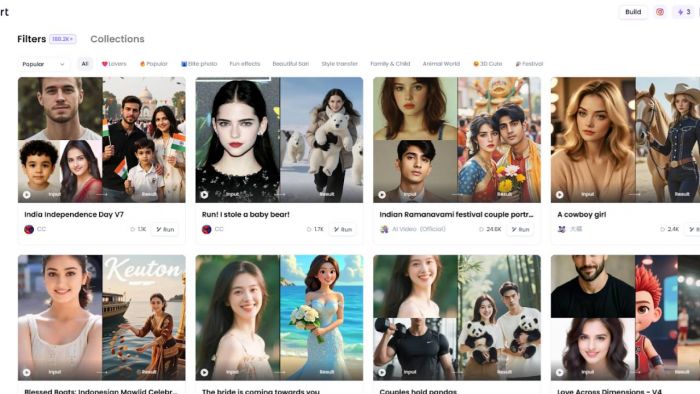
a1.art is an advanced creative platform that allows users to generate high-quality images, portraits, artwork, and stylized visuals. It’s built around a powerful AI art generator engine that enables visual transformations through simple text, photo uploads, and preset styles.
While the platform offers dozens of creative tools—from AI photo editors to character styling to niche fashion templates—the ai saree Generator has become one of its most popular features. It taps into a globally beloved garment and lets users see themselves in rich fabrics, graceful draping, and culture-inspired aesthetics.
Why People Choose a1.art?
A dedicated AI saree tool distinguishes itself from generic image creators through its deep, tailored understanding of the garment. Its power lies in four key features:
1. Text-Prompted Infinite Design
The core engine is text-to-image generation. Describe your vision—like "a Kanjivaram saree with art deco motifs in emerald and mustard"—and the AI brings it to life, unlocking billions of design permutations instantly.
2. Style Fusion for Hybrid Creation
This is where creativity breaks boundaries. You can fuse concepts, such as asking the AI to interpret colors from a classic painting into a pattern or blending "the delicacy of Parsi Gara embroidery with bold Moroccan tile colors," resulting in breathtaking, original designs.
3. Photorealistic Virtual Visualization
While complex physics simulation is challenging, leading tools generate photorealistic images of models wearing your design. By using prompts like "a woman with long hair wearing my saree in a garden," you achieve a realistic preview with natural folds and context.
4. Curated Style & Occasion Libraries
For instant inspiration, platforms offer categorized libraries:
● Traditional & Heritage: Authentic Kanchipuram, Patola, or Chanderi styles.
● Contemporary & Fusion: Modern silhouettes with global patterns.
● Festive & Bridal: Opulent lehengas and heavy embroidery for weddings.
● Artistic & Conceptual: Designs inspired by nature, architecture, or abstract art.
Together, these specialized features transform the AI from a simple tool into a knowledgeable digital design partner.
How to Make an AI Saree Photo Easily
Using the AI saree generator is simple, making it perfect for casual users, digital creators, or fashion professionals. Here’s a quick walkthrough:
Step 1: Upload Your Photo
Choose a front-facing or half-body picture for the best result. Natural lighting and a neutral background help the AI identify your body shape more accurately.
Step 2: Select Saree Style
Pick from available options or use text prompts to choose:
➔ Traditional silk
➔ Bridal red
➔ Pastel chiffon
➔ Minimalist contemporary
➔ Bollywood-inspired styling
➔ Regional draping styles
Step 3: Generate
Click “Generate” and wait a few seconds. The AI analyzes your pose, lighting, and contours, then creates a realistic saree-draped image.
Step 4: Download & Share
You can save it, post it on social media, use it in invitations, or incorporate it into creative projects.
Final Words
The use of artificial intelligence in fashion reflects a broader shift toward digital creativity and accessibility. By enabling quick visualization of garments, AI art generators lower the barrier to creative experimentation and allow more people to engage with traditional fashion concepts.
In the context of saree design, these tools provide a way to explore colors, patterns, and draping styles while maintaining cultural reference points. Platforms such as a1.art serve as examples of how AI technology can be applied as a supportive creative tool rather than a replacement for traditional craftsmanship.
Post Comment
Be the first to post comment!